











Showrooms
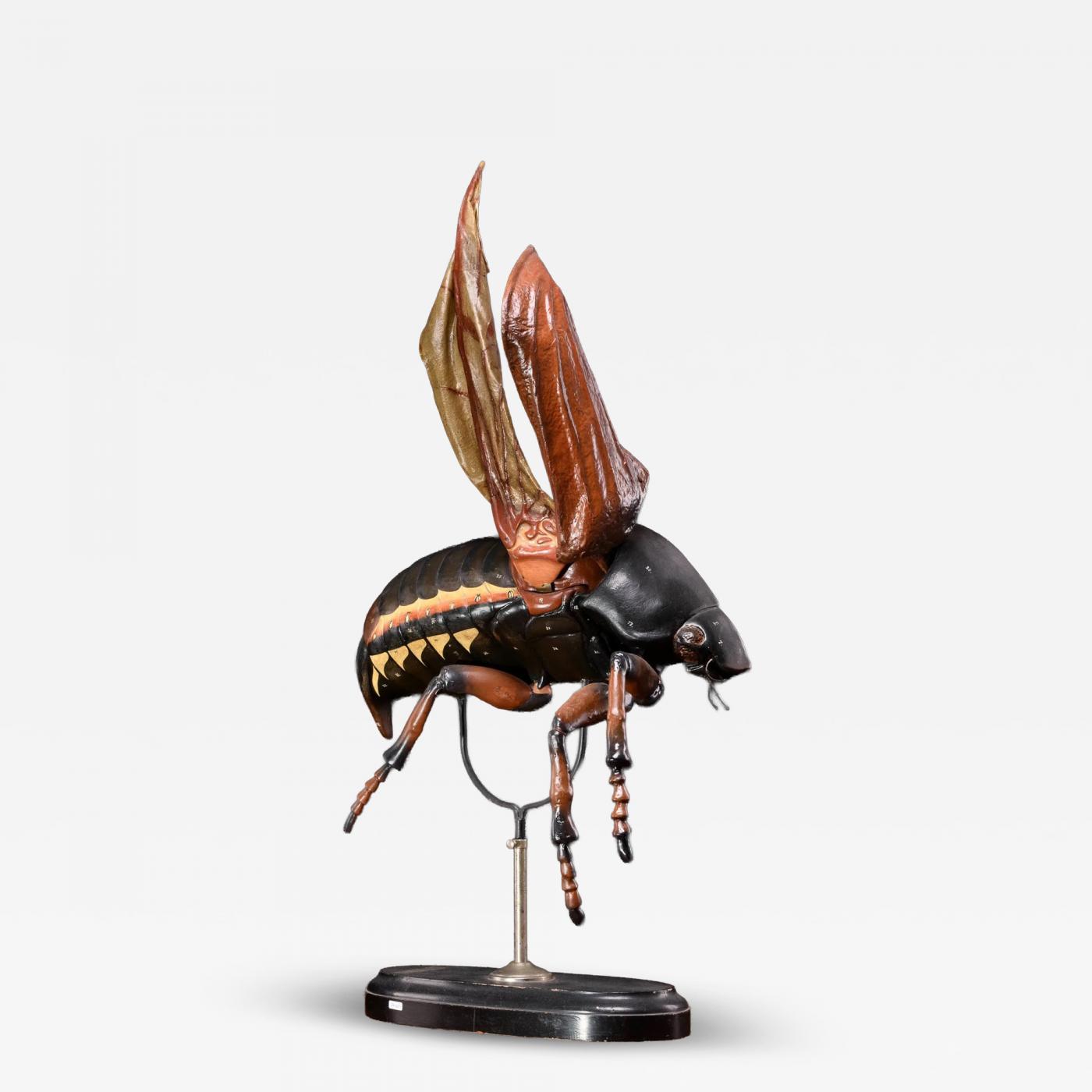
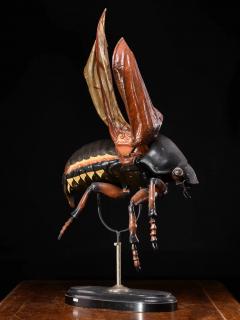
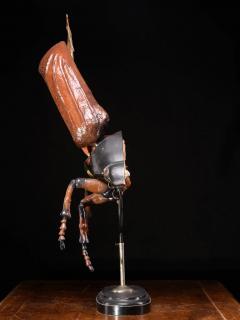
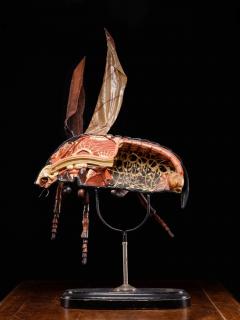
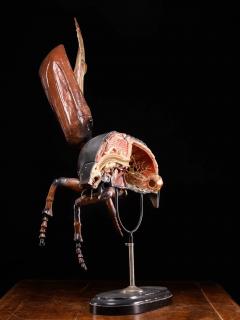
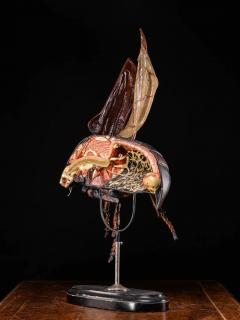
Didactical Model of a Cockchafer or May bug labeled
-
Description
Didactical Model of a Cockchafer or May bug labeled “ Denoyer-Geppert Company of Chicago », distributors of the Robert Brendel collection from Germany.
1st half 20th Century
Papier maché, wood, gelatine
63 x 46 x 19 cm
24 3/4 x 18 1/8 x 7 1/2 in
2044
€ 7,000.00
This large and impressive didactical model , on its original base,stands almost … cm tall. It was made of paper mache, wood and plaster and all the parts were hand painted.The model was manufactured by Brendel in Germany and distributed through Denoyer-Geppert Company of Chicago.From the late 19th to the first 20th centuries, the Brendel Company produced three-dimensional botanical and animal models as teaching aids. Meant to be observed and physically manipulated by entire classes of students, the models embody both artistic and scientific values, as they were created through an effective cooperation between botanists and model makers. Today these models are renowned for their historical value. Robert Brendel founded the R. Brendel company in Breslau (currently Wroclaw in Poland). He opened in 1866 a factory producing models of anatomy, mineralogy and mainly botanical models designed for teaching. Botanical models are enlargements of plants and flowers. They were made of papier mâché, wood, cotton, bamboo, glass beads, feathers and gelatin ….From the beginning of the company, Robert Brendel surrounds himself with qualified craftsmen and scientists. He benefited from the theoretical advice of a pharmacist, Dr. Carl Leopold Lohmeyer, and botanical advice from Professor Ferdinand Cohn, Director of the Institute of Plant Physiology at the University of Breslau.Throughout the life of the company, collaboration with various renowned scientists, precision and quality of execution have been a permanent concern of the founders father and son, which has earned the company to be internationally recognizedHis son Reinhold (1861-1927) collaborates with his father in the development of the company and succeeds him. He deepened his knowledge of botany, established in 1898 in Grunewald near Berlin and the models produced then show a quality that reaches an unparalleled level.The models were sold via illustrated catalogs, either by mail order or via a network of resellers (in Italy the Paravia firm and in the USA the Denoyer-Geppert Company of Chicago ) and were awarded with numerous awards and medals.
Modèle de l'abeille ouvrière (Apis mellifica) agrandi 35 fois, monté sur un socle. Un côté montre la forme extérieure, l'autre la constitution interne et les viscères qui peuvent être enlevés. Ce modèle didactique, grand et impressionnant, sur son socle d'origine, mesure près de 63 cm de haut. Il a été fabriqué en papier mâché, bois et plâtre, et toutes les parties ont été peintes à la main. Le modèle a été produit par Brendel en Allemagne et distribué par la société Denoyer-Geppert de Chicago. De la fin du XIXe siècle au début du XXe siècle, la société Brendel a produit des modèles botaniques et animaux en trois dimensions comme aide à l'enseignement. Destinés à être observés et manipulés physiquement par des classes entières d'élèves, ces modèles incarnent à la fois des valeurs artistiques et scientifiques, car ils ont été créés grâce à une coopération efficace entre les botanistes et les fabricants de modèles. Aujourd'hui, ces modèles sont renommés pour leur valeur historique. Robert Brendel a fondé la société R. Brendel à Breslau (actuellement Wroclaw en Pologne). En 1866, il a ouvert une usine produisant des modèles d'anatomie, de minéralogie et principalement des modèles botaniques conçus pour l'enseignement. Les modèles botaniques sont des agrandissements de plantes et de fleurs. Ils étaient fabriqués en papier mâché, bois, coton, bambou, perles de verre, plumes et gélatine... Dès le début de l'entreprise, Robert Brendel s'entoure d'artisans qualifiés et de scientifiques. Il bénéficie des conseils théoriques d'un pharmacien, le Dr Carl Leopold Lohmeyer, et des conseils botaniques du professeur Ferdinand Cohn, directeur de l'Institut de physiologie végétale de l'université de Breslau. Tout au long de la vie de l'entreprise, la collaboration avec divers scientifiques renommés, la précision et la qualité d'exécution ont été une préoccupation permanente du père et du fils fondateurs, ce qui a valu à l'entreprise une reconnaissance internationale. Son fils Reinhold (1861-1927) collabore avec son père dans le développement de l'entreprise et lui succède. Il approfondit ses connaissances en botanique, s'installe en 1898 à Grunewald près de Berlin et les modèles produits à cette époque atteignent un niveau de qualité inégalé. Les modèles étaient vendus via des catalogues illustrés, soit par correspondance, soit via un réseau de revendeurs (en Italie, la société Paravia et aux États-Unis, la société Denoyer-Geppert de Chicago) et ont été récompensés par de nombreux prix et médailles.
Provenance
Private American Collection -
More Information
Period: 1900-1919 Creation Date: 1st half 20th Century Styles / Movements: Traditional Incollect Reference #: 817249 -
Dimensions
W. 18.11 in; H. 24.8 in; D. 7.48 in; W. 46 cm; H. 63 cm; D. 19 cm;
Message from Seller:
Spectandum, a by-appointment gallery in Leuven, Belgium, can be reached at contact@spectandum.com 32475648678. The gallery specializes in Natural History, Ethnography, European works of art, antiquities, and rare curiosities sourced from around the world.
More Listings from Spectandum View all 175 listings
-
Female Kifwebe Mask with old collection label, Luba-Songye People, DR Congo
-
Ashanti Comb representing Female sitting Figure, Ghana
-
Kundu Knive-brass wrapped and tacked Hilt - wooden brass decorated Sheath, DRC

-
17th C The Ring of Polycrates, Tyrant of Samos, Circle of Antonio Molinari
-
Didactical Horse Skull on a wooden museum stand (Equus ferus caballus NR)

-
Fang Short Sword with wood and snakeskin Sheath, Gabon
-
A taxidermy Golden-bellied Mangabey Monkey mounted on a wooden plinth
-
Massim Pig charme sculpture, Trobiant

-
Lozi Wood and Bone Flywhisk with inlaid facial sculpture, Zambia

-
Bakongo Christian religious Artifact made of wood, DRC

-
Japanese hard Wood Nyoi (Sceptre) with black rock finish
-
Inuit Model Kayak. Wooden frame covered with seal skin, lined with bone
-
Collection of 4 antique Vietnamese waterpipe bowls
-
Sunset over the Sea, Jan de Clerck (1891 - 1964), Oil on Unalit, Signed

