





Showrooms
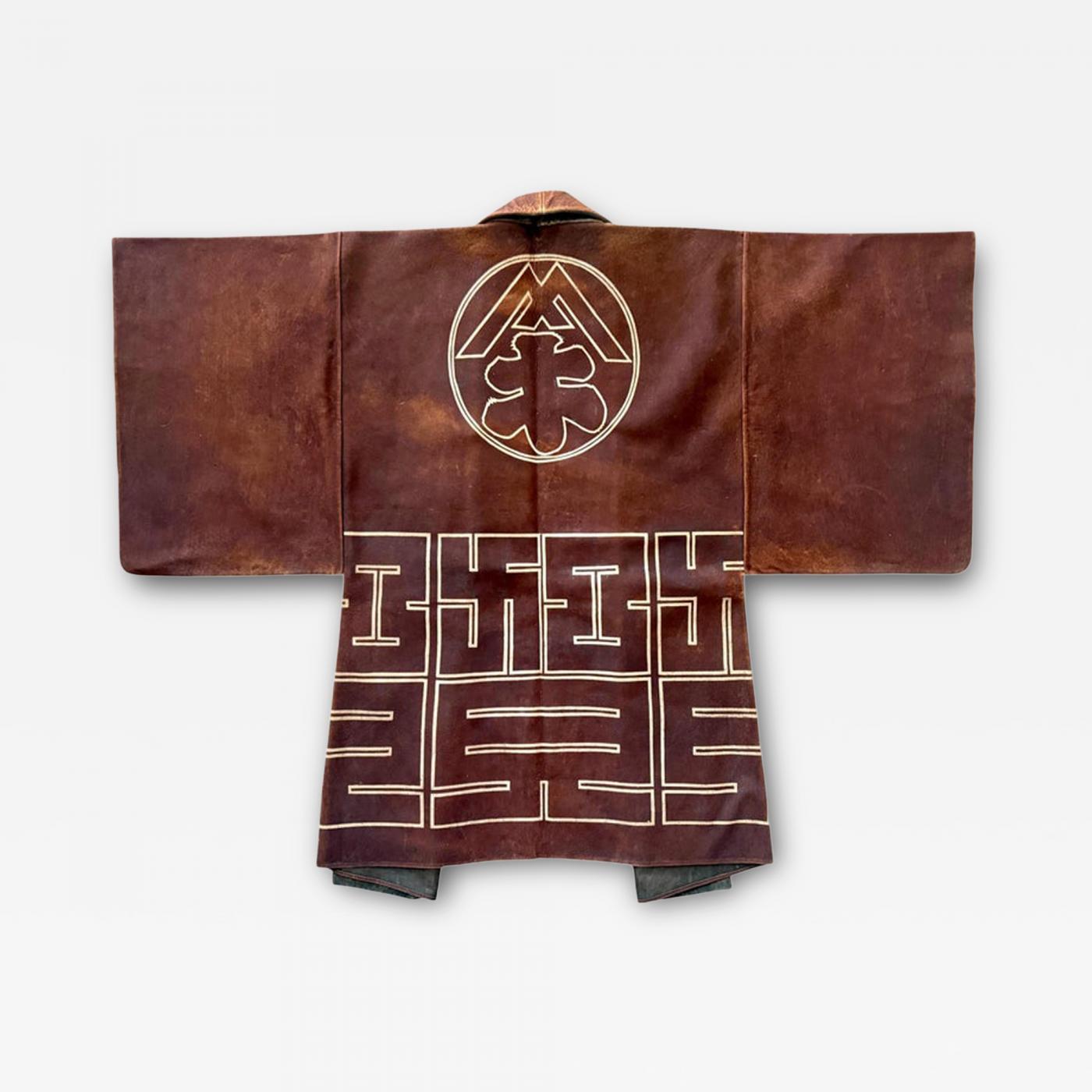
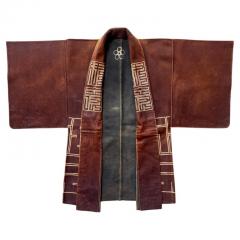
Rare Antique Japanese Leather Fireman Jacket Kawabaori with Stencil Design
-
Description
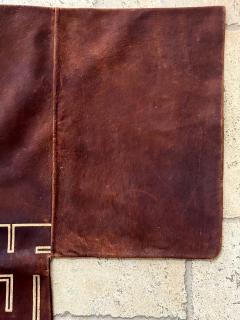
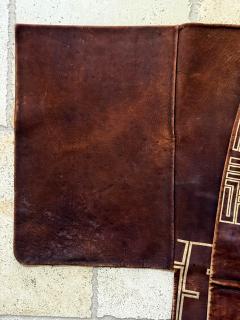
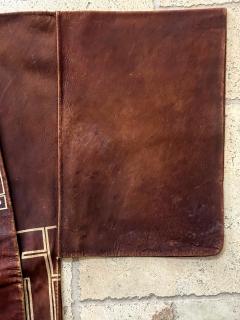
A Japanese Fireman's leather Coat known as Kawabaori circa mid-late 19th century of Edo Period. The robe was made from a deer skin smoke dyed with stenciled pattern. Animal skin was a material rarely used in Japanese attires historically due to the strong belief in Buddhism. The workmen would have been of low cast or outcasts of the society who were considered unclean (they were known as Eta). Due to the high cost of the leather, such jacket would have been a lavish gift to the battalion chief of firefighter brigades by associated merchant houses and used as a ceremonial wear rather than functional firefighting uniform.
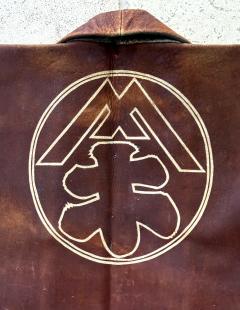
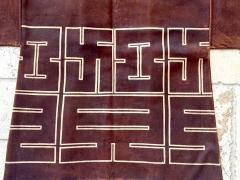
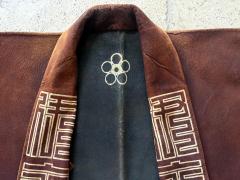
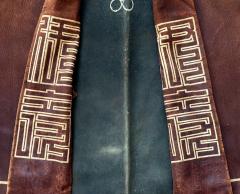
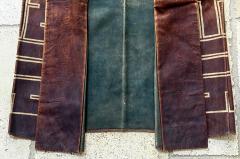
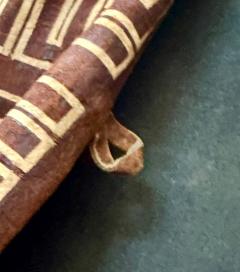
The pattern on this Kawabaori was created using stencil against the smoke dye, which turned the light skin color into the deep brown in the background except the areas of the covered design which remained a lighter color. A large round Mon Crest on the back indicates the family name Yamaki (Mountain Tree). This traditionally would be the family name of the donor. The lower part of the back was covered in archaic Kanji: the characters in the bottom row are Kun-yomi, which mean "to see"; the characters on the upper row appear to be Buddhism symbol including Swatika sign. The design continues to the lower part of the front. On the upper part of the lapel, there are a pair of highly stylized archaic form of Kanji, a decorative writing form called Kakuji in Japan, popular during Edo period for ceremonial use. These two characters are most likely "Ken Shou" in Japanese, meaning "Robust/Healthy and Longevity". The lapels were dyed indigo blue on the underside, matching the color of the interior. On the top part of interior under the collar, there is a smaller Mon with five circles. This is called Umebachi (Plum Blossom). possibly the family crest of the wearer as the receiver of this garment. The leather loop under either side of the lapels still remains.
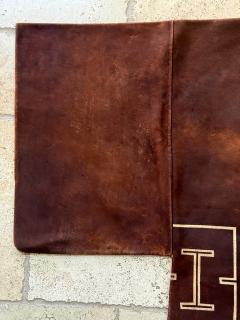
The garment has been well preserved, intact without any damage. It displays a deep warm patina commensurate with age and ceremonial use. It can be dated to the 19th century with confidence. A rare sample of Japanese textile art.
For two comparable deer skin Kawabaoris, see page 174-177 of the book "Textile of Japan" Edition Prestel.
Now in the collection of Minneapolis Institute of Art accession no 2019.20.122 and 2019.20.120. -
More Information
Origin: Japan Period: 19th Century Materials: leather Condition: Good. The robe shows beautiful, smoked dyed color. Patina and wear expected from the age, especially along the edges. Some color variations and fading in places. Folding line from storage. Creation Date: 19th century Styles / Movements: Asian, Traditional Patterns: Abstract, Asian/Oriental, Geometric, Handmade Incollect Reference #: 886854 -
Dimensions
W. 55 in; H. 44 in; D. 1 in; W. 139.7 cm; H. 111.76 cm; D. 2.54 cm;
Message from Seller:
Tishu, based in Atlanta, GA, offers a diverse collection ranging from Neolithic art to 20th-century collectibles, with a focus on Mid-century design, Japanese and Korean art, Asian textiles, and Contemporary Aboriginal art. Driven by a passion for timeless beauty, the gallery is open by appointment only and offers works that span 5,000 years of history. Reach them at 305-400-0561 or tishu@tishugallery.com.
More Listings from Tishu View all 1160 listings
-
Large Japanese Bamboo Ikebana Basket by Wada Waichisai II with Signed Box
-
Rare Japanese Handled Bamboo Basket for Chado Hayakawa Shokosai I Tomobako

-
Early Japanese Bamboo Flower Basket Hahakago by Monden Kogyoku Original Box
-
Japanese Ceramic Vase by Makuzu Kozan
-
Antique Japanese Silk Kesa Monk's Robe with Patchwork Meiji Era
-
Contemporary Australian Aboriginal painting by Minnie Pwerle
-
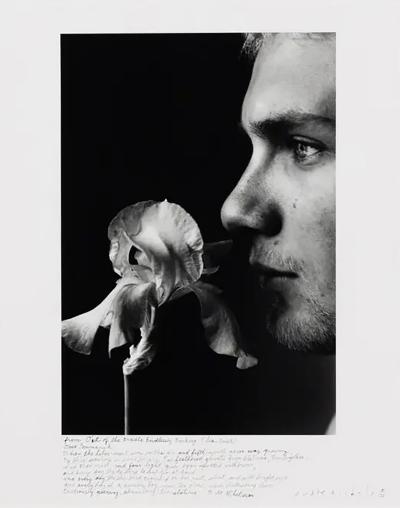
Framed Editioned Photograph with Notes by Duane Michals Prominent Provenance
-
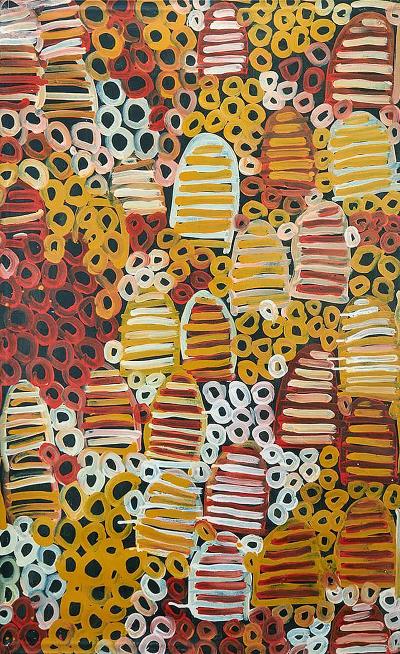
Contemporary Australian Aboriginal painting by Minnie Pwerle
-
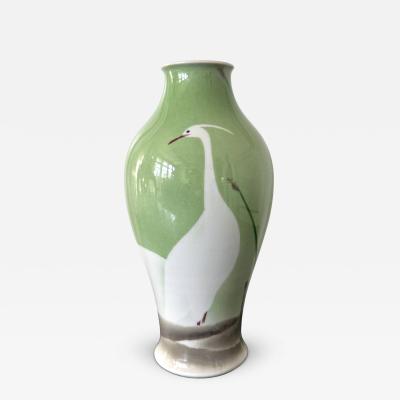
Japanese Porcelain Vase with Composed Egrets by Makuzu Kozan Meiji Period
-
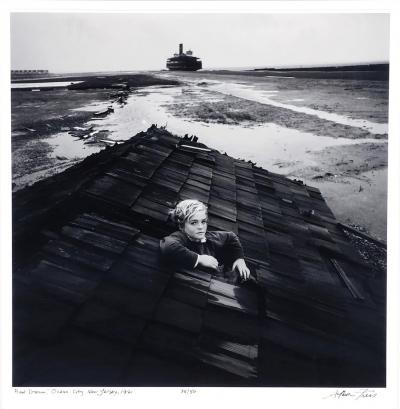
Framed Large Editioned Photograph Flood Dream by Arthur Tress
-
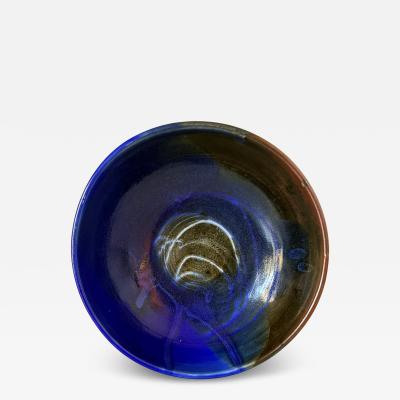
Large Ceramic Bowl with Brilliant Blue Glaze by Toshiko Takaezu
-
Framed Editioned Cyanotype Photograph by John Patrick Dugdale Provenance

-
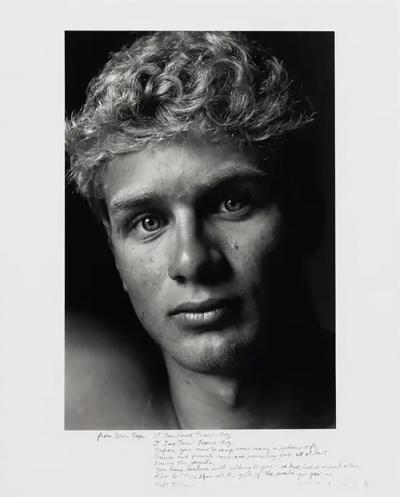
Framed Editioned Photograph with Notes by Duane Michals Prominent Provenance
-
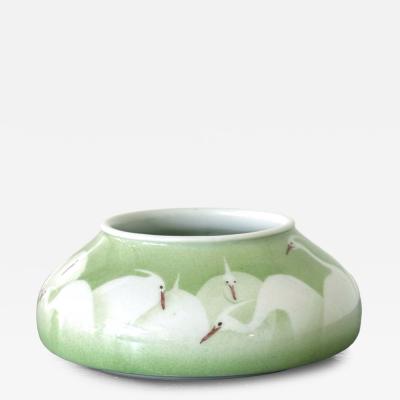
Japanese Porcelain Bowl with Composed Egrets by Makuzu Kozan Meiji Period