









Showrooms
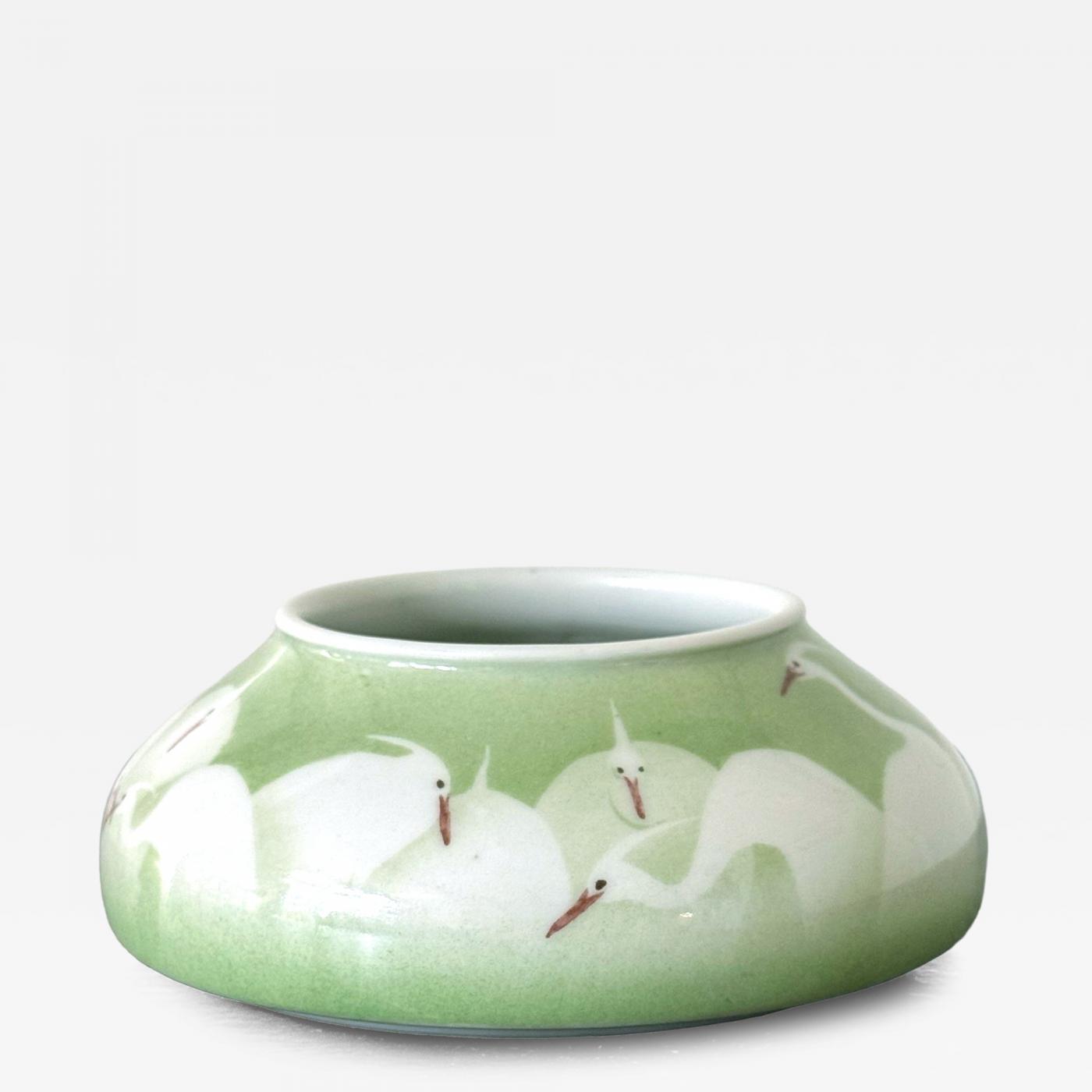
Japanese Porcelain Bowl with Composed Egrets by Makuzu Kozan Meiji Period
-
Description
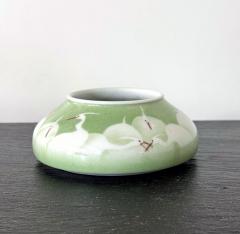
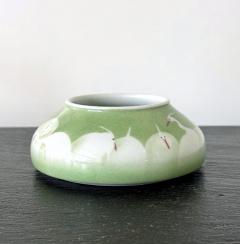
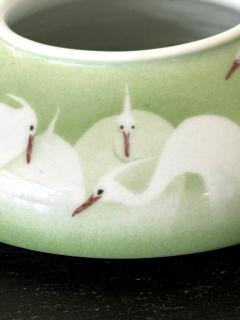
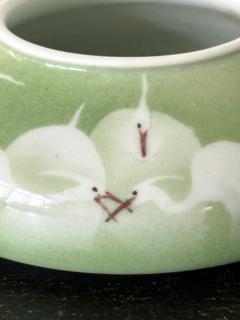
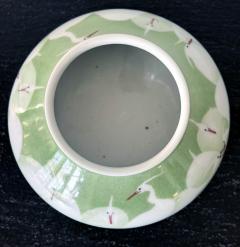
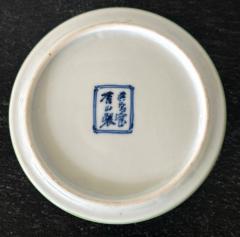
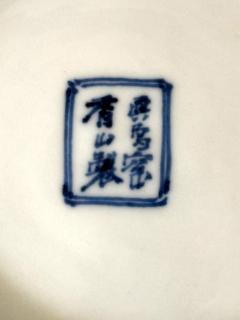
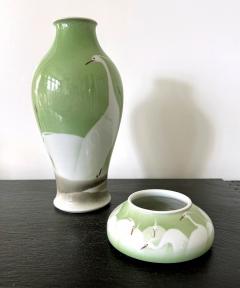
A small Japanese porcelain bowl in the form of a monk's alms bowl with beautifully decorated glazed surface by Makuzu Kozan. Also known as Miyagawa Kozan (1842–1916), Kozan was one of the most established and collected ceramists from Meiji Period. The exterior of the bowl is covered in an apple green glaze with a soft gradient. On top, the artist composed a full circle of white egrets in a style that combines realistic form and graphic. Egret is one of the popular designs from the underglaze period by Kozan as a beloved bird of the literati in Japan. It is a wonderful way to showcase new color palettes and the gradient technique called Morotai (Hazy style). The shape of this bowl is unusual, and it might have been used as a water wash for the scholar's desk. The bowl is signed on the base in blue underglaze mark "Mazuku Kiln Kozan Made".
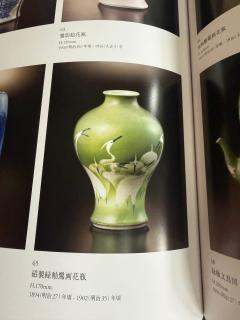
For a vase with similar and comparable egret motif dated to 1897, see figure 65 on page 60 of the book "Miyagawa Kozan Mazuku Ware".
Makuzu Kozan, also known as Miyagawa Kozan (1842–1916), one of the most established and collected ceramists from Meiji Period. Born as Miyagawa Toranosuke, Kozan established his pottery studio in Yokohama circa 1870s and later became one of the appointed artists to the Japanese Imperial household. His work was exhibited in many international fairs that the Meiji government participated at the turn of the century and won many grand prizes. Known as one of the most creative ceramists, circa 1887, Kozan started experimenting with new chemical colors from the West in the format of his porcelain glaze. New colors allowed him to create underglaze design that appeared bright, smooth and glossy. To create design that is realistic and dimensional, more common in the western paintings, he was inspired by the native Japanese ink painting technique developed around 1900 by Yokoyama Taikan (1868-1958) and Hishidan Shunso (1874-1911) called Morotai (Hazy style) and used colors on the porcelain like ink on paper. The fuki-e technique was demanding and uniquely featured in the works of Kozan studio. -
More Information
Documentation: Signed Origin: Japan Period: 19th Century Materials: ceramic glazed Condition: Good. Overall excellent condition with minimal shelf wear on the base as expected. Creation Date: 1890s Styles / Movements: Modern, Art Pottery, Asian Patterns: Animal/Insects, Asian/Oriental, Handmade Incollect Reference #: 885657 -
Dimensions
H. 2.1 in; Diam. 5 in; H. 5.33 cm; Diam. 12.7 cm;
Message from Seller:
Tishu, based in Atlanta, GA, offers a diverse collection ranging from Neolithic art to 20th-century collectibles, with a focus on Mid-century design, Japanese and Korean art, Asian textiles, and Contemporary Aboriginal art. Driven by a passion for timeless beauty, the gallery is open by appointment only and offers works that span 5,000 years of history. Reach them at 305-400-0561 or tishu@tishugallery.com.
More Listings from Tishu View all 1152 listings
-
Early Japanese Bamboo Flower Basket Hahakago by Monden Kogyoku Original Box
-
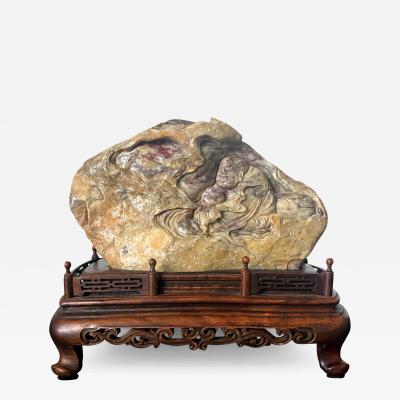
Chinese Chicken Blood Stone Carving of Bodhidharma on Wood Stand
-
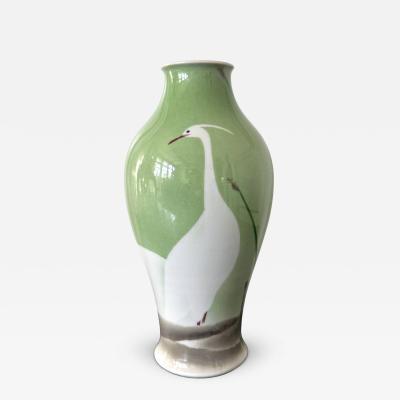
Japanese Porcelain Vase with Composed Egrets by Makuzu Kozan Meiji Period
-
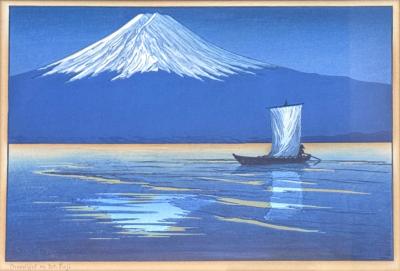
Vintage Framed Woodblock Print Moonlight on Mt. Fuji by Lillian Miller
-
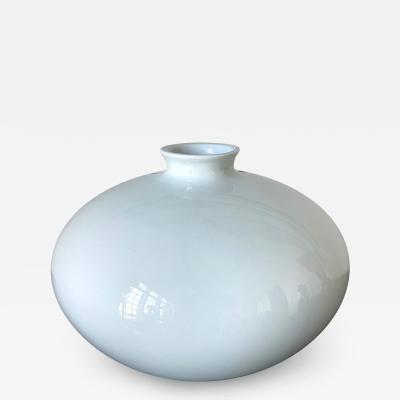
Contemporary Japanese White Glaze Ceramic Vase by Inoue Manji
-
A Pair of Framed Photographs by Susan Fenton

-
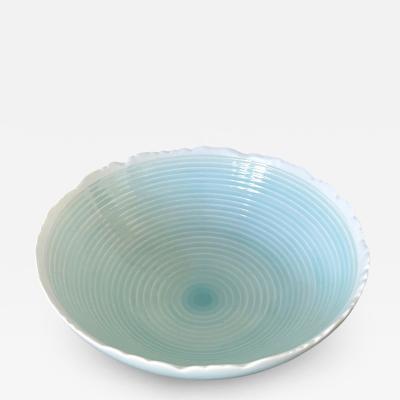
Japanese Contemporary Celadon Ceramic Bowl by Ono Kotaro
-
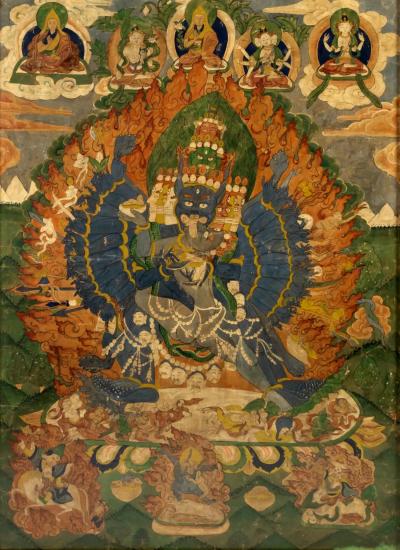
Framed Antique Tibetan Thangka of Yamantaka with Consort
-
Framed Editioned Cyanotype Photograph by John Patrick Dugdale Provenance

-
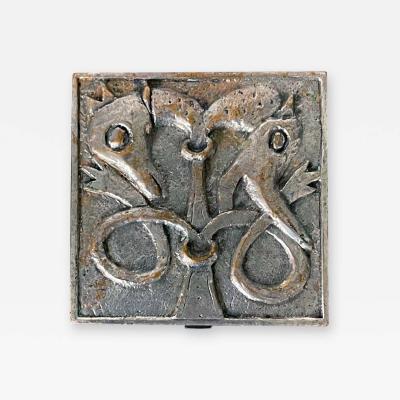
French Silvered Bronze Box Line Vautrin
-
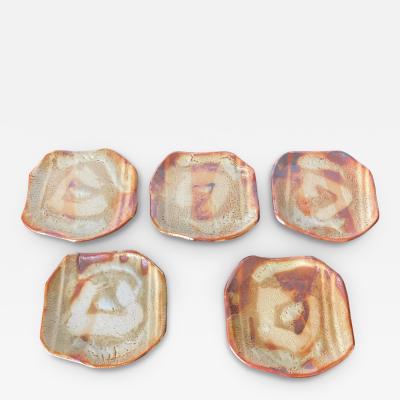
Set of Five Yohen-Kin Shino Ceramic Plates by Suzuki Tomio
-
Contemporary Ceramic Buncheong Moon Flask by Kang Hyo Lee
-
Japanese Ceramic Vase by Makuzu Kozan
-
Antique Japanese Silk Kesa Monk's Robe with Patchwork Meiji Era