











Showrooms
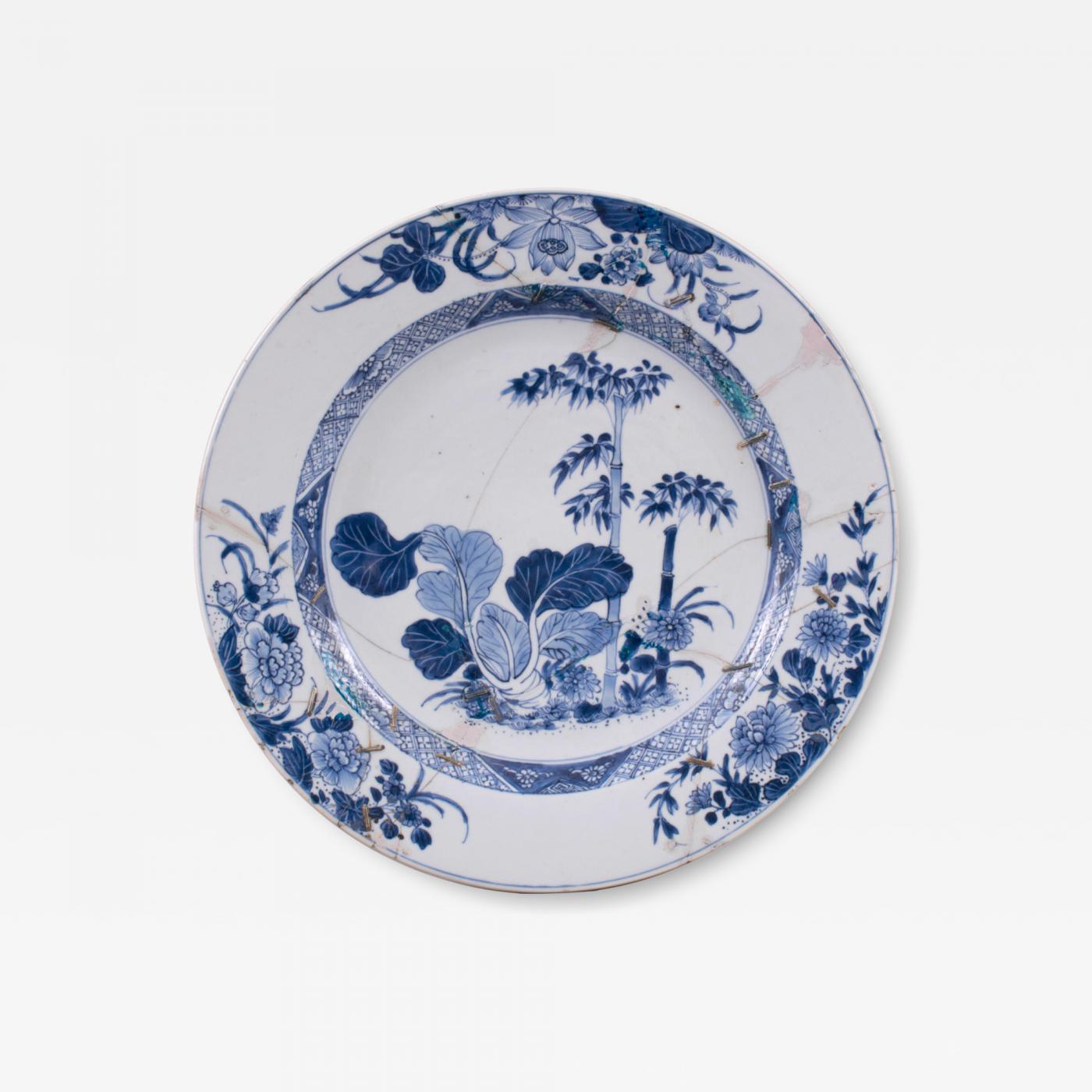
Chinese Export Pseudo Tobacco Leaf Charger with Staple Repairs, c. 1750
-
Description
Chinese Export blue and white pseudo tobacco leaf charger, the center painted with cabbage leaves and bamboo within a diapered cavetto, the border with leaves and flowers.
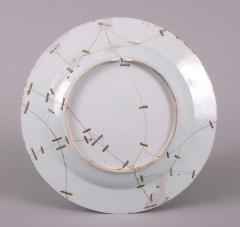
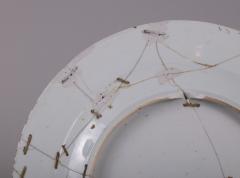
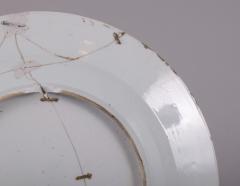
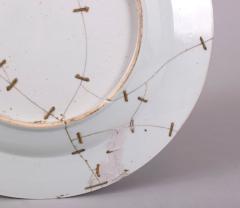
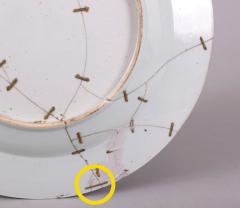
Years ago, this charger was shattered into more than 20 pieces. Obviously a prized possession, it was meticulously repaired using glue, plaster and numerous staples of a least three different sizes. Notice the longest staple, measuring an inch long and circled in yellow, secures two small chips.
Staple or rivet repair was used from ancient times throughout the 19th century, before modern adhesives were invented. Jewelers and silversmiths often advertised repair work. That staples of three different sizes were used on this charger suggests a professional restoration. (The sloppy epoxy patches were certainly added later.)
For an excellent article on staple restoration, read "Simply Riveting: Broken and Mended Ceramics" by Angelika R. Kuettner in Ceramics in America, 2016.
https://chipstone.org/article.php/742/Ceramics-in-America-2016/Simply-Riveting:-Broken-and-Mended-Ceramics
The term "tobacco leaf" was first used by W. G. Gulland in his 1898 book, "Chinese Porcelain". In it, he illustrates a plate with an identical leafy plant, painted in colors and described as "a bouquet of brown leaves with undertones of red and veins of gold with white enamel stems...This model is known as a tobacco leaf motif." [1] The foliage is actually similar to Chinese cabbage, but its representation in the brown tobacco color gave the motif its name. What would later be called "tobacco leaf", with its bright colors and exuberant designs, evolved from this early motif.
Many variations on this early pseudo-tobacco leaf design were produced. Pierre L. Debomy illustrates three on pages 183 and 185. (See footnote below.) Each has a central clump of wide leaves with white stems low to the ground. Unlike this charger, which is painted in underglaze blue, they are decorated with additional overglaze enamels. Bamboo stalks and leaves can be seen on the border of the plate on page 183.
[1]
Pierre L. Debomy, "Tobacco Leaf" and "Pseudo" : A Tentative Inventory (Societe des Amis du Musee National de Ceramique, 2013), 25. -
More Information
Origin: China Period: 18th Century Materials: Porcelain, metal Condition: Distressed. Shattered and stapled, areas of glue and repaint. Creation Date: 1750 Styles / Movements: Chinese Export, Rococo, Traditional Patterns: Handmade, Traditional Dealer Reference #: 4023958 Incollect Reference #: 843734 -
Dimensions
Diam. 14 in; Diam. 35.56 cm;
Message from Seller:
Robert Morrissey Antiques & Fine Art, established in 1948, specializes in period European furniture, modern design, and an extensive selection of paintings and sculpture. Contact us at 314.644.7066 or robert@robertmorrissey.com to explore our curated collection.
More Listings from Robert Morrissey Antiques & Fine Art View all 71 listings
-
Crossing Shanty

-
George III Mahogany Side Table, c. 1800

-
36 Old Paris Porcelain Plates, c. 1820
-
Happy Days Ice Cream

-
"Coal Car Inspection", Watercolor on Paper

-
Pair of Chinese Export Porcelain Ecuelles, c. 1750-60

-
Grover Texaco

-
Mark Horton (b.1953) "Neighborhood Movie Theatre", 50" x 34"

-
Chinese Export "The Lady with a Parasol" Plate, c. 1736-40
-
East Wind

-
Busy City Street in Blue 34" x 50"

-
Chinese Export Porcelain Bourdaloue, c. 1790
-
City Sunlight

-
Flag Day

