









Offered by:
Kristan Hauge Japanese Art
2-32 Saishoji-cho, Okazaki, Sakyo-ku,
Kyoto 606-8342 , Japan
Call Seller
81757515070
Showrooms
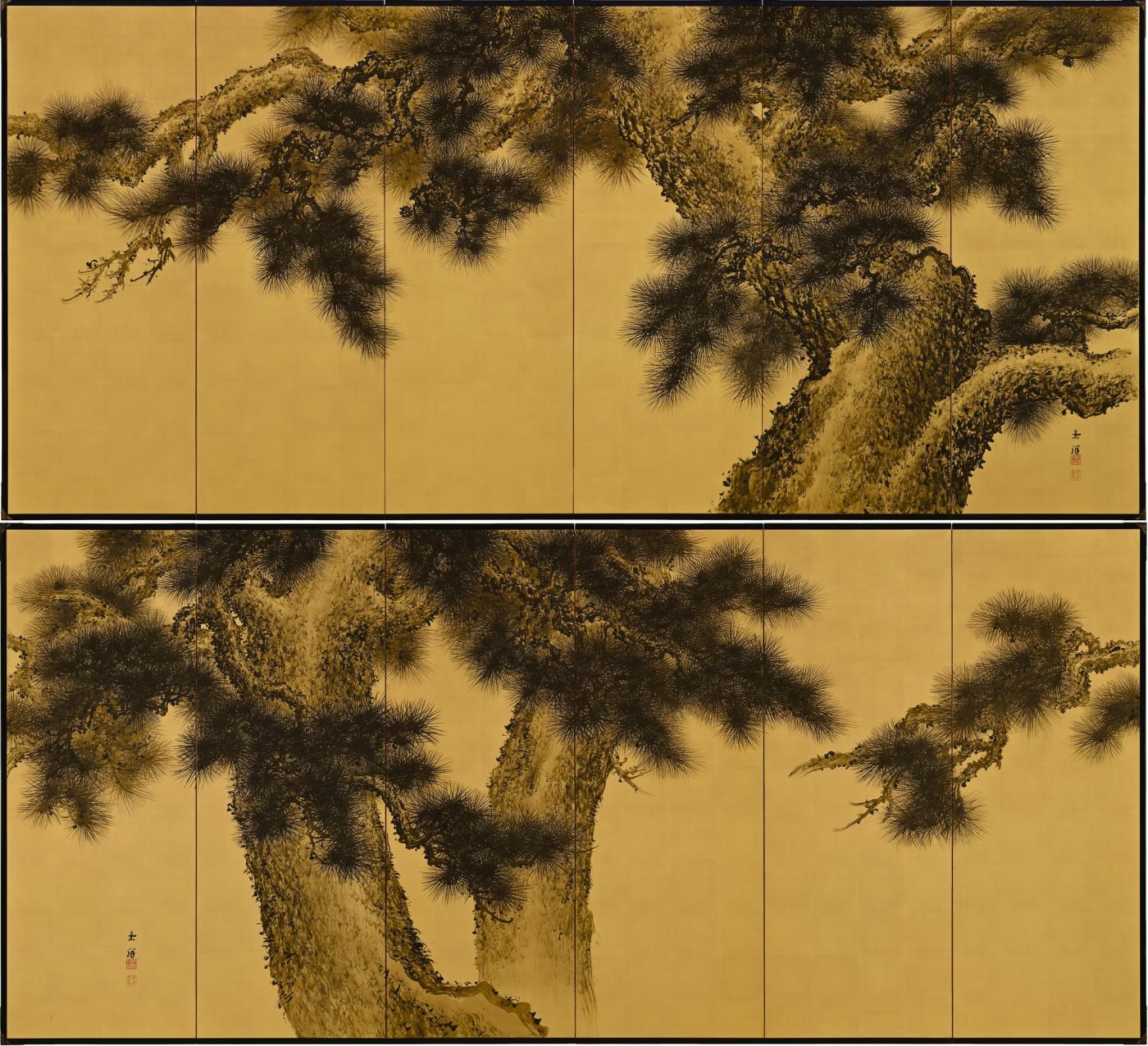
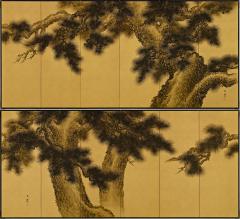
Early 20th Century Japanese Screen Pair – Ink Pine Trees on Gold
-
Description
Imao Keisho (1902-1993)
Pine Trees
Early 20th Century, Circa 1930
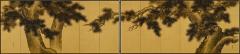
Pair of six-panel Japanese screens. Ink on silk and gold leaf.
Dimensions: Each screen H. 67.5” x 148” (172 cm x 376 cm)
Price: USD 35,000
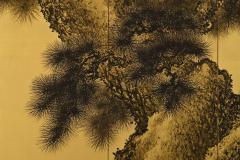
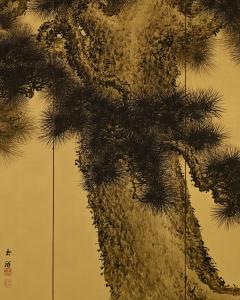
A pair of monumental six-panel Japanese pine screens by the renowned Nihonga artist Imao Keisho. Here Keisho entirely removed the background and brought the pine trees to the surface of the painting. This simplification of the elements makes the scene exceptionally direct and compelling and injects a very modern feel into the screens, which are extraordinary for their technical virtuosity. The work is both majestic and delicate, with Keisho’s exquisite brushwork defining the complex and visually stunning scene. The bright gold of the screens and the rich black of the ink demonstrate a magnificent visual power. Keisho’s complete and meticulous control of the ink is made possible by the design of the folding screens themselves. The fronts are first laid with silk before gold leaf is layered on top, allowing artists a highly refined silk canvas with all the visual benefits of the gold leaf.
Imao Keisho (1902-1993) is the adopted son of and successor to Imao Keinen (1845-1924). A highly talented Nihonga artist, Keisho fully inherited Imao Keinen’s painting style, and his brush skills are widely recognized. Like his father Keinen, Keisho did not affiliate himself with any painting association and their exhibitions, instead focusing on a series of one-man shows. His large-scale works were exhibited at various temples and shrines in Kyoto, including Kinkaku-ji, Ginkaku-ji, and Honen-in. He was favored with many private commissions, including fusuma sliding door panels in major Kyoto temples. His most famous work being his tiger paintings on the sliding doors of Konkai Komyo-ji temple in Kyoto. Keisho also presented his works to the Imperial family on several occasions. -
More Information
Documentation: Signed Period: 1920-1949 Creation Date: 1930 Styles / Movements: Asian Art Incollect Reference #: 845949 -
Dimensions
W. 148 in; H. 67.5 in; W. 375.92 cm; H. 171.45 cm;
Message from Seller:
Kristan Hauge Japanese Art, based in Kyoto's museum district since 1999, specializes in important Japanese screens and paintings for collectors, decorators, and museums worldwide. Contact us at khauge@mx.bw.dream.jp or +81 75-751-5070 for exceptional access to Japanese art and history.
More Listings from Kristan Hauge Japanese Art View all 61 listings
-
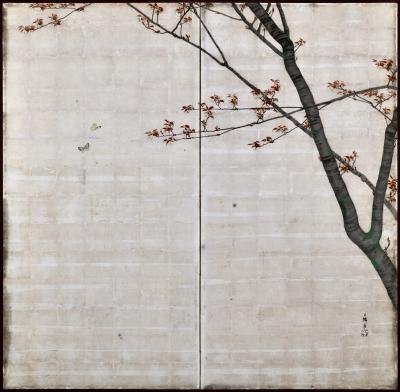
1895 Meiji Japanese Screen Pair. Cherry Blossoms & Autumn Maples on Silver Leaf
-
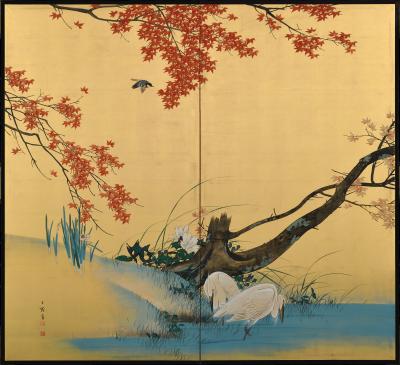
Meiji era Japanese Screen Pair, Two-panel. Spring & Autumn Birds & Flowers
-
17th Century Japanese Screen Pair. Flock of Cranes. Ink and color on gold leaf.

-
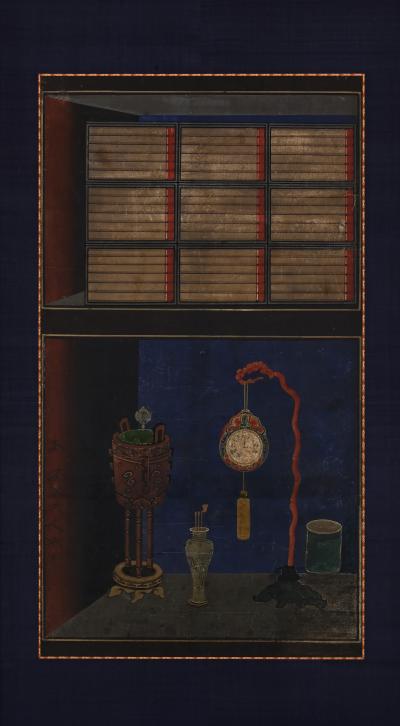
Chaekgeori painting. 19th Century Joseon. Books & Scholars’ Accouterments.
-
Mitani Toshuku Unkoku School, 17th century. Japanese falcon painting.

-
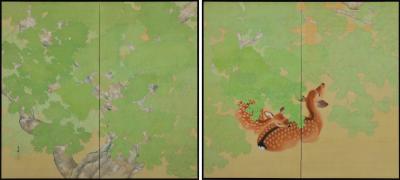
Early 20th Century Pair of Japanese Screens | Deer under Maple Trees
-
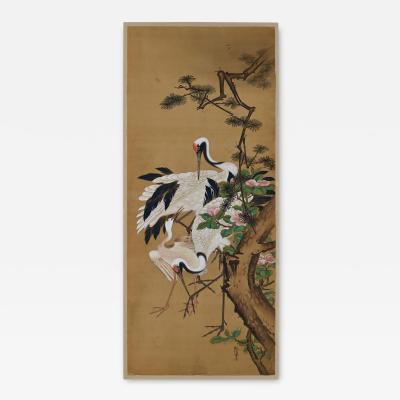
19th Century Japanese Silk Painting by Kano Chikanobu. Cranes, Pine & Camelia.
-
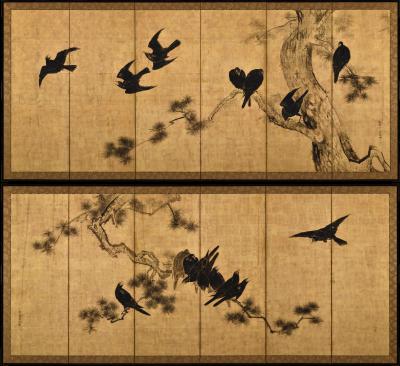
Mid 18th Century Japanese Screen Pair. Crows & Pines by Unkoku Toshuku
-
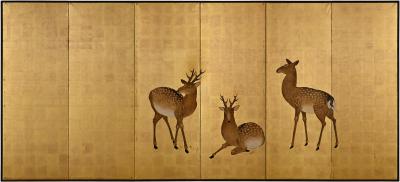
19th Century Japanese Deer Screen by Okamoto Toyohiko. Maruyama Shijo School
-
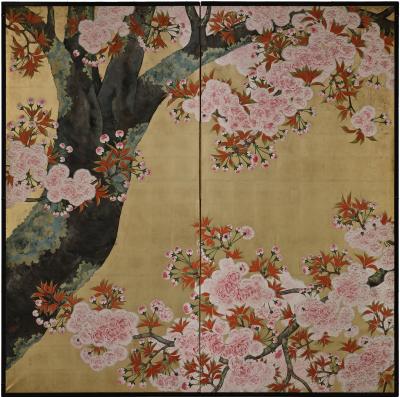
Early 20th Century Japanese Cherry Blossom Screen
-
17th Century Japanese Screen. Ink Plum Tree & Birds by Kano Naonobu

-
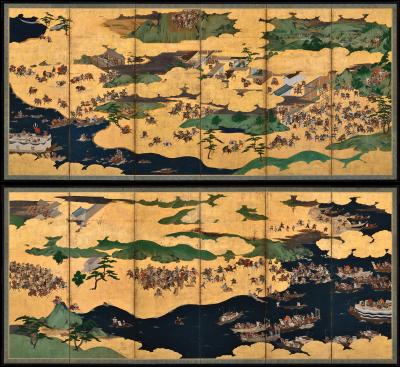
Late 17th Century Japanese Screen Pair. Battle of Ichi-no-tani and Yashima
-
Japanese Screen. Early 20th Century. Furosaki Screen. Wagtail & Chrysanthemum

-
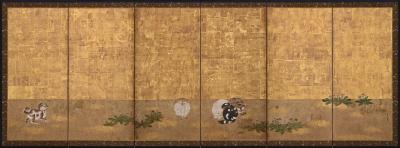
Late 17th Century Japanese Screen. Puppy and Kittens on Gold Leaf.