




Showrooms
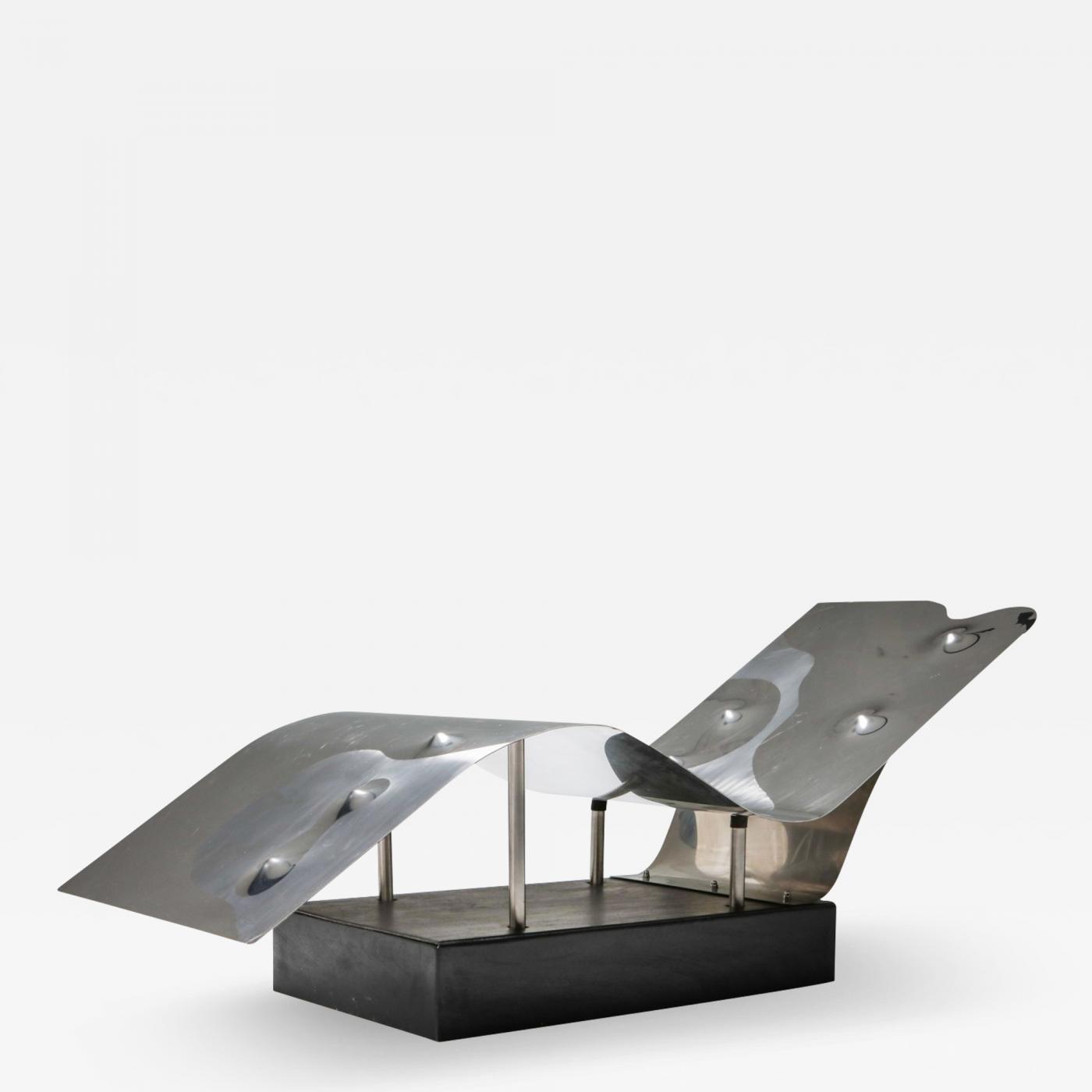
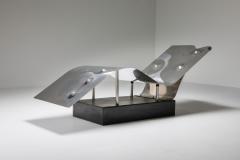
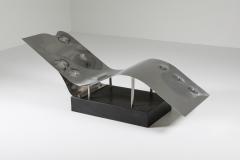
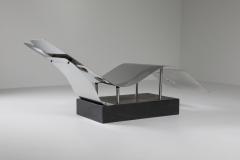
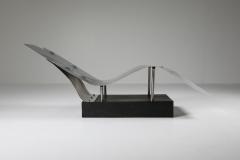
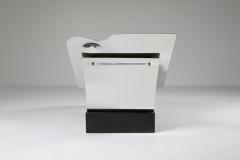
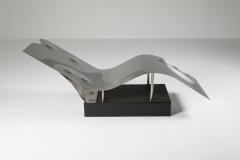
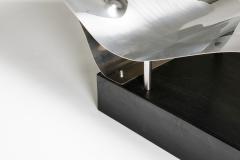
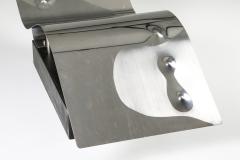
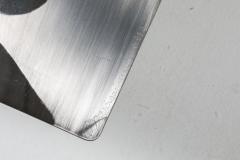
Chaise longue by Italian artist Angelo Brescianini - 2008
-
Description
Lounge chair in stainless steel, Angelo Brescianini, ca 2008. Sourced straight from the artist's atelier, this one-of-a-kind lounge chair surely has some unique and prestigious characteristics.
Equally a sculpture as a functional art piece. Born in Palazzolo sull’Oglio (in the province of Brescia) in 1948, Angelo Brescianini was the youngest of four children. At the age of 12, he participated in his first collective exhibition with other artists and successively attended a school for mechanical designers.
In the late 1960s, he made his first bronze sculpture, currently exhibiting at the Enrico Fermi Institute in Palazzolo. In 1968 he carried out military service in Verona, while painting in his free time. During these years, he created his first “shots” on rusty metal sheets. He took part in the Padua Biennial with a painting called “Dolorosa attesa” (Painful waiting) for which he received his first recognition. The title of the artwork is probably related to the anticipation of his long-awaited leave. At the end of his military service, he was hired as a cast iron, bronze, and aluminum operator at a metalworking company, a collaboration he interrupted in 1970 to open a workshop for cabinet-makers. His father was considered one of the best carpenters in the country and Angelo, as a child, lived the fascination of work on fine woods, breathing and learning their essence. He began designing and producing art objects with lathe and other tools, day and night until the late 1970s.
During this period, he participated in art fairs and collective exhibitions and met the architect Luca Pastorio, the son of the painter Enzio, with whom he collaborated on several furniture projects. He became part of the artistic staff of the Spirale Arte gallery in Milan. Here he began to design and build wooden objects where he set precious metal plates, bas-reliefs, plaques of famous authors such as Cassinari, Fiume, Munari, Bonalumi and Kodra. Over time he started to abandon the collaboration to devote himself to furniture both as a designer and as a builder. In his workshop, the essence of different woods spread in the air, the pieces of trunks taking on the most varied and imaginative shapes. Tables, chairs, writing desks, sculptures designed by Brescianini got a lot of attention and success, gaining admiration by collectors and becoming desired pieces to furnish their homes. He also designed and produced stained glass which was fused in the most famous glassworks, resulting in original and unique pieces. He collaborated with many famous architects and artists and his artworks were advertised in a number of sector-specific magazines.
In 1991 his sister’s death caused him infinite pain, which translated into the production of works with complex structures, full of expressiveness and brilliance
For almost eight years the artist gradually gave up the furniture work, devoting himself exclusively to structural and chromatic research. The collaboration with the Argentinian artist Horacio Garcia Rossi, engaged in the production of kinetic artworks, brought him to develop an almost exclusive interest for the realization of optical sculptures in movement.
In 1999 the art gallery L’Ariete in Ponte San Pietro (Italy) organized his personal exhibition, in which his sculptures in motion were displayed to the public for the first time. In collaboration with the same gallery he took part in Expo Arte Montichiari in 2000 and showcased at the gallery Lo Spazio in Brescia (Italy). He continued his optical research with moving wall sculptures, in which some articulated technological moving gears and machines had been inserted. His dynamic visions had become polychromic and luminous, fluctuating through kinetic schemes that the artist conceived in a continuous change of planes and forms.
The tools for creating his artworks had changed: they were no longer brushes, but guns and rifles. The artist understood the enormous potential of this new medium and the surprise effect that it caused. Thus, the first creations of the surfaces shaped by bullets were born. Brescianini overcame this experimentation by making the metal sheet the target for every shot. It transformed according to a carefully organized ritual: trigger of the bullet, angle, shooting distance. Strangely, in an astonishing contrast, the alteration of the surface evoked the flexible and refined form of a female breast: on the cold metal plate the artist managed to convey the light that, trapped on a polished and shiny surface, enhanced the final effect in its essentiality. The use of stainless steel, the material capable of transmitting solidity to the entire composition, permitted to abandon the laceration by replacing it with the “indentations”, thus revealing a daring manifestation of beauty. These indentations come out of the metal, collect light and create unexpected and sinuous paths of fleeting moments. This new technique is now considered to be a real revolution in the international art scene by many critics. Exclusively represented by the Minotauro Fine Art Gallery in Palazzolo sull’Oglio (Italy) since 2008, the artist took part in numerous specialized art fairs. In 2012 an extensive retrospective exhibition of Brescianini’s work, curated by Antonio Falbo, was shown in the rooms of the Museo del Presidente in Rende (Italy). In 2014 La Spirale in Milan and the Monti Gallery in Monza (Italy) dedicated him a personal exhibition. Since 2015 he has exhibited some of his artworks in Miami and at the Unix Gallery in New York. He also returned to his city with a solo exhibition at the Minotauro Fine Art Gallery. Several shows at some prestigious Italian and foreign galleries have been held afterwards. In April 2016, the exhibition “A singolar tenzone” at the Castello di Cavernago (Italy), curated by Antonio Falbo, was exceptionally successful. It was the artist’s last personal show. He passed away on April 26th, 2016. Works by Angelo Brescianini appear nowadays in prestigious private and public collections in Italy and abroad, with a growing appreciation of his very original stylistic code. - More Information
-
Dimensions
W. 70.87 in; H. 27.95 in; D. 25.59 in; W. 180 cm; H. 71 cm; D. 65 cm; Seat H. 12.6 in; Seat H. 32 cm;
Message from Seller:
Goldwood by Boris, located in Antwerp, Belgium, offers a unique selection of high-end 20th-century furniture and decorative pieces, alongside a range of antique items. For appointments or inquiries, contact us at +32 493 794 223 or info@goldwoodbyboris.com.
More Listings from Goldwood by Boris View all 951 listings
-
Brass Geometric Pendant Lights, Europe - Late 1980s
-
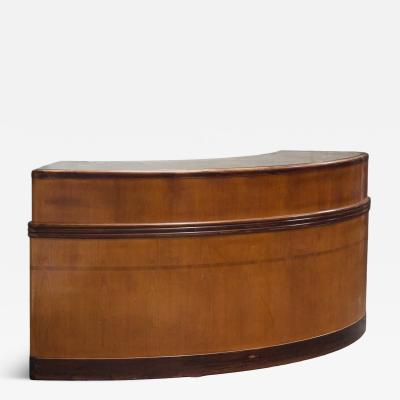
Monumental Art Deco Curved Counter, Italy, Mid-20th Century
-
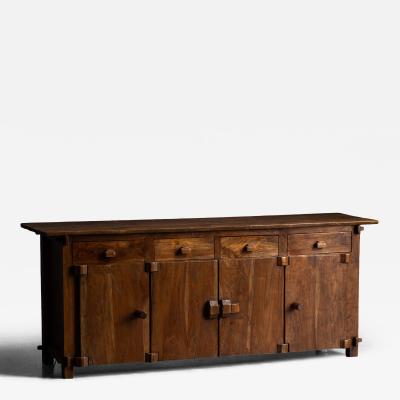
Rustic Brutalist Elm Enfilade, Europe - Mid-20th Century
-
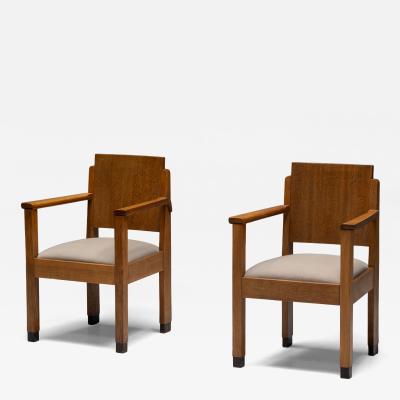
Amsterdam School Art Deco Oak Armchairs, Netherlands, 1920s
-
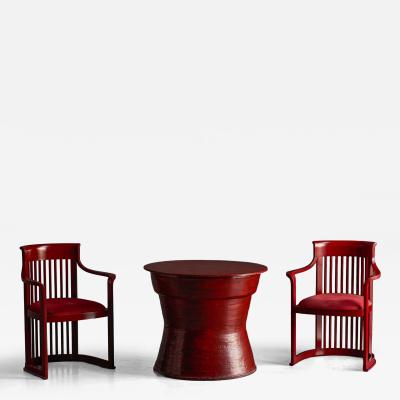
Japanese Dining Set in the Style of Frank Lloyd Wright, Belgium, 1940s
-
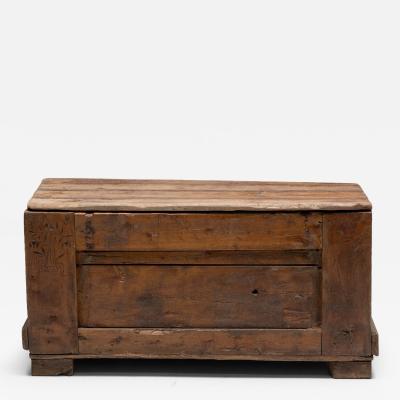
Rustic Folk Art Wood Chest with Carved Motifs, 19th Century
-
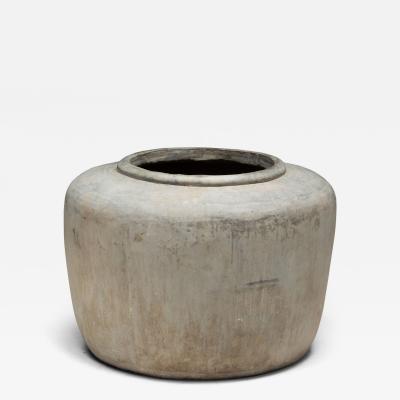
Large Mediterranean Terracotta Pot, 19th Century
-
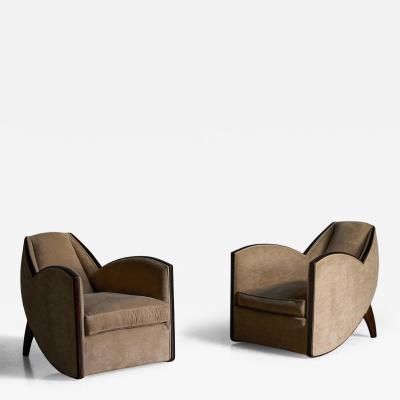
Pair of Art Deco Club Chairs in the Style of Joubert & Petit, France, 1940s
-
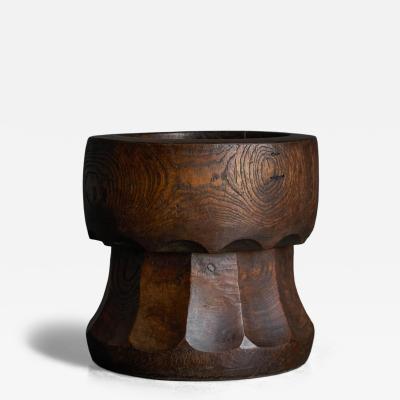
Hand-Carved Sculptural Usu Mortar, Japan, Early 20th Century
-
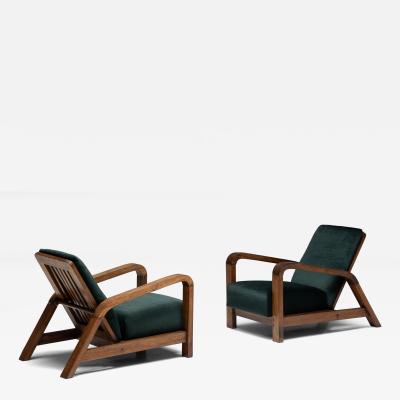
Pair of Art Deco Lounge Chairs, France, 1930s
-
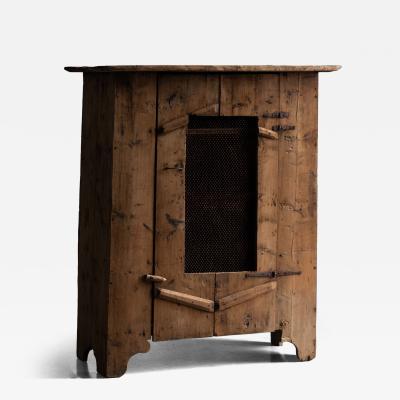
Rustic Art Populaire Wooden Cabinet, France, 19th Century
-
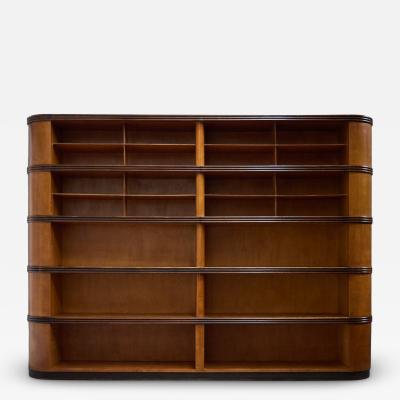
Monumental Art Deco Display Cabinet, Italy, Mid-20th Century
-
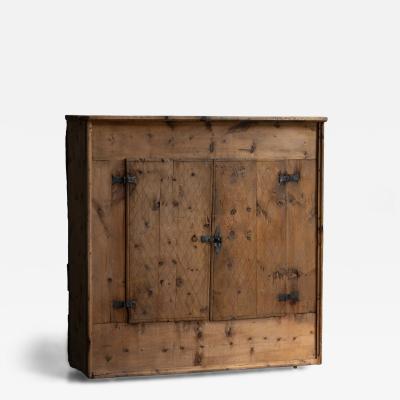
Rustic Alpine Folk Art Pine Cupboard, Circa 1800
-
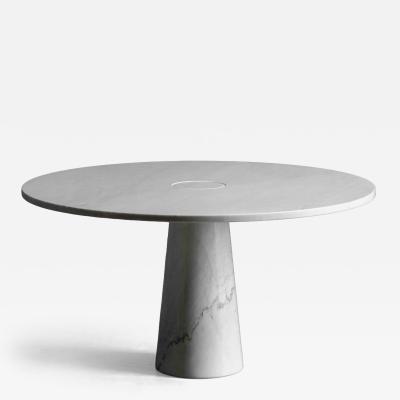
Eros White Marble Dining Table by Angelo Mangiarotti for Skipper, Italy, 1970s