








Reginald Marsh
American, 1898 - 1954
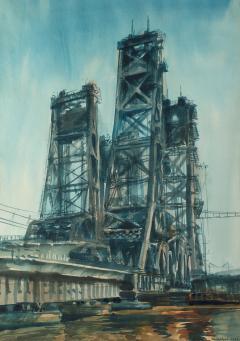
Reginald Marsh (1898–1954) was a defining figure of Social Realism, chronicling Depression-era New York with vivid paintings, prints, and drawings. Born in Paris to American artist parents and raised in New Jersey, he graduated from Yale in 1920 before moving to New York to illustrate for publications like the New York Daily News and as an original staff cartoonist for The New Yorker. He studied painting at the Art Students League under Kenneth Hayes Miller, John Sloan, and George Luks, deeply influenced by the old masters through European study trips in the mid-1920s.
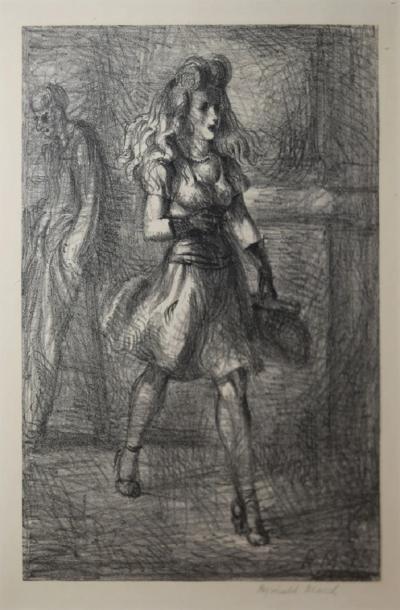
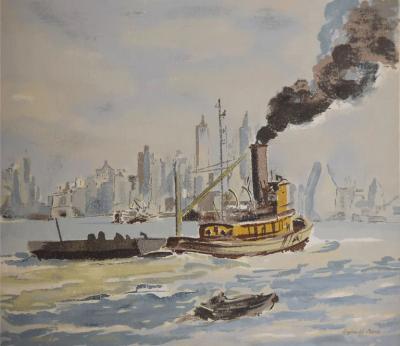
Marsh’s art focused on crowded subways, burlesque shows on Fourteenth Street, the Bowery’s down-and-out characters, and mass scenes at Coney Island and New York’s bustling ports. Working often in egg tempera, oil, watercolor, and print media, he taught at the Art Students League from 1935 until his death and served as department head at the Moore Institute in Philadelphia.
In addition to his iconic paintings—such as *Twenty-cent Movie* (1936), *Tattoo and Haircut* (1932), and *Why Not Use the “L”?* (1930)—Marsh produced murals for New Deal arts programs and had a retrospective at the Whitney Museum in 1955. His art is celebrated for its energetic compositions, psychological depth, sly social commentary, and portrayal of the public spectacle of urban life. Marsh’s legacy endures in major national collections; his work remains in demand among galleries, museums, and collectors of American modernism.
Marsh’s art focused on crowded subways, burlesque shows on Fourteenth Street, the Bowery’s down-and-out characters, and mass scenes at Coney Island and New York’s bustling ports. Working often in egg tempera, oil, watercolor, and print media, he taught at the Art Students League from 1935 until his death and served as department head at the Moore Institute in Philadelphia.
In addition to his iconic paintings—such as *Twenty-cent Movie* (1936), *Tattoo and Haircut* (1932), and *Why Not Use the “L”?* (1930)—Marsh produced murals for New Deal arts programs and had a retrospective at the Whitney Museum in 1955. His art is celebrated for its energetic compositions, psychological depth, sly social commentary, and portrayal of the public spectacle of urban life. Marsh’s legacy endures in major national collections; his work remains in demand among galleries, museums, and collectors of American modernism.
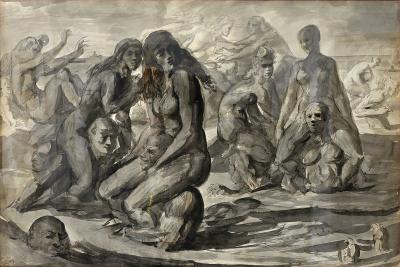
Reginald Marsh
Water Sports - Swimmers and Bathers at Coney Island
H 26 in W 39 in
$ 68,000
Access Trade Price



Sold

 Loading...
