






Daniel Larsson Sources Antiques To Be Looked At, But Also Lived With
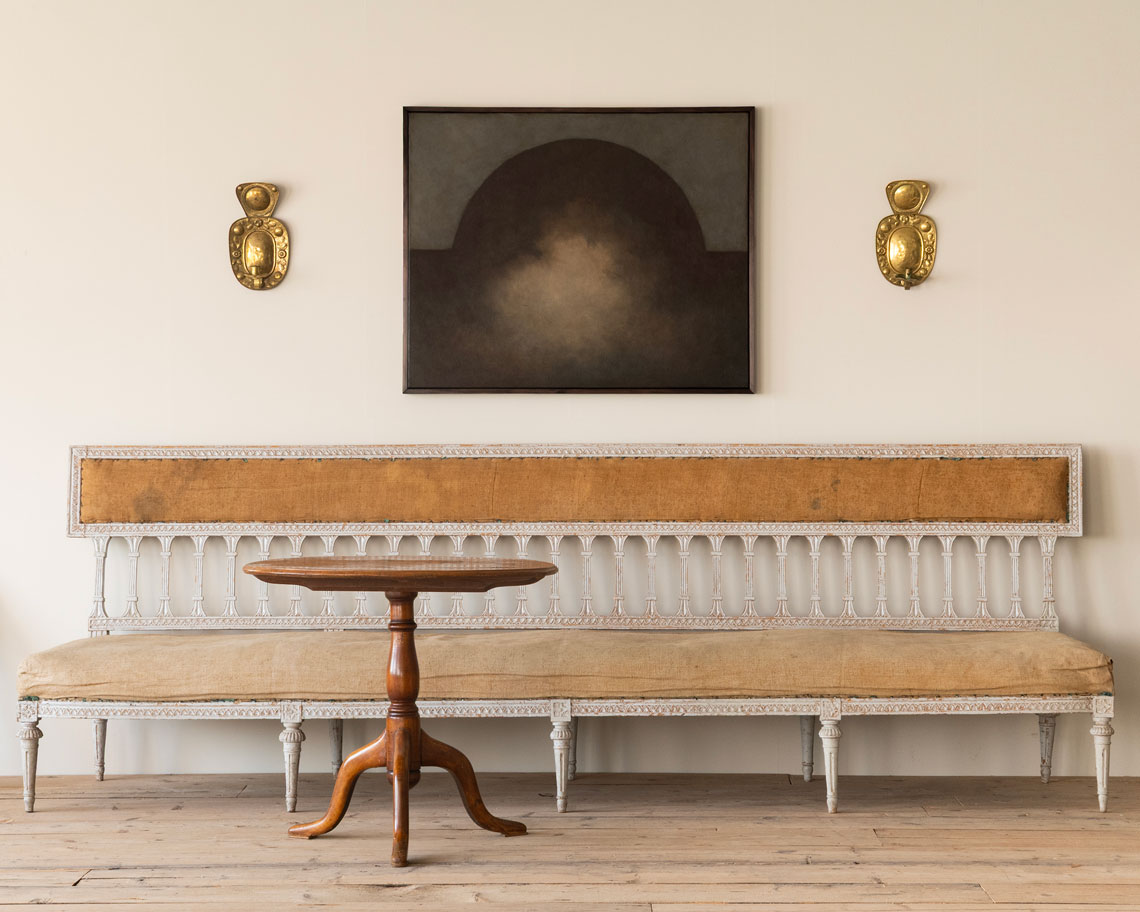 |
| This circa 1810 Gustavian sofa measuring over 10 feet wide is a tour de force of exceptional skill and beauty, signed by Swedish royal cabinetmaker Ephraim Ståhl. |
Daniel Larsson Sources Antiques to be Treasured, But Also Lived With
Swedish antique dealer Daniel Larsson specializes in Baroque, Rococo, Gustavian, and Empire period Scandinavian furniture and decorative arts. He prides himself on sourcing the finest pieces, and not surprisingly, works with some of the world’s leading interior designers, architects, and private collectors. Incollect spoke with Larsson about the enduring fascination for Scandinavian antiques, and his fervent belief that ‘objects with history’ bring intelligence and sophistication to any interior.
By Benjamin Genocchio
Photography by Daniel Larsson
 | |
Daniel Larsson, founder of D Larsson, is an internationally recognized Scandinavian antique dealer |
You have built a reputation as a source of high-quality Swedish and Scandinavian antiques and decorative arts from the 18th and 19th centuries. What is your secret?
The secret comes down to a mix of my own obsession with quality and the details, as well as the unique stories these pieces tell. Over the years, I’ve refined my eye to spot that perfect balance of soul and structure—the kind of expertise you only get by living and breathing these objects daily. I believe my clients value both the personal touch and the deep knowledge as much as the pieces themselves.
What makes these items so covetable internationally, even today?
It is all about that quiet, austere beauty. While 18th and 19th-century France and Italy were showing off with exotic woods from their colonies, Swedish makers had to be more inventive. Since we didn't have access to those 'expensive' hardwoods, we turned to local timber and mastered the art of paint. That soft, chalky palette was born out of necessity, but it created an ethereal look that feels incredibly 'now.' It’s less about 'look at me' and more about 'live with me.' That versatility—taking something historical and making it feel effortlessly modern—is exactly why they remain so covetable.
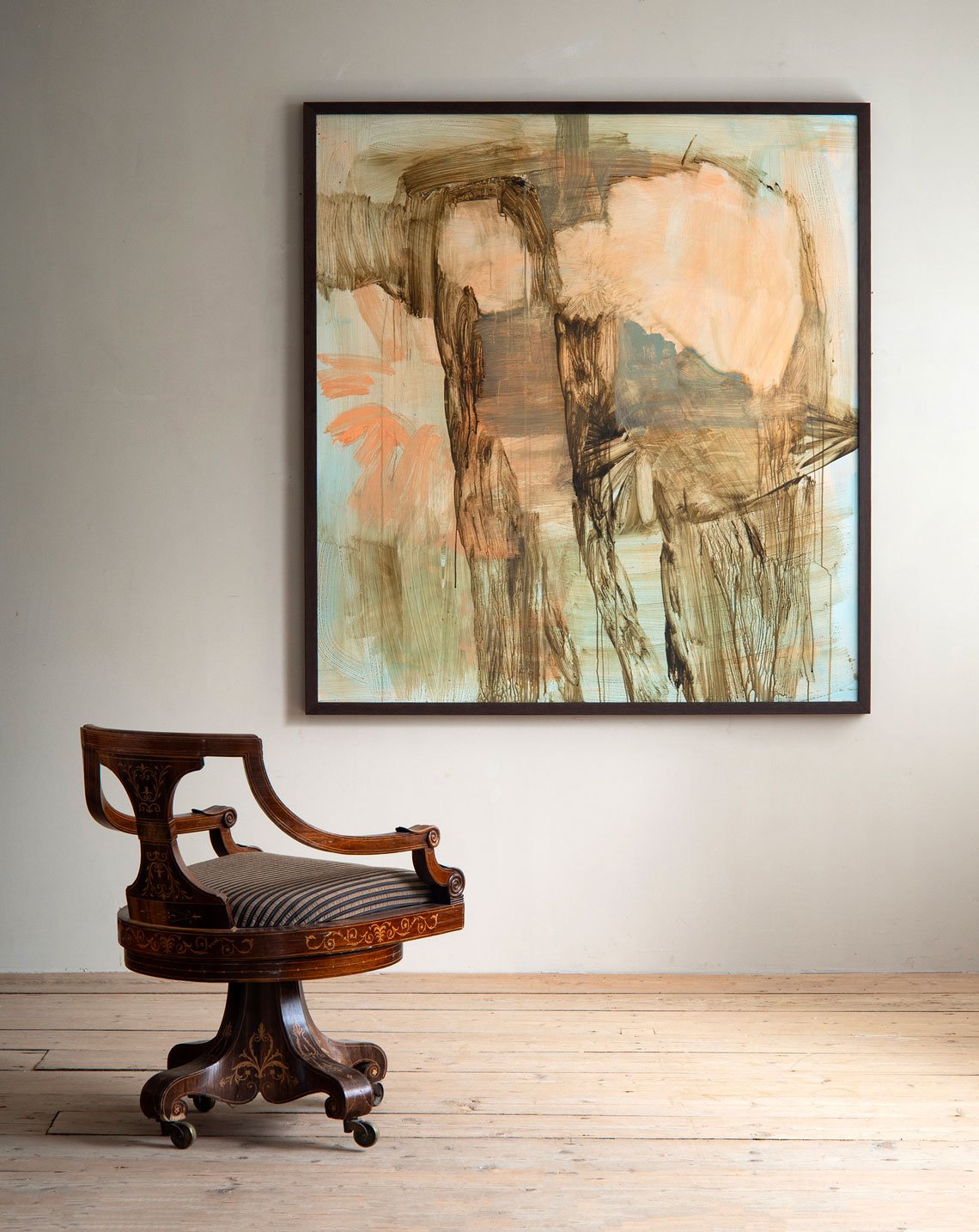 | 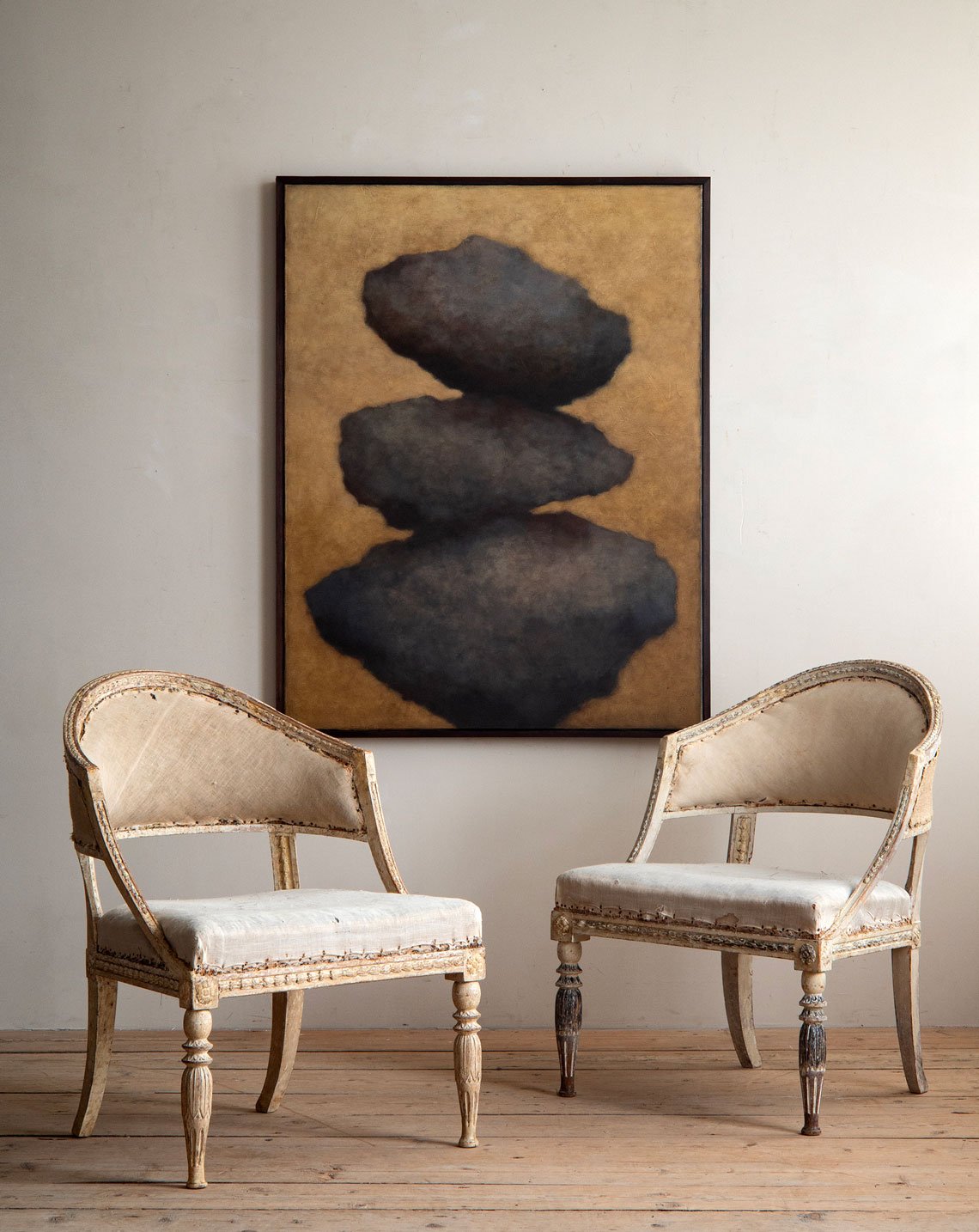 | |
| Left: 19th-century Danish revolving desk armchair in mahogany with marquetry and brass casters, from the Empire period, circa 1850, Denmark. Mirja Ilkka, Carnations 1, 2024, acrylic on MDF. Right: Fine early 19th-century Gustavian barrel back armchairs in their original condition, dry scraped to reveal original finish. Circa 1810, Stockholm, Sweden. | ||
Tell us about your gallery—where you’re located, your focus and mission.
My gallery today is a bit of an evolution. For years, I ran a traditional shop in Helsingborg, but as the industry shifted, I noticed fewer people walking through the door and more of my sales moving online. I decided to lean into that change rather than fight it. Today, I’m based in southern Sweden, about an hour from Malmö, in a space that’s a hybrid between a warehouse and a high-end photo studio. Because the trade has changed so much, I realized that imagery is everything. If a client in New York or London can't see the exact texture of the paint or the soul of the wood, I haven’t done my job. My mission now is to use this studio to bring these pieces to life for the global interior design community. It’s about continuing to do what I’m best at—finding those rare, 'one-off' Swedish gems—but presenting them with the digital clarity and honesty that the modern market demands. It’s a more focused way of working that lets me prioritize the quality of the pieces over the foot traffic of a storefront.
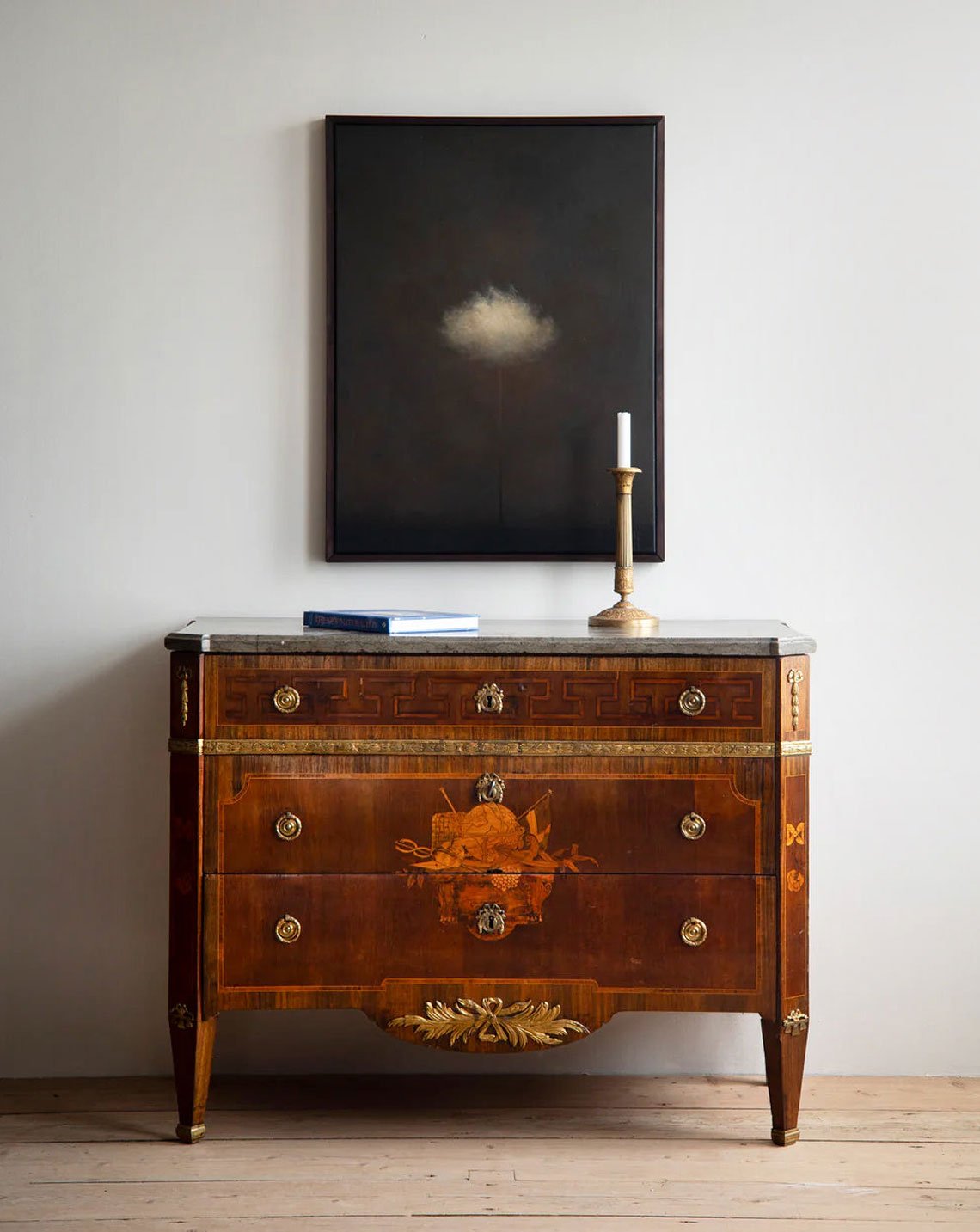 | 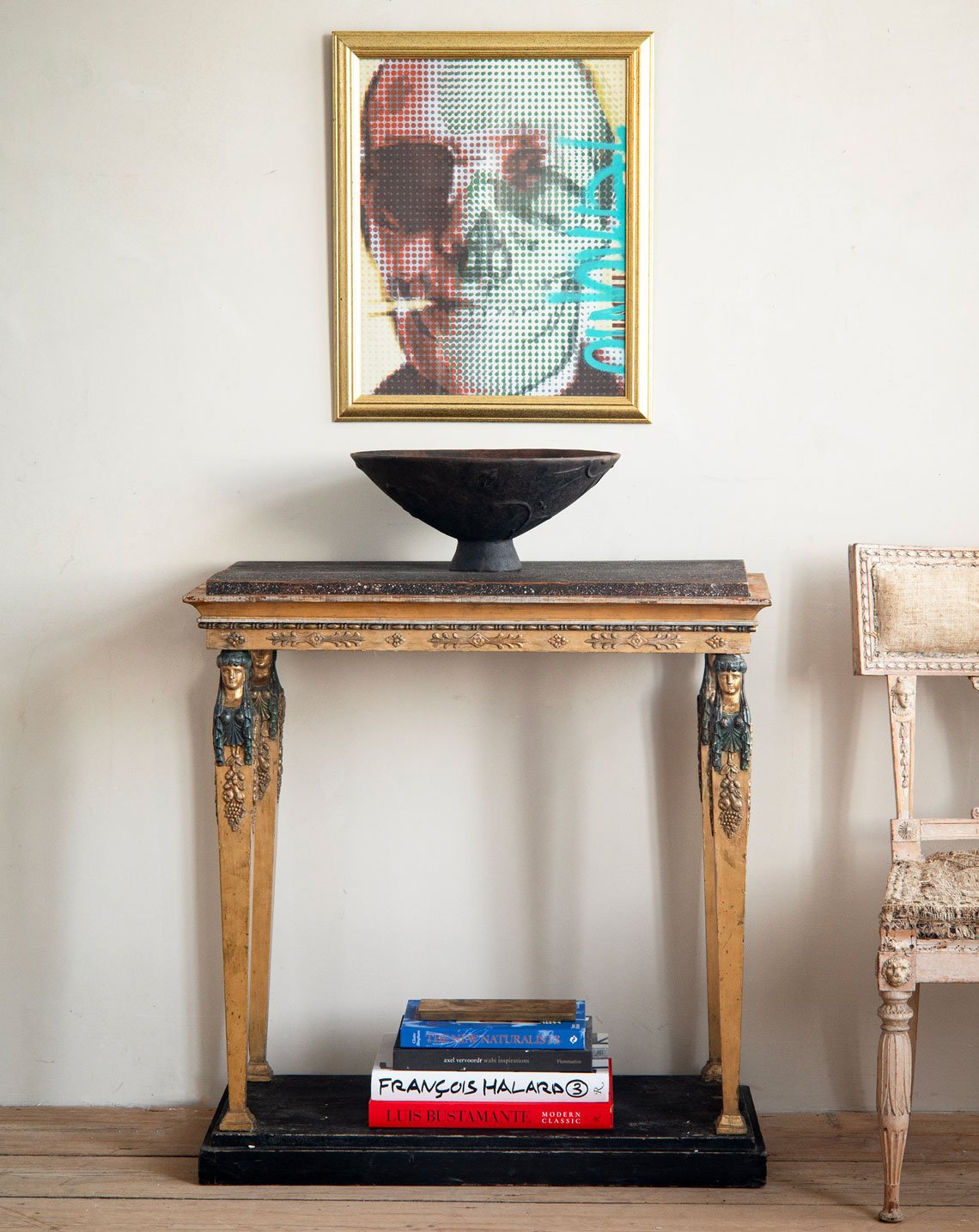 | |
| Left: Exceptional early 19th-century Gustavian chest of drawers veneered with amaranth, birch, jacaranda and maple. Limestone top, gilt brass fittings, à la greque upper case and sides, front with marquetry symbolizing seafaring and commerce, including Mercury's helmet. Master work, Stockholm, Sweden circa 1800. Right: Early 19th-century late Gustavian gilt-wood console table with a faux porphyry painted wooden top. Circa 1810, Sweden. | ||
What special services do you offer for interior designers and trade clients?
When it comes to the trade, I’ve developed a very clear and thoughtful discount strategy that respects the professional relationship. It’s a bit of a balancing act these days with varying portal commissions. Most of my clients realize that direct, transparent communication through Incollect or my website is the best way to start that conversation. But honestly, in this business, the sale is only half the battle—the real work is the logistics. For a designer, knowing a piece will arrive in the same condition it left my studio is everything. That’s why I work exclusively with www.hauges.com, a specialized antique shipper I’ve partnered with for years. They are currently expanding their operations, but they remain very selective, working only with seasoned professionals rather than the general public. We have a seamless, tried-and-tested pipeline for frequent, custom-built crates to the USA, giving my American clients total peace of mind. Shipping is such a massive part of the trust equation; I handle the 'heavy lifting' of the logistics so the designers can focus on their project.
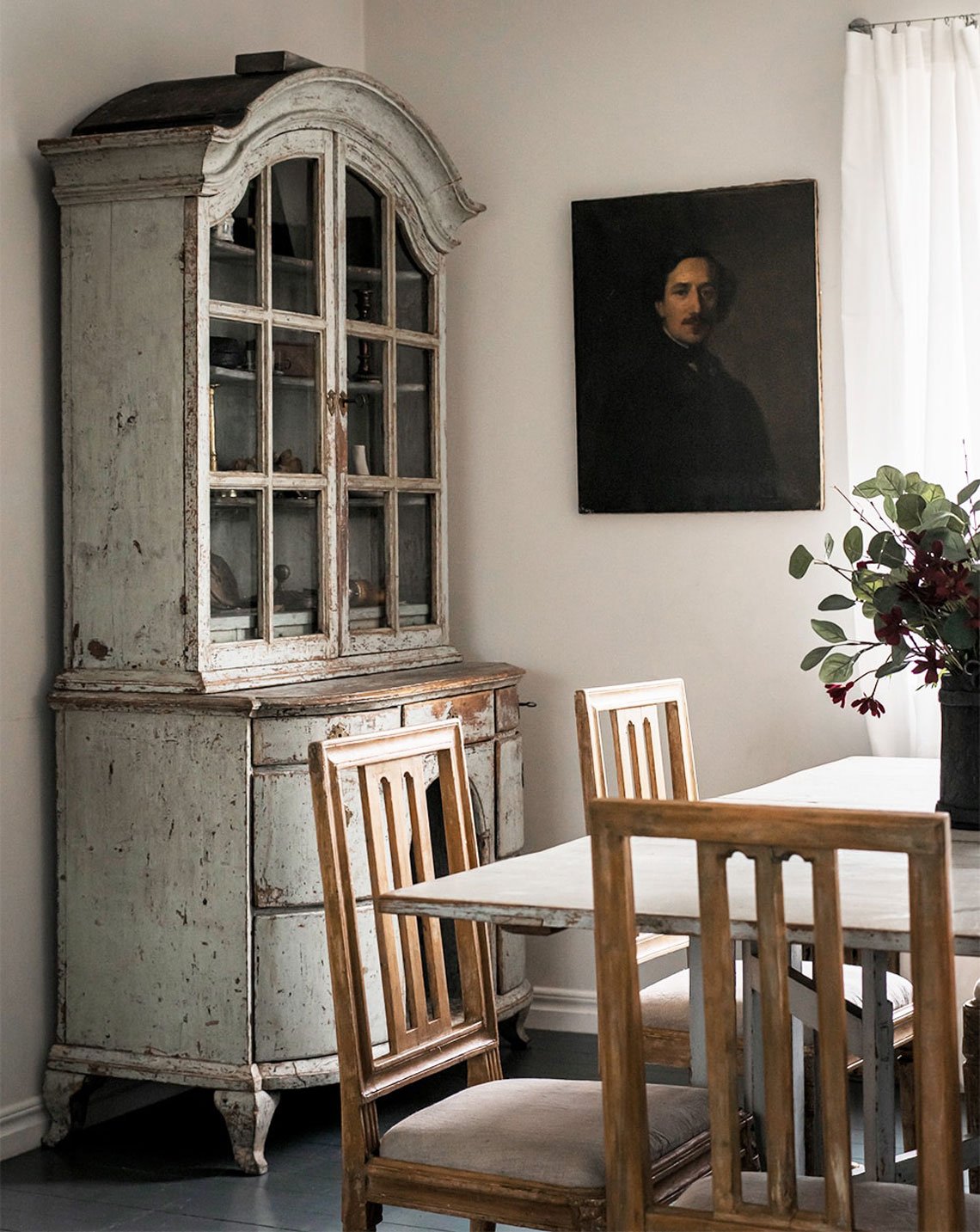 | 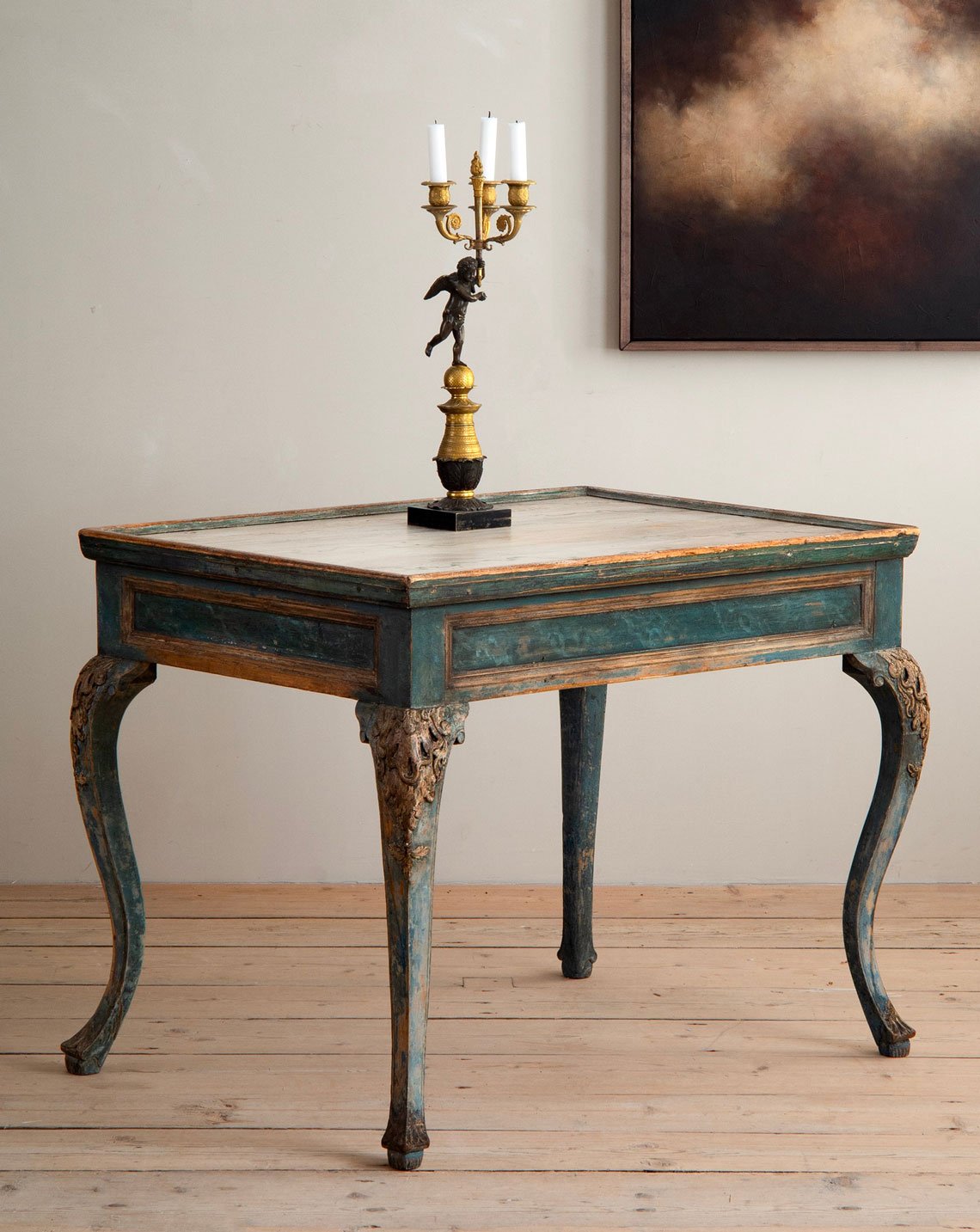 | |
Left: This soulful Swedish Rococo cabinet in Daniel Larsson’s personal collection serves as his touchstone, an exceptional distillation of timeless beauty, craftsmanship and history. Photo by Francisco Caires Right: 18th-century Norwegian Rococo tray table in a great finish and proportions, dry scraped to reveal the original color. | ||
You must have sourced and seen thousands of amazing objects. What is one of your rarest, most surprising finds?
You’re right, I’ve seen thousands of beautiful things, but there is one piece I haven’t been able to part with yet. It’s an extraordinary 18th-century Swedish Rococo cabinet that remains in my private collection. What makes it so special is its history as a showcase for 'white gold', the grand porcelain collections of the era. The distressed, original paint has aged into an incredible, chalky grey-blue that can't be replicated; it’s a living record of time. It’s in fantastic original shape, with those quintessential, fluid Rococo curves and delicate glazing that feels both grand and humble at once. Every time I look at it, I’m reminded of why I started doing this. It captures the very best of the Swedish aesthetic, the elegance, the restraint, and that soulful patina. For now, it stays with me, but it serves as the constant benchmark for the 'museum-quality' pieces I look for when I’m out sourcing for my clients.
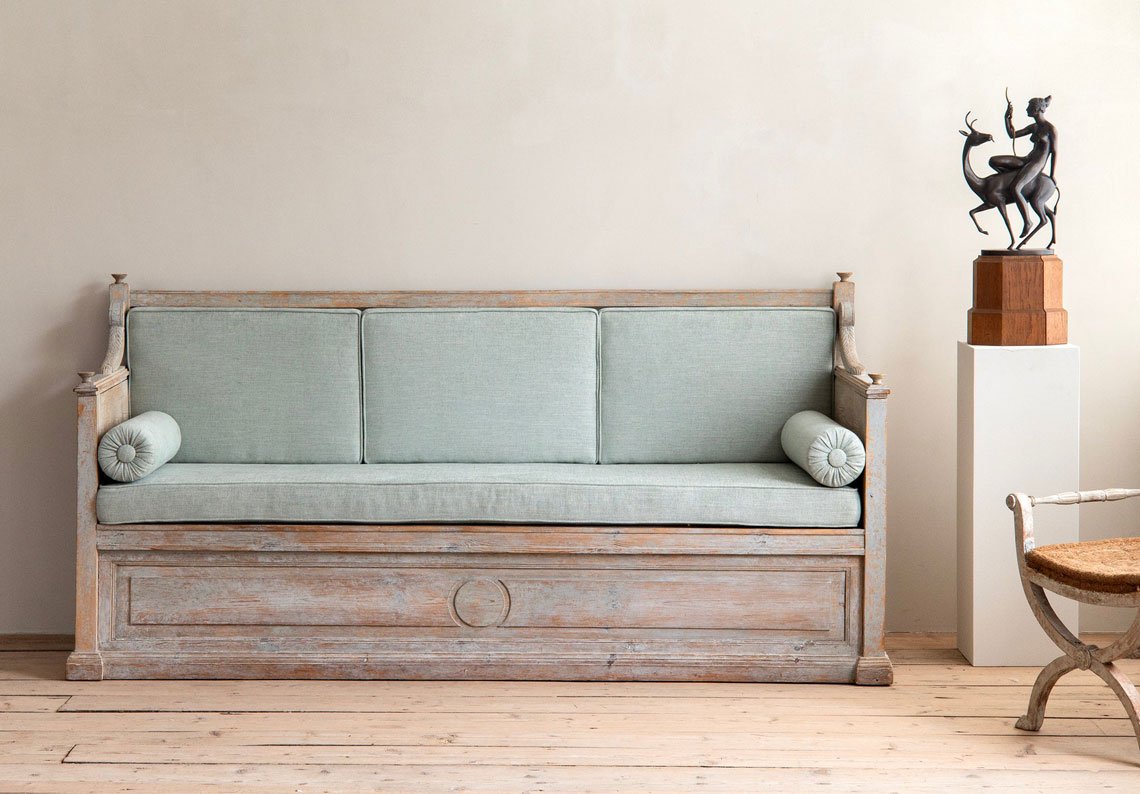 |
19th-century Swedish provincial Gustavian sofa, dry scraped to reveal traces of the original finish. New upholstery. Circa 1810, Sweden. |
You have exceptionally fine Gustavian pieces. Could you tell us about this design style, and elaborate on the distinguishing characteristics of the best work?
The Gustavian style is essentially French Neoclassicism filtered through a Nordic lens, but its heart is actually much further south. When King Gustav III returned from Versailles in the late 1700s, he didn’t just bring back Parisian elegance; he brought back a fascination with the ancient world. He had taken a legendary 'Grand Tour' to Italy, bringing along an entourage of his finest artists and architects, most notably Louis Masreliez. They visited excavations at Pompeii and Herculaneum, and seeing those Roman ruins firsthand changed their entire design philosophy. They took those 'Pompeian' motifs—the slender fluted columns, the laurel wreaths, and the strict geometric symmetry—and brought them back to Sweden. But here’s the brilliant part: they adapted those grand Roman ideals for our long, dark winters; we replaced heavy Mediterranean colors and expensive French hardwoods with local timber and a palette of light-reflecting, chalky tones such as soft greys and pale blues. What makes a 'fine' Gustavian piece stand out to me today is that exact balance: it has the architectural soul of a Roman temple, the refinement of a French chateau, but the restraint and 'honesty' of the Swedish landscape. It’s essentially Roman grandeur, simplified and softened for a modern, livable home.
What makes a 'fine' Gustavian piece stand out for you?
Firstly: The Architecture of the Piece. While the previous Rococo period was all about 'vegetative' curves, the Gustavian style is strictly architectural. Look for straight, symmetrical lines and those iconic tapered, fluted legs that mimic classical columns. The best pieces from the 'High Gustavian' period (roughly 1775–1790) have a perfect, almost mathematical sense of proportion. Secondly: The Restraint of Detail. In Sweden, we replaced the 'bling' of heavy French gilding with subtle, carved motifs like laurel wreaths, rosettes, and ribbons. On the best work, these carvings are crisp and intentional—they never overwhelm the piece; they catch the light. Thirdly: The Palette of Light. This is the style's secret weapon. We used local woods like pine and birch and painted them in chalky, muted tones—soft greys, whites, and pale blues. This decision wasn't just for looks, these colors were designed to reflect as much natural light as possible into a room. The genre really peaked in the late 18th century with masters like Georg Haupt, but I’ve always had a soft spot for the 'Provincial' Gustavian pieces that followed. They took those high-court ideals and made them a bit more rustic and lived-in, which is exactly why they feel so effortless and modern in a designer’s home today.
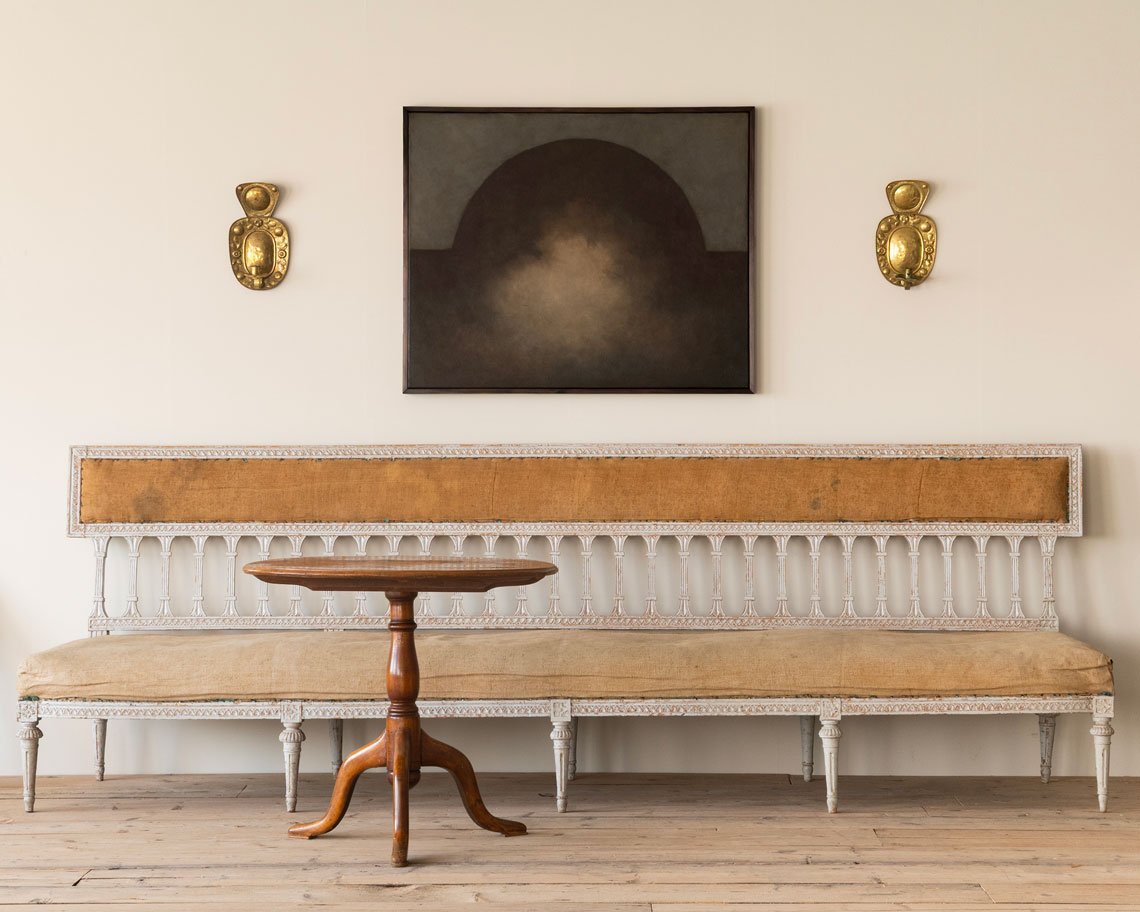 |
Exceptional and unusually long 19th century Gustavian sofa in original condition. Signed by Ephraim Sthal, supplier to the Royal Court and one of the most sophisticated and inventive makers of his period, circa 1810 Stockholm, Sweden. Swedish Rococo tilt-top table with burled root grain veneered top, signed by master carpenter Jacob Sjolin, circa 1775. Painting by Frida Manuella, from the Nubibus series. |
What are one or two of your favorite pieces in your inventory?
It’s difficult to pick just one, but right now I have a piece that truly defines the pinnacle of Swedish furniture history: an exceptionally long, 19th-century Gustavian sofa from around 1810. What makes this piece an absolute 'find' is that it is signed by Ephraim Ståhl, a supplier to the Swedish Royal Court and arguably the most sophisticated maker of his era. Ståhl’s work has this incredible, sculptural elegance—look at those crisp leaf-carved collars and perfect fluted legs. It's in fantastic original condition, which is so rare for a piece of this age and scale. You definitely need a big house for this one! It’s not a piece you can tuck into a corner; it requires space to breathe and really demands its 'true' place in a room. Because of its unusual length and clean, linear profile, it would be magnificent as the anchor of a grand hallway or a minimalist living room. It brings a deep sense of history without any of the 'heaviness' of other antiques, making it the perfect partner for contemporary art and open, airy architecture.
Does all antique furniture require conservation? Is that something that you carry out?
Absolutely. Conservation is a vital part of the process when you are dealing with pieces that are 200 years old. My philosophy is always 'less is more'—we want to stabilize the object without stripping away its history. Sometimes a piece needs structural stabilization to ensure that it’s functional, or we might perform a dry scraping to reveal original layers of paint. However, that process can sometimes remove too much color, so delicate retouching is often needed to bring the piece back to life and restore its visual balance. We also frequently use a clear wax to nourish the wood and preserve that beautiful, chalky patina for the next century. I work with a small group of professionals who understand exactly how to handle these museum-quality materials. My role is to provide the artistic direction—ensuring that every restoration remains invisible and that the piece retains its authentic, 'time-worn' integrity.
Do you source special requests for clients?
Yes, from time to time, I do help source additional chairs, for example, to complete a set. That said, it’s often harder than it sounds to find the same model. Even when pieces come from the same designer or series, there are usually small differences — variations in color, dimensions, wood tone, upholstery, or production year. Personally, I don’t think it’s always a bad thing to mix two closely related models. Sometimes the slight variation actually adds character and makes the set more interesting. Earlier in my career, I also sourced very specific “holy grail” pieces for clients. While I enjoyed the hunt, I found that it could be challenging — preferences are incredibly personal. A piece might be “perfect,” but then it’s five centimeters too wide, or the shade of wood isn’t quite right. I often spent many hours traveling to inspect items that ultimately weren’t quite what the client had envisioned.
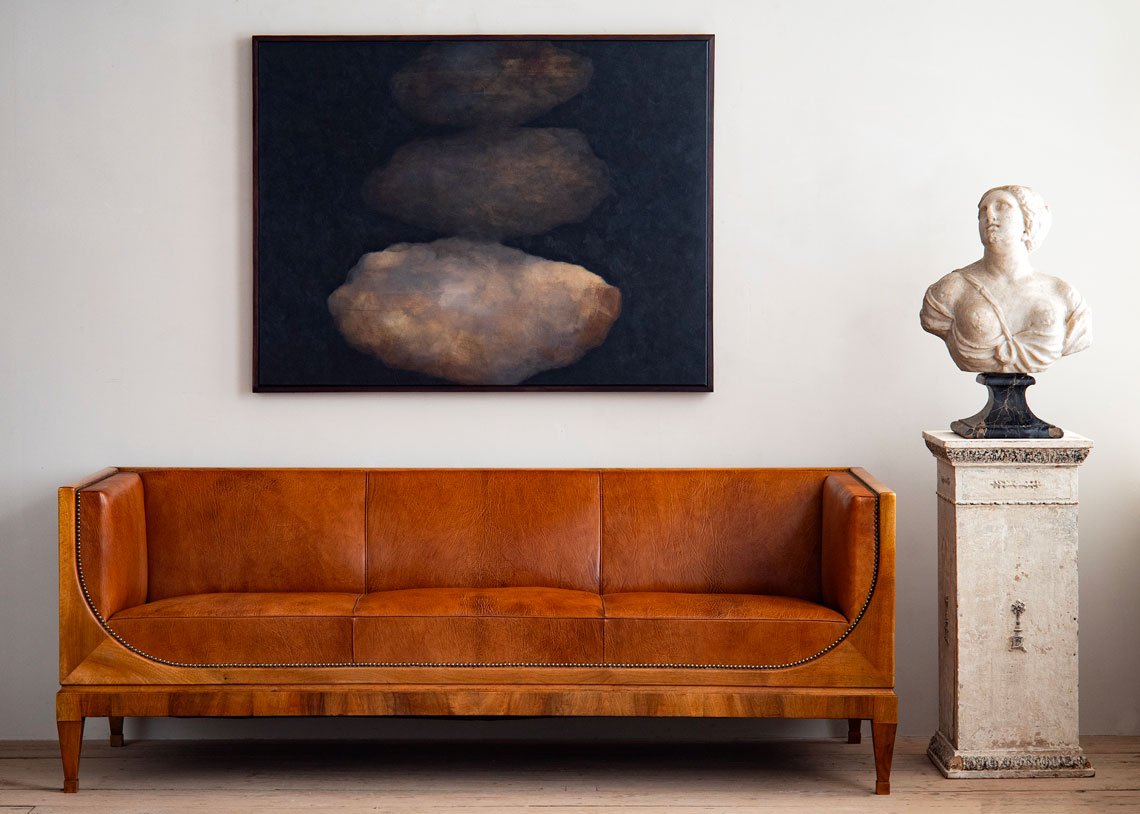 |
Early 20th century mahogany and leather sofa by Frits Henningsen with leather-covered back, circa 1930s Denmark. |
You also have mid-century modern design. How do antiques combine successfully with more modern and contemporary furniture in a home?
Mid-century design has always been a passion of mine, although it’s only in recent years that I’ve started actively sourcing it. My background and real expertise are in antiques, and there are already so many fantastic specialists dedicated solely to mid-century material. Because of that, my focus remains primarily on antiques. That said, I love the dialogue that happens when you mix the two. Combining antique pieces with mid-century design creates a layered interior that feels collected and thoughtful — almost intellectual. Something is compelling about the tension between different periods. It gives a home depth and personality rather than making it feel one-dimensional. When I source mid-century pieces, I approach them the same way I approach antiques: I rely on my eye, my attention to detail, and my obsession with finding unique, character-driven objects. For me, it’s never about the label — it’s about quality, presence, and how a piece contributes to the overall atmosphere of a space.
Your gallery is expanding into contemporary art. Why?
I see contemporary art as a strong complement to my antique collection, creating a dynamic contrast and showing how beautifully different periods can coexist. It makes the presentation feel more alive and relevant. When the right antique and the right contemporary artwork are paired together, they elevate each other. I enjoy styling and photographing my pieces, as well as incorporating works by artists I personally know and admire, whose work I believe deserves greater exposure. I would be happy if my promotion of their work led to their presence in an art gallery.
 |
Discover More From D Larsson on Incollect
 |