





Enduring Impermanence: Anasthasia Millot Captures Movement in Bronze
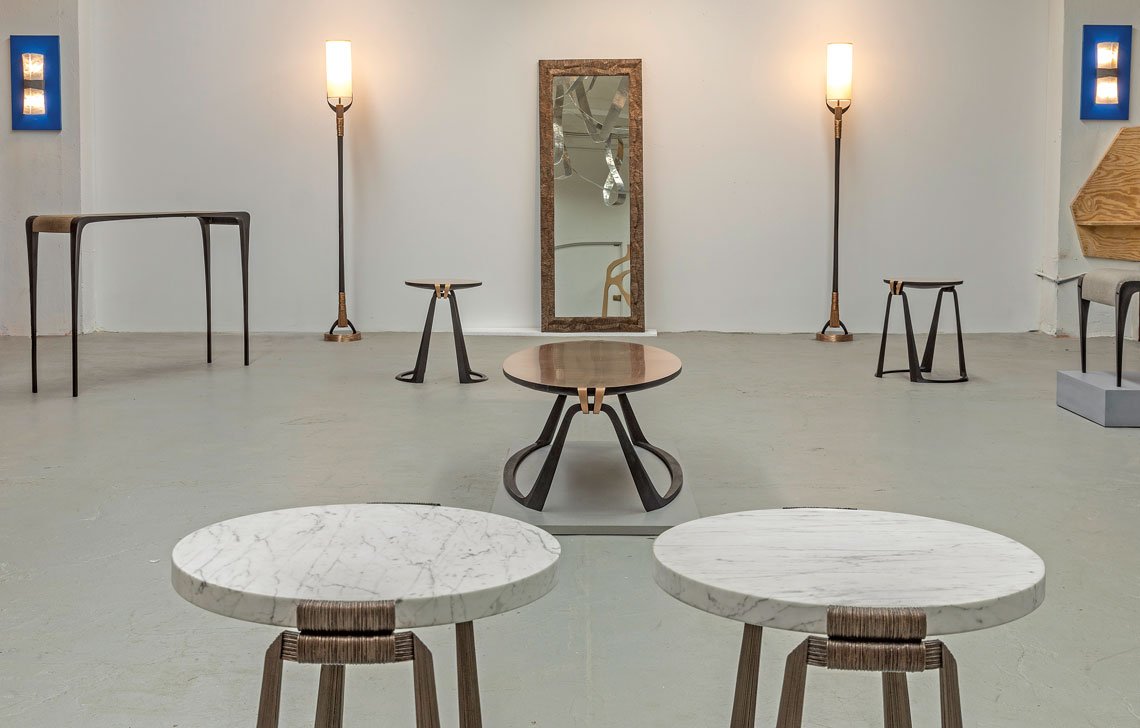 |
An exhibition of works by Anasthasia Millot at Valerie Goodman Gallery. |
 |
Anasthasia Millot Captures Movement in Bronze
By Benjamin Genocchio
Photography by Antoine Bootz, courtesy Valerie Goodman Gallery
Works by Anasthasia Millot are available through Valerie Goodman Gallery on Incollect.com
 |
says Anasthasia Millot, the French designer and fabricator of delicate and impeccably crafted sculptural furniture, which has attained cult-like status. “Sometimes the process begins with wax, but there are modifications, even during the 3D-computer rendering stage and on the final model.
The piece is then molded in sand or wax, depending on the desired level of detail, and subsequently welded, whitened, chased, leather-clad, upholstered, or polished according to the final patina.”
Sophistication is the word that comes to mind when you look at her designs. It derives from the finesse and adroitness of detailing as well as the intricacy and ingenuity of textures and finishes. She works in bronze, one of the hardest metals to shape, but makes the material appear light, fluid, and even dynamic with a perfection and effortlessness rarely found in contemporary design. Little wonder that Millot and her FODOR art foundry in Franche-Comté in rural eastern France fabricates in bronze for several top furniture designers, including Paul Mathieu, Patrick Naggar, and Elizabeth Garouste.
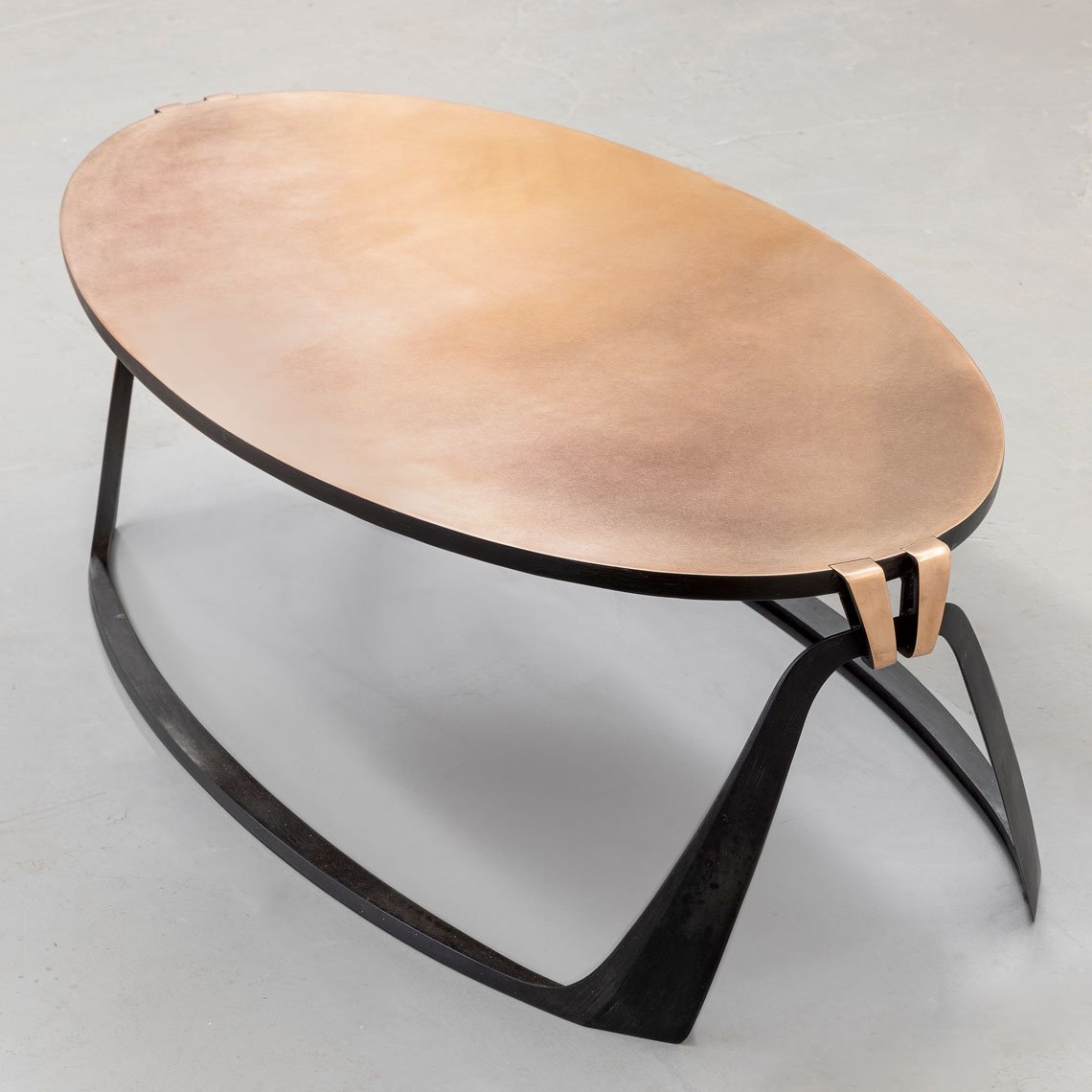 | 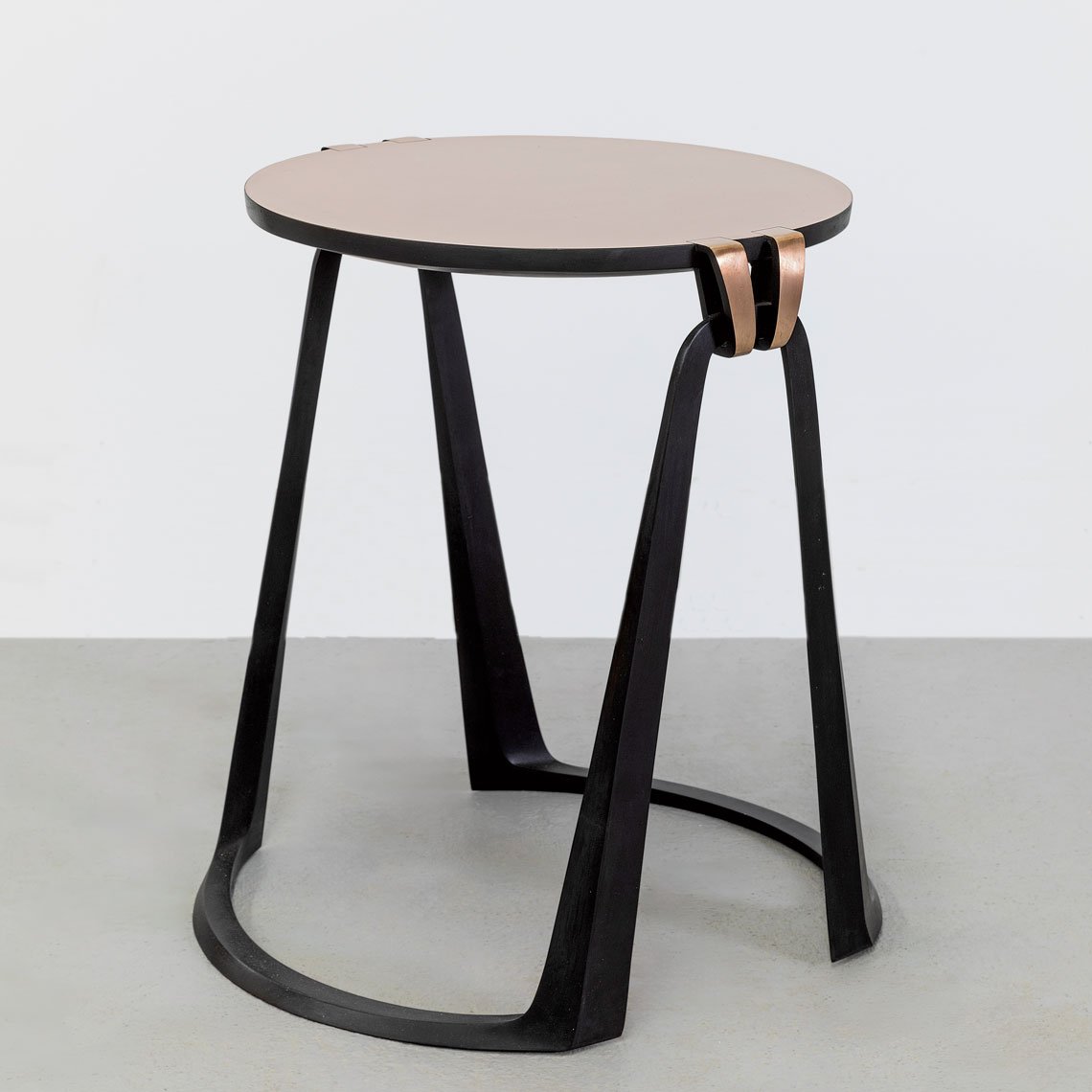 | |
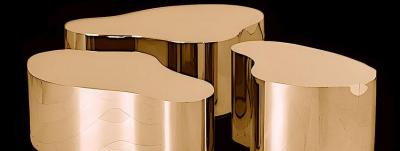
Inspired by couture fashion, the “Link“ Coffee Table, 2023 and “Link” Side Table, 2023 are executed in 2-tone bronze; a semi-polished top with legs in black patina. | ||
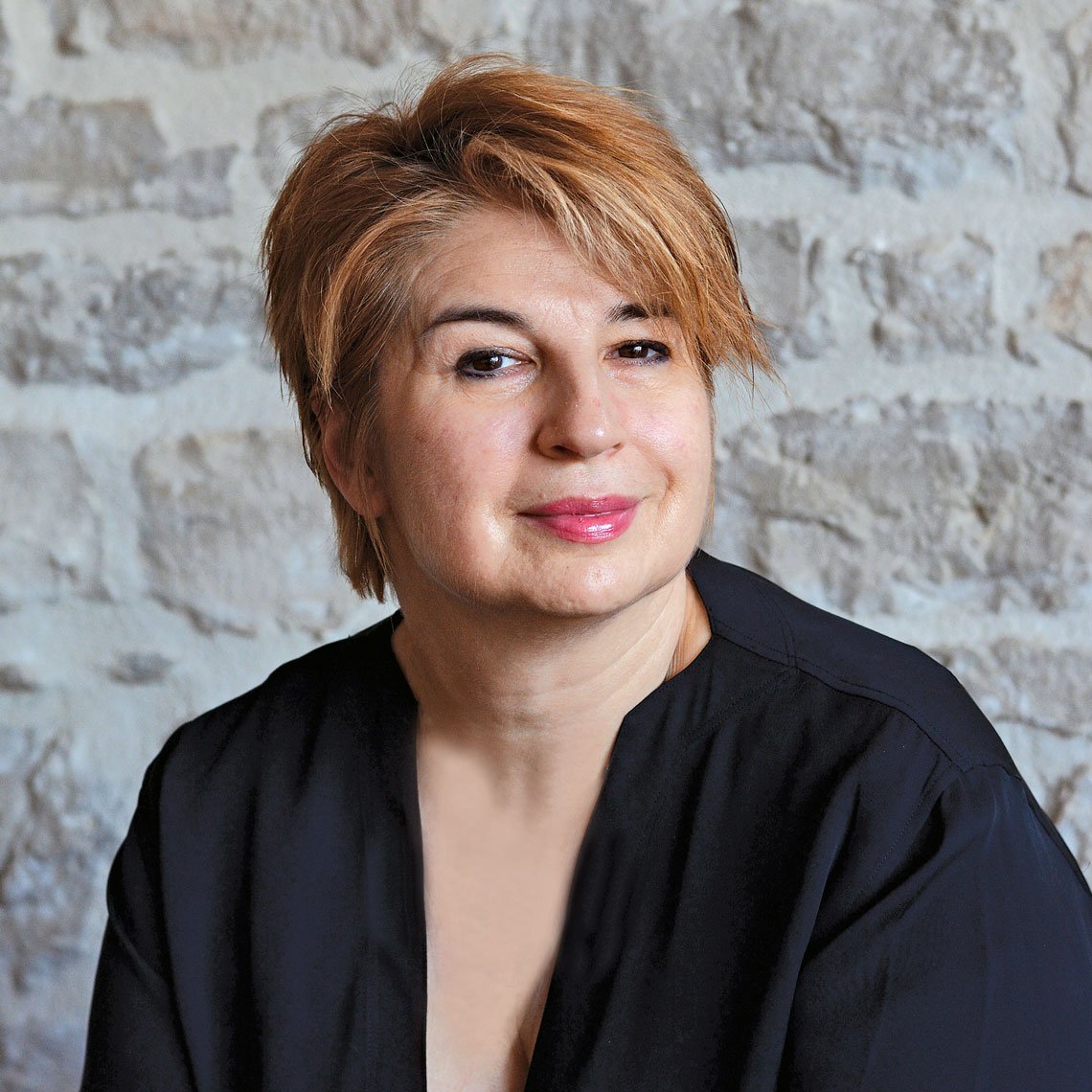 | 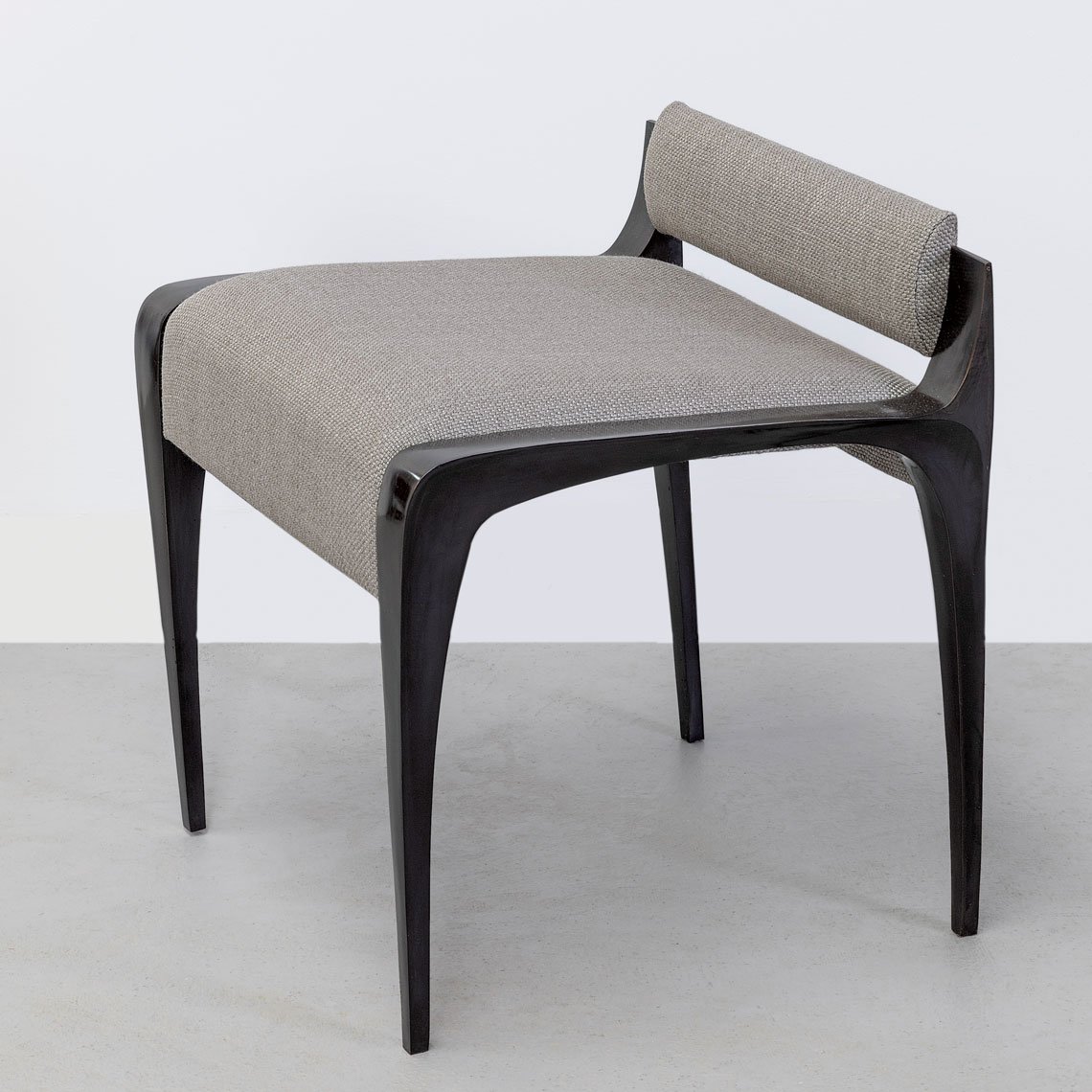 | |
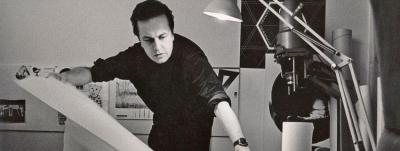
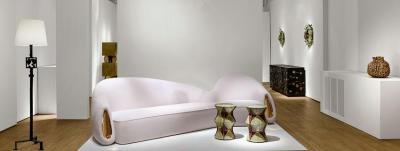
| Left: Anasthasia Millot. Right: Bronze “Gabrielle” stool, 2023, pair available. Patina and upholstery can be customized. | ||
Her inspiration, she says, often comes from nature around her, but her forms are as much geometric and symmetrical as they are curvaceous and fluid. Her studio is located within the foundry itself, where she works as part of a team, relying on each person’s expertise and skill to anticipate and solve issues arising at the different stages of creation. “We are not immune to technical challenges,” she says. “Bronze is an alloy, and our production is all artisanal, bearing no resemblance to industrial bronze casting by rolling. The guiding principle is constant improvement in the quality of the finished products.”
Millot, 61, says she never imagined that one day she would be a furniture designer, let alone the owner-operator of a foundry. She grew up in the Franche-Comté region of France, and later moved to Paris to study and work in the fashion industry as a brand stylist. Then changes in her personal life led her to step away from fashion and return to her family roots in eastern France. “During that time, I reconnected with my future husband, who ran a third-generation foundry, FODOR, so I decided to join him. That encounter with the foundry redirected my life and my creative path.”
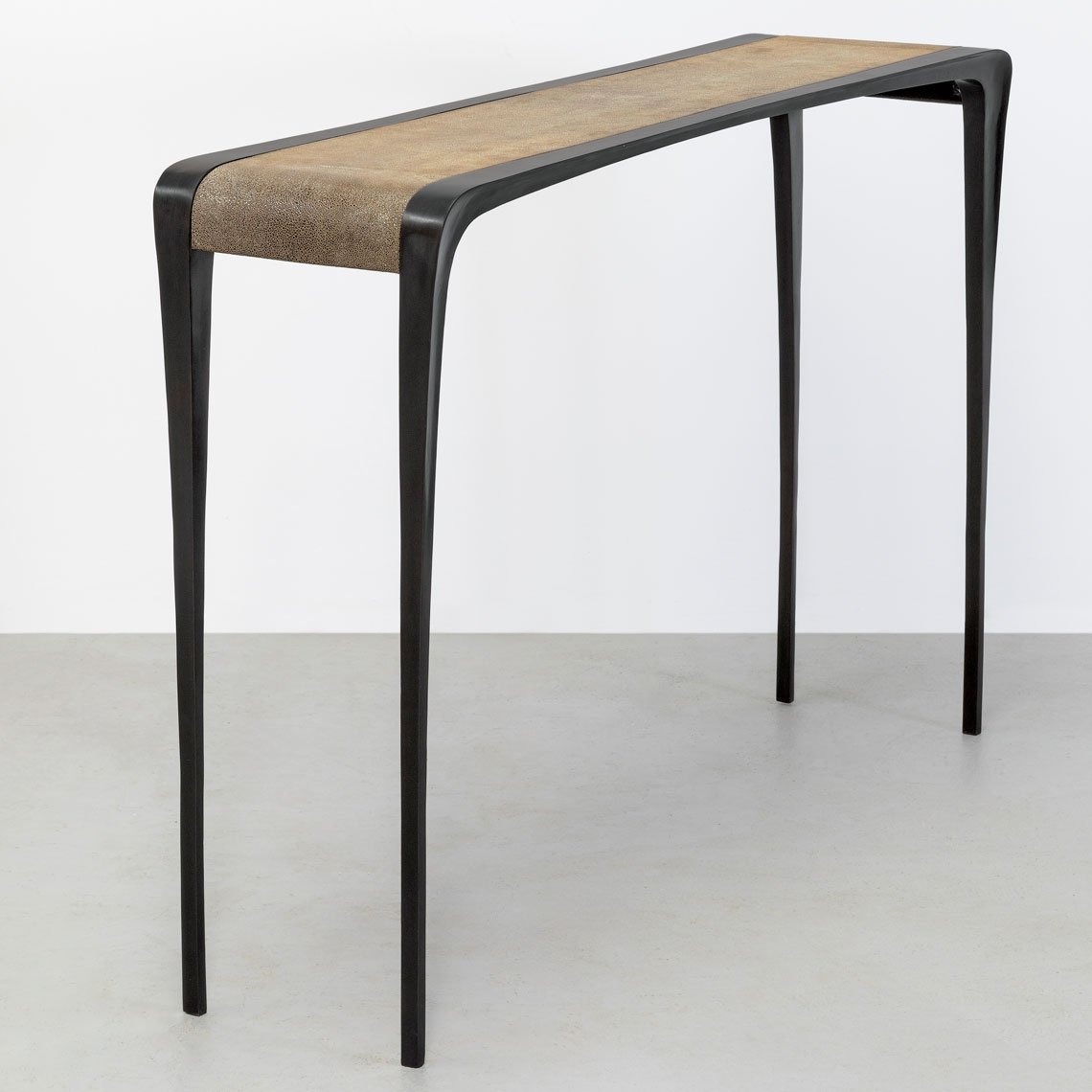 | 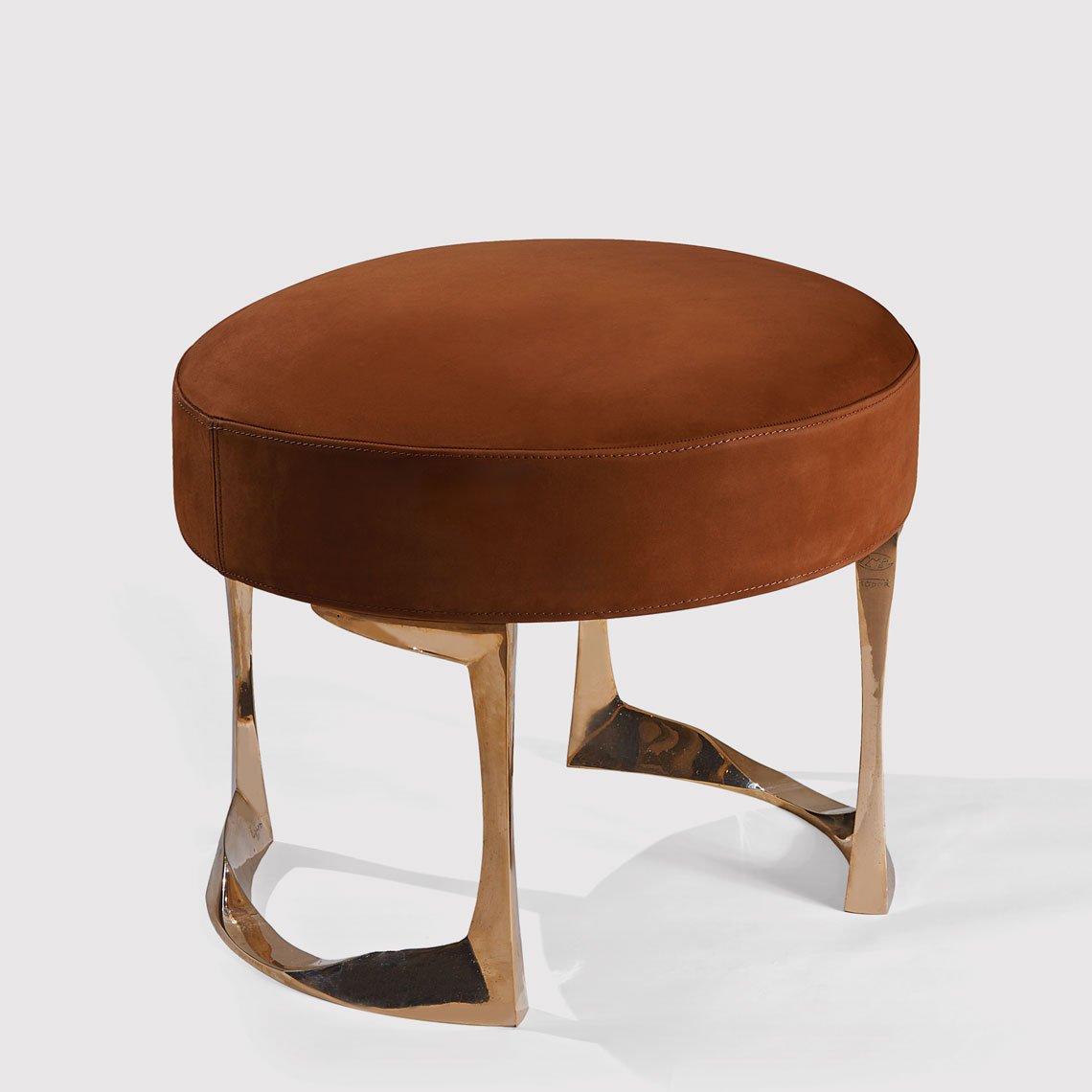 | |
Left: “Gabrielle” Console Table, 2023, in bronze with a printed shagreen top. Right: “Pouf” Stool, 2020. Polished bronze, pair available | ||
She began working alongside her husband in the foundry in 2000. “I immediately loved the atmosphere of the workshops, where a centuries-old artisanal craft is still practiced. We cast and finish every piece by hand.” She developed a desire to create her own designs in bronze, beginning in 2007. “After producing a few tableware pieces, I had an opportunity to participate in the PAD design fair in Paris in 2010, exhibiting with Avant-Scene Gallery. I created a bronze console with palm wood and a bronze and horsehair stool. The eager interest shown by interior decorators marked the beginning of the creation of my first, small collection of five pieces.”
All her pieces are made at the FODOR foundry. Some are then sent to specialized workshops for subcontracting: polishing, surface treatment, gilding, silver plating, cabinetmaking, upholstery, and leatherwork. “Weight was my first surprise when working with bronze,” she says. ‘That is why I focused extensively on structure and form, keeping it visually intact while refining it within the constraints of the material. Maintaining the same curves while hollowing them to get the sense of lightness I was after, for example, is a whole discipline in itself and a particularly lengthy process.”
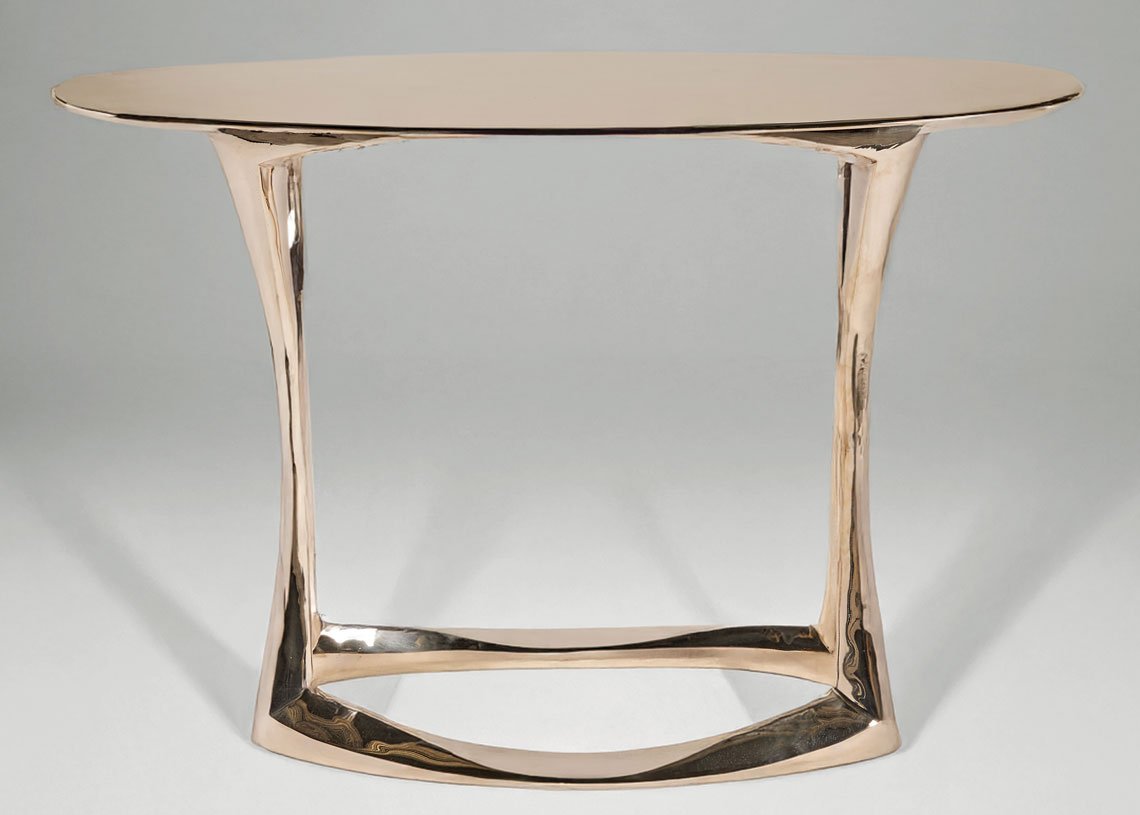 |
Polished gilt bronze “Stardust” Console Table, 2010 |
Her initial idea was not just to create an impression of lightness in the treatment of bronze, but also a sense of momentum, she says, “avoiding a static appearance so that the pieces felt almost in a state of movement or in motion.” Through painstaking research, trial and error, she incorporated a delicate little twist in the legs of her floor pieces, and in the taut, angular lines that visually refine the contours. “Once these details are resolved and maintained from design through to the final finishing, they allow the line, and therefore the weight of the design, to be significantly lightened.”
Working with bronze, she usually employs one of two artisanal casting techniques: sand-casting, and the lost wax technique, both of which she learned at the foundry. Sand-casting bronze creates objects by pouring molten bronze into a mold formed in moistened sand, which is left to cool and then finished. The lost wax casting is a far more precise technique that utilizes a plaster cage with a male and female taphole for the molten bronze, covered with elastomer to create an imprint of the sculpture. “Then we brush it with wax to get a mold in reverse, and we use that hollow form to get the final object cast.”
One of the most intricate works Millot created was a mirror for an exhibition at the Valerie Goodman Gallery in New York in 2023. “I had a floral element in mind and wanted the bronze frame to retain that same sense of movement, something that felt alive and never static.” The technical challenge for her was thus how to create a meandering detail that would remain varied and visually engaging over the entire surface.
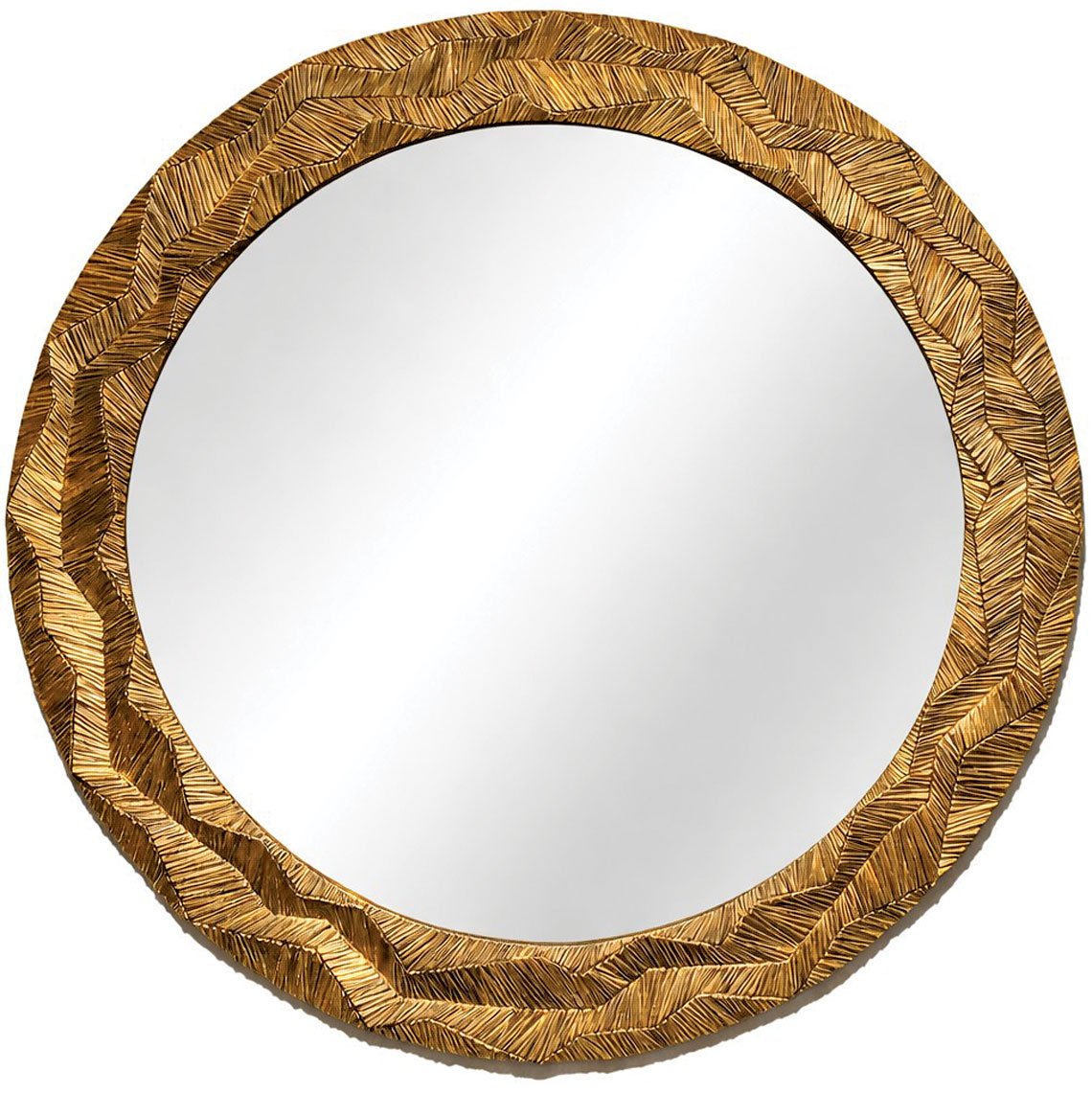 | 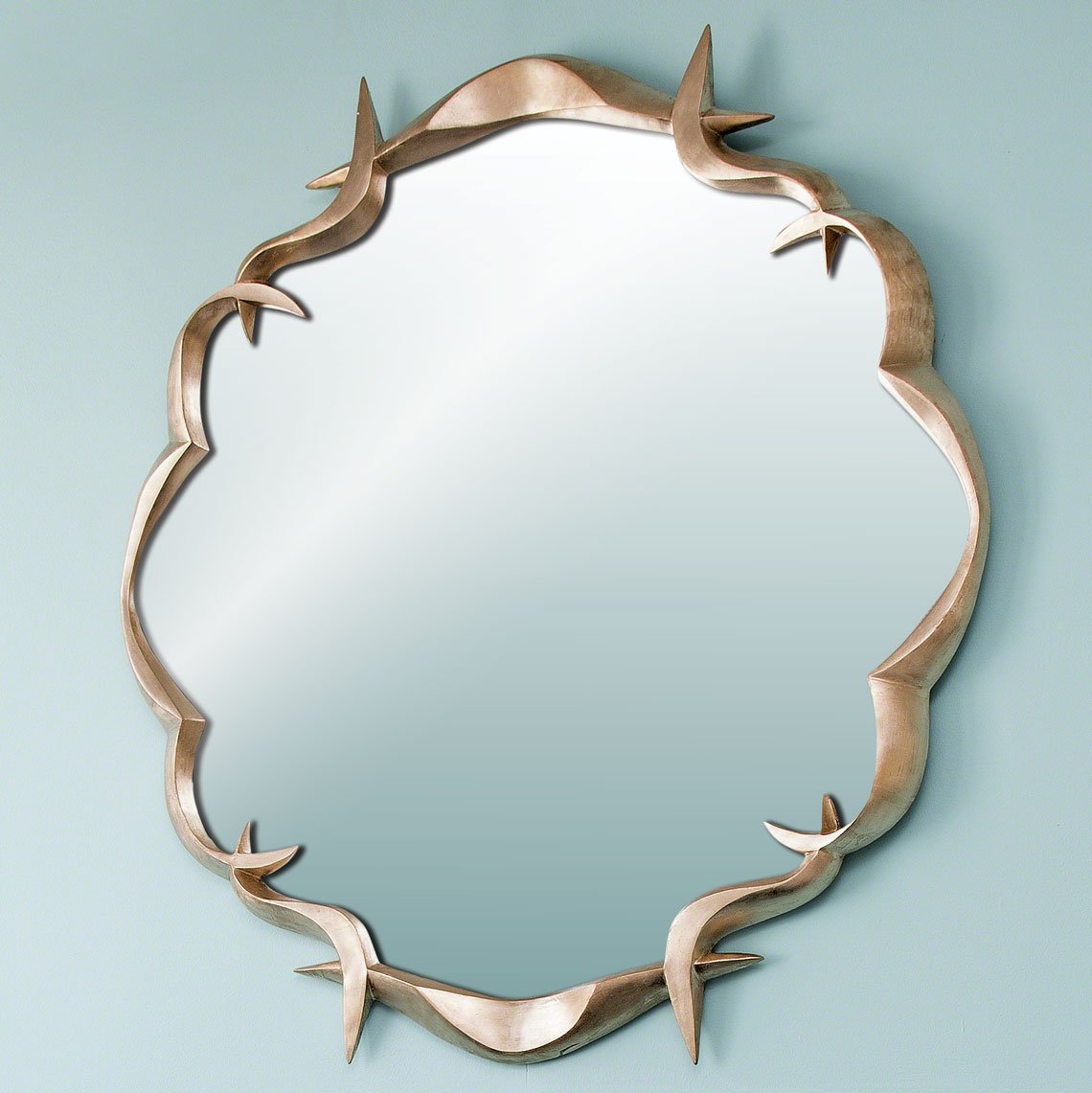 | |
Left: Round Textured Mirror, 2026. Made with multiple molds of plant details. Gold powder over waxed black patina bronze. Right: “Stema” Mirror, 2016. Bronze gilded with 24K gold | ||
She began by molding wax fragments of thistle leaves, creating a range of motifs that were all slightly different yet harmonious. “I reproduced enough of these wax elements to cover the full length of the mirror frame, then rearranged them repeatedly until I was satisfied with the balance and coherence, and the overall rhythm felt right. At times, certain sections became too repetitive, so I would dismantle and recompose them.” Once the composition was resolved, the mirror frame was cut into quarters, and each section was sand cast. Because sand casting softens the edges, extensive chiseling of the edges was then required to restore sharpness and definition. The elements were mounted together, and a patina chosen.
Each design presents its own challenges. The Gabrielle bench, for example, required extensive hand sculpting to achieve the taut, dynamic curvature Millot wanted. For the Gabrielle console, she focused on attaining the exact rounded edges for the ends which she had envisioned. “This involved pushing the material in the production process until it aligned precisely with the form I imagined,” she explains. The smaller Link side tables combine a smooth and polished top with ribbon-like linking leg elements between the curved base and the surface. The ribbons were made using the lost wax technique while the base and top were done with sand casting before assemblage.
Millot admits she is a perfectionist, and nothing leaves her studio until she is satisfied with it. That is why she likes exhibiting with art galleries and participating in fairs, she says, because working to a deadline pushes her to make decisions. “These exhibitions are very important for me creatively because of the deadline. It is galvanizing, inspiring, and stressful. I am forced to focus on what I am doing. But I also get excited. I like to focus that excitement into the creation and production.”
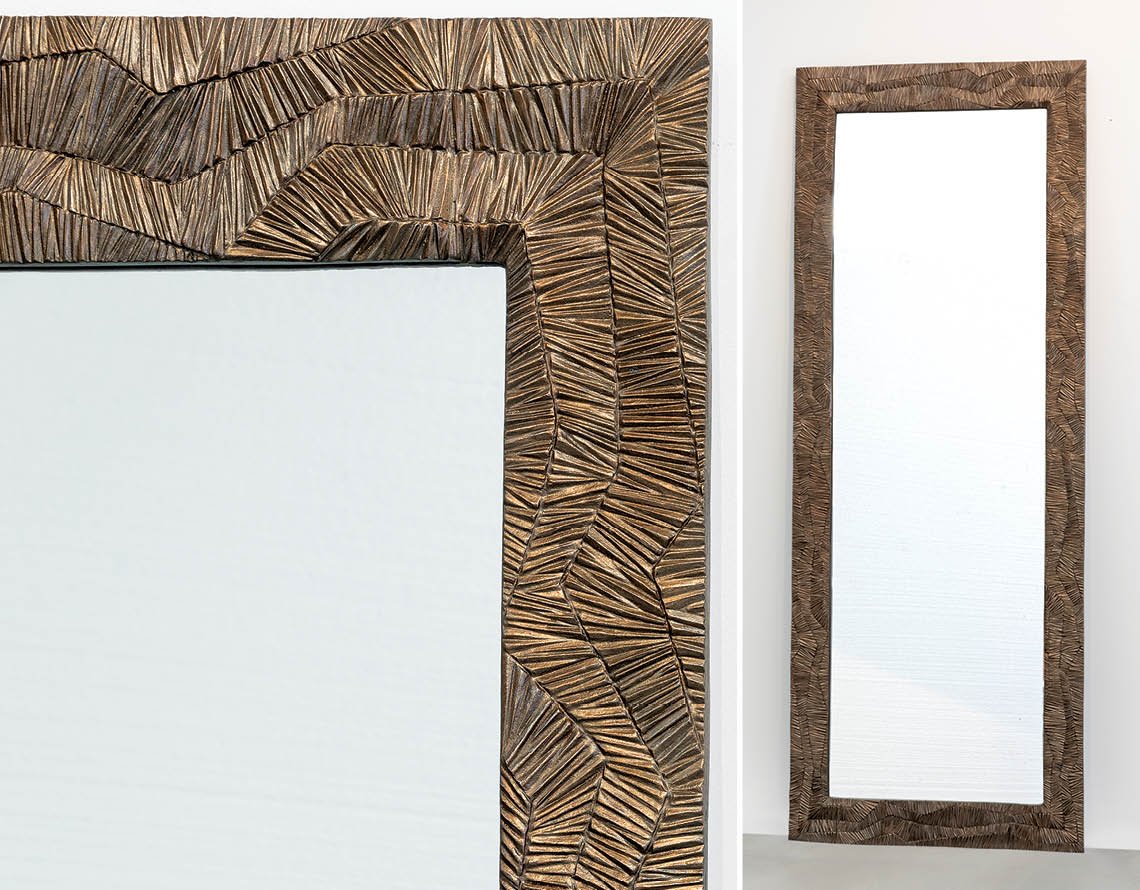 |
Textured Wall Mirror, 2023. Textured bronze made with multiple molds of plant details. |
Millot started working with Valerie Goodman Gallery in New York in 2013 and had her first solo show at the gallery in 2014. She has been exhibiting there ever since, and a new show is planned for 2027. “Interior designers love her designs,” Goodman says, rattling off the names of A-List designers. “Victoria Hagan was an important early client,” she says, “and acquired multiple consoles, tables, and benches from me. David Kleinberg included tables and seating in his projects, as have Rees Roberts + Partners, Robert A.M. Stern and Kimille Taylor.”
Paris-based interior designer Tristan Auer selected Millot’s tables for the lobby of the Hôtel de Crillon, Paris; Sagrada Studio from Los Angeles commissioned her to create side tables for the contemporary art-filled art’otel in London. New York interior designer Wesley Moon commissioned a pair of consoles for a project in Los Angeles. “Her work has an effortless way of bridging opposites — formal and informal, classic and contemporary — without ever feeling contrived,” Moon says. “We commissioned the consoles for a Laguna Beach villa, and they brought a sense of whimsy and ease, softening the stately architecture while preserving the regal character of the home. Her pieces function as artful punctuation rather than furniture that asks for attention.”
Goodman first met Millot in 2013 when she and her husband came to the gallery during a trip to New York in 2013. “I was already working with their foundry in eastern France, which had long been fabricating the bronze works of Jacques Jarrige for my gallery,” Goodman says. “They showed me images of Anasthasia’s furniture and expressed interest in presenting it in New York. I saw its quality and beauty immediately, and seized the opportunity. I ordered several pieces for a show, including side tables, a coffee table, and consoles.”
Goodman says that what struck her about Millot’s work was the unusual lightness and unique personal style. “It felt harmonious and sober, minimal yet incredibly complicated technically at the same time,” she says. “She’s also a joy to work with,” Goodman adds. “She’s vivacious and curious, always eager to expand her vocabulary. Over time, we have developed a close relationship, building our collaboration through exhibitions that allow her to explore new directions while enabling me to present fresh work.”
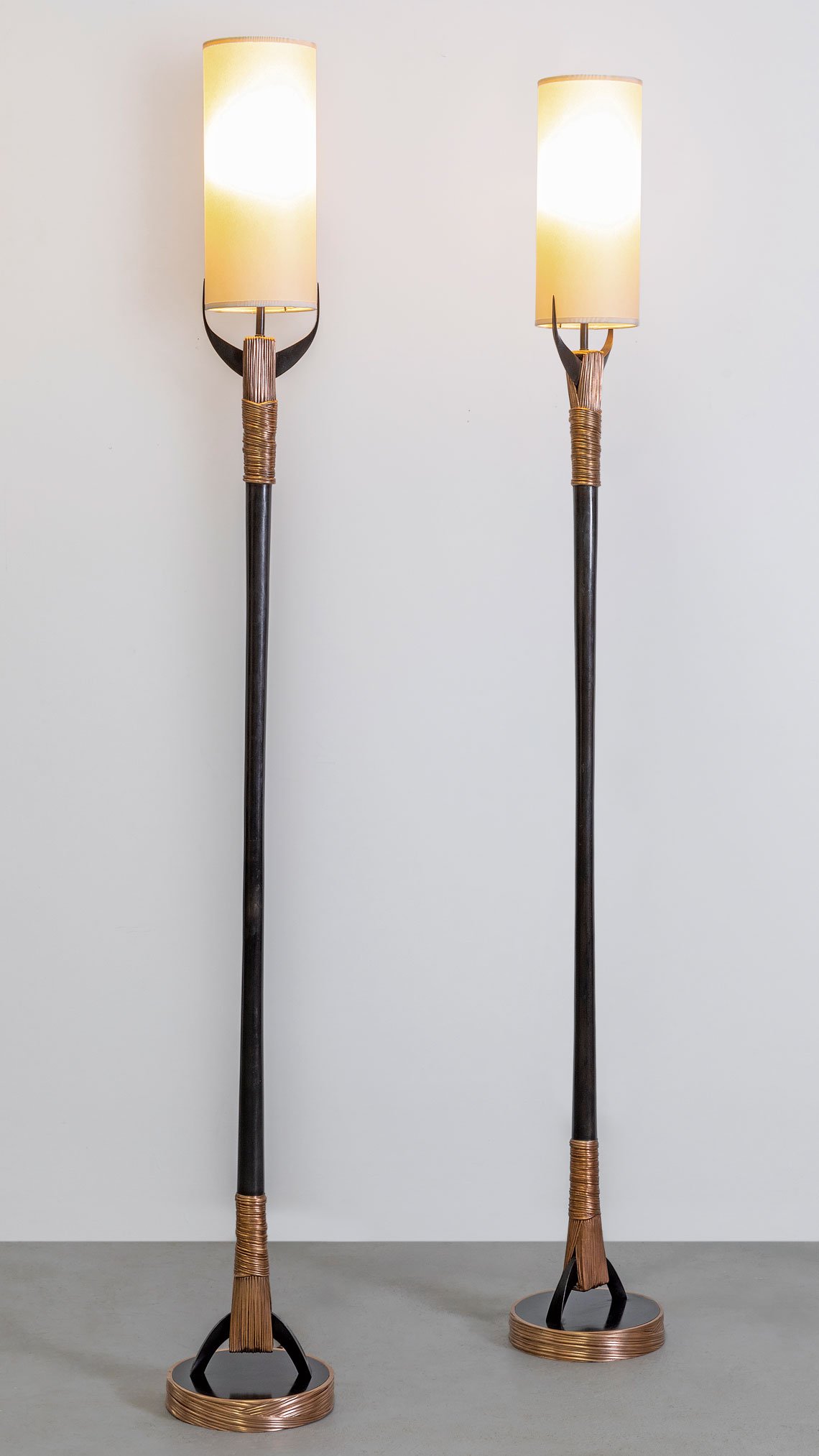 | 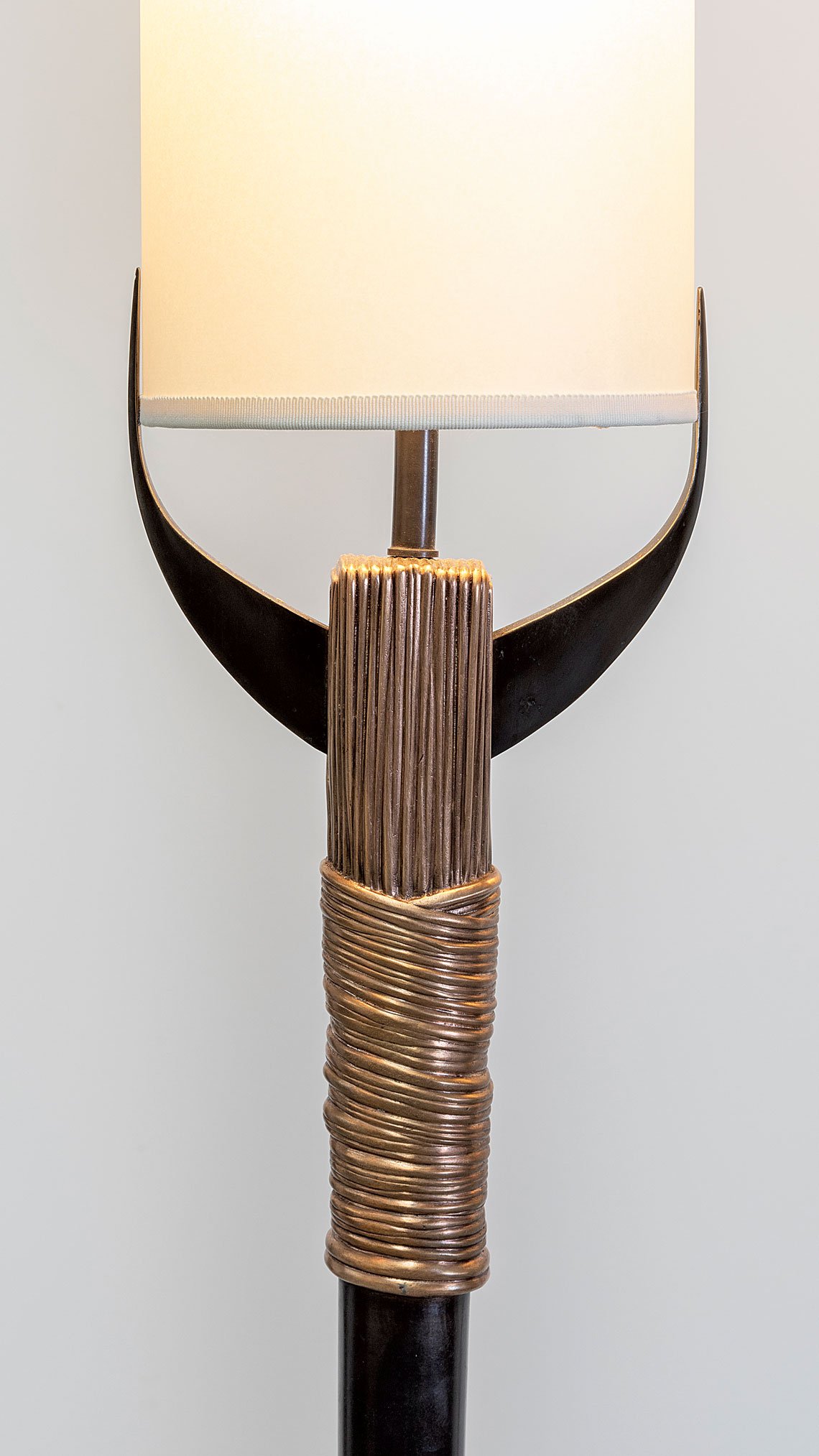 | |
Floor Lamp, 2023. Bronze with plant-inspired textured bronze detail. | ||
Millot‘s workday is currently divided into two activities: one involves the daily direction and management of the foundry as a business, which she undertook after her husband died suddenly in 2023, while her creative work takes place whenever possible. Most days her foundry work includes producing prototypes for other designers, and for her own work, creating drawings and exploratory studies in wax or plaster for her personal research. These are developed into definitive prototypes before being translated into 3D models on the computer, and then worked and reworked. Sometimes the process can take up to a year.
Millot wants to have a bigger collection, she says, not only in bronze but made in other materials, including glass, marble, and natural fibers. “Creation is a process that materializes through the opportunity to work with a variety of materials.
I was originally a fashion stylist, and I have always loved lines that appear fluid and pure, yet carefully thought out to convey a sense of simplicity. This is also what led me, from my first bronzes, to continue in that direction: creating restrained designs that are nevertheless structured. I am excited to continue this exploration.”
 |