Ceramics are Everywhere in the Design World
by Benjamin Genocchio
Rapid advances in technology continue to transform our lives, while simultaneously driving a surge in handmade art and design. Witness the ongoing revival of market interest in ceramics — typically, utilitarian objects made of clay, natural minerals, and water. Ceramics were once considered a craft, traditionally a category viewed as inferior to fine art, but they are increasingly attracting the attention of influential interior designers and collectors today. Here we profile some of the best makers exhibiting in design galleries to celebrate the quality and diversity of contemporary ceramics.
Cristina Salusti • Valerie Goodman Gallery
|
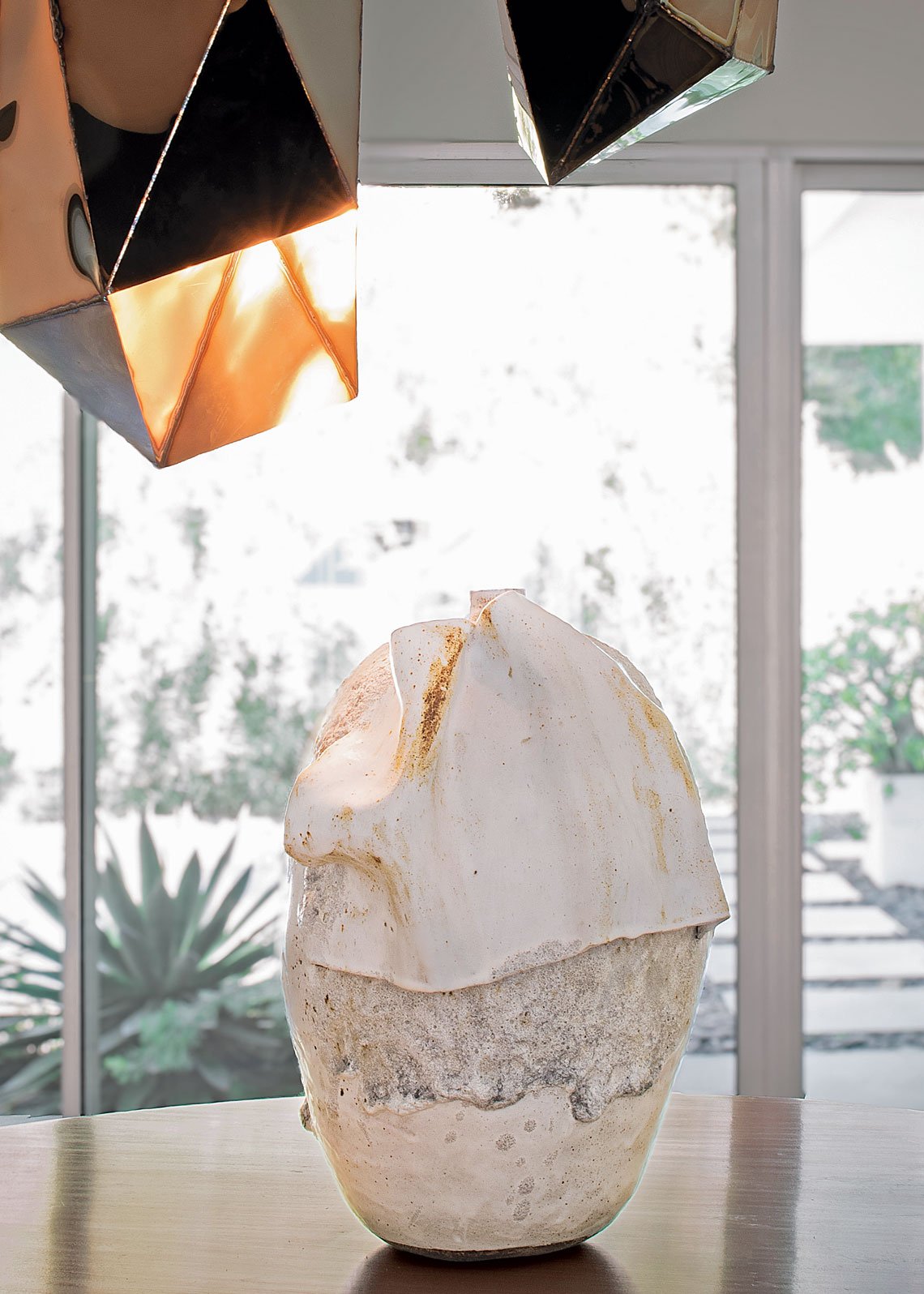
Top: Cristina Salusti, Large Volcanic Round Vessel with Gold, United States, 2018. Clay, stone fragments, 22k gold. This juxtaposition of raw, earthy exterior and refined, iridescent interior invites both visual intrigue and tactile exploration. Right: Cristina Salusti, White Shell Centerpiece, United States, 2025. Clay, stone fragments. Bottom: Cristina Salusti, Long Vessel Centerpiece with Gold and Platinum, United States, 2022. Clay, stone fragments, 22k gold and platinum. |
Valerie Goodman first met Salusti at her studio in Woodstock, Vermont, in 2012. “I immediately loved what she was doing and purchased some pieces,” she says. What impressed her most about the work was “a contrast between the dark, volcanic exterior and the glowing gold-glazed interiors. This interplay gives her pieces a quiet, yet powerful, almost spiritual presence.” In 2014, Goodman presented an exhibition of Salusti’s ceramics at her gallery. “The natural world is my primary source of inspiration, both in form and texture,” the artist has stated. “Within that framework, my choice of color and glazing determines the final personality of each piece.” Salusti is constantly experimenting with new techniques and ideas. Recently, she developed a series of popular white-glazed works for the gallery. “Unlike the gold or colored glazes that often draw the viewer’s attention inward toward the luminous interior, the achromatic white pieces emphasize the overall form,” Goodman says. “They possess a calm, neutral presence that works beautifully in quieter, more restrained interiors.” Buyers of her ceramics include interior designers Victoria Hagan, Kelly Behun, Bespoke Interior Design, Soucie Horner, Pembrooke & Ives, Nicole Hollis, and Semel-Snow, among others. Photos: Karine Kohlberg

|
Robbie Heidinger • Donzella
|
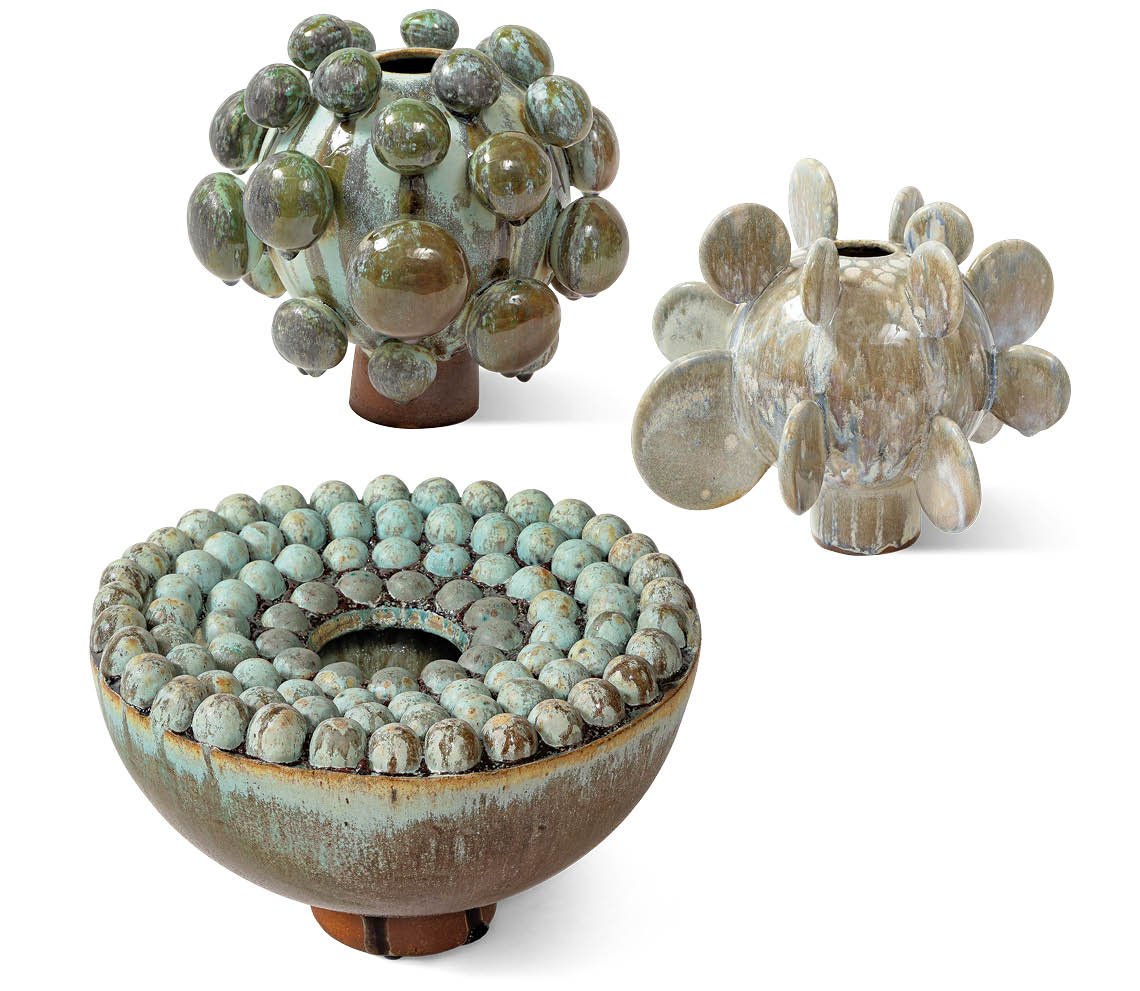 |
Top: Robbie Heidinger, Big Bubble Bud Vase, United States, 2022. Footed orb-shaped vase with applied bubbles.Glazed stoneware with blue, green and brown glazes. Signed on underside. Right: Robbie Heidinger, Pollinator Vase, United States, 2022. Glazed stoneware, blue and brown glazes with applied disk forms. Signed on underside. Bottom: Robbie Heidinger, Flora Bubble Vase, United States, 2023. Glazed stoneware, blue and brown glazes with applied orb forms. Signed on underside. |
“I first came across Heidinger and her work at a booth at one of the Architectural Digest design fairs,” says Paul Donzella. “We began a conversation that led to her sending me pictures of her work, and eventually I started showing her beginning around 2019.” Heidinger’s work really stood out for him in terms of “the forms and palette,” Donzella explains. “It had a soft and unified quality that for me was unique.” Working with her for 7 years now, Donzella says he has seen her work grow tremendously. “I’ve loved seeing her evolution as an artist and am constantly surprised and impressed when seeing new works.” Donzella says Heidinger is now one of his most sought-after ceramic artists, adding, “people are just drawn to her pieces.” Notable designers and design firms who have purchased from him include Damon Liss, Haynes-Roberts, Kelly Behun, Cullman & Kravis, Studio Sofield, Ken Fulk, and David Scott. Photos: Josh Gaddy
Tonino Negri • L’Art De Vivre
|
 |
|  |
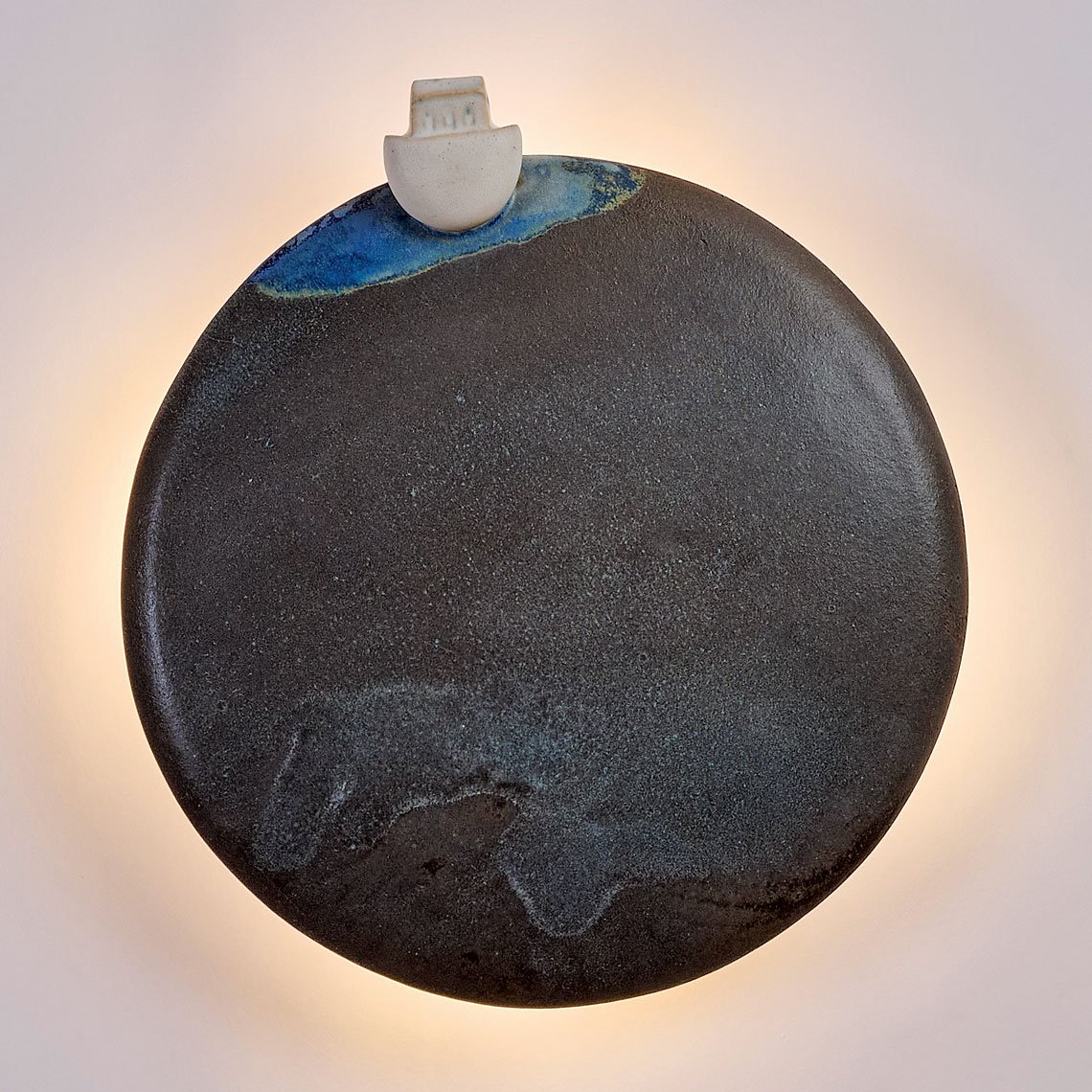
Left: Tonino Negri, ARCA SCONCE, Italy, 2022. Glazed ceramic, limited edition of five pair exclusive to L’Art de Vivre, in four different glazes. Right: Tonino Negri, DOMUS, Italy, 2009. Illuminated sculpture in whitewashed ceramic. |
| 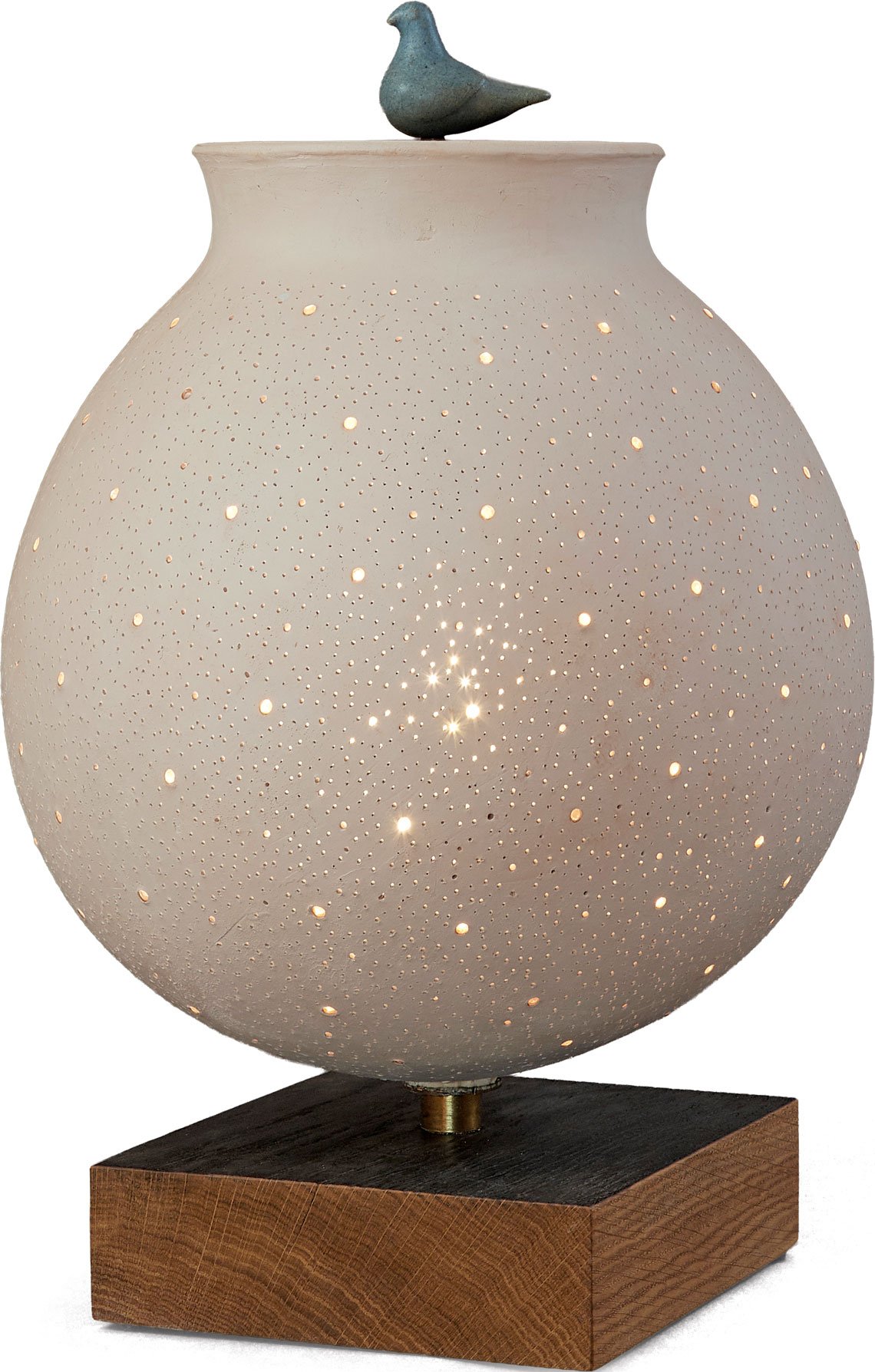 |
| Tonino Negri, CIELO, Italy, 2021. Illuminated sculpture in ceramic with molten glass inserts, copper lid, wood base. |
Charles and Patricia Fuller, owners of L'Art De Vivre, met Negri through mutual friends in Italy and have worked with him for a decade. They started buying studio pieces and, more recently, have collaborated with him on commissioned works for the gallery. The Fullers were immediately drawn to the work by the artist’s meticulous craftsmanship and unique expression of theme, and commented, “It is evident in his beautifully hand-built forms, applied with original, subtly stunning glazes, along with the interplay of internal light with the interior/exterior divides of his vessels.” Negri’s work blends and traverses several disciplines — sculpture, design, and even theater — most noticeably in his illuminated ceramic sculptures. They have also begun working with the artist to produce a limited series of sconces exclusive to L’Art De Vivre. “They elaborate on his core theme of the floating ark, an almost primeval symbol of rebirth and new beginning. The ‘ocean’ on which they float is illuminated from behind with an aureole of soft glowing light.” Among the top designers who admire Tonino’s work and have placed his pieces in homes is NYC-based Aamir Khandwala. Photos: Dan Mayer
|
Beatriz Garrigo • Galerie OAK
|
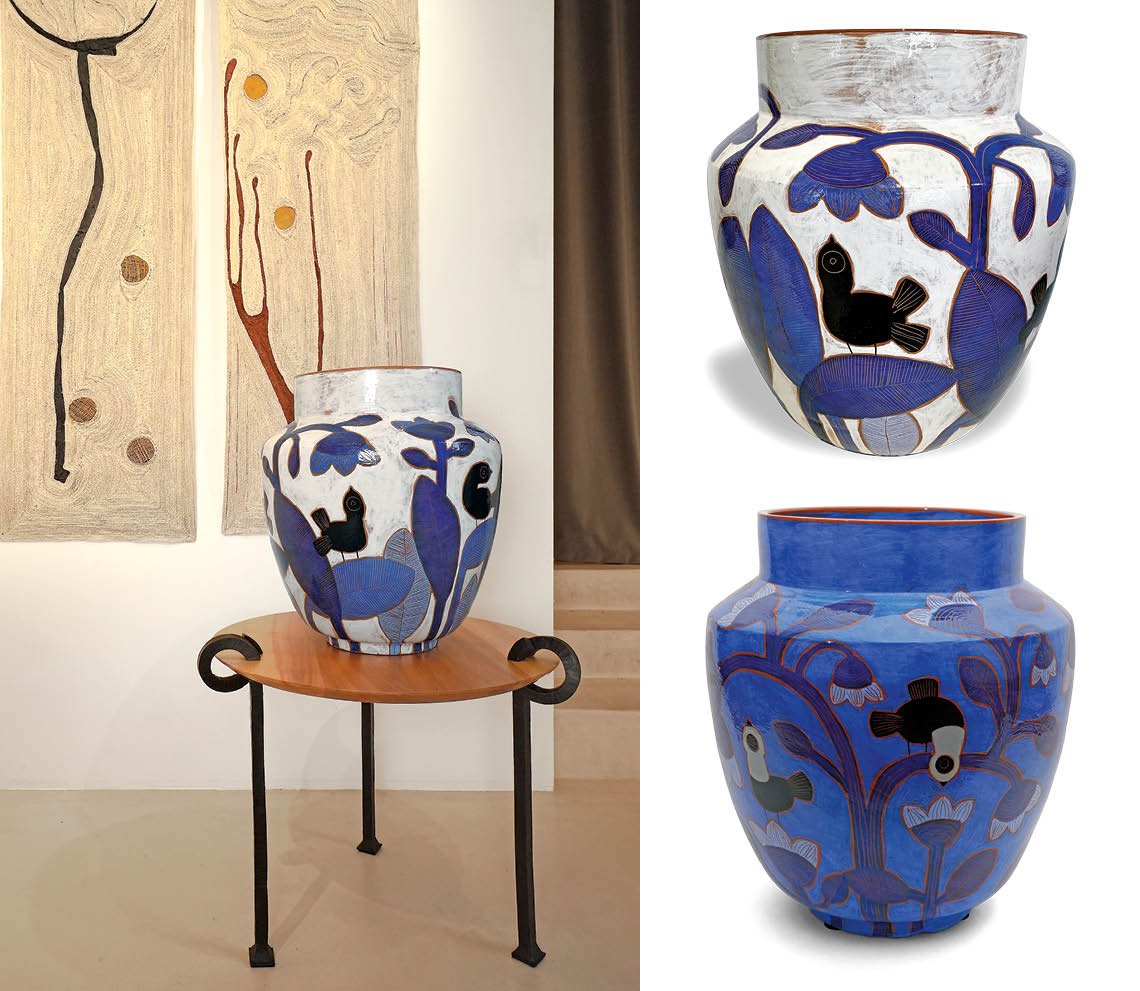
Antoine Vignault first discovered Garrigo’s ceramics at the Musée d’Art Moderne de Céret in French Catalonia. “This museum is located in a town with a remarkable artistic history,” Vignault explains. “Céret has long been a place of passage and inspiration for major artists such as Pablo Picasso, Georges Braque, Juan Gris, and Marc Chagall, who all worked there in the 20th century.” Discovering Garrigo’s ceramics here created for him “a beautiful dialogue between past and present: In a town marked by the legacy of modern masters, her work felt like a continuation of that creative energy — another voice added to the long artistic story of Céret.” What sparked his attention to her work was the quiet poetry of her motifs. “Her ceramics are deeply inspired by the landscapes of the Massif des Albères, a national park where she lives and works. One senses in her ceramics the presence of this environment: its vegetation, its light, its horizon between sea and mountains.” The strength of her colors also moved him. “The vibrant Catalan palette she uses seems to emerge almost in relief from the warm red clay of La Bisbal d’Empordà, whose earth she uses to throw her plates and vases. The pigments appear highlighted against this deep terracotta background, creating a simple, powerful, luminous contrast. It is this balance between material, landscape, and color — between the earth of the clay and the poetry of the painted motifs that made me want to present her work.” Vignault is planning an exhibition of her ceramics and paintings at Galerie OAK in 2027. Photos: Antoine Vignault for OAK Gallery
|
Paul Briggs • Liz O’Brien
|
 |
| Top left: Paul Briggs, Blooming Vase, United States, 2024. Hand-built and pinched pot with creamy white glaze over black clay, signed with artist’s cipher. Top right: Paul Briggs, Caltrop Water Chestnut Vessels, United States, 2023. Hand-built and pinched pots with gunmetal glaze over white clay, signed with artist’s cipher. Bottom: Paul Briggs, Group of unglazed terracotta vessels with shiny blue glazed interiors, United States, 2024, signed with artist’s cipher. |
Liz O’Brien was introduced to Briggs about 10 years ago by her friend Greg Kuharic, a renowned clay artist whose work Liz has shown in her gallery, formerly an Antiques Roadshow appraiser and now an art consultant. “He thought Paul’s work might be a good fit for the gallery, and he was right!” She loved the work, but also liked the artist as a person. “Paul is so lovely to work with. He has worked as a minister and as a teacher.” His popular ‘Pinch Pots’ are handmade on a pottery wheel and have, for O’Brien, “a deeply meditative quality.” Briggs has a strong following among designers and collectors; his work is included in the Brooklyn Museum, the MFA Boston, the MFA Houston, and the Museum at the Rhode Island School of Design. Markham Roberts, Daniel Romualdez, Studio Shamshiri, Tino Zervudachi, Monique Gibson, Brian McCarthy, Jed Johnson Associates and Robert Stilin are among the designers who have selected his work for their projects. Photos: Josh Gaddy
|
| Helle Damkjaer • Galerie Carole Decombe |
 |
|  |
| 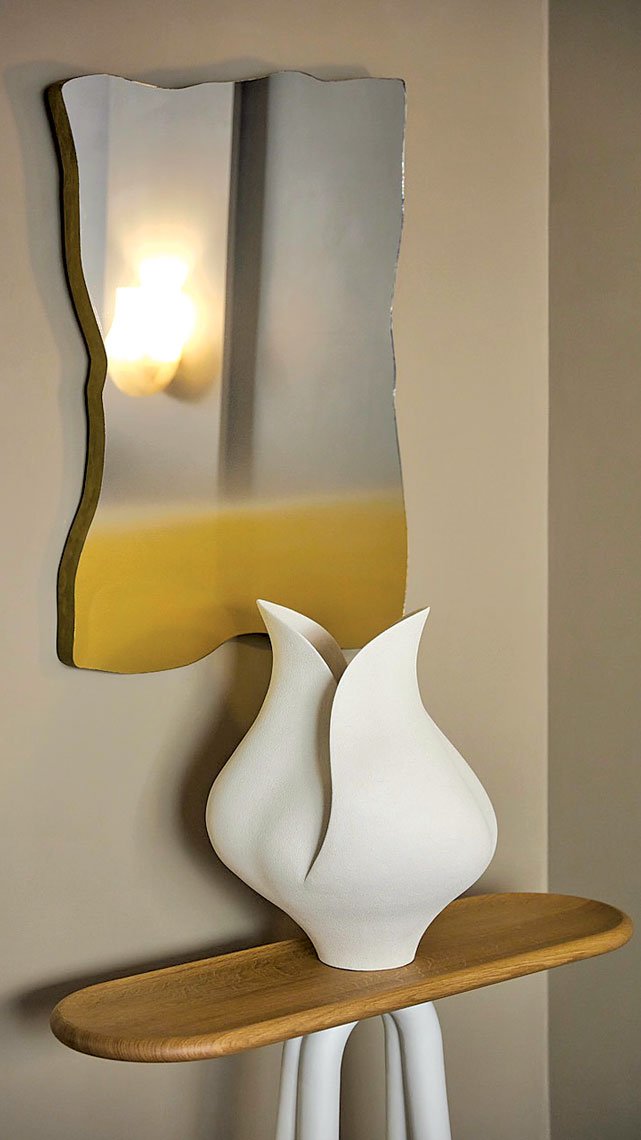 |
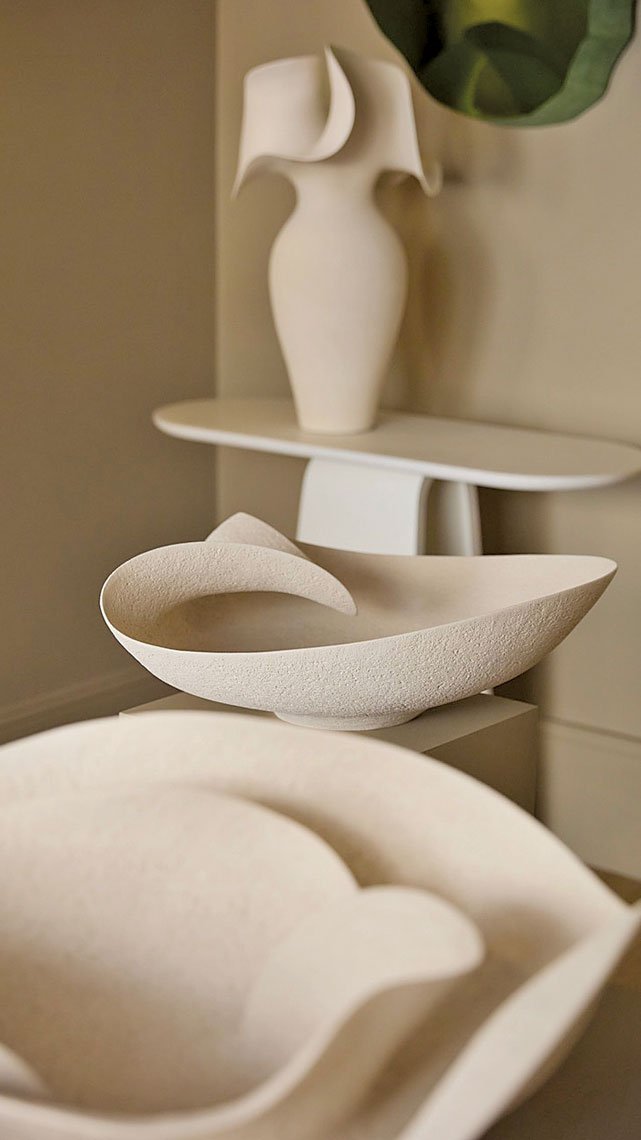
Left: From rear: Helle Damkjaer, Ruffle Vessel, France, new. Chamotte stoneware sculpture, rough finish outside, polished finish inside, one of a kind. Raw Wave, France, new. Stoneware sculpture, one of a kind. Carmelia, France, new. Chamotte stoneware sculpture, one of a kind. Center: Helle Damkjaer, Raw Flower Vessel, chamotte stoneware sculpture, France One-of-a-kind piece. Right: Helle Damkjaer, Bulp, France, new. Stoneware sculpture, one of a kind. |
Helle Damkjaer first came to see me at my gallery on Rue de Lille in Paris more than ten years ago to present her work,” says Carole Decombe. “What immediately struck me was the curvature of her forms, expertly balanced, both sensual and powerful, as well as the way she finely polishes her pieces, giving them a remarkable velvety finish.” Not surprisingly, Damkjaer’s work has found its way into some of the most important homes and collections in both the United States and Europe, with buyers including interior designers Thomas Pheasant and Nicole Hollis, the Picasso family, the late Lady Victoria Rothschild, collector of ceramics and contemporary craft, and many others. “Her pieces are timeless and integrate beautifully into interiors ranging from those rich in antiques to more contemporary settings,” Decombe says. Photos: Jeremy Josselin
R. A. Pesce • Beto Oliveros Studio |
 |
Top left: R.A. Pesce, Wheel-thrown, hand-carved biomorphic vessel in white stoneware with a deco black glaze, United States, 2022. From the series Elements: Wind, Water, Fire. Signed: RP. Top right: R.A. Pesce, Wheel-thrown and manipulated vessel in white stoneware with a blanc de chine glaze, United States, 2019. From the series Brutalism. Signed: RP. Bottom: R.A. Pesce, Wheel-thrown and manipulated Cubist low vessel in white stoneware with a bronze gold glaze, United States, 2021. From the series Brutalism. Signed: RP. |
Beto Oliveros was introduced to Pesce’s ceramics several years ago through an artist representative, “at a time when we were expanding our collection to include more contemporary artists.” His ceramics immediately stood out. “They felt fresh and unlike anything we had seen before, and we recognized that they had strong potential as decorative objects within thoughtfully designed interiors.” Pesce’s work has always had a strong sculptural presence and is widely admired for its ability to blend architectural geometry and crisp lines with organic, soft curves and fluid movement. “His inspiration often draws from natural elements — wind, water, and fire — or can leverage a strong Cubist sensibility,” Oliveros explains. “The glazes are layered and atmospheric, giving pieces depth and individuality. As decorative objects, they feel both artistic and intentional, making them particularly compelling within curated interiors. Rather than functioning as small accents, they tend to anchor surfaces such as dining tables, consoles, and sideboards where their form and presence can be fully appreciated.” His ceramics are in many major museums’ collections and have been bought by leading designers, including Cullman & Kravis Associates. Photos: Beto Oliveros Studio
|
Francisco Brennand • Jeff Lincoln Art + Design |
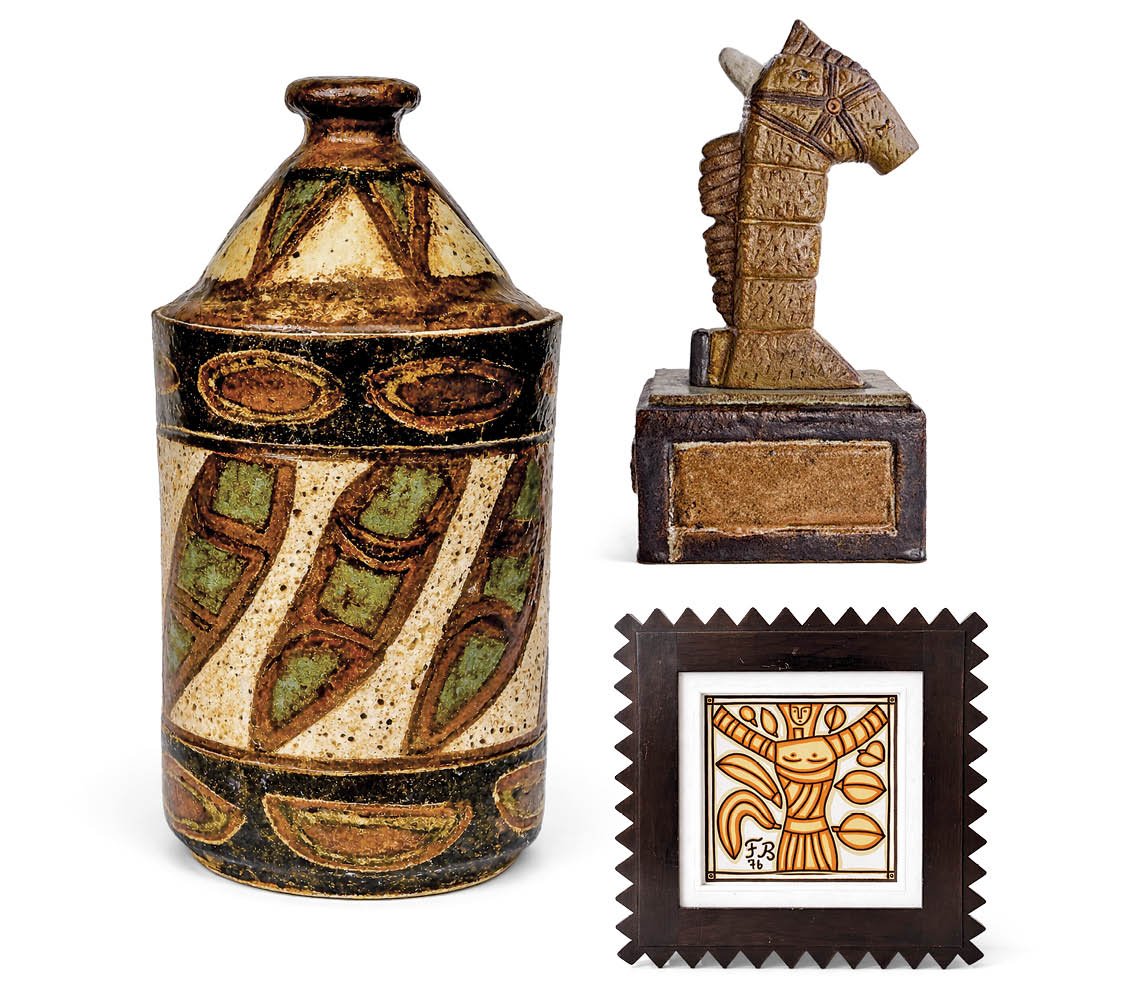 |
| Left: Francisco Brennand, Covered Vessel with Fruit Motif, Brazil, 1990s. Glazed ceramic. Top right: Francisco Brennand, Cavalo de Troia, Brazil, 1993. Glazed ceramic. Bottom right: Francisco Brennand, Untitled, Brazil, 1976. Hand painted ceramic tile, Jacaranda wood frame. |
Jeff Lincoln discovered the work of Francisco Brennand years ago during his own research on important mid-century Brazilian modern design. “He is one of the seminal figures of Brazilian ceramics from the mid-century, but he remained little known outside Brazil,” Lincoln says. What struck Lincoln as different and special about the work was his ambition to use ceramics for sculpture, rather than making utilitarian craft objects. Brennand started as a painter before devoting himself to ceramic sculpture and employs sophisticated multi-colored glazes and painted decorations. The forms are also highly original, often of Brazilian native plants, animals, and even fantastic tropical creatures. Lincoln says the ceramics are sought after by in-the-know collectors “often already familiar with important Brazilian art and design,” and points to the attractive subject matter and elaborate polychrome finishes as to why Brennand’s work is quickly gaining wider popularity. A show of Brennand’s ceramics is currently on view at Lincoln’s Southampton, New York, gallery through June 30th. Photos: courtesy Jeff Lincoln Art + Design
|
Ryo Toyonaga • Moderne Gallery |
 |
| Left: Ryo Toyonaga, Surrealist Life Form, United States, 2001, stoneware. Top right: Ryo Toyonaga, Surrealist Figure #5, United States, 1993, stoneware. Bottom right: Ryo Toyonaga, Surrealist Life Form #3, United States, 2002, aluminum. |
At Moderne Gallery, founder Bob Aibel, a leading authority on the works of the Studio Craft Movement, has also curated an extensive collection of historical and contemporary ceramics from the U.S., Europe, and Japan. Following a tip from a friendly dealer, he visited Ryo Toyonaga in his New York studio. He was “blown away by the work,” he says. The originality and quality of the work are among the things he considers when selecting artists to show in his gallery. “Toyonaga’s ceramics have both of those qualities in spades,” he says. Toyonaga’s preferred material for his ceramics is hand-sculpted clay, with his forms “developed totally organically and spontaneously from his unconscious, without any drawings or plans before the making, so his process is highly improvisational,” Aibel says. The work looks good in any interior, but tends to work best, Aibel feels, in “a rather simple or minimalist interior so that the furniture and other pieces in the space don’t overwhelm his work.” Aibel describes Toronaga’s ceramics rather poetically as “a refined mixture of organic imagination and modern aesthetics, emerging from the depths of the earth and the edges of his soul.” Photos: Christian Giannelli
|
Trish Demasi • Wexler Gallery |
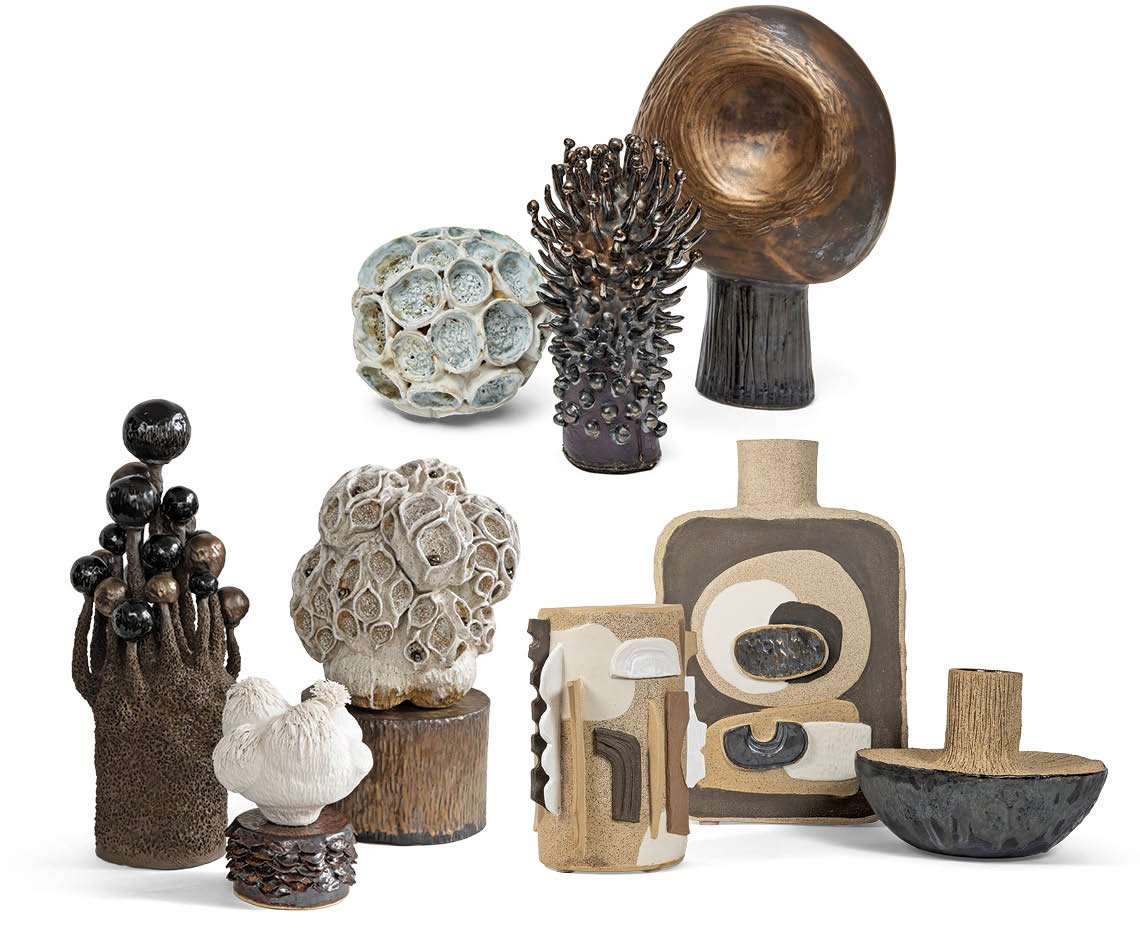 |
Top: Trish Demasi, Toys II, United States, 2021. Glazed stoneware. Left: Trish Demasi, Three Sculptures: Pom, Samenschale, Jingu, United States, 2020. Raw porcelain and glazed stoneware; glazed stoneware; two clay bodies raw and glazed. Right: Trish Demasi, From left: Moderno Vessel, Lina, United States, 2021, inlaid clay bodies; Moderno Vessel, Gae, United States, 2021, inlaid stoneware with metallic glaze; Moderno Vessel, Antonia, United States, 2021, stoneware with brushed oxide glazes |
Lewis Wexler first met Trish Demasi through another dealer in Philadelphia. “What immediately drew me in were her organic forms, which are deeply influenced by nature. Her work has a wonderful warmth and serenity, which I find incredibly soothing. The glazes are perfectly in tune with the forms, giving the pieces a natural harmony.” Her work has evolved, and kept Wexler as intrigued and engaged as when he first saw it. “Just when you think you understand the quiet language of her work, she surprises you with five-foot totems or beautifully sculptural stools that are both functional and visually striking. Then she shifts again, creating pieces influenced by 1950s Italian ceramics, which introduce a completely different aesthetic. That range and diversity truly set her apart.” Her work has been included in projects by notable designers such as Rodney Lawrence and Julie Hillman. “We recently sold an extraordinary table she created to an important client, which speaks to her versatility.” Her pieces look especially beautiful in interiors with open space and strong connections to the outdoors, Wexler says. “They’re stunning in beach homes, where natural light enhances the richness of her glazes. At the same time, some of her more 1950s-inspired works feel perfectly at home in a sophisticated New York City apartment.” Photos: courtesy Wexler Gallery
|
Alice Gavalet • Twenty First Gallery |
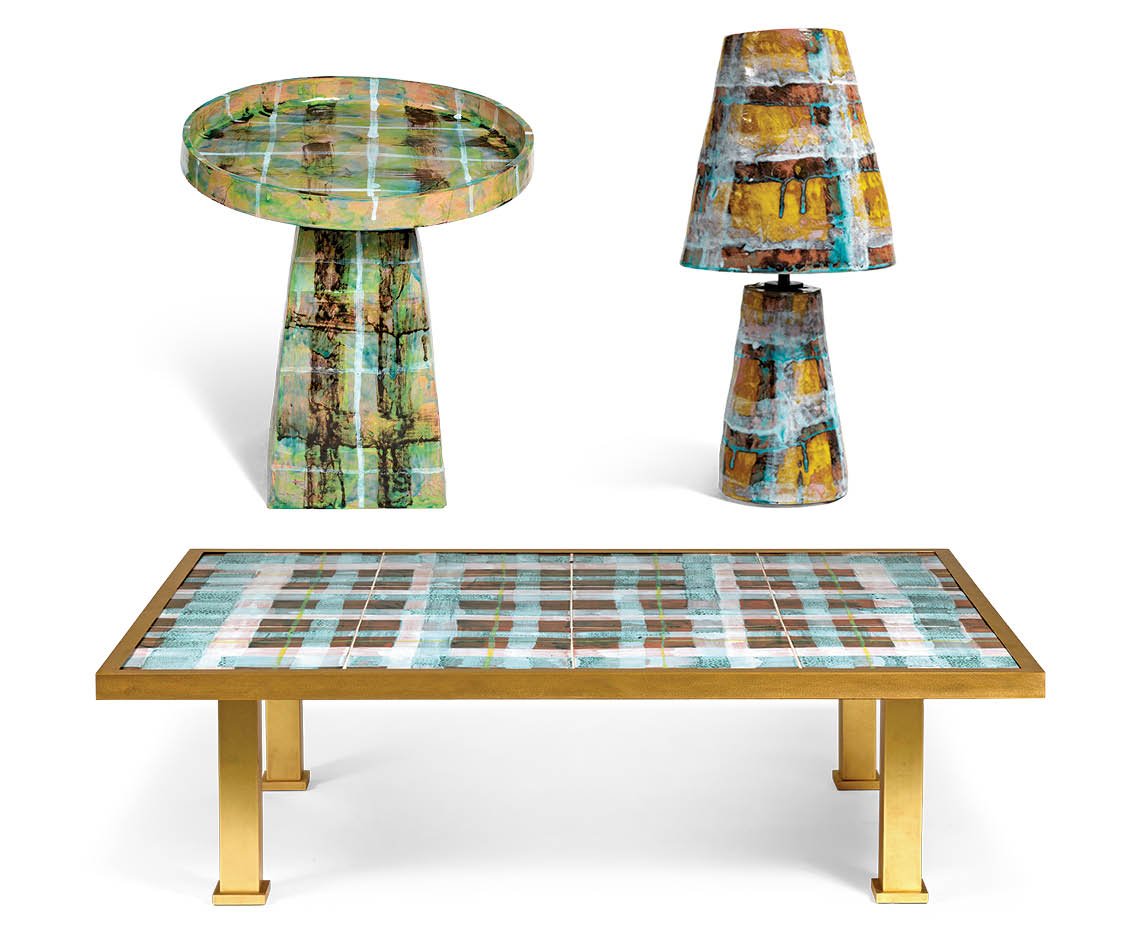 |
| Top left: Alice Gavalet, Untitled (Pair of Green Tartan Gueridons), France, 2025. Glazed ceramic. Top right: Alice Gavalet, Untitled (Yellow Tartan Lamp), France, 2023. Glazed ceramic. Bottom: Alice Gavalet, Untitled (Pink & Blue Ceramic Coffee Table), France, 2025. Glazed ceramic, brass. |
“Alice was introduced to me a long time ago through another great ceramic artist, Armelle Benoit,” says Renaud Vuaillat, the gallery owner. “At this time, she was French designer Elisabeth Garouste’s assistant and was just starting to create her own pieces.” What he found intriguing about her ceramics was the use of a “recurrent pattern (tartan in particular), bringing endless visual effects to her pieces. I see a different piece each time I look at one of her works.” He also admires the painterly gestures decorating pieces, which he describes as “instinctive, almost childish. I find this very refreshing and she masters it so it adds a painting quality underneath.” Her pieces have been sold to important U.S. and European collectors, and to major French interior designers Jacques Grange and Pierre Yovanovitch. “Despite the pieces being strong, they blend easily with the best and diverse interiors, adding a touch of vibrant color and energy to an interior,” Vuaillat says. Photos: Stephane Briolant
|
Mindy Horn • Todd Merrill Studio |
 |
Left: Mindy Horn, Naples, United States, 2024. Porcelain, pigment, glaze. Center: Mindy Horn, Blue Forest, United States, 2023. Porcelain, mason stain, glaze, 18k gold. Right: Mindy Horn, Empress, United States, 2019. Porcelain, mason stain, glaze, acrylic paint. |
Todd Merrill started showing Horn’s ceramics in 2018. He was, he says, immediately impressed by the delicacy and exquisite craftsmanship of her vessels. “They have this timeless or aged look, but with an ethnic feeling or quality that can not be exactly placed. It’s as if they came from an indescribable point in time and history.” He also felt she could evolve creatively. “She’d already had a long, terrific career but needed a dealer who could help find a new direction and market for her work,” Merrill says. It was the right move for both of them. Since starting to work with Merrill, Horn has developed a new group of highly successful wall-mounted porcelain sculptures. The Hana and Still Life series has been especially popular. “They are meticulously made,” Merrill says, “usually in neutral tones, sometimes in blues and whites.” They have also become iconic to her body of work, and Merrill has shown them at his booths at the Salon Art + Design Fair and Design Miami. Horn is currently featured in Merrill’s boutique at Bergdorf Goodman in New York. Photos: Simon Leung, courtesy of Todd Merrill Studio
|
Caroline Blackburn • Twentieth |
 |
|  |
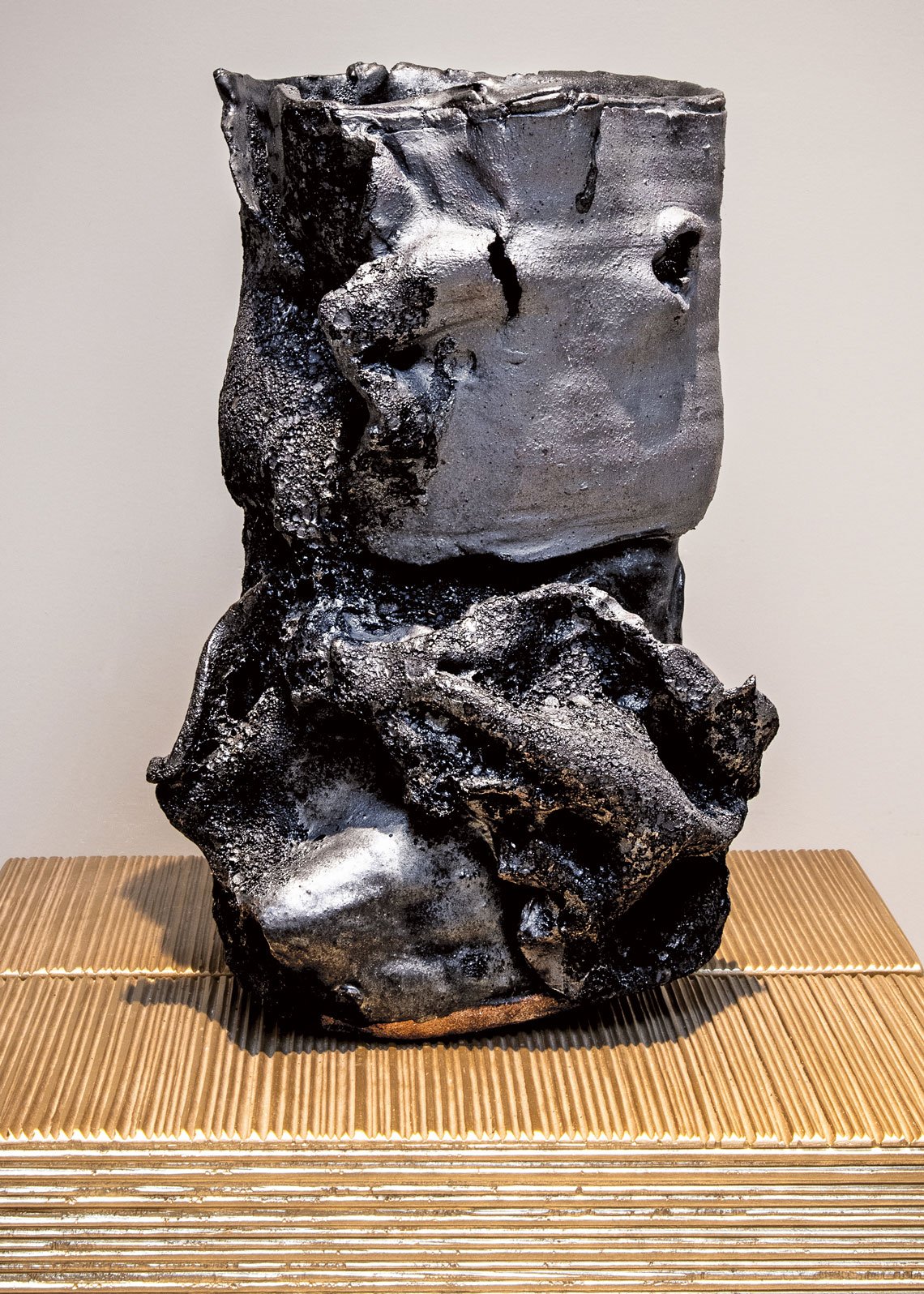
Left: Caroline Blackburn, No. 975, United States, new. Stoneware, black lava glaze. Right: Caroline Blackburn, No. 496, United States, new. Stoneware |
The late gallerist Stefan Lawrence, founder of Twentieth, had an impeccable eye for recognizing talent. He connected with Caroline Blackburn and invited her to show with the gallery. It was a smart move because her ceramics are now in constant demand with interior designers, who are attracted to their expressive forms and decorative surface qualities. “Caroline Blackburn’s vessels blur the line between painting and object, where surface, color, and form exist in a constant state of transformation,” says Daniele Albright, Gallery Director. The forms are thrown on a wheel, hand-built, or a combination of both. Trained as a painter, when Caroline glazes a work she approaches it as a canvas. She may first apply a slip, draw on the work with a ceramic pencil, and then hand-paint the piece with brushes in a variety of widths to accomplish a sublime painterly effect, and finally grind the surface with a stone. “Each piece carries a sense of movement, as if the material is still shifting, with layers that reveal both materiality and fluidity.” The gallery featured her work in 2024 at Design Miami/LA in Los Angeles. Photos courtesy Twentieth