






Sculpting With Light: Ovature Studios Takes Custom Sculptural Lighting to a New Level
 |
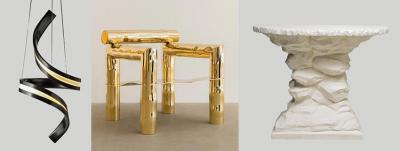
The Bonnie Sconce in softened bronze, installed as a ceiling mount, joins a brass wall sculpture and one of designer Matthew Holleman’s experimental furniture designs, a sculptural chair. |
by Benjamin Genocchio
Matthew Holleman lives and works on the remote East Coast of Sweden, where he has a small cluster of studios. He’s not Swedish; he was born in New Zealand. Nor did he study design. He studied music and then worked for a non-profit organization in Kenya and Tanzania. Next, he co-founded a lighting brand in London, Cameron Design House, before moving to Sweden in 2017 with his partner and two children to reinvent himself with Ovature Studios.
Little of this biographical information informs his sculptural lighting designs, except to suggest an innate restlessness — an attribute that becomes apparent in his creative practice. This restlessness is a big part of what makes him and his work interesting. He is constantly in search of new ideas and inspiration to, as he says, “do things other people haven’t done.” He is putting that approach into practice by currently experimenting with incorporating coffee bean grounds and fish scales into his pieces.
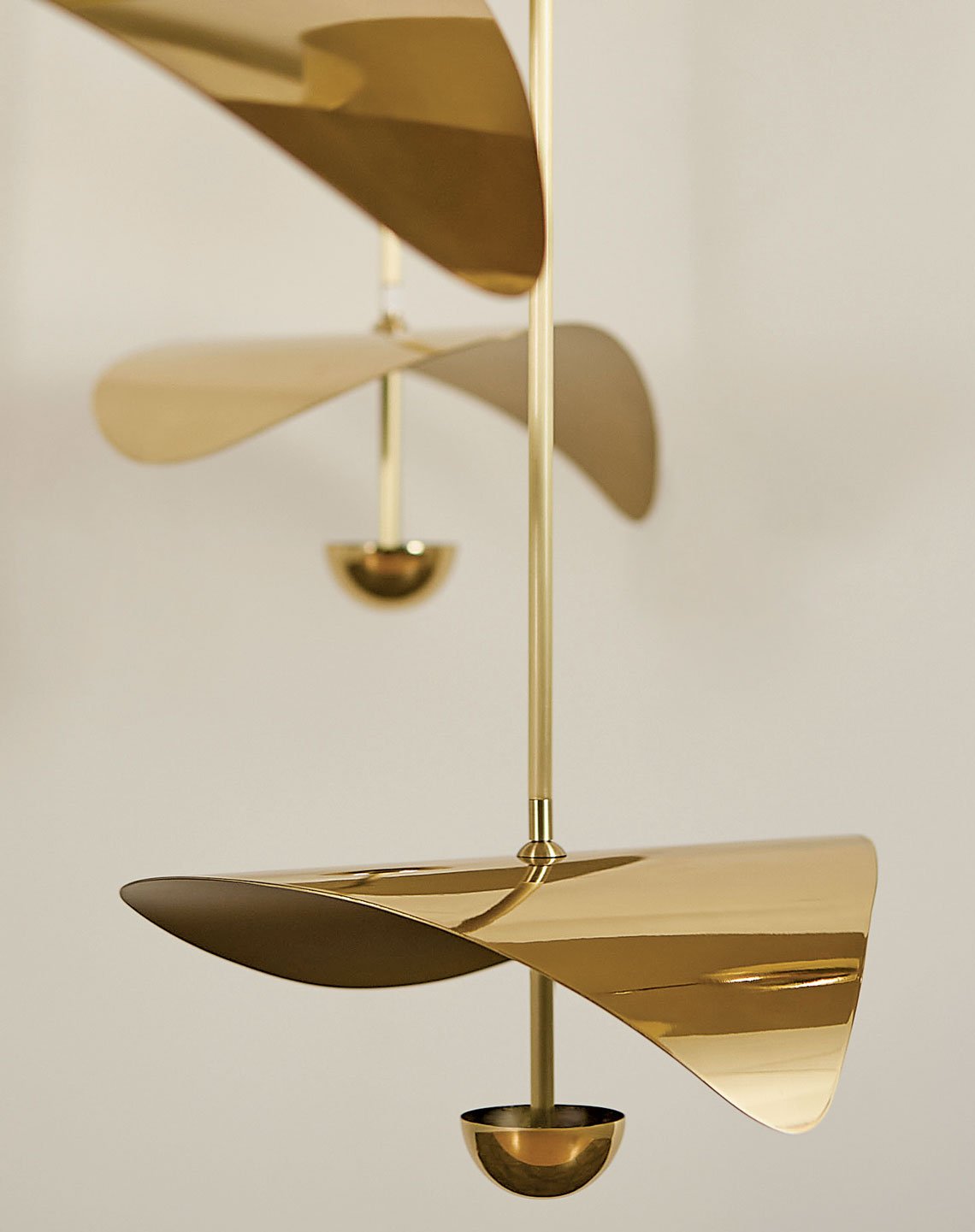 | 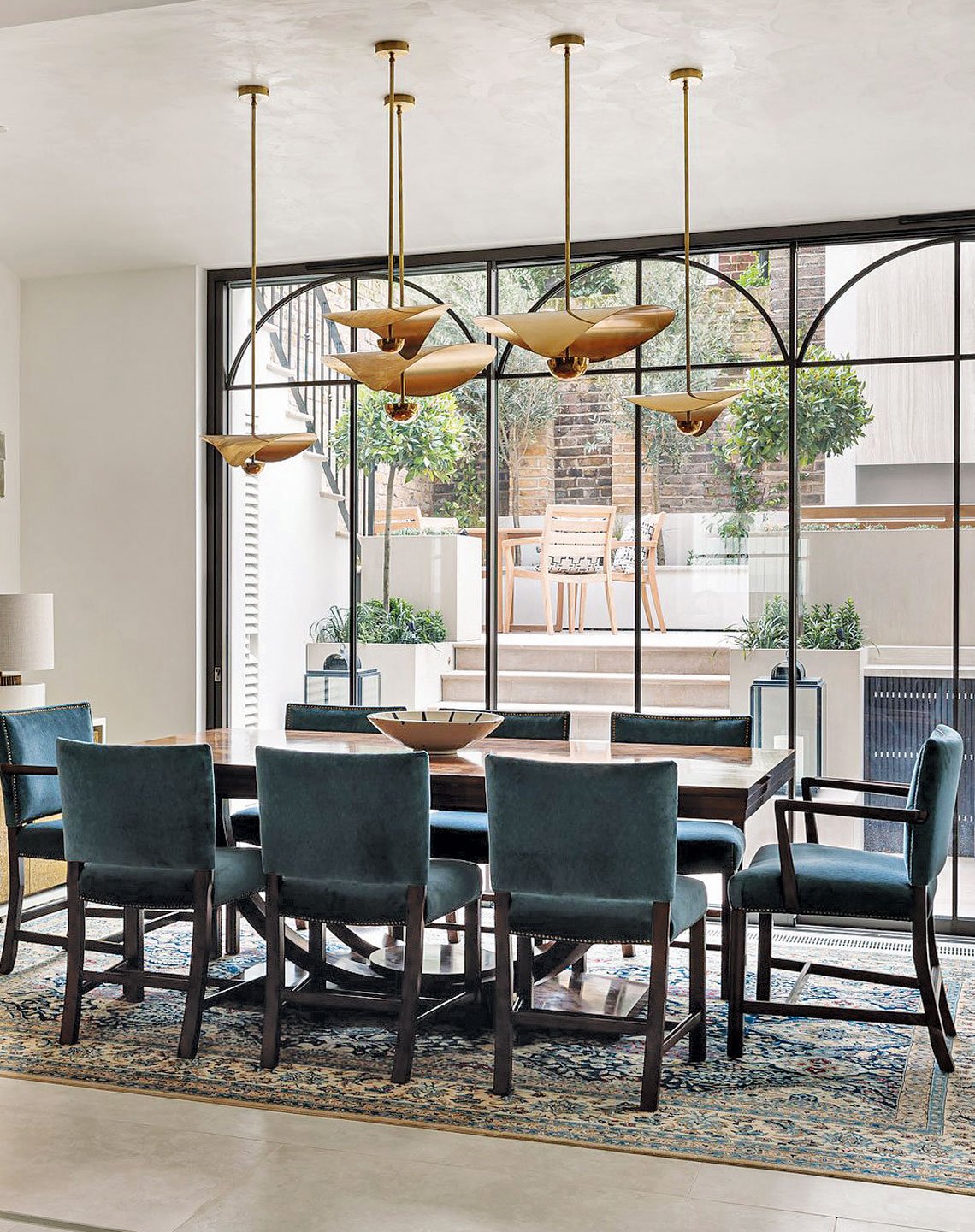 | |
Left: Close up of the Bonnie Cluster in polished brass. Light is cast up from semi-sphere cups and radiates outward from gracefully curved reflectors. Right: A beautiful Bonnie installation with 5 lights spreading ambient light across the length of a dining table. Interior design: Gordon-Duff & Linton | ||
He has the attitude of an artist towards his work — for him, function follows form. How it looks is always more important to him. The results are some of the most ingenious sculptural lighting on the market, for which he has a strong following among international designers and collectors. Last year, he produced 100 lighting pieces; most of them were commissions.
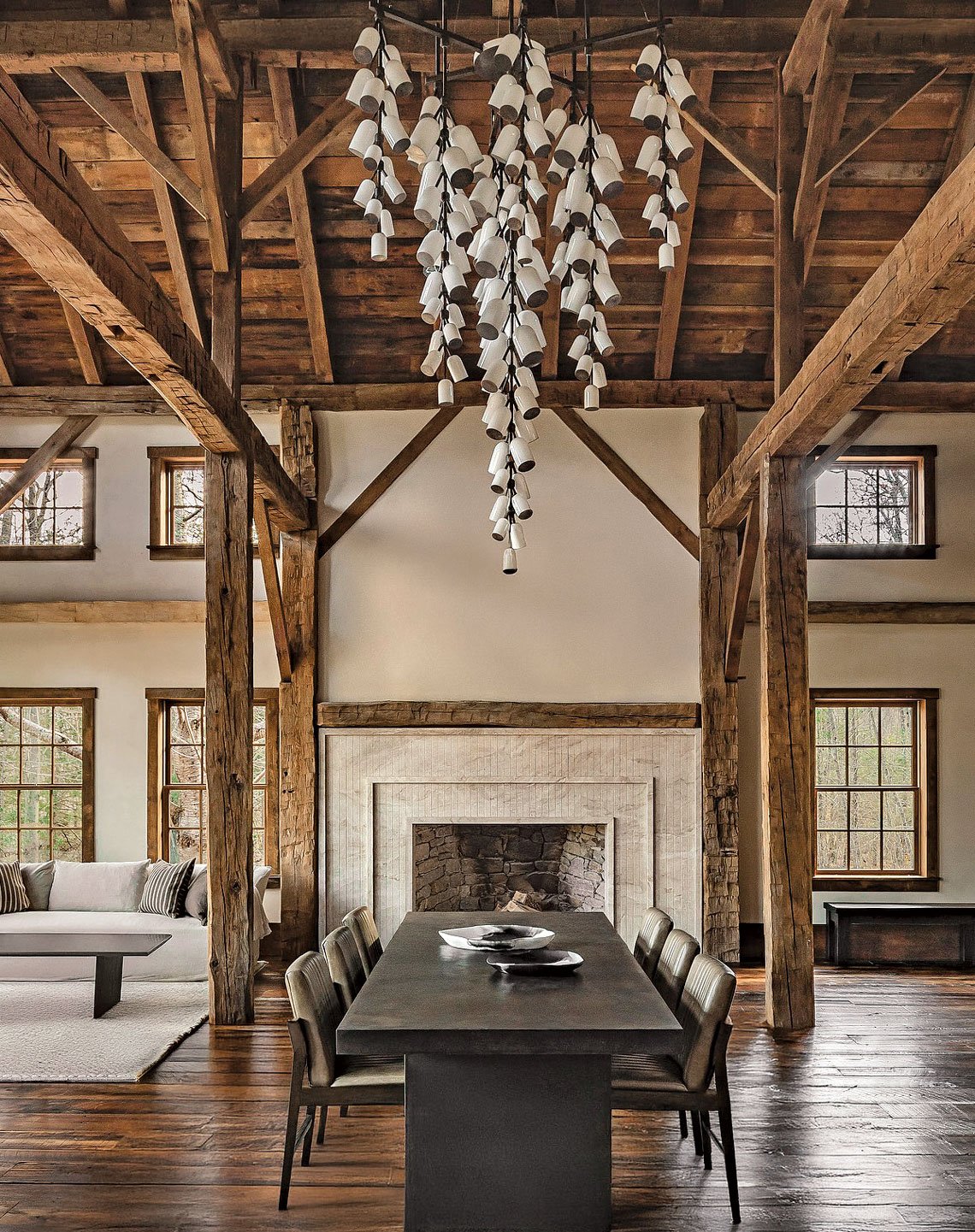 | |
Descending from the rustic rafters of a spectacular Connecticut party barn by architecture/interiors firm NAINOA, the Lauren chandelier has clusters of softly glowing lights and graduated “stems” that resemble flowering vines. Also available in a horizontal configuration, as a sconce or a single strand pendant, and custom configurations. |
Holleman is the first to admit he has had “a few lucky breaks.” Months after moving to Sweden, the late AD100 New York designer Amy Lau, who had seen his lighting for the One World Trade Center redevelopment, decided to take a gamble on his new lighting venture. “She invited me to create a chandelier for the Manhattan apartment of a member of the Rockefeller family,” he explains. “This sale, my first, launched the business.”
The commission didn’t just put capital in his pocket; it opened doors to the influential New York design market. “I became friends with Amy, who put me onto other interior projects and designers she was working with, which continued until she unfortunately became too sick to work before her untimely death,” he says. “She made a habit of finding and supporting emerging designers like me, and I will always admire and respect her for that.”
Today, Ovature Studios employs 8 people full time, along with an army of part-time workers. To support his multi-faceted projects, Holleman maintains different studios on the property for different activities: a glass studio for glass blowing, a brass-fabrication and finishes workshop, and a studio for assembly, testing, and quality control. “My typical day involves a bit of everything: managing and training staff, production, supply chain, clients, and project management. I also jump on the tools and try not to forget to do the fun, messy stuff too!”
“Ideally, what I want to be doing is focusing on the design and prototyping with less day-to-day operational stuff,” he says. Ideas for pieces come to him all the time. “Practice makes perfect, and I sketch new ideas every single day,” he says, “I map out a conceptual idea first, and then at some point, if it feels like it’s right, we make a 3D file on the computer to think about it as a product. In the early days, we made smaller-scale models to test, but now, going on 5–6 years at this, we’ve got a good idea of what works and doesn’t. So we’ve become better and more confident at tackling new designs.”
.jpg) | 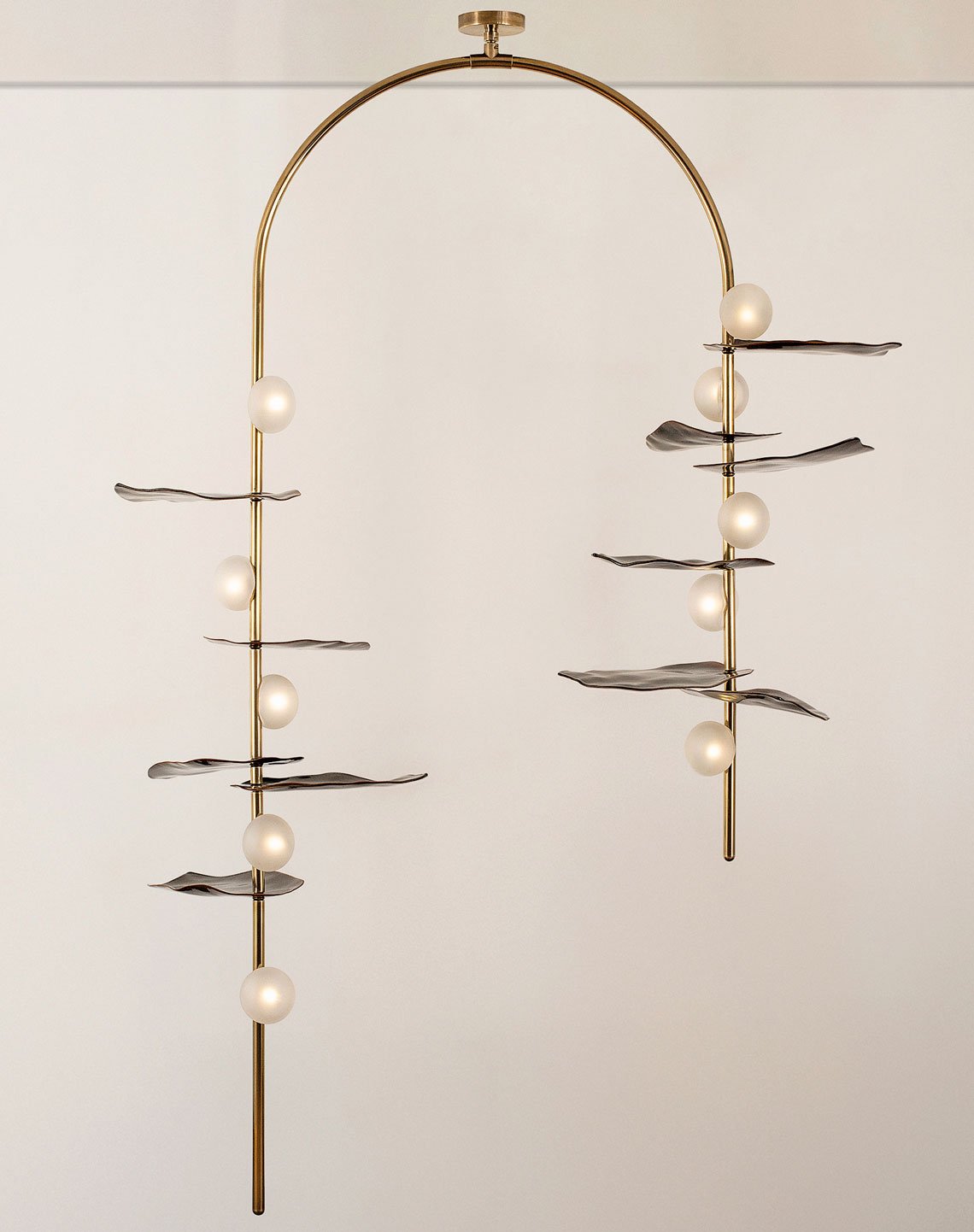 | |
Left: The Dia Chandelier. Like musical notes on a staff, circular pockets of light float up and down on the swirls and folds of brass arms. The LED lights can be articulated to angle light where you want it. Available in straight horizontal/vertical formats or curvy configurations. Right: The Sofia Chandelier, shown in Config 1 with Antique Brass structure and chocolate porcelain petals. A recent custom design featured plaster finish petals with a thin brass edge reveal. There are limitless possibilities, each one handmade and uniquely yours. | ||
Holleman admits that he has an obsessive personality. “I think you have to be obsessed to do this,” he says, “you have to dream about what you are working on at night, and that is very much my personality.” Everything he looks at and sees around him goes into a kind of “mental catalog of what I like and don’t like that I draw upon,” he says. “Because I am so fixated on lamp designs, I often perceive things as lamps that aren’t. I see something and think ‘that would be cool to interpret into a lamp’.”
Everything but the cast parts is handmade by his team and then assembled in his workshop. Mostly, his lighting is custom made. “We have a standard range, but we don’t really sell a standard product,” he says. “Our clients tend to come to us with a particular space and ask what I would suggest, so we are mostly making one-off pieces. It’s a long and involved process, partly because every project is different and partly because I’m always trying something new, so the process is never simple, and I like the challenge.”
 | .jpg) | |
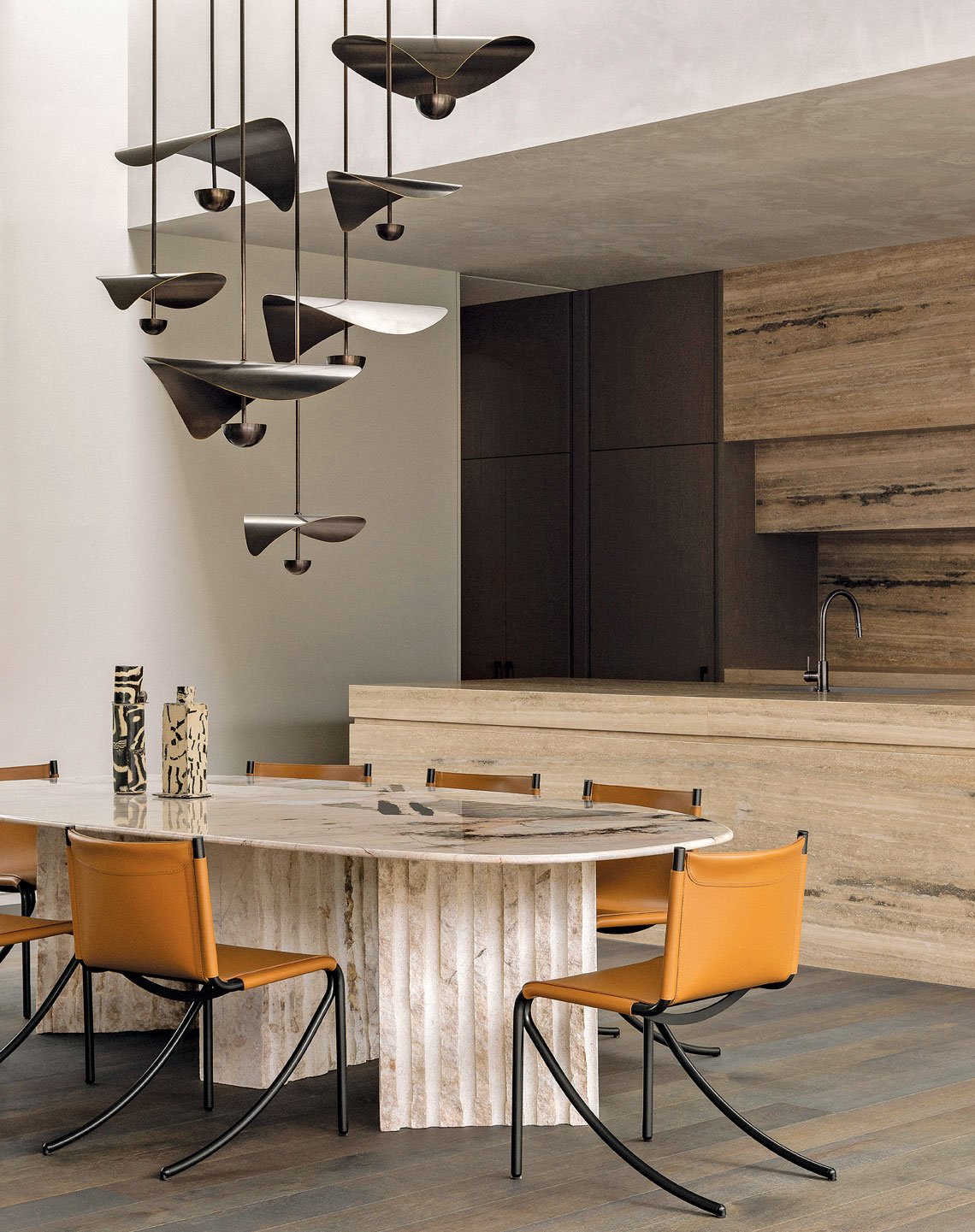
| Left: A Bonnie cluster in soft bronze finish graces the upper atmosphere of a double-height dining area, serving as art, architecture, and lighting. The Bonnie series design was inspired by the organic form of the saffron crocus flower. Interior design: Simone Haag, photo: Timothy Kaye. Right: Bonnie sconces emit a dreamy glow along a hallway. | ||
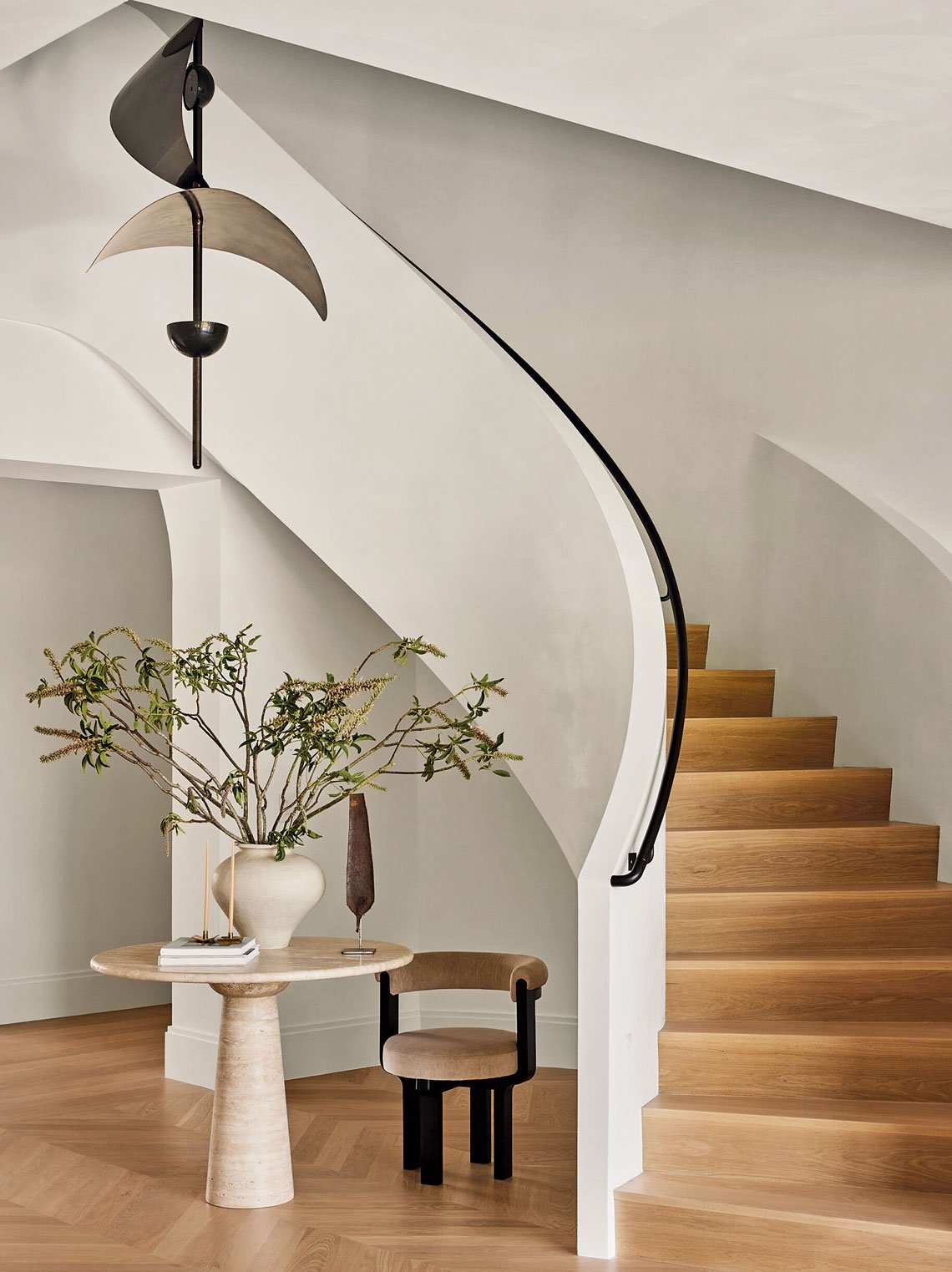 | 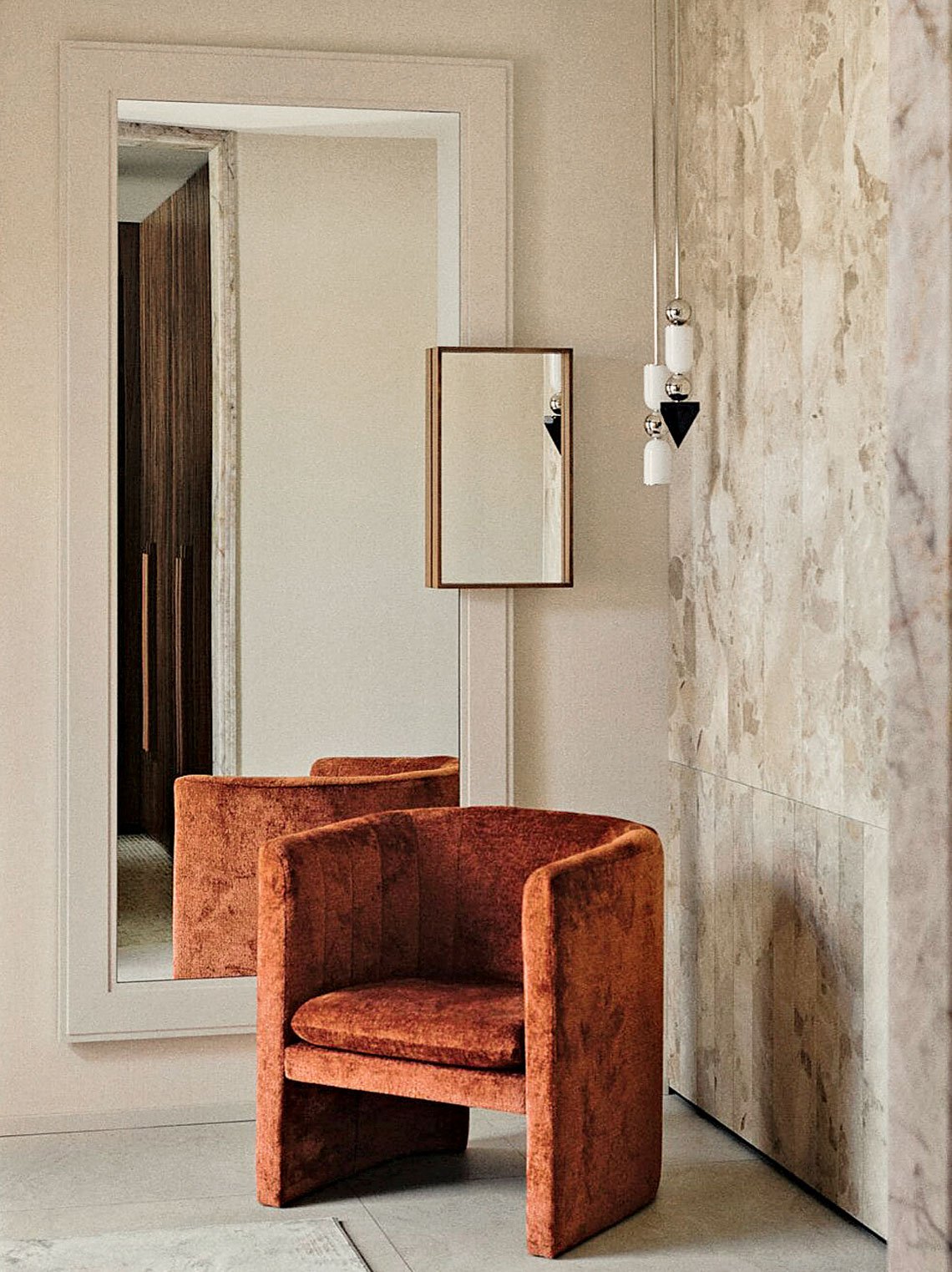 | |
Left: The curves of a Bonnie 1 pendant echo the sweep of a curvy staircase in this stunning entry foyer, and its deep, rich blackened bronze finish stands out against the swath of pristine plaster. Interior design: Monica Fried Design, photo: Nicole Franzen. Right: Laur Pendants 1 and 2 in brass, onyx, and hand-blown glass. Laur Pendants lend themselves to myriad configurations, and installations can combine those with LED lights and complementary ornamental elements. | ||
The elegant, minimal Dia Contemporary LED Chandelier is one of his most requested designs. It’s a versatile, functional design with, as he says, “swirling sculptural bends and folds of solid brass that support circular pockets of light.” At a glance, it resembles musical notation floating in space. Holleman concealed the brass joins within the LED light sources, which can themselves be adjusted “to direct and shape the light.” Musical references appear in other designs. The Lilly, Laur, Bonnie, or Sofia configurations, for example, exhibit subtle changes in repetition across vertical and horizontal axes. “The same subtle changes in repetition can be found in nature,” the designer explains. Nature is his primary source of inspiration, he says, along with music, and the forms of trees, leaves, flowers, and rocks are a constant reference point in discussions about his work. The Bonnie Chandelier, made of solid brass in various configurations, was inspired by “the form of a saffron flower,” Holleman says. “This pendant has organic flower-like shapes for lights, with each ‘petal’ of the flowers reflecting warm light from a concealed LED light source.
Holleman has also started making furniture. “We haven’t released works for sale, but I have an obsession with sculptural chairs,” he says. He’s also been designing coffee tables. “I’ve only been doing lamps until now, but Ovature was never about lamps; it was about art. It just so happened lamps were an accessible and commercial way to sell art. Truthfully, my lamps glow, but they don’t illuminate much, and that’s the point. They are artworks.”
 |
Discover More From Ovature Studios on Incollect
 |