







Jon Isherwood Makes Marble Bloom at Leila Heller Gallery
 |
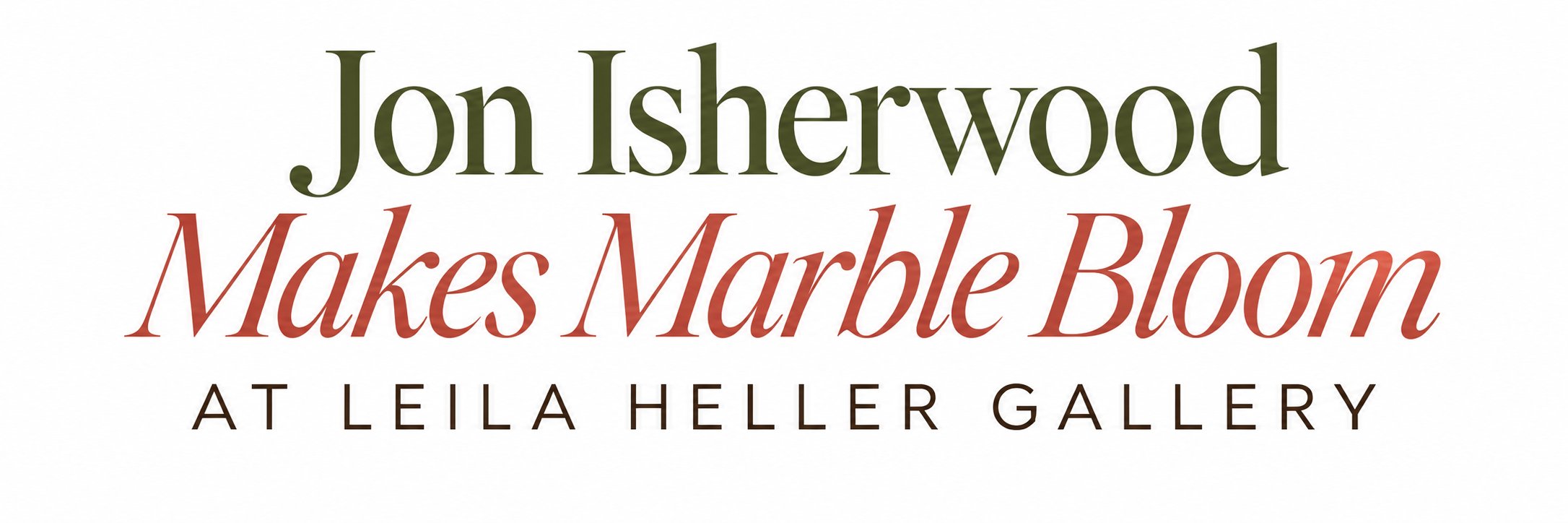
Those We Care For, 2026. Calacatta Gold marble, 10 x 26 x 15 in. |
 |
By Benjamin Genocchio
Photos courtesy of Jon Isherwood
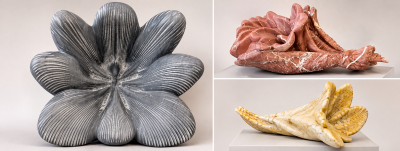
At Incollect dealer Leila Heller Gallery in New York, the British-born sculptor Jon Isherwood takes one of the oldest and most durable materials in art history and makes it behave like something altogether more delicate. His carved marble blossoms appear to swell, fold and unfurl, their surfaces suggesting the softness of petals rather than the toughness of stone. It is an unlikely marriage of material and subject, but that contradiction is precisely what makes the work so interesting.
Isherwood, born in 1960, has spent three decades exploring the possibilities of stone sculpture, particularly the relationship between its physical weight and the illusion of movement. His abstract works often look as though they have been stretched, compressed, or gently twisted, their surfaces animated by rhythmic grooves and incisions. In his hands, marble becomes surprisingly pliable. One might almost imagine it yielding to the pressure of human touch.
 |  | |
| Left: Living in the Sunshine II, 2020. Bardiglio Imperiale marble, 15 x 17 x 15 in. Right: Given and Received II, 2022. Rosso Cardinale marble, 11 x 20 x 13 in. | ||
These floral sculptures grew out of a public art commission installed along Broadway in 2021, when eight of Isherwood’s blossoms appeared on the streets of New York. The inspiration came partly from Édouard Manet’s paintings of peonies and partly from Isherwood’s memories of bouquets thrown onto the stage at Lincoln Center. Another starting point was a line from a Ralph Waldo Emerson poem: “Earth laughs in flowers.” It prompted the sculptor to consider why people give flowers to one another, and how something so common can express such a diverse, complicated range of emotions.
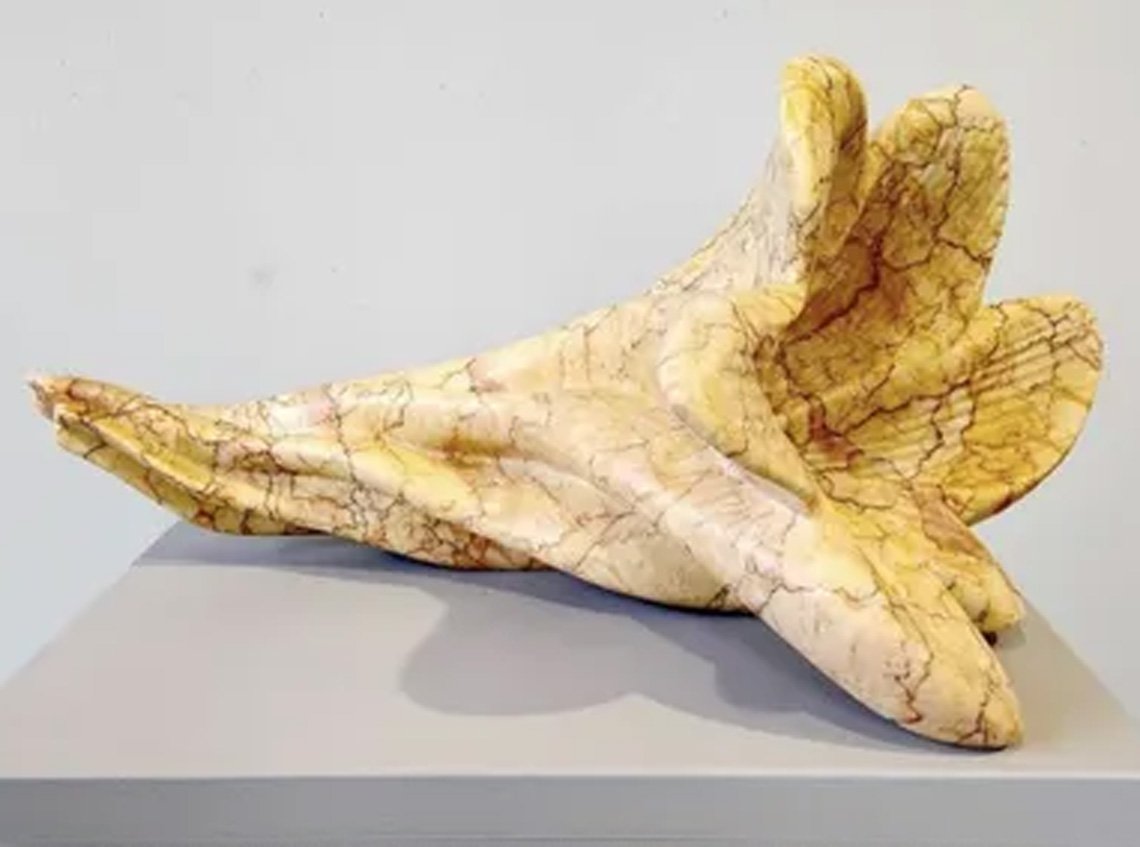 |  | |
Left: Yours Forever, 2023. Crema Valencia marble, 14 x 26 x 16 in. Right: Mazzolino, 2024. Roso Cardinale marble, 16 x 32 x 21 in. | ||
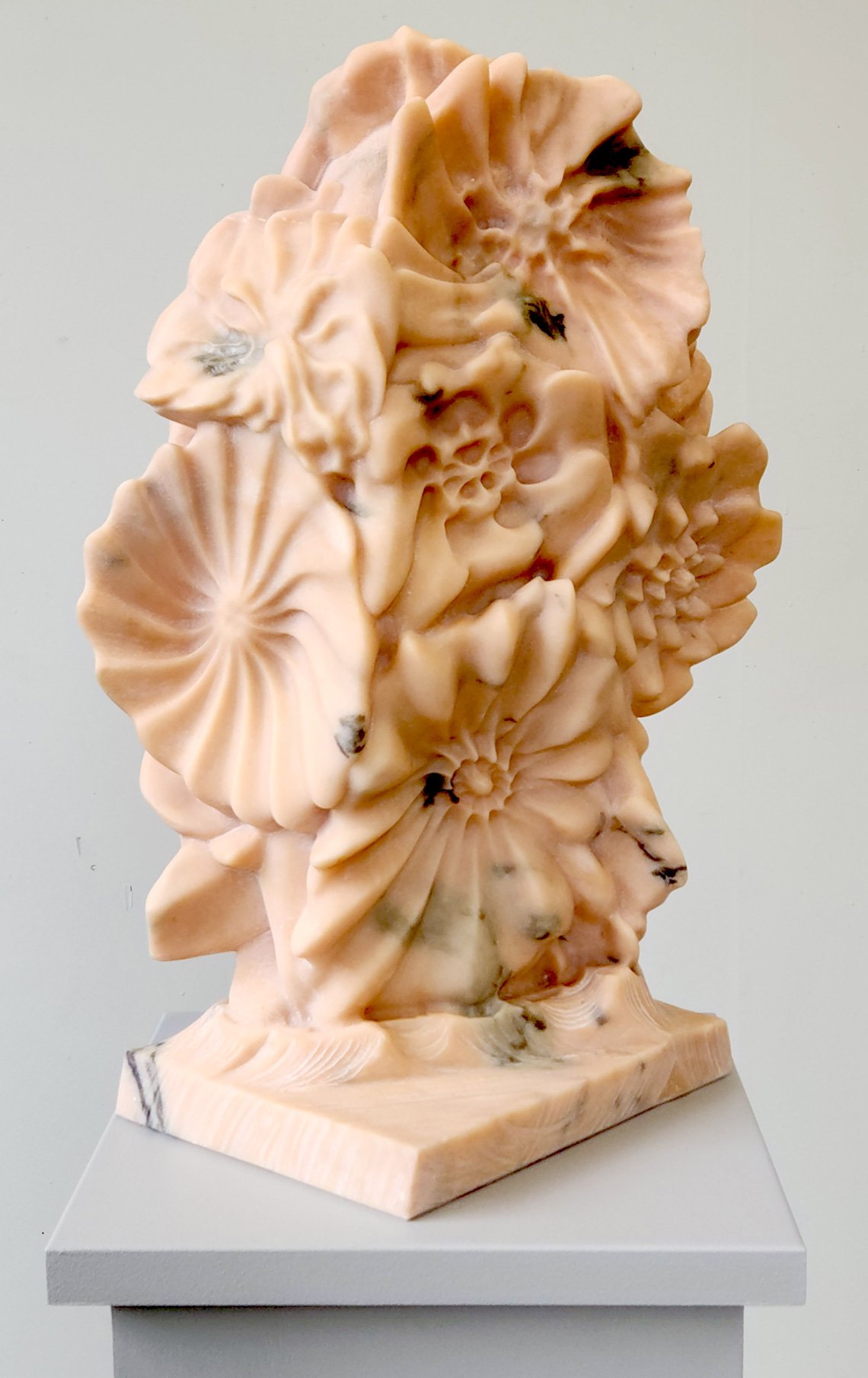 | |
Siempre Tuo (Always Yours), 2026. Rosa Portogallo marble, 29 x 20 x 12 in. |
Yet the sculptures are not simply botanical forms translated into stone. Their appeal lies in the tension between representation and abstraction. The blossoms are recognizable as flowers, but their exaggerated volumes, curling edges, and sculptural rhythms push them toward something more ambiguous, as in Those We Care For, 2026, made of Calacatta gold marble; Living in the Sunshine, 2020, made of Bardiglio Imperiale marble; or more strikingly, Mazzolino, 2024, made of Roso Cardinale marble. The carved lines that travel across their surfaces reinforce the impression of growth and movement, while also introducing patterns independent of underlying forms.
The work also has an interesting technological dimension worth mentioning. Isherwood was an early adopter of technology, specifically computer-controlled stone carving using digital scanning, modeling, and robotic fabrication alongside traditional hand finishing. His process begins with intuitive, organic forms that he translates into digital renderings and then carves in stone. The technology lets him achieve complex contours and precisely articulated surfaces, but the results retain a distinctly tactile quality.
This combination of mechanical precision and sensual form reaches its height in Sempre Tuo (Always Yours), 2026, a bold, towering assemblage of blossoms made of Rosa Portogallo marble. This impressive pinkish-orange and white object stands 29 inches tall, recalling an effusive flower arrangement. The sculpture retains a sense of both the handmade and the manufactured, but rather than treating technology as an aesthetic in itself, Isherwood seems to use it to push once again and extend the possibilities of what stone can do.
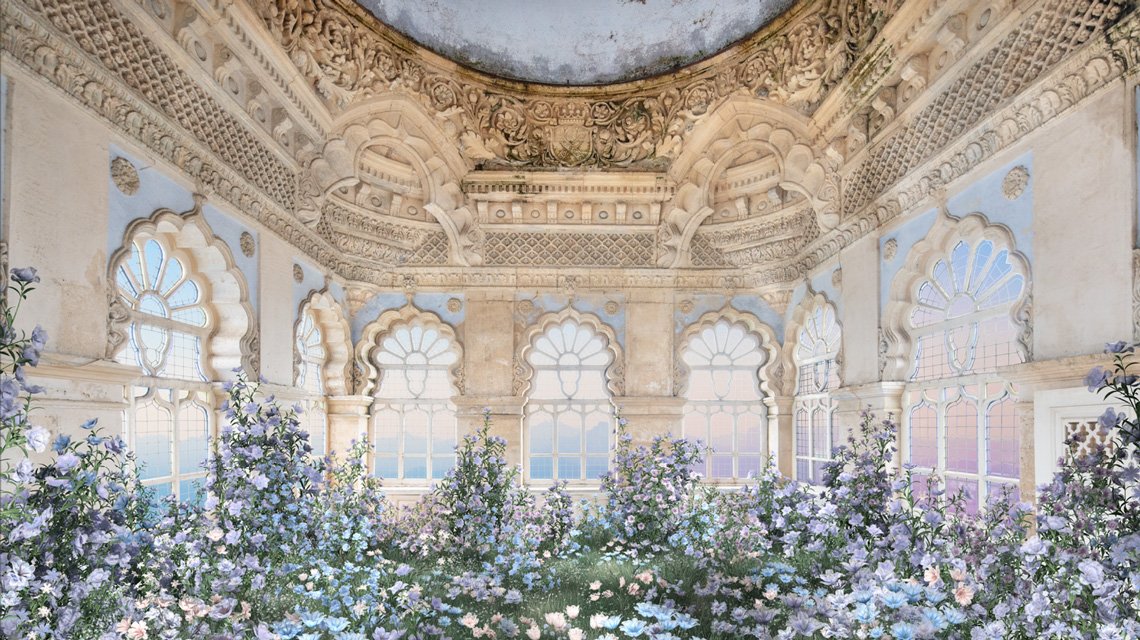 |
Tides of Time, 2025, Ryan Koopmans & Alice Wexell. Archival pigment print, mounted on Dibond and framed in maple. Edition of 3 + 2AP, 45 × 80 in. Photo: Leila Heller Gallery |
The exhibition is presented alongside The Wild Within, featuring photographic and digital works by collaborative duo Ryan Koopmans and Alice Wexell. Their images introduce a different understanding of nature and permanence. Working from photographs of historic buildings, including a nineteenth-century villa in Beirut and Lebanon’s Grand Aley Hotel, built in 1926, the artists digitally introduce luxuriant vegetation into abandoned or deteriorating interiors.
The pairing is more interesting than it might initially appear. Isherwood uses an enduring physical material to preserve something ephemeral, while Koopmans and Wexell use digital technology to imagine architecture's transformation. One arrests nature in stone; the other allows it to run wild in images. Both practices depend on a conceptual paradox: attempting to preserve something by fundamentally changing its nature.
Ultimately, Permanence in Bloom is less about flowers than about the strange possibilities of sculpture in the digital age. Isherwood takes something hard and makes it look soft, something heavy and makes it appear weightless, something permanent and gives it the appearance of a moment about to disappear. The flowers may never wilt, but they still seem caught in the act of blooming.
Jon Isherwood: Permanence in Bloom
Leila Heller Gallery
22 East 80th Street, New York
October 29–November 21, 2026
 |
Discover More From Leila Heller Gallery on Incollect
 |