










Bill Fine, Artnet Veteran and Art World Advertising Legend, Is Moving On
 |
by Benjamin Genocchio
 | |
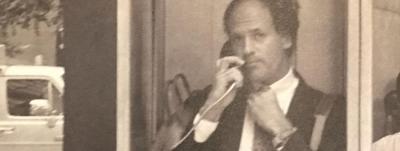
Bill Fine, New York, 1996. Photo courtesy Paige Powell. |
Bill Fine is leaving Artnet, ending an association stretching back nearly three decades and closing a significant chapter in a remarkable career in art publishing. His departure marks the end of an era for a company he helped transform from a pioneering online art market platform into an international art data and media business. He is also one of the last great advertising men from the glory days of print publishing.
I have known Bill for many years, first working with him at Louise Blouin Media, where we helped build and rebuild artinfo.com, Art+Auction, and Modern Painters following the global financial crisis, and later at Artnet, where I founded Artnet News. Bill returned to Artnet in 2014 to lead the commercial side of the new publication. We had worked well together before, trusted each other and shared a conviction that serious art journalism could attract an international audience and become a successful business. Neither of us knew if it would work.
Within two years, we had turned Artnet News into the world's most widely read dedicated art news site. It was an extraordinary period of growth, experimentation and occasional missteps. Bill was central to that success, bringing decades of advertising experience, an enormous network of relationships and an instinctive understanding of how the art business worked.
His career began far from New York's contemporary art market. While studying pre-med at Northwestern University, he worked in the demanding production departments of the Chicago Sun-Times and Chicago Daily News, learning the newspaper business from the ground up. He subsequently entered advertising sales at Esquire before moving to The New Yorker, where he spent five years developing major national accounts. Rolling Stone then recruited him to establish its first Chicago and Midwest advertising bureau.
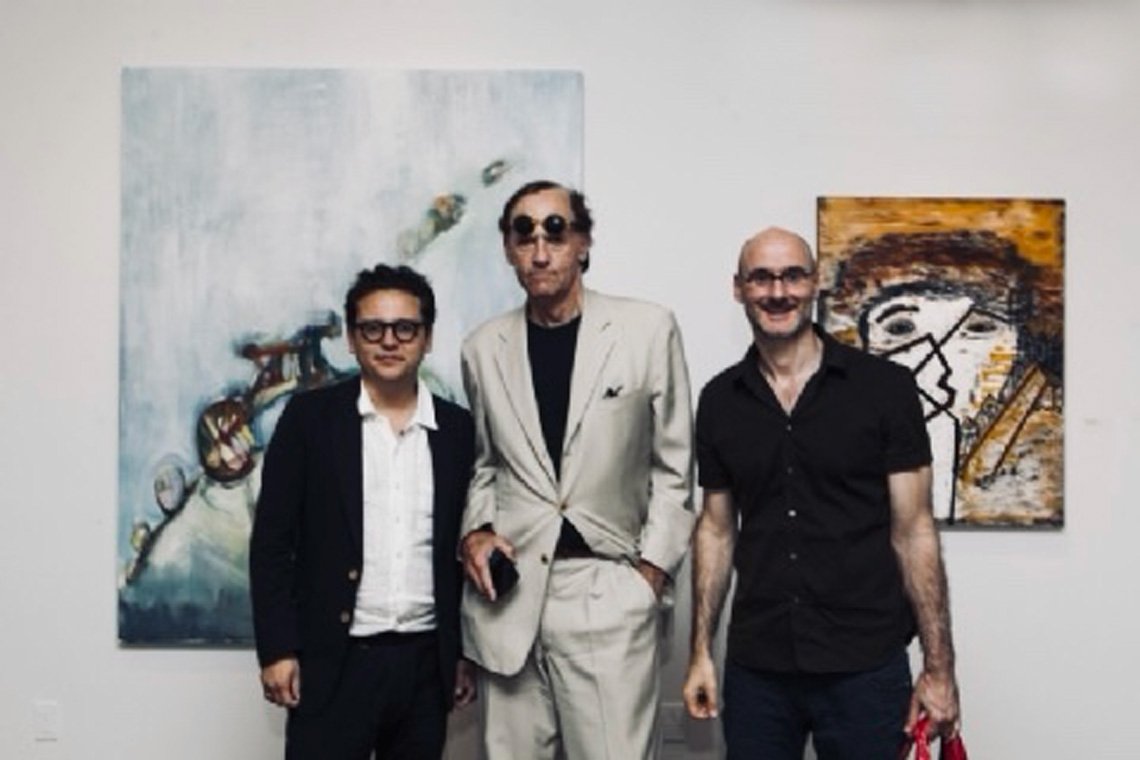 |
Georges Bergès, Bill Fine, and Benjamin Genocchio at the opening of the Georges Bergès Gallery in SoHo on June 11, 2015, at 462 West Broadway, New York. Photo courtesy of Georges Bergès Gallery. |
In 1981, he joined Hearst to help launch the American edition of Connoisseur alongside Thomas Hoving, the flamboyant former director of the Metropolitan Museum of Art. It introduced him to the commercial possibilities of art publishing, and he never really left the field.
He subsequently spent more than 13 years at Peter Brant’s publishing empire, overseeing advertising and commercial operations for Art in America, The Magazine Antiques, and Interview. These were the glory days of glossy magazine publishing, when relationships mattered, advertising budgets were generous, and a good publisher was expected to know everyone worth knowing. They also needed to handle their liquor and tolerate volatile colleagues.
Bill joined Artnet in the 1990s, working with the founder Pierre Sernet and later Hans Neuendorf to develop the commercial potential of the internet at a time when much of the art establishment remained deeply suspicious of it. As president of Artnet Worldwide from 1997 to 2011, he helped expand its gallery network, build its advertising business, and navigate the 2000 dot-com collapse and the upheaval following the September 11, 2001 attacks. These were hard years.
After an interval working elsewhere, he returned to Artnet and held senior commercial and publishing positions. He remained with the business through its acquisition under Beowolff Capital in 2025 and the announcement of shared leadership with Artsy in April 2026.
Titles and corporate milestones tell only part of the story. Bill belongs to a generation of publishers who understood that the art business is fundamentally a people business. He knew collectors, dealers, auction house executives, advertisers, and publishers, cultivating relationships that often lasted for decades. He also understood something increasingly rare in an age of digital metrics and algorithms: that trust, loyalty and personal relationships are not incidental to business success. They are the business.
Bill has never been particularly good at switching off. I once watched him pull an advertising contract out of his tennis bag during a summer match in the Hamptons, casually telling his doubles partner, “I just need you to initial here.” For Bill, business has always been a way of life. And knowing him, I suspect this latest announcement will simply be an opportunity to start all over again.