

William Farrell and the Art of Imperfection
JK Art & Design Projects
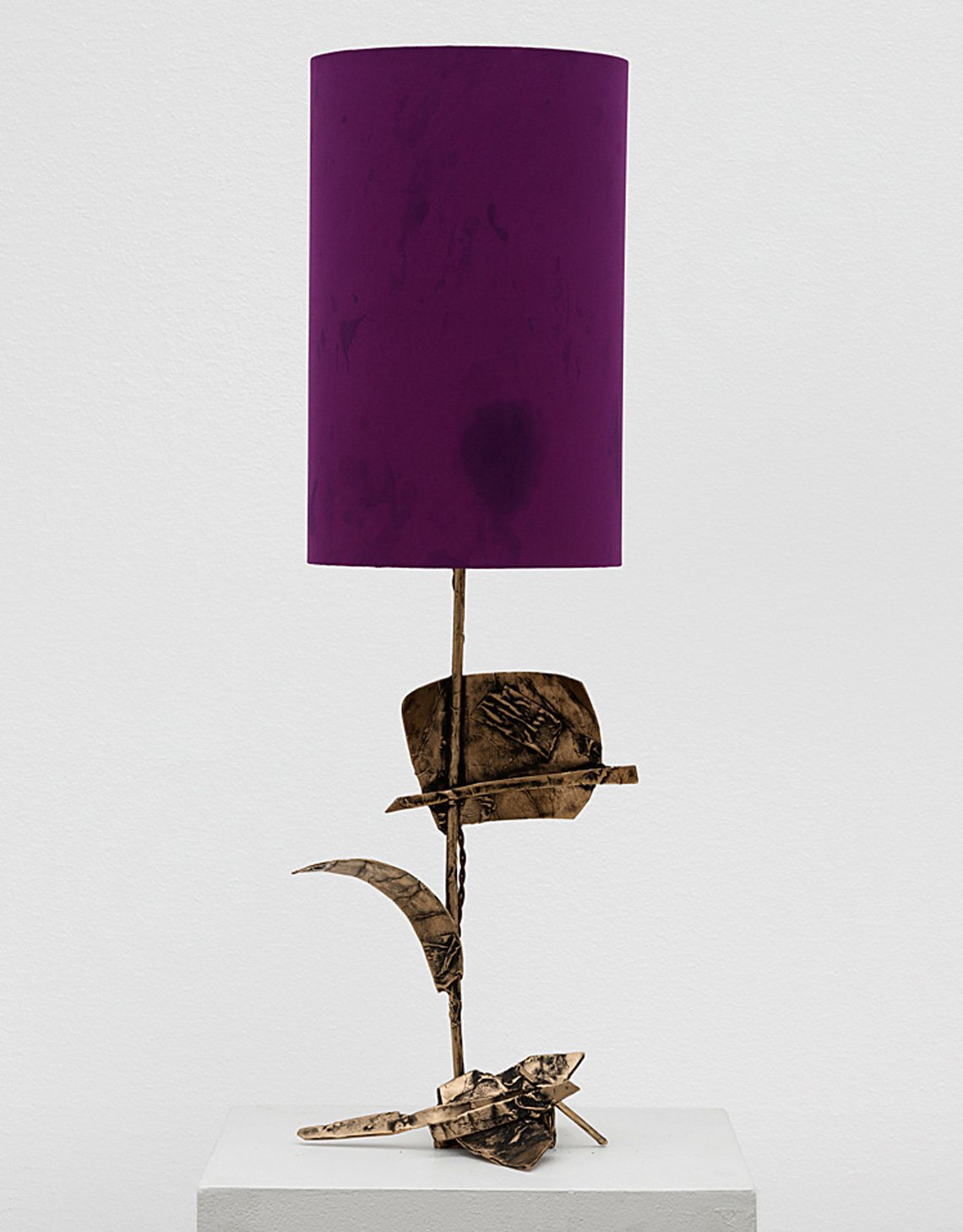 | 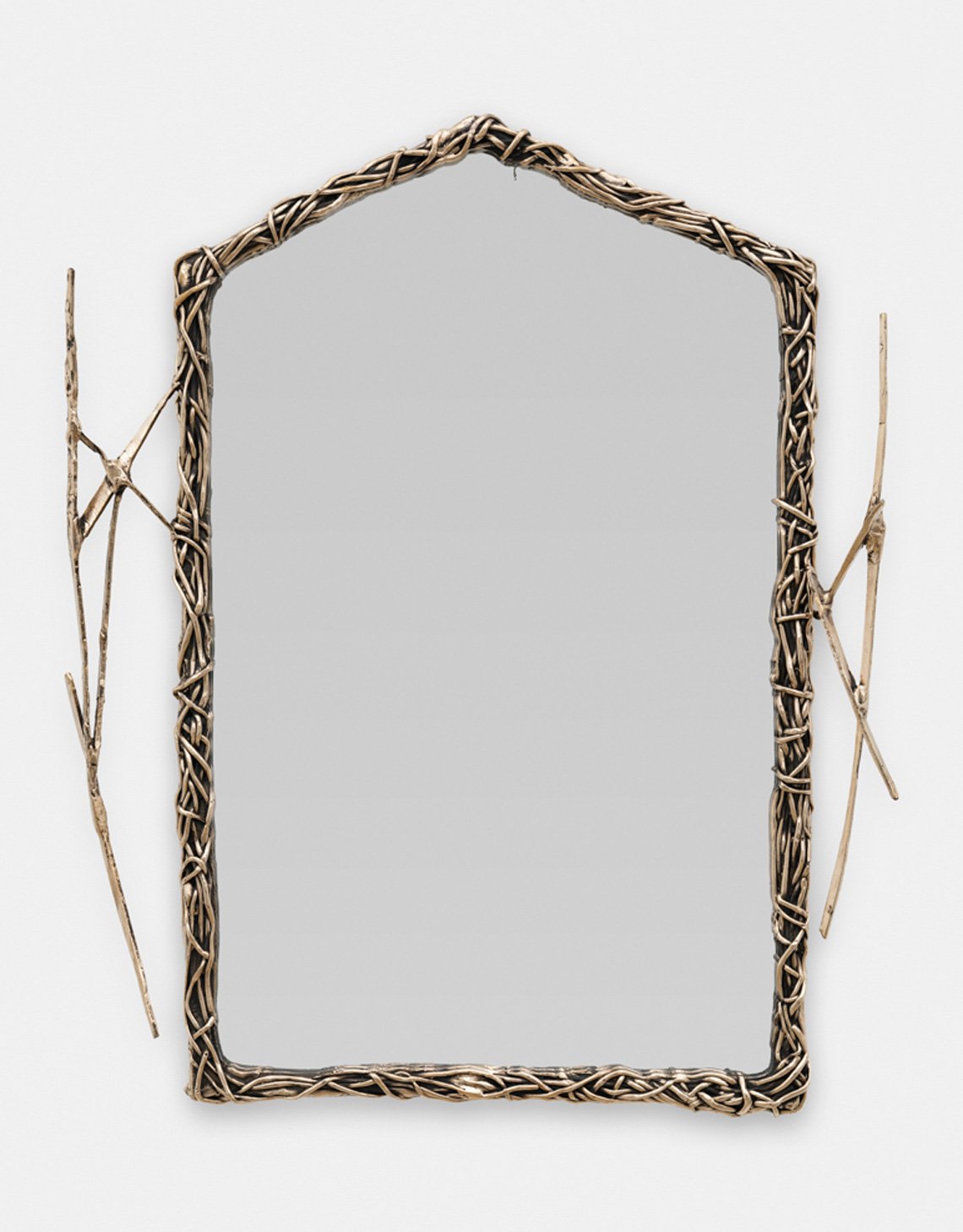 | 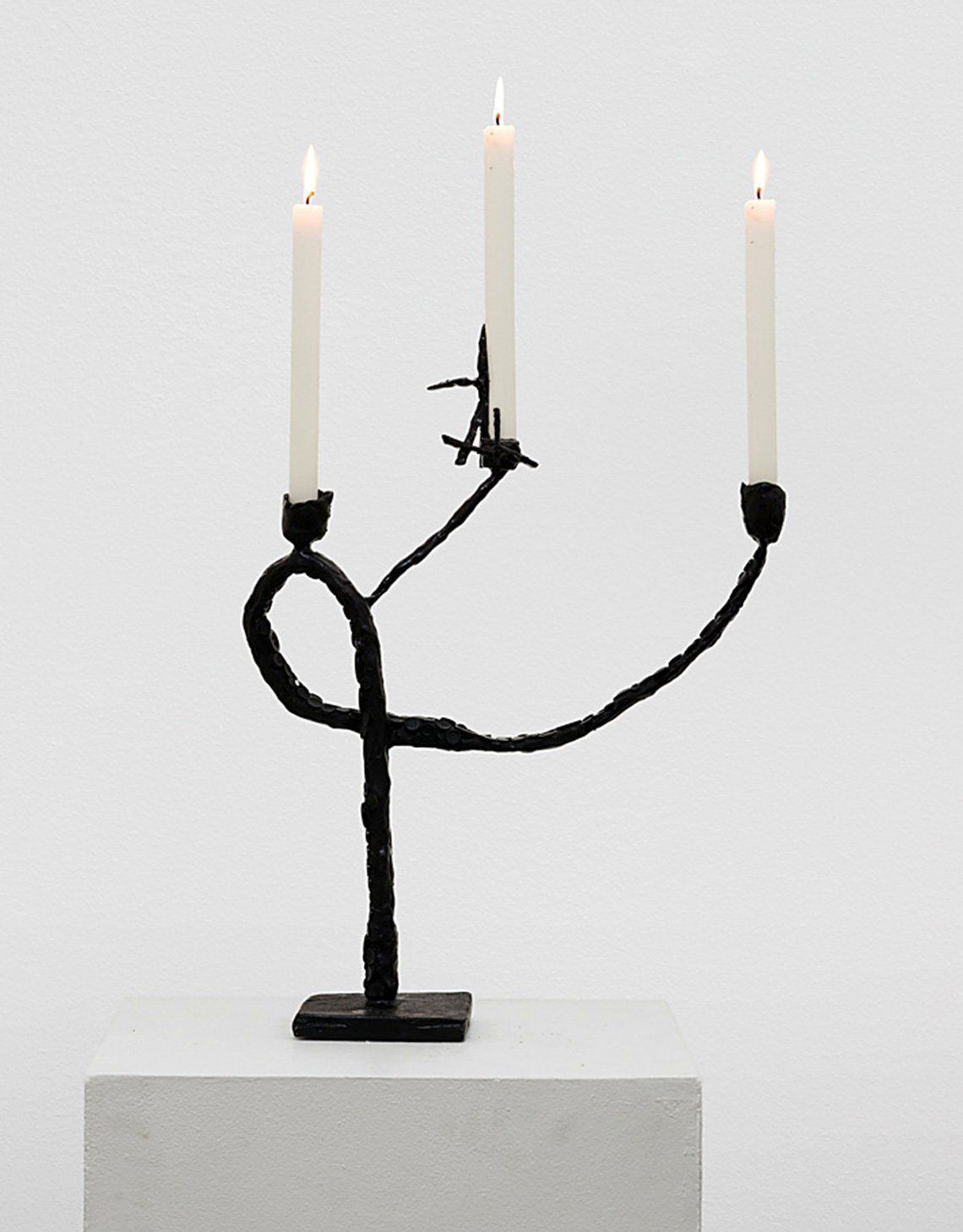 | ||
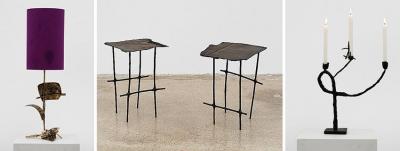
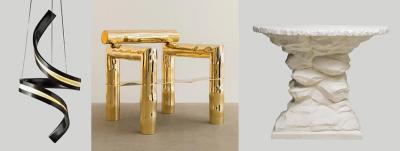
| Left: Lbidal Lamp, 2026, polished cast bronze, dyed silk lampshade; center: Werma Mirror, 2026, polished cast bronze; right: Octa Candelabra, 2026, bronze. | ||||
 |
By Benjamin Genocchio
Photos courtesy of William Farrell and JK Art & Design Projects
William Farrell has an unusually casual way of talking about bronze. For a material freighted with several thousand years of cultural history—emperors, gods, monuments—he treats it almost like cardboard. He cuts things apart, adds pieces, changes his mind, incorporates scraps, and occasionally discovers the final form only after casting has begun.
“Bronze is such a finalized form in people’s heads,” Farrell says, “but you can treat it more lightly and loosely than people imagine.”
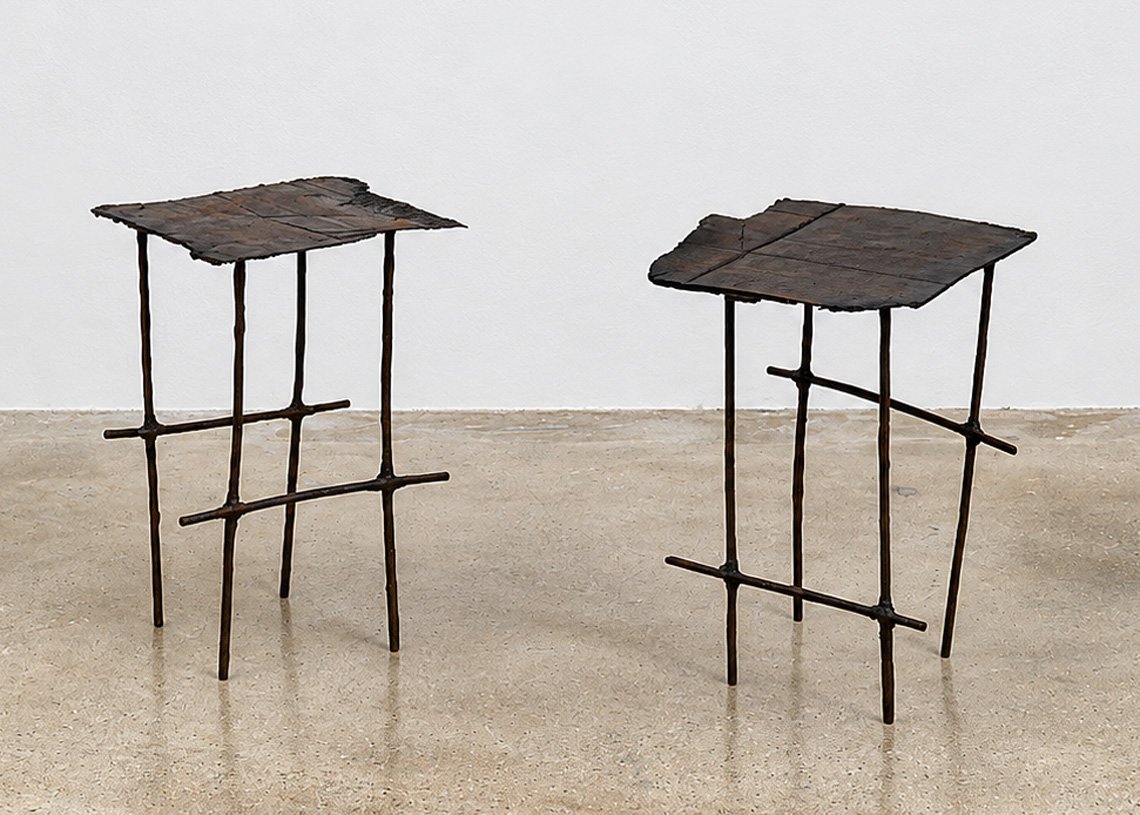 |
| Cardboardius Tables, 2026, bronze. |
That contradiction lies at the heart of Farrell’s emerging design language. His lamps, mirrors, tables, and objects have the physical presence and authority of bronze but often originate in decidedly unauthoritative materials: paper, tape, cardboard, twigs, or whatever else happens to produce the shape he wants. Instead of disguising those humble origins, Farrell preserves them. A fold remains a fold. A taped joint becomes a seam. An improvised construction survives in metal as a record of how the object was dreamed or conceived.
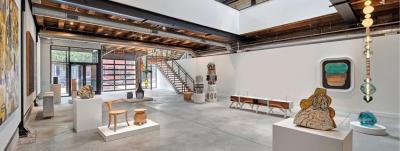
This past fall, that approach was on display at Farrell’s first solo design presentation at Incollect dealer JK Art & Design Projects in Southampton, New York. The exhibition marked an important moment for the 31-year-old Los Angeles artist and designer, best known until then as one half of Farrell Hundley, the collaboration he established with Elliott Hundley in 2019.
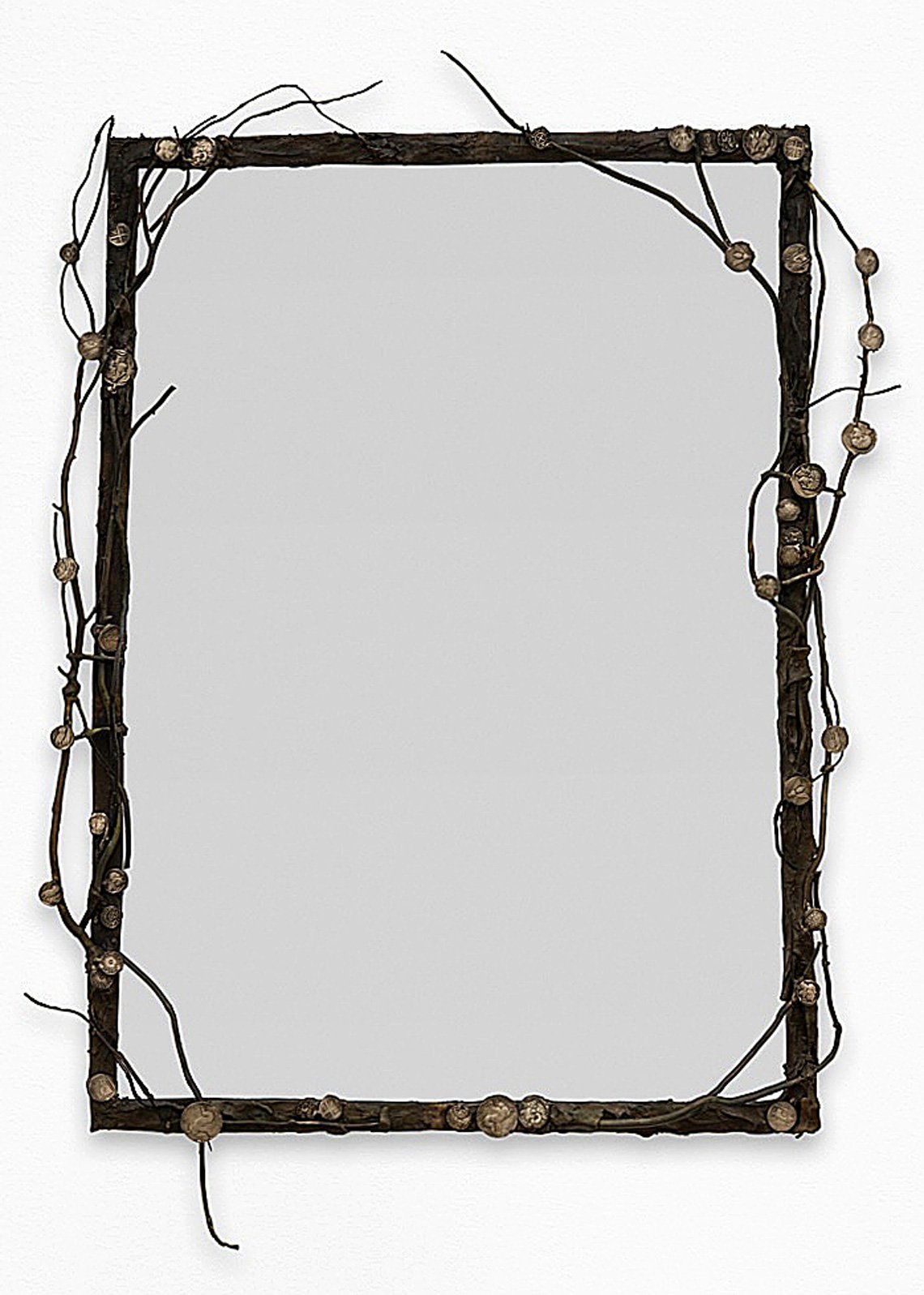 | 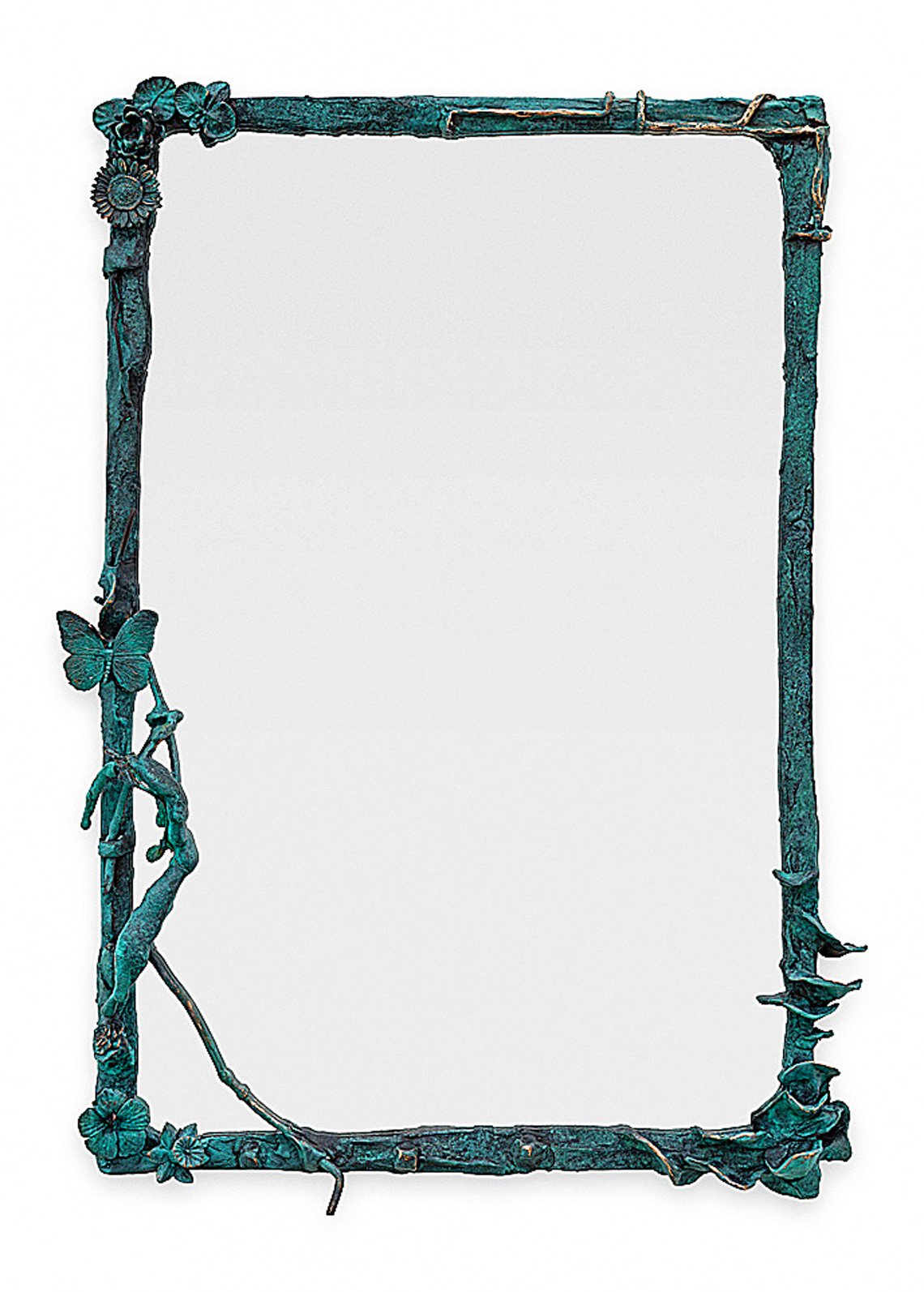 | |
Left: Tresius Mirror, 2026, bronze; right: Fluris Mirror, 2026, bronze. | ||
The new work was less a repudiation of that history than a sharpening of Farrell’s own voice, he says. “This series is not dramatically different from work I produced before,” he says. “It’s more a heightened version of what I was always doing.”
The exhibition came together through a longstanding relationship with JK co-founder Kate Vogel, who previously worked with Farrell at Friedman Benda. Farrell was in Berlin when Vogel called to say she was partnering with designer Jeff Lincoln in his Southampton gallery and asked whether he wanted to do a show. He agreed, with one condition of sorts: could he bring some friends? The resulting presentation placed Farrell’s work alongside that of Chandler James and Ryan Zhao, preserving something of the informal, collaborative atmosphere from which his practice developed.
“I first met William Farrell when I moved to Los Angeles in 2023 to open Friedman Benda’s new gallery location,” Vogel says. Back then, he was collaborating with the artist Elliott Hundley, as part of the duo Farrell Hundley. I immediately responded to their creative reinterpretation of history through a contemporary lens. When William made the move to focus on his own practice, I was delighted to see that he took time to hone his creative voice. It has yielded groundbreaking new work which I really wanted to show and was thrilled when he said yes.”
For Farrell’s contribution to the JK show, the unlikely intellectual starting point was Satyricon, the fragmentary Roman novel attributed to Petronius, the courtier traditionally described as Nero’s arbiter of taste. Written during the first century AD, it is a bawdy satire of appetite, social climbing, bad manners, and conspicuous consumption. Farrell became fascinated by its depiction of people attempting to manufacture status through possessions and display.
The reference was especially apt for a designer making expensive bronze objects from constructions that might begin with little more than tape and cardboard. Farrell describes the process in almost religious terms as a kind of transubstantiation: the humble becomes precious without entirely surrendering its former identity. Something provisional becomes something that looks archaeological, expensive.
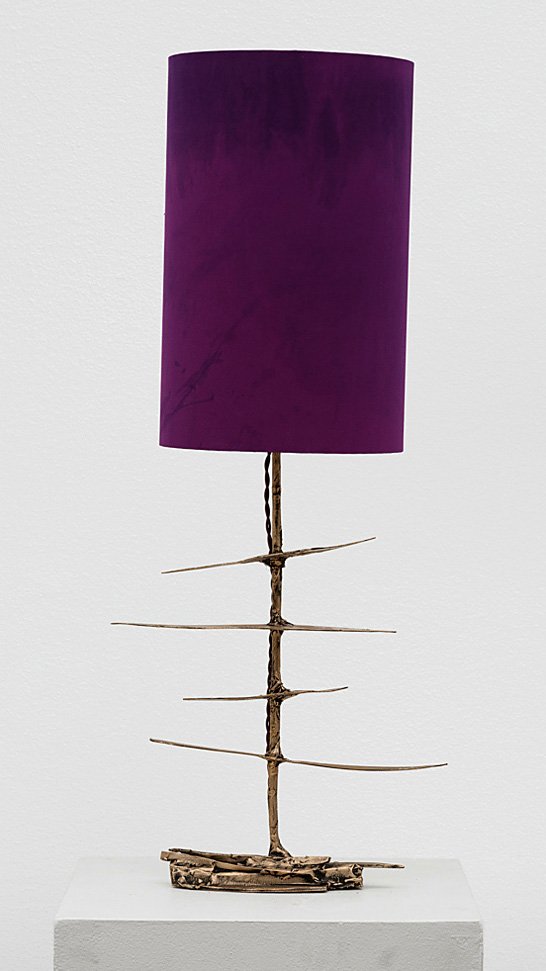 | 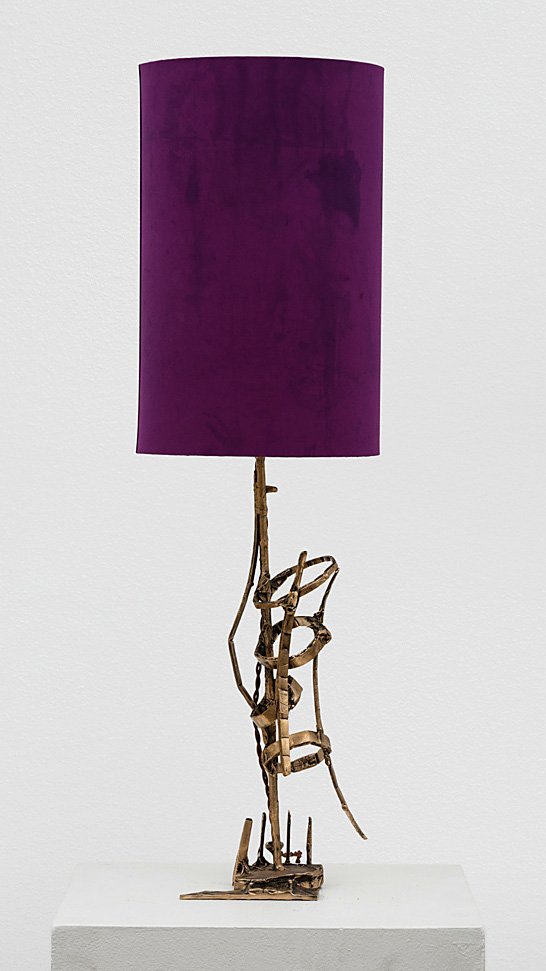 | |
Left: Petra Lamp, 2026, polished cast bronze, dyed silk lampshade; right: Rinal Lamp, 2026, polished cast bronze, dyes silk lampshade. | ||
One group of lamps made the point vividly. Farrell was thinking about the famous episode in Satyricon involving Trimalchio, the spectacularly vulgar nouveau riche host whose dinner party becomes an extended performance of wealth. Farrell focused on purple, historically associated with imperial status. He bought purple silk and then tie-dyed it again in purple, creating variations of intensity within the same color.
The supporting forms were built quickly from cardboard and tape before being translated into bronze. Look closely and the evidence survives: folds, creases, and taped joints remain embedded in the metal surface. Farrell then had the bronze polished to a brilliant gold finish. The result deliberately flirts with excess—purple and gold, imperial colors turned into an almost comic display of luxury. From across a room, the lamps appear sumptuous, even decadent. Up close, their humble genealogy reveals itself. “I wanted people to look at the form, not the color,” Farrell says. “As you get closer, you see where the cardboard was taped together. The bronze casts all the folds, creases, all these little details and moments.”
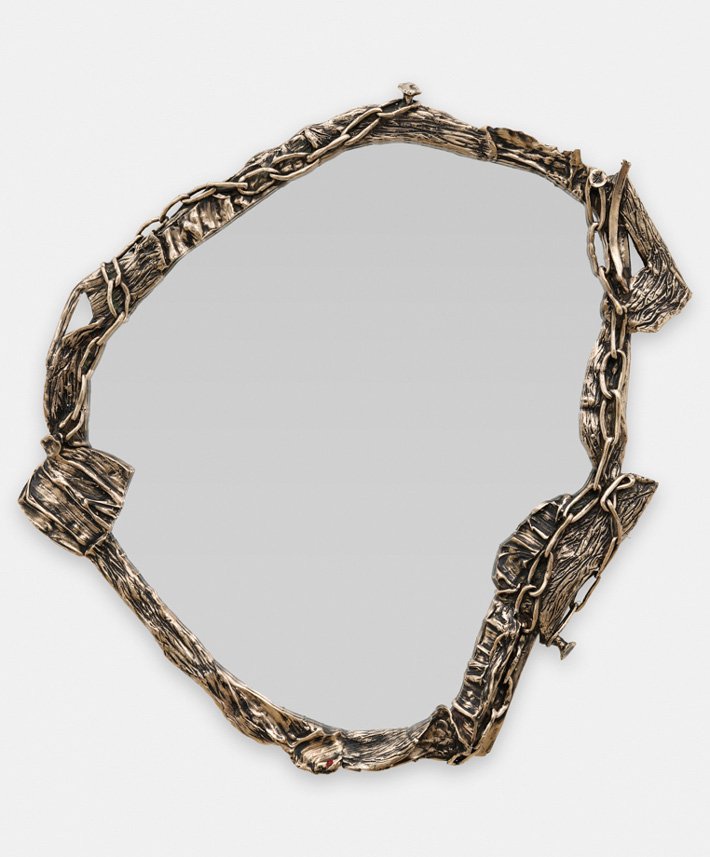 | 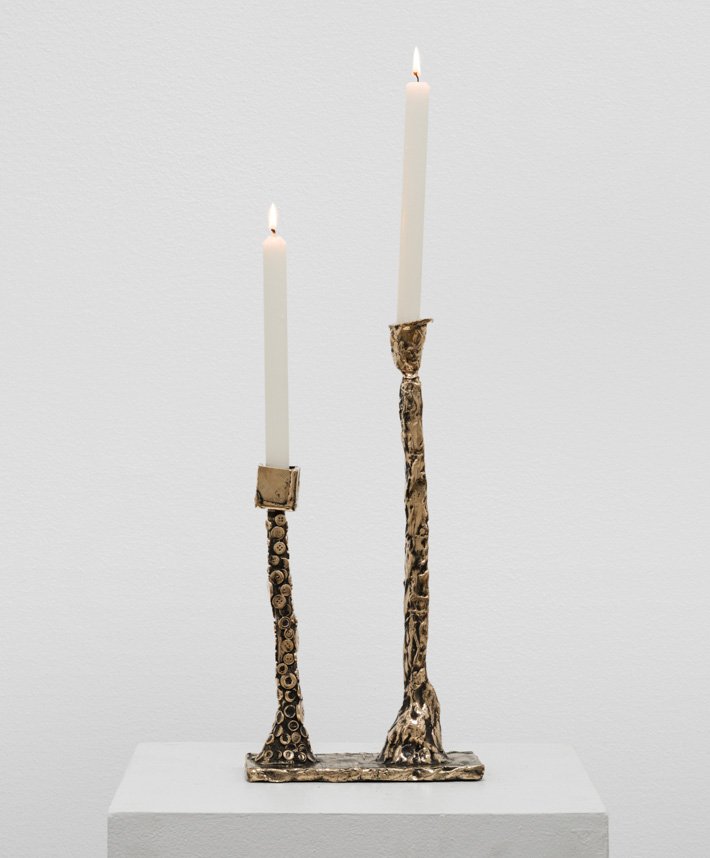 | |
Left: Linctius Mirror, 2026, bronze; right: Ducta Candelabra, 2026, polished cast bronze. | ||
The objects are funny, but the joke has some bite. Farrell is interested in the instability of taste: how something can move between vulgarity and refinement, rubbish and luxury, depending upon material, context, and who is looking at it. In Farrell’s mind, Petronius’s Romans are not particularly remote from contemporary Los Angeles, New York, or the Hamptons. “If you read Satyricon, you see these people are like us today,” he says.
Bronze bridges the ancient and contemporary worlds. Farrell has worked with the material for close to a decade and developed an intuitive relationship with it. He casts his pieces at Artisan Bronze in Oxnard, California, where he has worked with a father-and-son team for years. Rather than sending designs away for fabrication, Farrell treats the foundry as an extension of his studio. He brings in waxes and other cast-off materials, spends days working there, and participates in welding, assembly, finishing, and patination.
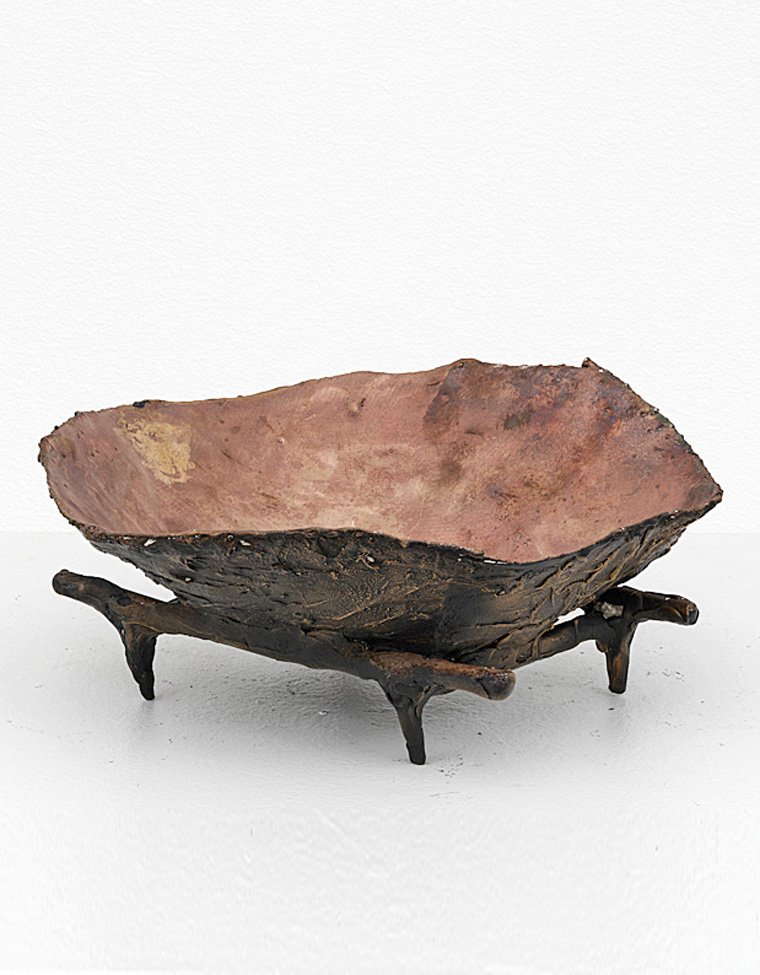 | 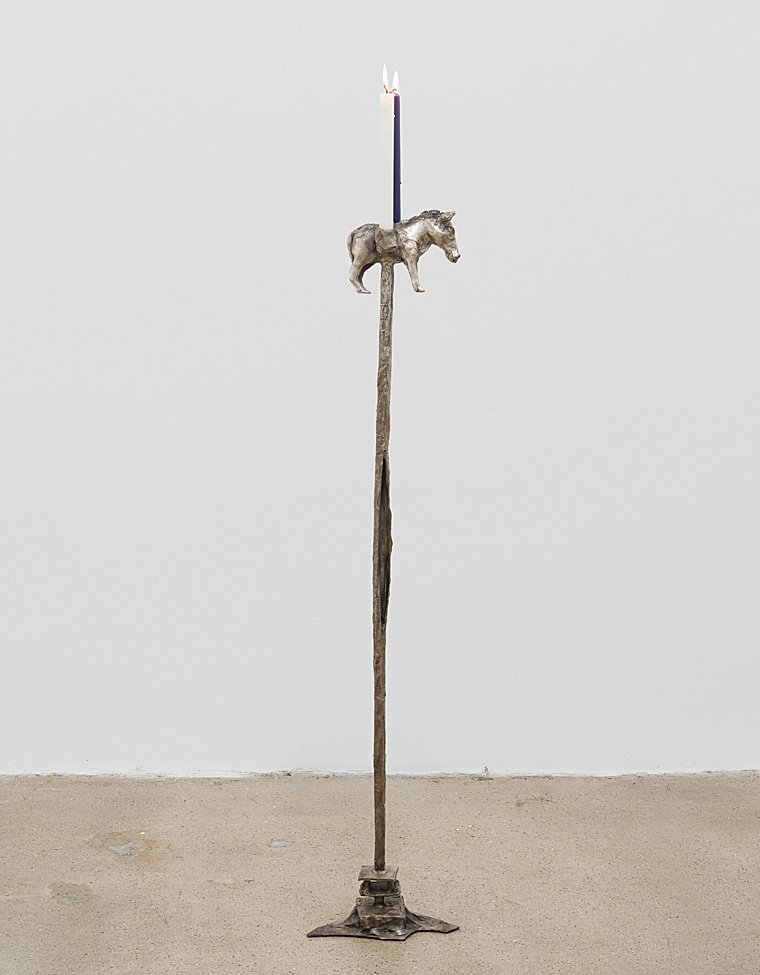 | |
| Left: Plour 1, 2026, bronze; right: Asinius Candelabra, 2026, silvered bronze. | ||
Top designers have gone gaga over his unusual creations. New York-based interior designer David Scott has bought pieces, which he admires for the artistry. “What draws me to William Farrell’s work is the tension between spontaneity and refinement. I’ve long admired The Lalannes for their ability to bring nature, sculpture and function together in such an imaginative way. William approaches that relationship with his own distinctive, contemporary voice. I purchased a mirror because it has that rare combination of wit, beauty and individuality. It feels like a work of art that happens to be a mirror. To me, that’s what makes a piece worth collecting,” he says.
Designer Kelly Behun had also purchased several pieces for projects. “I look at so much design, and it’s not often that something feels truly fresh and original,” says Behun. “William’s work stopped me in my tracks. There’s a wonderful delicacy and lightness in the way he works with bronze, and then to see the lamps paired with these bold and richly colored silk shades – it’s such an unexpected combination, and somehow he makes it all work beautifully together. He is really one to watch.”
His attachment to bronze began partly through failure. When Farrell and Hundley first started experimenting together, they made enormous concrete tables. They cracked. Neither man, Farrell admits, was a precision furniture maker likely to disappear into a woodshop and emerge with flawless right angles. They moved on to lamps in clay, considered plaster and eventually tried bronze. Suddenly imperfection became an advantage. “You can cast anything that will burn,” Farrell says. “You can do so much with it. I was never a precision guy.”
That freedom became fundamental to Farrell Hundley. The pair began collaborating experimentally in 2018 and established the design practice the following year. Their objects combined bronze with twigs, driftwood, lobster shells, string, foamcore and textiles, transforming disparate materials through lost-wax casting and assemblage. Their 2023 exhibition Daphne at Nina Johnson art gallery in Miami included works in which fingerprints and irregular surfaces remained conspicuously visible; later that year, Chorus, a solo exhibition of Farrell Hundley at Friedman Benda in Los Angeles expanded into tables, benches, mirrors, lamps and other objects informed by Greek and Egyptian mythology.
The collaboration brought Farrell significant exposure. Farrell Hundley’s work subsequently appeared at TEFAF New York and Design Miami. At the same time, pieces such as the Polydorus Stool, Set Floor Lamp and Lydian Desk demonstrated how readily the pair could move between sculpture and furniture. But Farrell maintained his own artistic practice throughout, and by 2024 was concentrating on working independently.
His relationship with Hundley was formative. Farrell met the older artist when he was 21 or 22 and working in galleries, imagining he might become an art dealer. The two became friends, and Hundley encouraged him to take his own creative impulses more seriously. “He took me in and thought I wanted to be an artist and pushed me to explore creativity,” Farrell recalls. Furniture making emerged gradually from the friendship until it became a serious practice.
Farrell’s route to design was hardly conventional. He studied finance at Fordham University and is now pursuing an MFA at ArtCenter College of Design in Pasadena. Perhaps consequently, he has little interest in defending rigid professional categories. He paints. He makes sculpture. He makes furniture. He keeps a notebook with lists of ideas but rarely sketches and doesn’t work from photographs. “I see something I like in my head, and I try to make it,” he says.
That directness is important. Farrell wants enough structure to begin an object, but enough uncertainty for the object to speak. Sometimes, at the foundry, he sees a discarded piece of bronze and welds it into whatever he is making. An object can change in fabrication. For him, a sculpture does not have to be resolved before it is finished. “I allow a sculptural object to be treated like a sketch,” he says.
Nature offers another route into that improvisation. Twigs, branches, driftwood, and other organic forms recur throughout his work, not because Farrell obsessively collects natural specimens—he doesn’t—but because he is fascinated by the way natural forms hover between representation and abstraction. A branch can simultaneously be recognizably a branch and an eccentric linear composition.
For the JK exhibition, Farrell presented a broad selection of lighting, mirrors and objects, including Melania, Bottega Mirror, Radahn, Ducta, Gatorade, Asinus and Petra, all available on Incollect.com. In each case, function never dictated the design. “I care more about aesthetics than function,” he says. “My lamps, for example, are expensive objects that probably aren’t the most functional things on the planet. If you are looking for something to light up a room, I am probably not your guy. It’s more for me about a visual experience.”
His working life is similarly uncomplicated. Farrell has no assistants. He works alone in his downtown Los Angeles studio, generally treating the day like a nine-to-five job, though projects inevitably spill into nights. He does not listen to music while working. Silence suits him. He makes things, walks his Scottish terrier and miniature Bernedoodle at lunch, and returns to what he loves – making things.
 |
Discover More from JK Art & Design Projects on Incollect
 |