








Abraham Munting
Dutch, 1626 - 1683
Abraham Munting (June 19, 1626 – January 31, 1683) was a notable Dutch botanist and botanical artist, born in Groningen as the son of Henricus Munting. He began his studies under his father before attending universities in Franeker, Utrecht, and Leiden. Munting also spent two years in France, where he earned an M.D. degree in Angers.
After returning to Groningen in 1651, Munting joined the faculty at Rijkshogeschool Groningen, which later became the University of Groningen. He dedicated 24 years to teaching botany and chemistry. Following his father’s passing in 1658, he took charge of the Hortus Botanicus Groninganus, the botanical garden, where he remained until his death. Munting maintained connections with fellow botanists who sent him seeds from diverse regions, including the Dutch East and West Indies, Africa, and the Americas. His personal life was marked by tragedy when his daughter, Hester, died after consuming Deadly Nightshade from the garden, prompting him to explore the medicinal properties of plants more deeply.
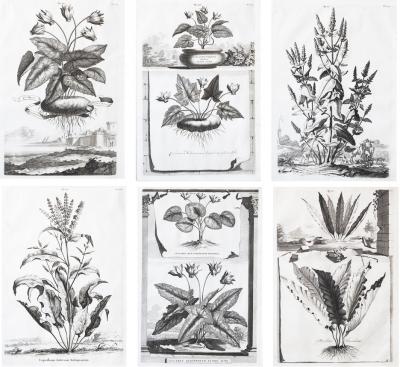
Munting is best known for his posthumously published work, Naauwkeurige Beschryving Der Aardgewassen (1696). This book, an improved version of his earlier Waare Oeffening der Planten, gained popularity for its innovative approach to botanical illustration. Unlike traditional depictions, Munting's plants were often illustrated against classic or pastoral landscapes, sometimes appearing to float in midair with little attention to perspective or scale. His illustrations included a range of temperate plants, as well as some tropical and subtropical species introduced to the Netherlands. Despite its acclaim, the work faced criticism; botanist Albrecht von Haller questioned the authenticity of some plates. In 1702, the work was translated into Latin by Franz Kiggelaer.
After Munting's death in 1683, his son Albert Munting succeeded him in managing the Hortus Botanicus Groninganus. In recognition of his contributions to botany, the genus Muntingia was named in his honor by Linnaeus in 1753.
After returning to Groningen in 1651, Munting joined the faculty at Rijkshogeschool Groningen, which later became the University of Groningen. He dedicated 24 years to teaching botany and chemistry. Following his father’s passing in 1658, he took charge of the Hortus Botanicus Groninganus, the botanical garden, where he remained until his death. Munting maintained connections with fellow botanists who sent him seeds from diverse regions, including the Dutch East and West Indies, Africa, and the Americas. His personal life was marked by tragedy when his daughter, Hester, died after consuming Deadly Nightshade from the garden, prompting him to explore the medicinal properties of plants more deeply.
Munting is best known for his posthumously published work, Naauwkeurige Beschryving Der Aardgewassen (1696). This book, an improved version of his earlier Waare Oeffening der Planten, gained popularity for its innovative approach to botanical illustration. Unlike traditional depictions, Munting's plants were often illustrated against classic or pastoral landscapes, sometimes appearing to float in midair with little attention to perspective or scale. His illustrations included a range of temperate plants, as well as some tropical and subtropical species introduced to the Netherlands. Despite its acclaim, the work faced criticism; botanist Albrecht von Haller questioned the authenticity of some plates. In 1702, the work was translated into Latin by Franz Kiggelaer.
After Munting's death in 1683, his son Albert Munting succeeded him in managing the Hortus Botanicus Groninganus. In recognition of his contributions to botany, the genus Muntingia was named in his honor by Linnaeus in 1753.


Sold
Abraham Munting
Antique Abraham Munting 1696 Hand Colored Botanical Print in Trobridge Frame
H 21 in W 17 in D 2 in

 Loading...
