






Andre Derain
French, 1880 - 1954
André Derain (1880-1954) was a French painter, sculptor, and co-founder of the Fauvism movement. Born in Chatou, France, Derain began his artistic training at the Académie Carrière in 1898, where he met fellow artist Henri Matisse.
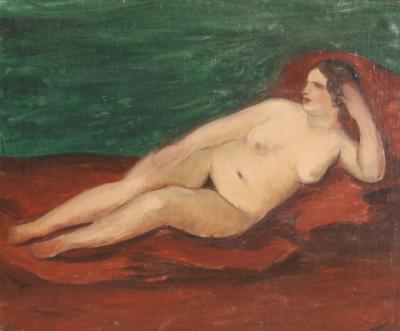
In the early 1900s, Derain and Matisse worked together in the southern French city of Collioure, where they developed a new style of painting that became known as Fauvism. Fauvism was characterized by its use of bright, bold colors and its rejection of traditional artistic conventions.
Derain's work often depicted landscapes, still lifes, and portraits, and he was particularly drawn to the natural beauty of the French countryside. He also experimented with sculpture, creating figurative works in stone and bronze.
During World War I, Derain served in the French army, and his experiences during the war had a profound impact on his work. He became interested in the classical tradition and began to incorporate elements of classicism into his art.
In the years following the war, Derain continued to explore different styles and techniques, creating works in a variety of media, including oil paint, watercolor, and gouache. He also designed stage sets for ballet and theater productions, and collaborated with other artists on projects in the decorative arts.
Today, Derain is considered to be one of the most important figures in the development of modern art. His work has been exhibited in museums and galleries around the world, and his influence can be seen in the work of many contemporary artists.
In the early 1900s, Derain and Matisse worked together in the southern French city of Collioure, where they developed a new style of painting that became known as Fauvism. Fauvism was characterized by its use of bright, bold colors and its rejection of traditional artistic conventions.
Derain's work often depicted landscapes, still lifes, and portraits, and he was particularly drawn to the natural beauty of the French countryside. He also experimented with sculpture, creating figurative works in stone and bronze.
During World War I, Derain served in the French army, and his experiences during the war had a profound impact on his work. He became interested in the classical tradition and began to incorporate elements of classicism into his art.
In the years following the war, Derain continued to explore different styles and techniques, creating works in a variety of media, including oil paint, watercolor, and gouache. He also designed stage sets for ballet and theater productions, and collaborated with other artists on projects in the decorative arts.
Today, Derain is considered to be one of the most important figures in the development of modern art. His work has been exhibited in museums and galleries around the world, and his influence can be seen in the work of many contemporary artists.



 Loading...
