



Showrooms
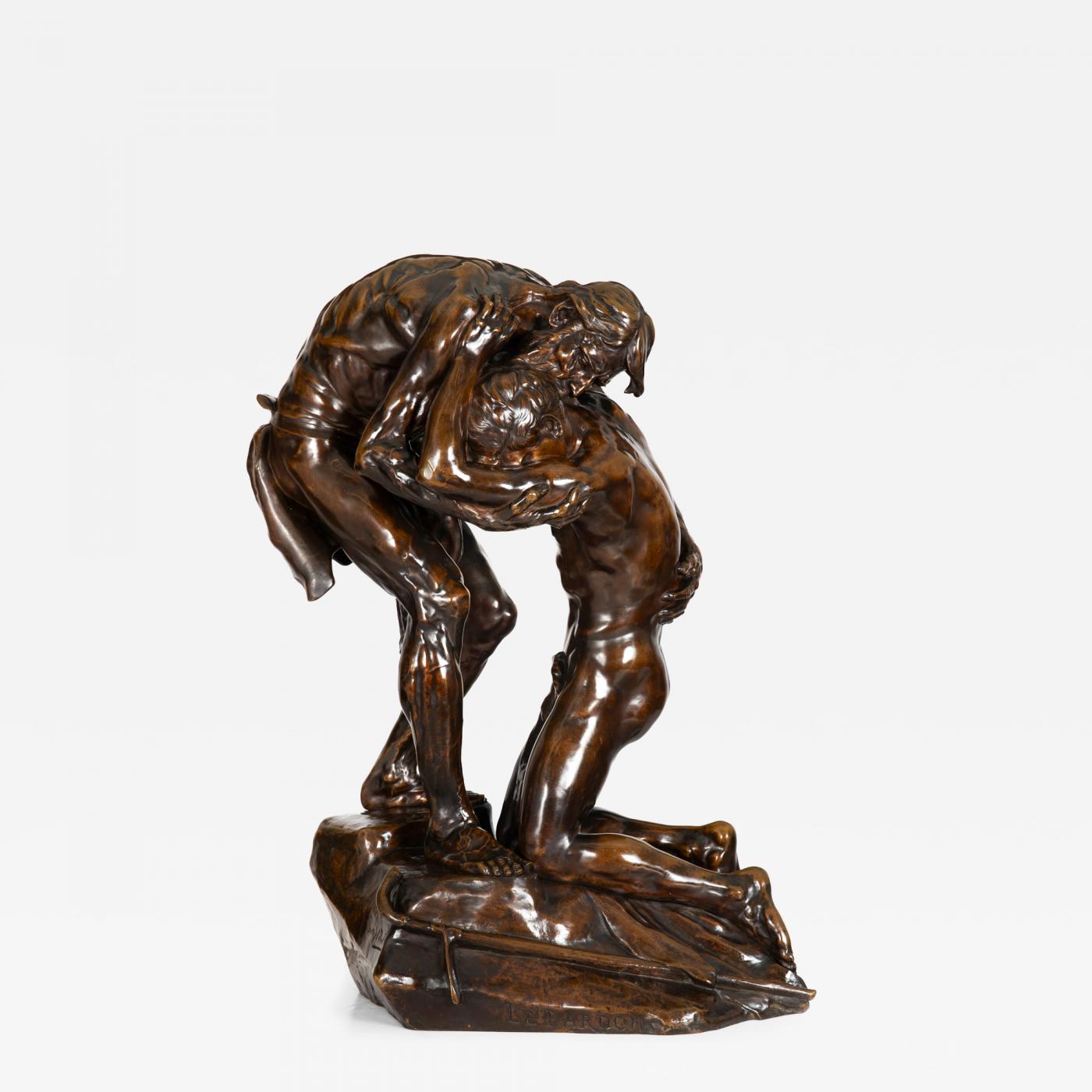
Rare French Bronze Sculpture “Return of Prodigal Son” by Ernest Dubois
-
Description
ERNEST DUBOIS
French, 1863-1931
"Le Pardon" (The Return of the Prodigal Son)
Patinated sand-cast bronze
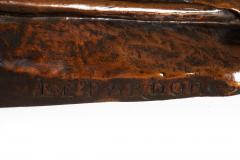
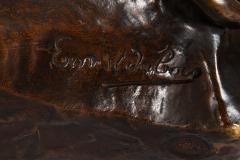
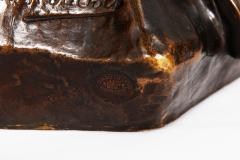
Signed Ernest Dubois, foundry cachet for Casa Bellas Artes Avda De Mayo 625 Buenos Aires
Conceived in 1894, cast circa 1910
28" H x 21" W x 15" D
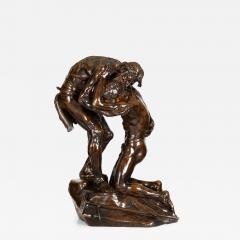
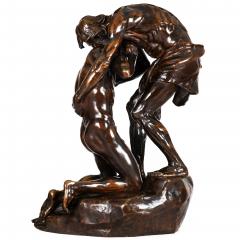
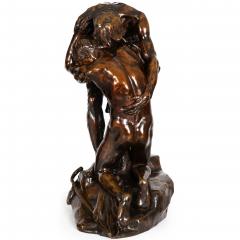
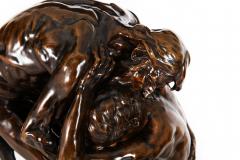
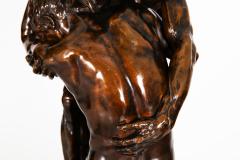
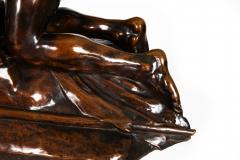
Le Pardon takes as its subject the parable of the Prodigal Son from the Gospel of Saint Luke (15:11–32). The scene is reduced to two figures alone: the father, broken and emaciated from worry over his lost child encircles his kneeling son in his weary arms. His son is a picture of abject emotional and physical poverty, naked and on his knees, his head bowed in shame while taking on the almost fetal weeping embrace of a child. There is an outpouring of relief that comes through so perfectly as the father receives him in a tightly bound embrace, his arms drawn around the son’s shoulders while the son’s body rises from the ground in response. The composition is deliberately closed with no subsidiary setting or narrative detail.
The model was first presented at the Salon des Artistes Français in 1894 in plaster, where Dubois received a first-class medal. That distinction led to a State commission for a marble version, ordered in 1895 for the Musée du Luxembourg. The completed marble was exhibited at the Salon of 1899, where it received the médaille d’honneur, and again at the Exposition Universelle of 1900. That work is now held in the collection of the Musée d’Orsay. These successive presentations established Le Pardon as one of the principal works through which Dubois secured his position within the official Salon system.
Dubois exhibited regularly at the Salon des Artistes Français and was awarded a travel grant in 1894, the same year as the debut of Le Pardon. The group was subsequently produced in multiple versions, including marble and bronze with documented reductions exhibited in the early twentieth century, including at Aix-les-Bains in 1907 and at the Rome International Exhibition in 1911.
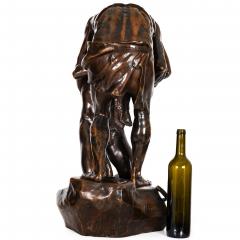
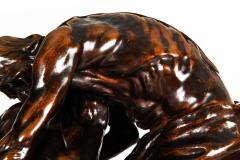
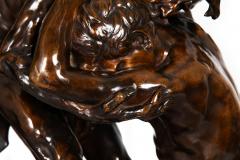
The work is constructed through a compact arrangement of interlocking forms. The father’s forward weight and the son’s unstable kneeling posture create a continuous exchange of tension across the surface. Particular attention is given to the modeling of the son’s attenuated body, his head turned inward and partially concealed, while the father’s arms form a structural frame around him. In bronze, the compressed design allows light to move uninterrupted across the figure group, reinforcing the unity of the composition.
ERNEST HENRI DUBOIS (1863–1930)
Ernest Henri Dubois, known as Ernest Dubois, was born in 1863. He entered the École nationale des arts décoratifs in Paris in 1881 and subsequently enrolled at the École des Beaux-Arts, where he studied under Henri Chapu and Alexandre Falguière. He also trained with Jules Chaplain and Antonin Mercié.
Dubois began exhibiting at the Salon des Artistes Français in 1892, where he received an honorable mention for Jeune Adolescent. He continued to exhibit there regularly throughout the 1890s. At the 1894 Salon, he was awarded a first-class medal for Le Pardon. The work was subsequently commissioned by the French State for execution in marble for the Luxembourg Palace and is now held in the collection of the Musée d'Orsay. The completed marble version was recognized with a medal of honor in 1899.
Dubois exhibited at the Exposition Universelle, where he presented a model for a monument to Bossuet at the Grand Palais. For this work, he received the Medal of Honor and was appointed Chevalier of the Légion d'honneur in 1900. The Bossuet monument was completed and installed at Meaux Cathedral in 1911, the same year Dubois was promoted to Officier of the Légion d’honneur.
Dubois continued to produce portrait busts and public monuments in the early 20th century, maintaining his association with the Salon des Artistes Français. He died in 1930.
Condition: Several open seams where the sand-cast joints come together (son's proper left wrist, father's proper right shoulder, father's proper left forearm). The open seams are not in any way destabilized or loose, simply a loosening over the years resulting in visibility of what would have originally been an invisible joint. Rubbing to the patina revealing nuanced undertones, including relief of raised elements, wear around base, scuffs and scratches to arms and back of both figures. Carefully cleaned and sealed, a glowing presentation. Very fine and ready to place.
ref. 506BLR26S - More Information
-
Dimensions
W. 21 in; H. 28 in; D. 15 in; W. 53.34 cm; H. 71.12 cm; D. 38.1 cm;
Message from Seller:
Silla, Ltd. is a family-owned antique gallery located at 117 W Burd St., Shippensburg, PA 17257, specializing in 19th and early 20th century bronze sculptures and unique period furniture. For more information or to schedule a visit, contact us at sales@sillafineantiques.com or call 717.708.9017.
More Listings from SILLA View all 379 listings
-
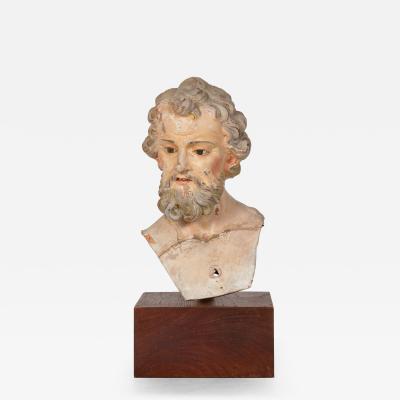
19th Century Italian Polychromed Terracotta Bust of a Saint
-
Pair of Bronze and Black Granite Demilune Console Tables, Manner of Jansen

-
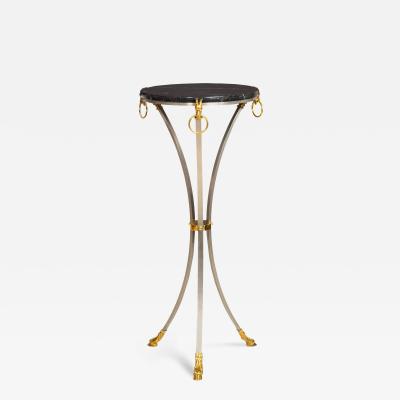
Hollywood Regency Steel Marble Top Pedestal Plant Stand Gueridon Table
-
French Louis XVI Period Mahogany Commode, stamped by J. Canabas ca. 1775

-
American Art Nouveau Bronze Sculpture of “Wildflower” by Edward Berge

-
Pair of Louis XVI Style Lamps | Entwined Snake Handles

-
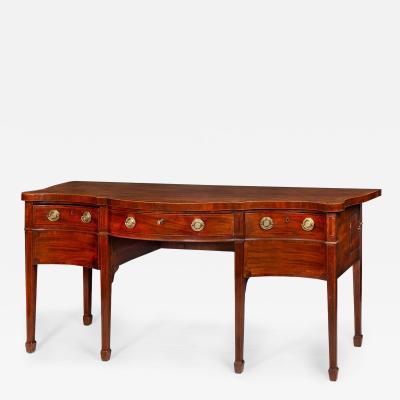
George III Period Inlaid Mahogany Serpentine Sideboard, English ca. 1790
-
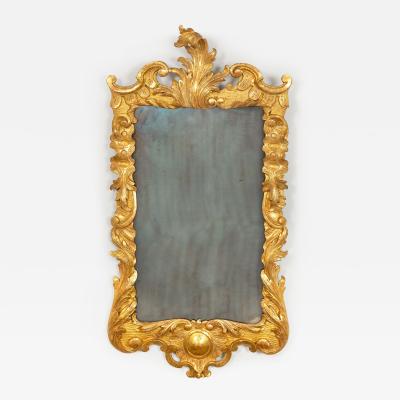
Fine George II Carved Giltwood Wall Mirror, English or Scottish circa 1750
-
Baltic Neoclassical Mahogany, Brass & Leather Writing Desk, late 19th century

-
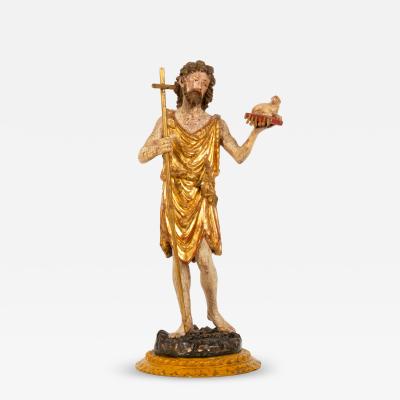
German or Austrian Polychromed Statue Sculpture of Saint John the Baptist
-
Fine Austrian Empire Black Lacquered Cabinet Sideboard circa 1820

-
Swedish Modern “Oresund” Oak Bookcase and Dresser by Borge Mogensen

-
Pair of English Regency Rosewood Chiffoniers Cabinets Bookcases ca. 1810

-
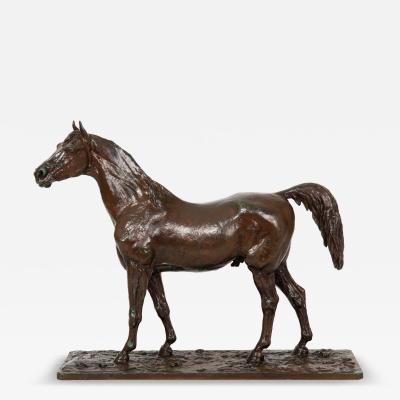
French Bronze Sculpture of Arabian Stallion “Rainbow” by Christophe Fratin