








Showrooms
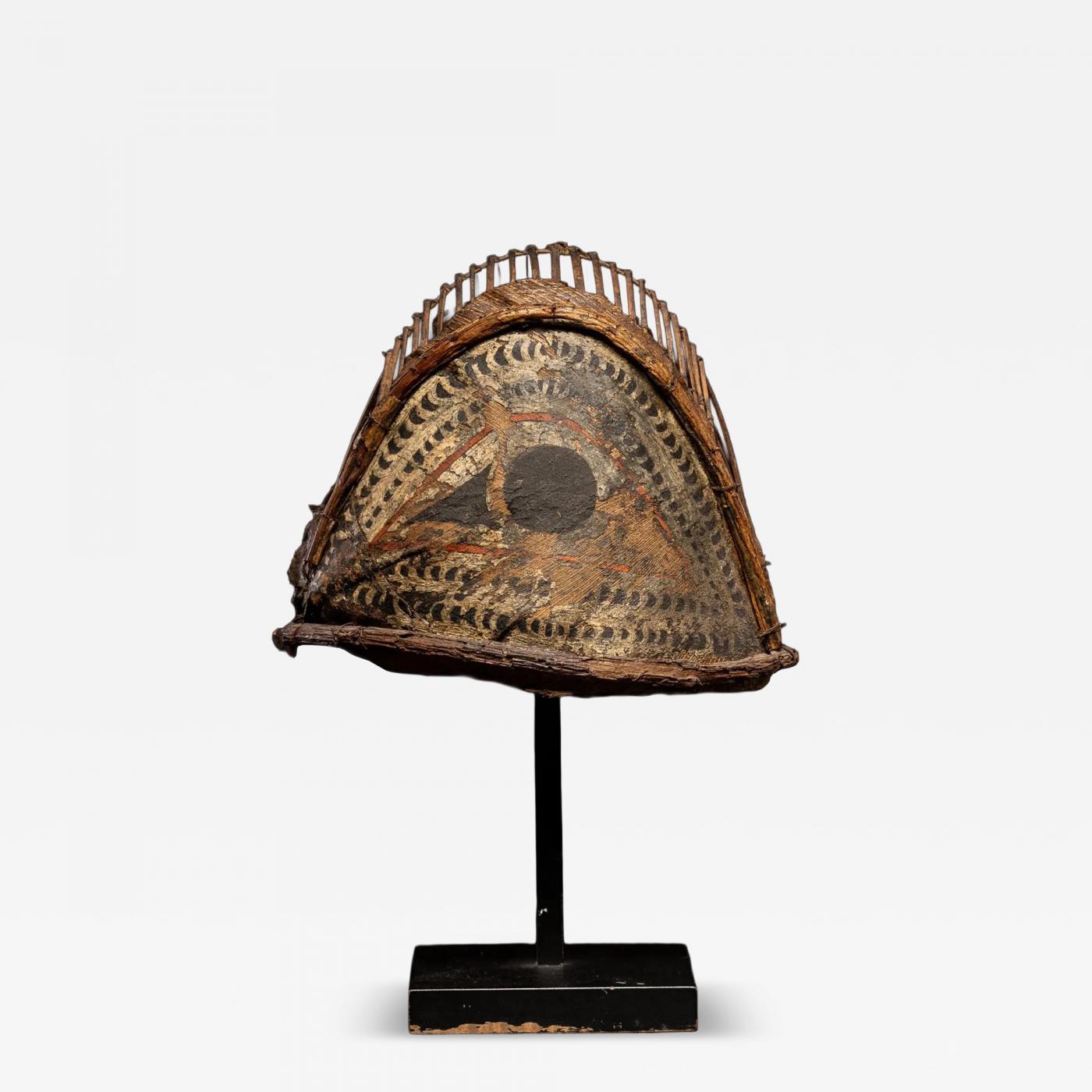
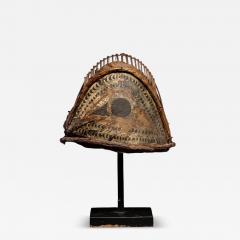
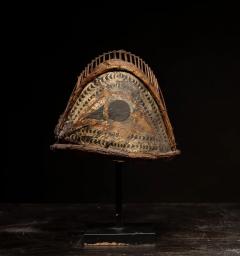
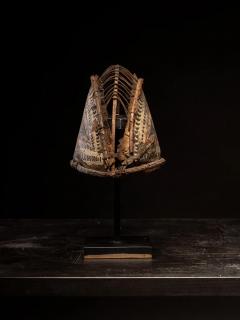
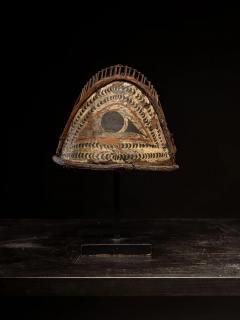
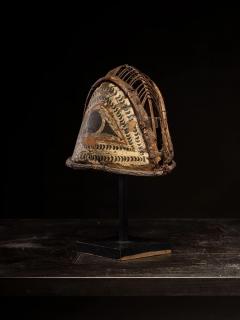
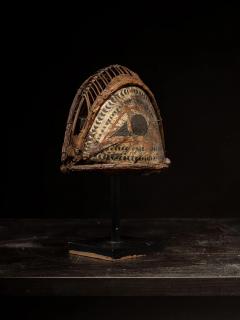
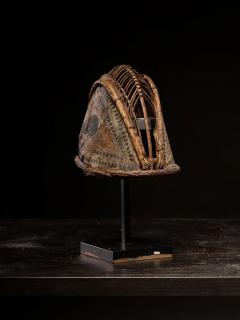
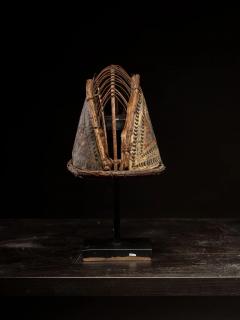
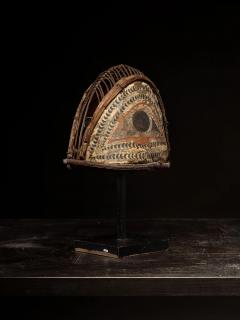
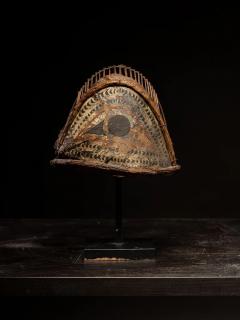
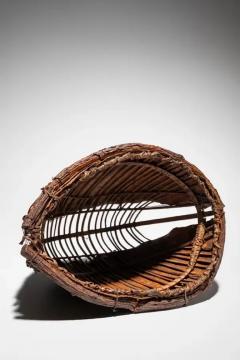
Vanuatu Hat, New Hebrides Wickerwork
-
Description
Vanuatu Hat, New Hebrides Wickerwork
1st half 20th Century
Wickerwork, bark, pigments
25 x 27 cm
9 7/8 x 10 5/8 in
6235
€ 7,000.00
Made from fibers, wood, beaten bark, and natural pigments, this headdress was worn during rituals organized by a secret society.Once disguises the wearer represented a spirirt.Hats of this type are extremely rare : a similar hat belongs to the British Museumbcollection ( inv. Oc,1305 )and another one to the Grassi Museum fur Volkerlunde in Leipzig (inv.Me 05314).
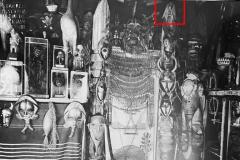
Anthony Innocent Moris, known as “Père Moris,” was one of the earliest dealers and collectors of tribal art. Following his death in 1951, Charles Ratton documented his collection by photographing the objects that had gradually filled his Paris apartment. In one of these photographs, the Vanuatu headdress from the Bottet Collection can be identified, placed on top of a Yoruba post.
Réalisée en fibres, bois, écorce battue et pigments naturels, cette coiffe était portée lors de rituels organisés par une société secrète. Une fois dissimulé sous son costume, le porteur incarnait un esprit.
Les coiffes de ce type sont extrêmement rares. Un exemplaire comparable est conservé au British Museum (inv. Oc,1305) et un autre au Grassi Museum für Völkerkunde de Leipzig (inv. Me 05314).
Anthony Innocent Moris, dit « Père Moris », fut l’un des premiers marchands et collectionneurs d’art tribal. À sa mort en 1951, Charles Ratton immortalisa sa collection en photographiant les objets qui avaient progressivement envahi son appartement parisien. Sur l’un de ces clichés, on peut identifier la coiffe du Vanuatu provenant de la collection Bottet, posée au sommet d’un poteau yoruba.
Deze hoofdtooi, vervaardigd uit vezels, hout, geklopte boomschors en natuurlijke pigmenten, werd gedragen tijdens rituelen die door een geheim genootschap werden georganiseerd. Eenmaal volledig vermomd, belichaamde de drager een geest.
Hoofdtooien van dit type zijn uiterst zeldzaam. Een vergelijkbaar exemplaar bevindt zich in de collectie van het British Museum (inv. Oc,1305) en een ander in het Grassi Museum für Völkerkunde in Leipzig (inv. Me 05314).
Anthony Innocent Moris, bekend als “Père Moris”, was een van de eerste handelaars en verzamelaars van tribale kunst. Na zijn overlijden in 1951 documenteerde Charles Ratton zijn collectie door de voorwerpen te fotograferen die in de loop der jaren zijn Parijse appartement hadden gevuld. Op een van deze foto's is de Vanuatu-hoofdtooi uit de Bottet-collectie te herkennen, geplaatst boven op een Yoruba-paal.
Dieser aus Fasern, Holz, geschlagener Rinde und natürlichen Pigmenten gefertigte Kopfschmuck wurde bei Ritualen getragen, die von einer Geheimgesellschaft organisiert wurden. Vollständig verkleidet verkörperte der Träger einen Geist.
Kopfbedeckungen dieses Typs sind äußerst selten. Ein vergleichbares Exemplar befindet sich in der Sammlung des British Museum (Inv. Oc,1305), ein weiteres im Grassi Museum für Völkerkunde in Leipzig (Inv. Me 05314).
Anthony Innocent Moris, bekannt als „Père Moris“, gehörte zu den frühesten Händlern und Sammlern für Stammeskunst. Nach seinem Tod im Jahr 1951 dokumentierte Charles Ratton seine Sammlung, indem er die Objekte fotografierte, die im Laufe der Jahre zunehmend seine Pariser Wohnung gefüllt hatten. Auf einer dieser Aufnahmen ist der Vanuatu-Kopfschmuck aus der Sammlung Bottet zu erkennen, der auf einem Yoruba-Pfosten platziert ist.
Literature
-Raoul Lehuard, La collection du Père Moris, in Arts d'Afrique Noire, No. 46, Summer 1983, p.36 (Photograph taken by Charles Ratton in the apartment of Père Moris
-Speiser, F., Ethnology of Vanuatu, An Early twentieth century study,Bathurst, 1990, pl.99, fig.7 pour une coiffe semblable conservée au musée de Leipzig (inv.ME.5314).
-Leenhardt, M., Arts de l'océanie, Paris, 1947, fig.40 pour une coiffe conservée au musée du Quai Branly (inv.71.1942.16.5).
Made from fibers, wood, beaten bark, and natural pigments, this headdress was worn during rituals organized by a secret society.Once disguises the wearer represented a spirirt.Hats of this type are extremely rare : a similar hat belongs to the British Museumbcollection ( inv. Oc,1305 )and another one to the Grassi Museum fur Volkerlunde in Leipzig (inv.Me 05314).
Anthony Innocent Moris, known as “Père Moris,” was one of the earliest dealers and collectors of tribal art. Following his death in 1951, Charles Ratton documented his collection by photographing the objects that had gradually filled his Paris apartment. In one of these photographs, the Vanuatu headdress from the Bottet Collection can be identified, placed on top of a Yoruba post.
Réalisée en fibres, bois, écorce battue et pigments naturels, cette coiffe était portée lors de rituels organisés par une société secrète. Une fois dissimulé sous son costume, le porteur incarnait un esprit.
Les coiffes de ce type sont extrêmement rares. Un exemplaire comparable est conservé au British Museum (inv. Oc,1305) et un autre au Grassi Museum für Völkerkunde de Leipzig (inv. Me 05314).
Anthony Innocent Moris, dit « Père Moris », fut l’un des premiers marchands et collectionneurs d’art tribal. À sa mort en 1951, Charles Ratton immortalisa sa collection en photographiant les objets qui avaient progressivement envahi son appartement parisien. Sur l’un de ces clichés, on peut identifier la coiffe du Vanuatu provenant de la collection Bottet, posée au sommet d’un poteau yoruba.
Deze hoofdtooi, vervaardigd uit vezels, hout, geklopte boomschors en natuurlijke pigmenten, werd gedragen tijdens rituelen die door een geheim genootschap werden georganiseerd. Eenmaal volledig vermomd, belichaamde de drager een geest.
Hoofdtooien van dit type zijn uiterst zeldzaam. Een vergelijkbaar exemplaar bevindt zich in de collectie van het British Museum (inv. Oc,1305) en een ander in het Grassi Museum für Völkerkunde in Leipzig (inv. Me 05314).
Anthony Innocent Moris, bekend als “Père Moris”, was een van de eerste handelaars en verzamelaars van tribale kunst. Na zijn overlijden in 1951 documenteerde Charles Ratton zijn collectie door de voorwerpen te fotograferen die in de loop der jaren zijn Parijse appartement hadden gevuld. Op een van deze foto's is de Vanuatu-hoofdtooi uit de Bottet-collectie te herkennen, geplaatst boven op een Yoruba-paal.
Dieser aus Fasern, Holz, geschlagener Rinde und natürlichen Pigmenten gefertigte Kopfschmuck wurde bei Ritualen getragen, die von einer Geheimgesellschaft organisiert wurden. Vollständig verkleidet verkörperte der Träger einen Geist.
Kopfbedeckungen dieses Typs sind äußerst selten. Ein vergleichbares Exemplar befindet sich in der Sammlung des British Museum (Inv. Oc,1305), ein weiteres im Grassi Museum für Völkerkunde in Leipzig (Inv. Me 05314).
Anthony Innocent Moris, bekannt als „Père Moris“, gehörte zu den frühesten Händlern und Sammlern für Stammeskunst. Nach seinem Tod im Jahr 1951 dokumentierte Charles Ratton seine Sammlung, indem er die Objekte fotografierte, die im Laufe der Jahre zunehmend seine Pariser Wohnung gefüllt hatten. Auf einer dieser Aufnahmen ist der Vanuatu-Kopfschmuck aus der Sammlung Bottet zu erkennen, der auf einem Yoruba-Pfosten platziert ist. -
More Information
Period: 1900-1919 Styles / Movements: Traditional Incollect Reference #: 879292 -
Dimensions
W. 10.63 in; H. 9.84 in; W. 27 cm; H. 25 cm;
Message from Seller:
Spectandum, a by-appointment gallery in Leuven, Belgium, can be reached at contact@spectandum.com 32475648678. The gallery specializes in Natural History, Ethnography, European works of art, antiquities, and rare curiosities sourced from around the world.
More Listings from Spectandum View all 180 listings
-
Japanese hard Wood Nyoi (Sceptre) with black rock finish
-
A taxidermy Golden-bellied Mangabey Monkey mounted on a wooden plinth
-
18th C Vanitas (Memento Mori) Bust carved in marble, Italy

-
Kholuka ou Mbaala mask by the hand of Nkaleweni, the "Master of the Frontier”

-
Fang Short Sword with wood and snakeskin Sheath, Gabon
-
Ashanti Comb representing Female sitting Figure, Ghana
-
A cased taxidermy display of the Toad and Frog orchestra

-
Bakongo Christian religious Artifact made of wood, DRC

-
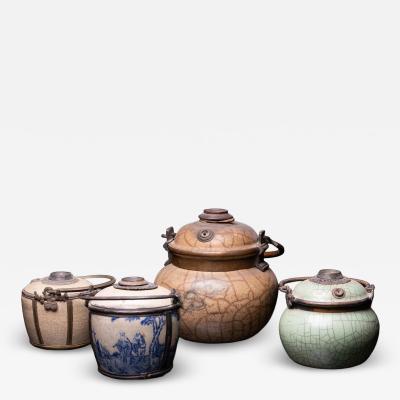
Collection of 4 antique Vietnamese waterpipe bowls
-
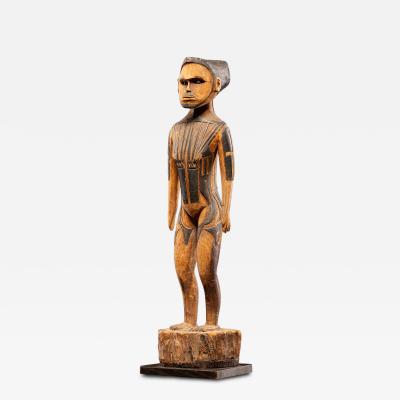
Tattooed Male Ancestor Figure, Yap Island, Federated States of Micronesia
-
Kundu Knive-brass wrapped and tacked Hilt - wooden brass decorated Sheath, DRC

-
Massim Pig charme sculpture, Trobiant

-
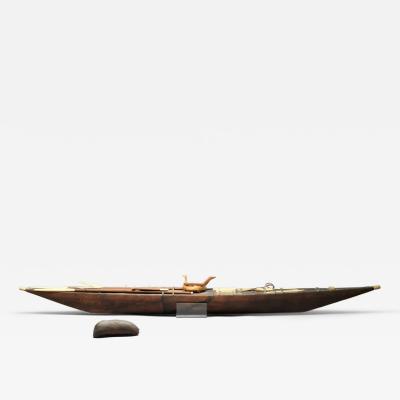
Inuit Model Kayak. Wooden frame covered with seal skin, lined with bone
-
Lozi Wood and Bone Flywhisk with inlaid facial sculpture, Zambia

