



Listings / Fine Art / Photographs / Abstract
Showrooms
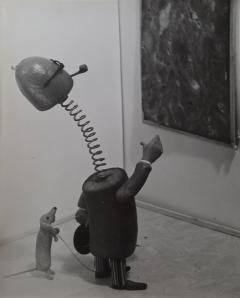
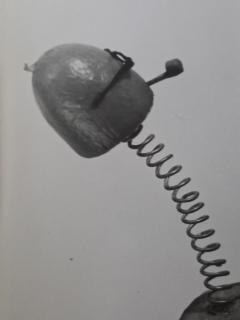
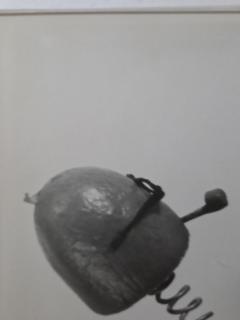
Art Critic (Head Extended on Spring Before Post War Painting)
-
Description
Henry Rox
Art Critic (Head Extended on Spring Before Abstract Painting)
c. 1948
Vintage silver gelatin print
8 x 10 inches
Printed c. 1948
Estate stamp verso
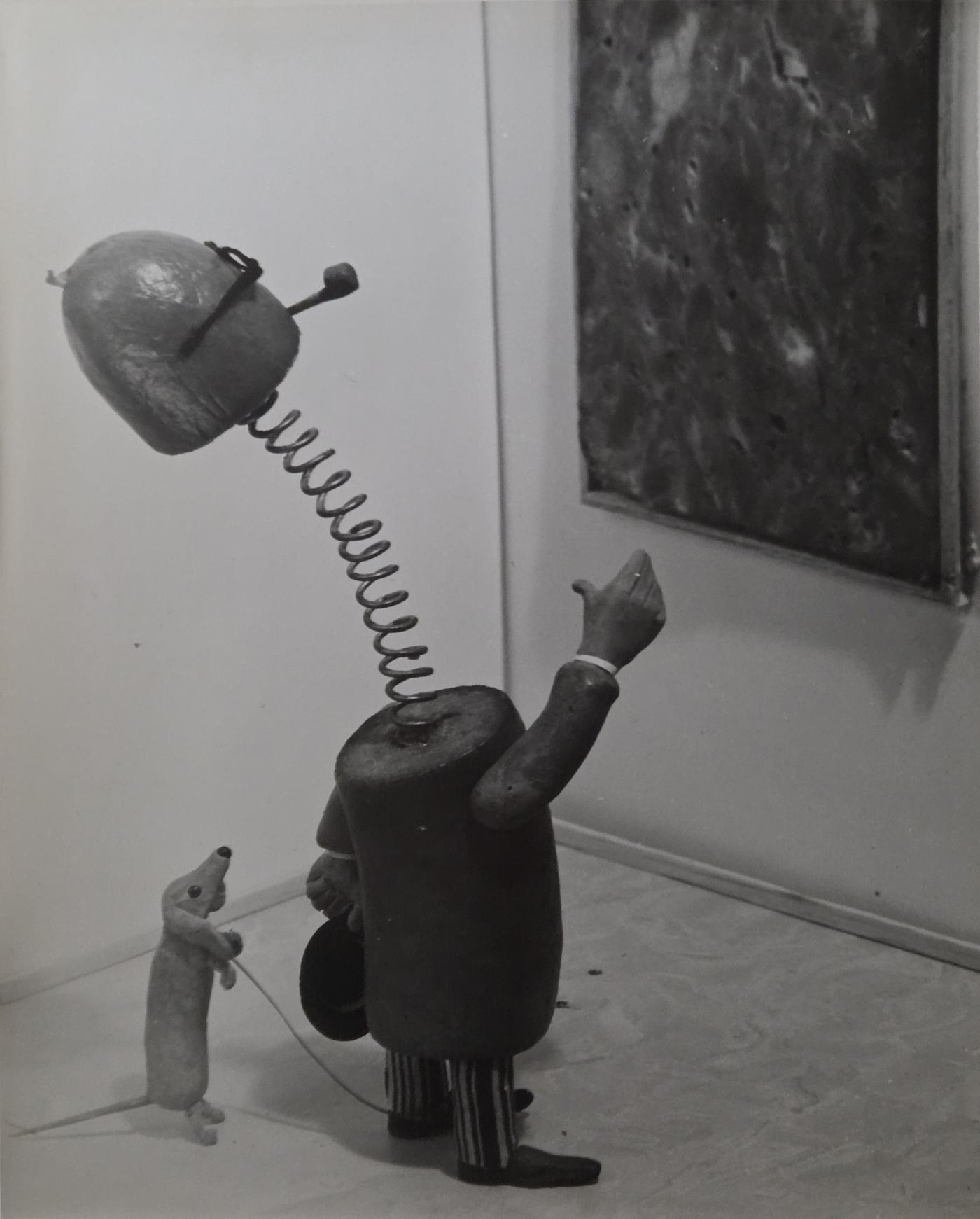
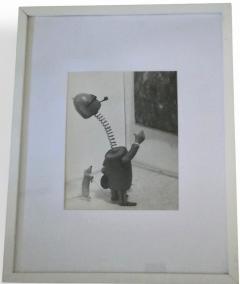
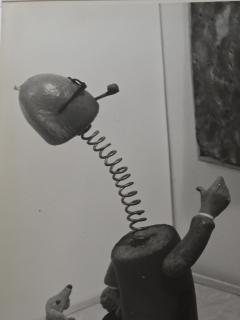
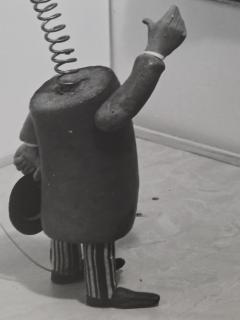
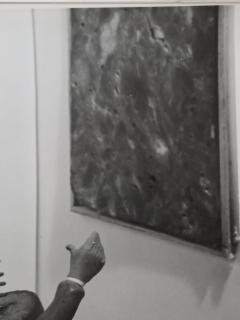
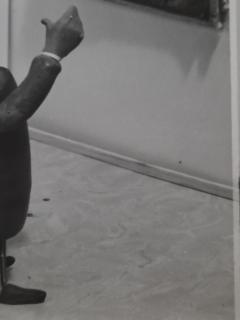
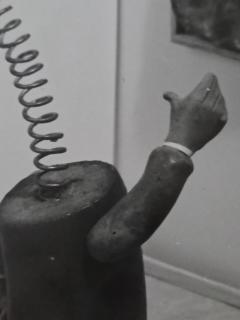
This 8 × 10 inch vintage silver gelatin print presents a distinctive variation within Henry Rox’s Art Critic series: a figure whose head is extended forward on a coiled spring, positioned before a postwar abstract painting. The critic’s altered anatomy converts the act of looking into a physical projection, transforming observation into extension.
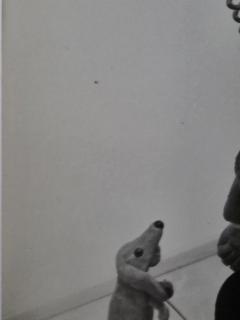
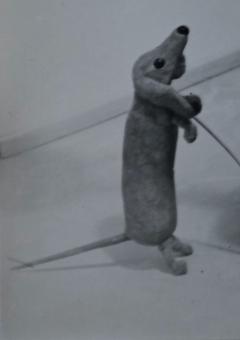
The composition centers on the critic, constructed from a tubular sausage form and articulated with small round spectacles, bow tie, pipe, and cane. His head, mounted on a spring, advances toward the painting, establishing a clear directional force within the space. At his side, a small dachshund stands upright, tethered by a thin line, its posture echoing the critic’s concentrated attention. The painting reads as a dense abstract surface, though it is built from materials consistent with German charcuterie. The critic’s raised hand reinforces a gesture of indication or measure, as if testing the surface before him.
The scene is tightly compressed. The spring creates a strong diagonal that pulls the eye from the figure toward the painting, while the flat plane of the work resists that movement. The dog anchors the lower left, providing a quiet counterweight to the forward thrust above. Space is deliberately minimized, leaving little distance between viewer and object. The result is an encounter that feels immediate, slightly strained, and physically engaged.
Rox constructs every element—the figure, the dog, and the painting—from everyday materials, then stages and lights them before making the photograph. The photograph is the final work, not a document of a prior object. What initially reads as a conventional gallery moment shifts on closer inspection, as the materials remain legible and subtly at odds with the seriousness of the setting.
The spring-loaded head is the decisive intervention. Attention is no longer abstract or detached; it becomes mechanical, extended, and potentially unstable. The act of looking is rendered as effort—elastic, probing, and contingent. The dog’s upright stance quietly reinforces this condition, mirroring focus without distortion.
Rox’s material choices are deliberate. Substances associated with everyday consumption—aligned here with German charcuterie—are reconfigured into the language of postwar abstraction and gallery display. The effect is measured rather than satirical. The scene holds as a credible encounter with modern art while simultaneously questioning the basis of its authority.
Executed circa 1948, during the consolidation of postwar abstraction in New York, the work reflects Rox’s sustained examination of modern exhibition rituals. A European-trained sculptor who fled Germany in 1934, rebuilt his practice in London, and later taught at Mount Holyoke College, Rox observed American abstraction from a position shaped by earlier modernist and Dada-informed traditions. In this cycle, he neither rejects abstraction nor imitates it; he examines the mechanics of reception.
Rox referred to these works as “photo-sculptures.” Rather than photographing existing subjects, he constructed miniature sculptural environments from fruit, vegetables, and everyday materials, carefully arranging lighting and perspective before photographing the finished tableau. The resulting images combine sculpture, stagecraft, and photography into a single resolved composition.
Rox’s photo-sculptures circulated widely within the illustrated magazine culture of the mid-twentieth century. His constructed images appeared in American publications including Life, Coronet, Collier’s, The New York Times Magazine, and later Family Circle, participating in the expanding visual journalism environment shaped by publisher Henry Luce and the broader editorial world associated with Condé Nast and art director Alexander Liberman.
British editorial connections established during Rox’s London years in the mid-1930s also continued to surface in later publications. Illustrated magazines such as Picture Post and other European design journals, including the Swiss publication Graphis, reproduced Rox’s photo-sculptures during the 1940s and 1950s, demonstrating the ongoing circulation of his work within both British and continental publishing networks.
Alongside his photographic constructions, Rox maintained an active career as a modern sculptor. During the 1940s and 1950s his work appeared in a number of important museum exhibitions, including presentations at the Whitney Museum of American Art, the Yale University Art Gallery, the Philadelphia Museum of Art, and the Metropolitan Museum of Art. These exhibitions placed Rox within the broader international development of modern sculpture in the decades surrounding the Second World War.
During his London period (1934–1938), Rox collaborated with writer and art historian James Laver on illustrated books published by Jonathan Cape. These works—Tommy Apple and His Adventures in Banana-Land (1935) and Tommy Apple and Peggy Pear (1936)—introduced Rox’s sculptural photographic tableaux to a wide audience through narrative illustration.
Beginning in 1992, Rox’s photographs were reintroduced through a series of Modernism exhibitions in the United States, where they were engaged primarily as objects within a broader decorative and material context.
In recent years, Rox’s work has undergone renewed European institutional reassessment through the research of Wolfgang Vollmer (Cologne). This includes exhibition at Fotohof, Salzburg (2021); participation in the European Month of Photography; presentations in Paris; and inclusion in the exhibition at Bonartes Photo Institute, Vienna (December 2025 – February 2026).
Rox’s career bridges European avant-garde sculpture, émigré reinvention, British publishing culture, American commercial modernism, and postwar academic practice. His photo-sculptures stand as hybrid works—simultaneously sculptural, performative, and photographic—reflecting a life shaped by displacement, adaptation, and sustained intellectual rigor.
The present understanding of Rox’s work also benefits from the examination of a large surviving body of vintage prints, including several hundred photo-sculpture images as well as photographs documenting Rox’s sculptural works and self-portraits.
As with all Rox photo-sculptures, the photograph is not documentation but the resolved artistic object — sculpture conceived for photographic realization and completed through the lens. The construction existed for the camera; the print constitutes the finished work. No known negatives survive. This example bears the estate stamp verso and forms part of the approximately 300–500 lifetime prints preserved following Rox’s death. The majority of Rox’s images survive in only one to three prints.
Condition
Very good vintage condition. Minor handling marks consistent with age. Verso with later collection stamp. -
More Information
Documentation: Signed Origin: United States, Massachusetts Period: 1920-1949 Materials: silver gelatin print Condition: Good. Vintage silver gelatin print, strong tonal range, stable surface. Minor handling wear, ight edge softening consistent with age. No significant creases or losses observed. Estate stamp verso. Overall very good vintage condition. Creation Date: c.1948 Styles / Movements: Conceptualism, Modernism, Black & White Incollect Reference #: 849286 -
Dimensions
W. 8 in; H. 10 in; W. 20.32 cm; H. 25.4 cm;
Shipping Information:
Ask about competitive S&H rates.
Message from Seller:
Established in 1984, Appleton offers a curated selection of 20th Century furniture, tables, chairs, and décor, featuring works by iconic designers like Frank Lloyd Wright and Edward Wormley. For inquiries, contact us at appletonarts@gmail.com.
More Listings from Appleton View all 224 listings
-
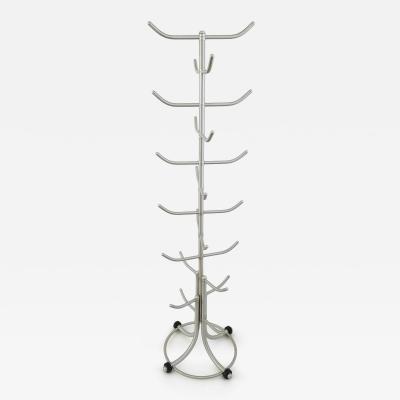
Warren McArthur Hat Rack c. 1938
-
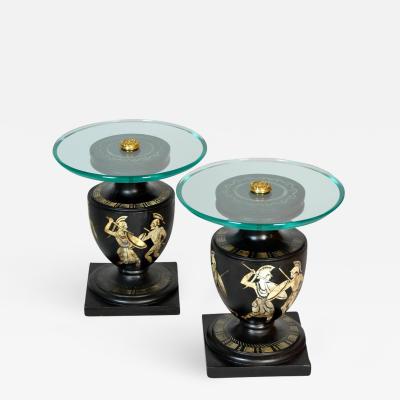
Hand-Painted Italian Mid-Century Black and White Urn End Tables, circa 1940
-
Enrique Garcel 1970s Goatskin Parchment Dining Chairs - Set of 6 (2 Arm, 4 Side)

-
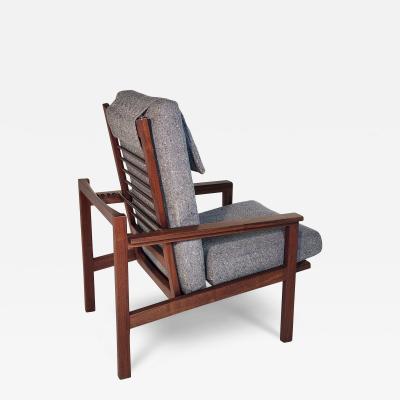
Walnut Adjustable Lounge Chair Arden Riddle (1921-2011) pre-1965
-
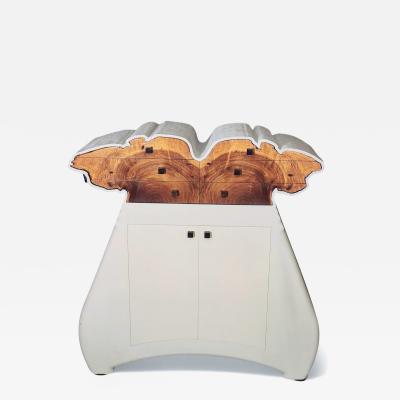
Charles Cobb Studio California Cherub Chest Figured Acacia Unique 1980s
-
1960s Adrian Pearsall Craft Associates Walnut & River Slate Side Table

-
Profile of A Clown Georges Rouault Interpreted As A Ceramic Mosaic Panel C. 1955

-
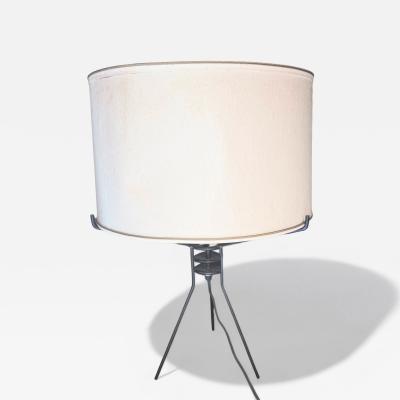
Mid-Century Horo-Lite Wrought Iron Tripod Table Lamp, Brooklyn NY, 1950s
-
The Bicentennial in New York Harbor Mosaic Artwork1978 4 by 8 feet

-
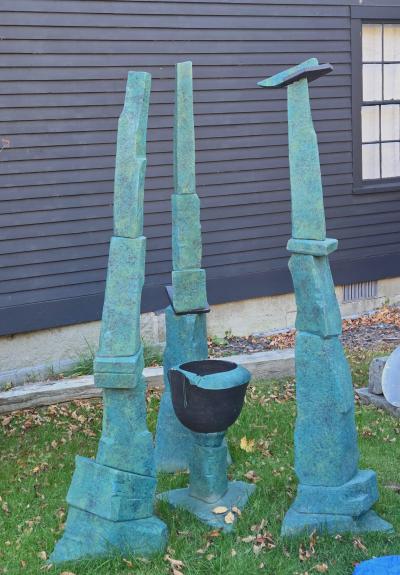
Vance Bell – Falk Lake Site Marker #64 (1986) Ceramic Sculpture
-
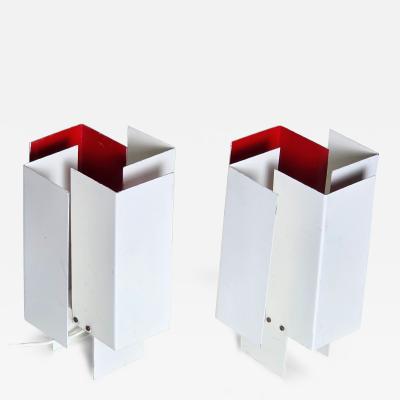
Pair 1970 Simon Henningsen Nippon Table Lamps LYFA
-
Warren McArthur Modified Revolving Stool Aircraft Seat 1947/2024
-
!940s Bamboo Rattan Lounge Chair

-
Warren McArthur Console Beauty Salon Cubicle Blue Cafolite Top Rome NY 1935