









Offered by:
Kristan Hauge Japanese Art
2-32 Saishoji-cho, Okazaki, Sakyo-ku,
Kyoto 606-8342 , Japan
Call Seller
81757515070
Showrooms
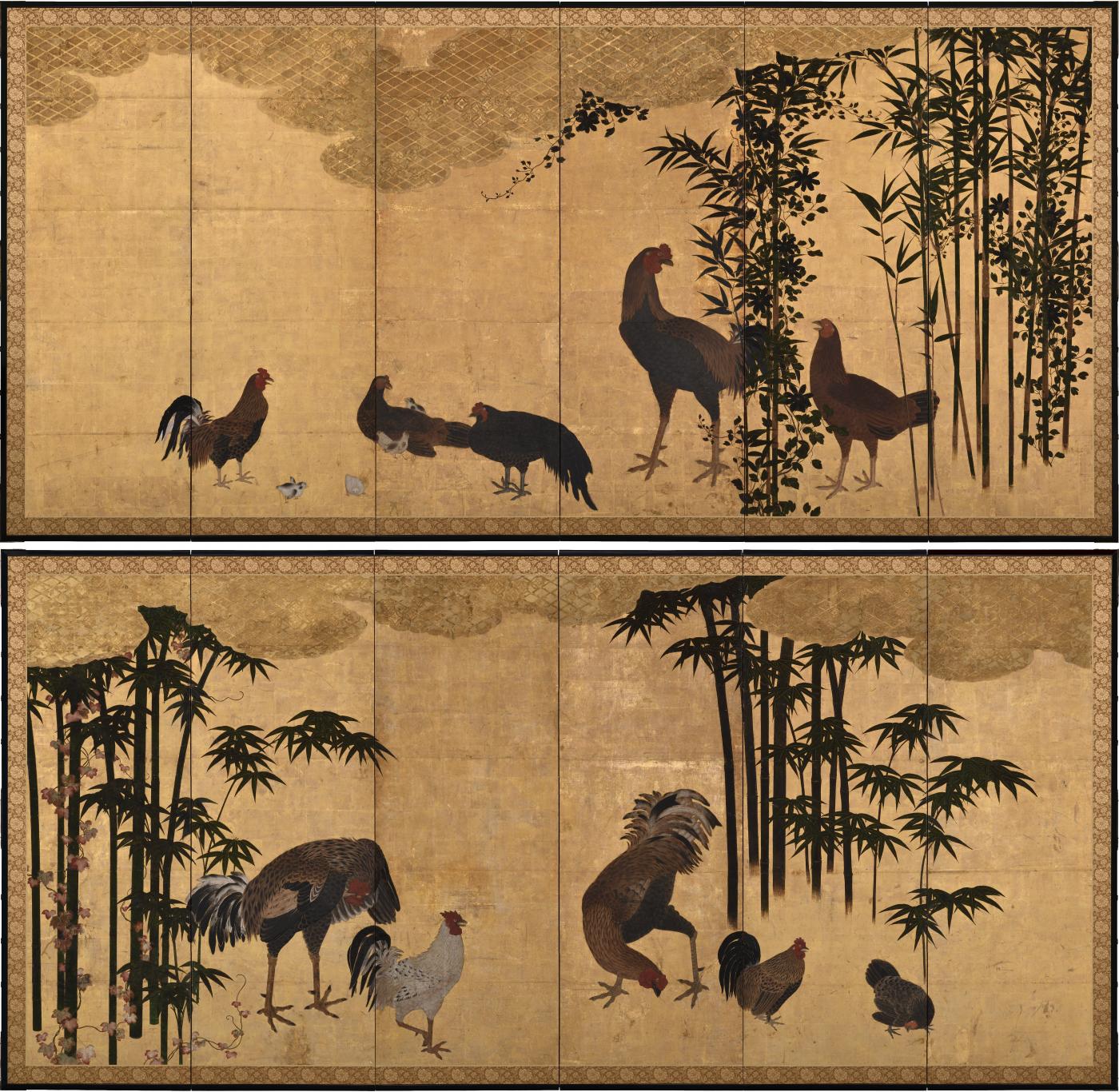
17th Century Japanese Screen Pair. Roosters and Chickens in a Bamboo Grove
-
Description
Kano School
Roosters and Chickens in a Bamboo Grove
Edo period, early 17th century
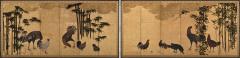
Pair of six-panel Japanese folding screens Ink, mineral pigments, gofun, gold and gold leaf on paper Dimensions (each): H. 164.5 cm × W. 339 cm (65" × 133.5")
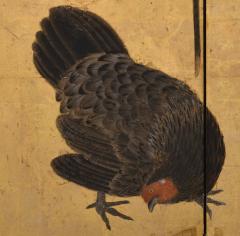
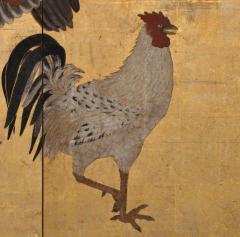
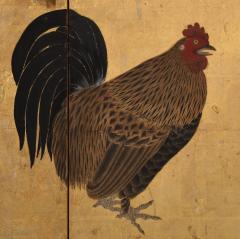
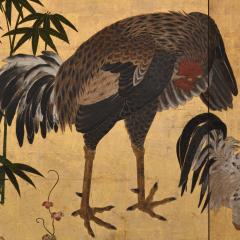
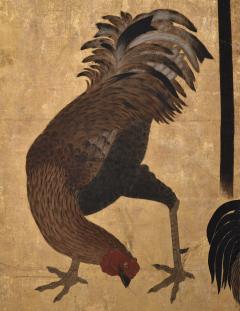
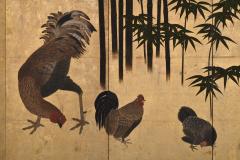
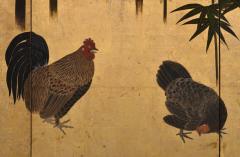
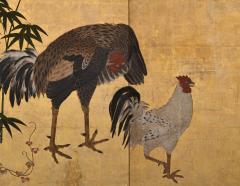
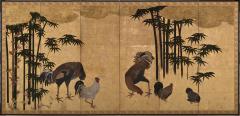
The artist has depicted the roosters and chickens with remarkable sensitivity and close observation. Every aspect of their anatomy—from the finely serrated combs and wattles to the layered plumage and slender legs—is rendered with assured, controlled brushwork. Careful modelling lends the birds convincing volume and weight, while subtle variations in posture create a natural sense of movement throughout the composition. Rather than repeating a single motif, the artist has given each bird its own distinct character, whether crowing, foraging, preening, or tending to newly hatched chicks. The result is a composition that feels both harmonious and quietly animated.
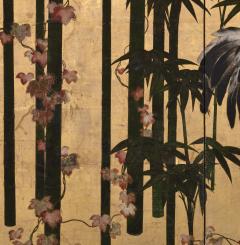
The surrounding landscape is equally considered. Groves of bamboo, together with flowering clematis and climbing ivy, frame the birds without overwhelming them, dividing the expansive gold ground into a series of intimate scenes. The pair also incorporates a subtle seasonal progression. One screen evokes spring through flowering clematis, fresh bamboo shoots, and newly hatched chicks, while the companion screen suggests autumn with mature bamboo and ivy in seasonal colour. Together, the two screens reflect the cyclical rhythms of nature and the continuity of life.
Beyond their naturalistic appeal, roosters held rich symbolic meaning in Japan. Long regarded as heralds of the dawn, their crow announced the triumph of light over darkness and came to symbolize vigilance, renewal, and perseverance. Influenced by Chinese tradition, the rooster was also admired as the embodiment of the Five Virtues—literary accomplishment, martial spirit, courage, benevolence, and fidelity. The inclusion of hens and chicks further introduces themes of prosperity, fertility, and family continuity, lending the pair an auspicious character well suited to a prestigious commission.
Running across the upper edge of the screens is an elaborate band of raised gilt ornament (moriage), creating a richly textured surface. This relief was built up with successive layers of gofun (powdered oyster shell) before being finished with a gold wash, a decorative technique associated with high-quality seventeenth-century screens. The ornament consists of circular family crests (mon) arranged within a repeating diamond pattern. Significantly, the same crest appears on the gilt copper corner fittings and frame hardware, strongly suggesting that the metal fittings are original to the screens.
Raised relief is also employed within the painted composition itself, most notably in the cockscombs and legs of the birds, where it imparts a subtle three-dimensional quality. Combined with the generous use of costly mineral pigments and gold, these details speak to the exceptional refinement of the commission. Taken together with the auspicious subject matter, the screens may have been created to commemorate the Year of the Rooster for an important patron, perhaps a member of the court aristocracy or a powerful daimyo.
Approximately 15 years ago the screens underwent a complete ground-up restoration and remounting in a traditional Japanese conservation studio. Carried out by master craftsmen employing centuries-old materials and techniques, the process is exceptionally complex, requiring extensive knowledge and meticulous handwork at every stage. Comprehensive restoration of this calibre is a substantial undertaking that safeguards the screens for future generations while ensuring their continued structural stability and aesthetic integrity.
Published:
Japanese Paintings and Works of Art, Erik Thomsen, 2010.
Forbes, "In Pictures: Asian Art," March 15, 2010. -
More Information
Period: Pre 18th Century Creation Date: Early 17th century Styles / Movements: Asian Art Incollect Reference #: 874800 -
Dimensions
W. 133.46 in; H. 64.76 in; W. 339 cm; H. 164.5 cm;
Message from Seller:
Kristan Hauge Japanese Art, based in Kyoto's museum district since 1999, specializes in important Japanese screens and paintings for collectors, decorators, and museums worldwide. Contact us at khauge@mx.bw.dream.jp or +81 75-751-5070 for exceptional access to Japanese art and history.
More Listings from Kristan Hauge Japanese Art View all 68 listings
-
Early 20th Century Japanese Nihonga Screen. Bamboo Forest
-
19th Century Japanese Shunga Hand-Scroll, Katsukawa School.

-
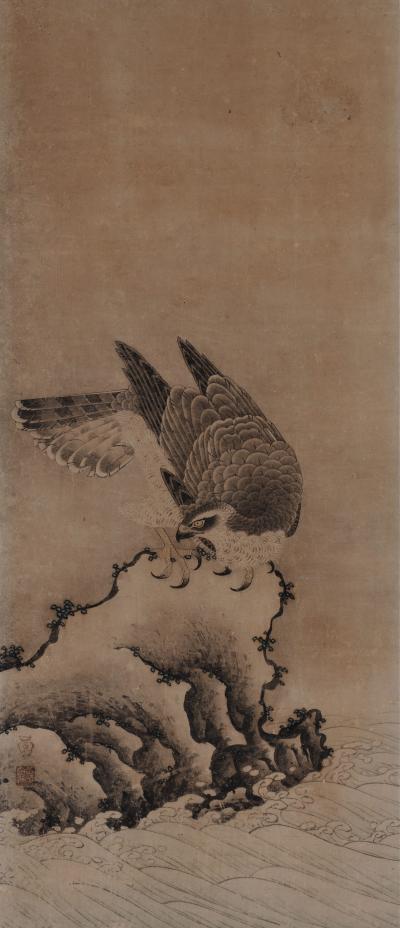
Mitani Toshuku (1577-1654). Unkoku School. Japanese falcon painting.
-
Mother’s Breast (Chichi) 1844. Japanese scroll painting.

-
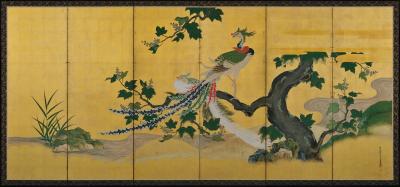
Tsunetake Yotei (18 c.) | Phoenix & Peacocks | Japanese folding screen pair
-
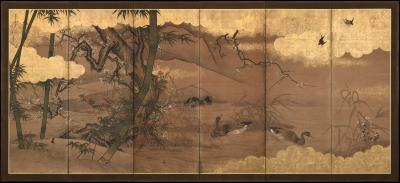
17th Century Japanese Unkoku Screen. Flowers & Birds of Winter and Early Spring
-
Korean grapevine painting. 17th century.

-
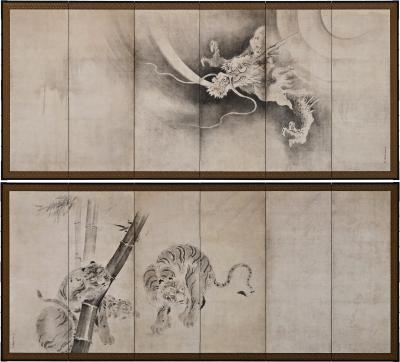
17th Century Japanese Screen Pair. Tiger & Dragon by Kaiho Yusetsu
-
Mitani Toshuku (1577-1654). Unkoku School. Japanese falcon painting.

-
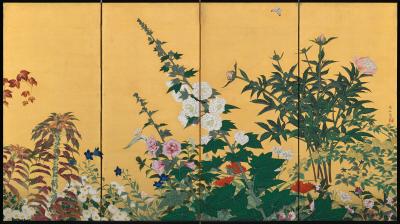
Early 20th Century Japanese Screen. Flowers of the Four Seasons
-
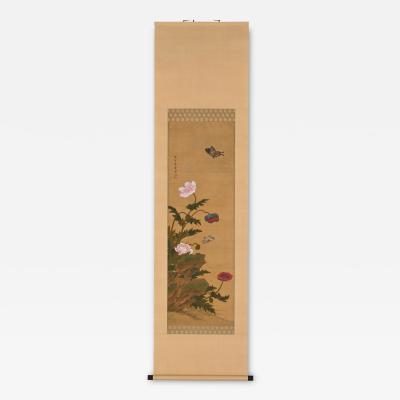
19th Century Japanese Scroll Painting by Igarashi Chikusa, Poppies & Butterflies
-
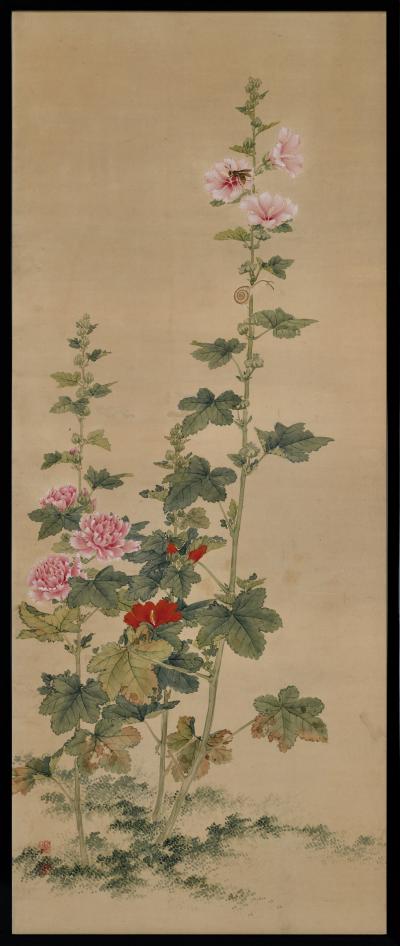
Mid 19th Century Framed Japanese Painting. Snail, Wasp & Hollyhock.
-
Amaranth & Rooster | Circa 1930 | Japanese scroll painting

-
Early 20th Century Japanese Nihonga Scroll. Crow & Persimmon.

