













Showrooms
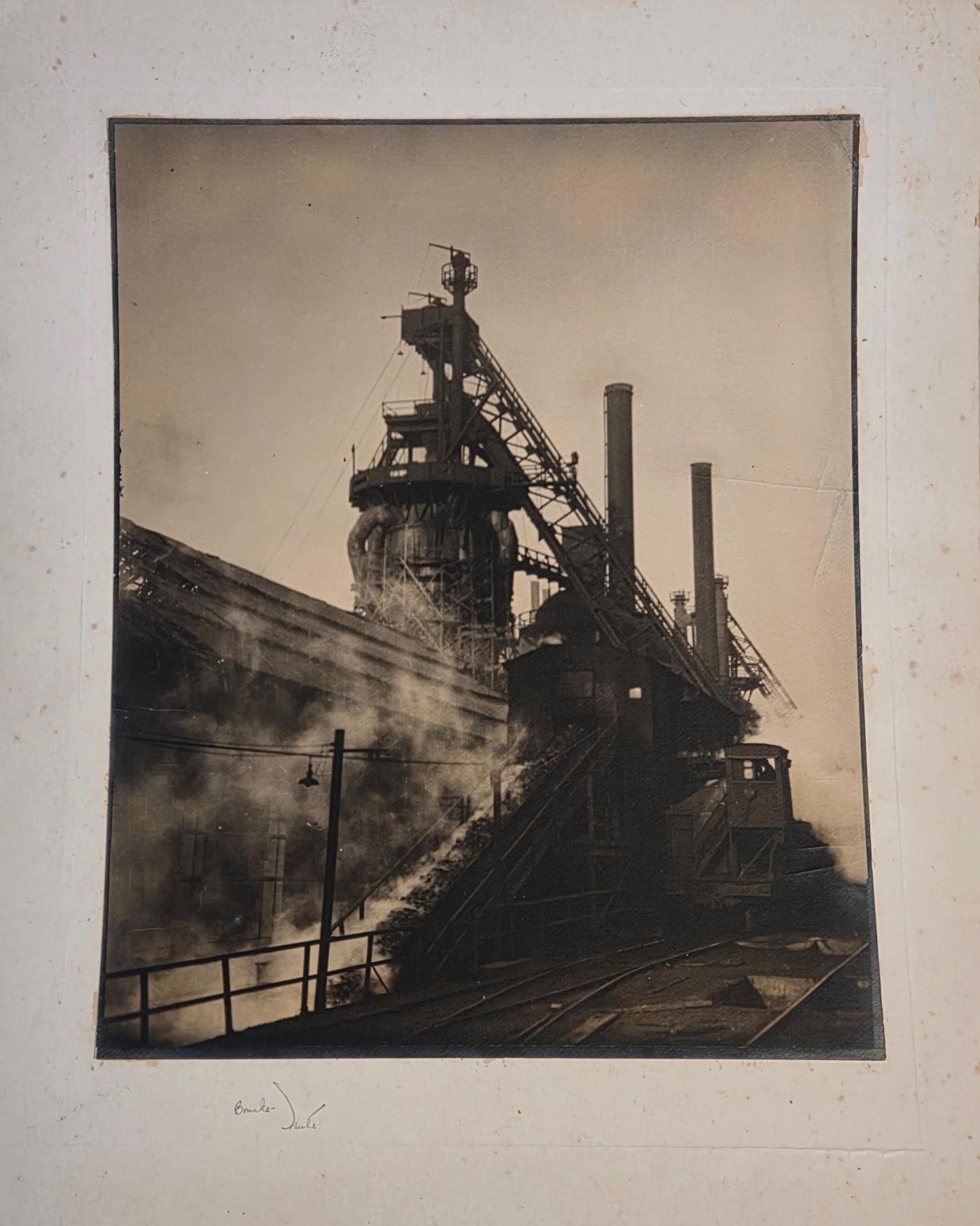
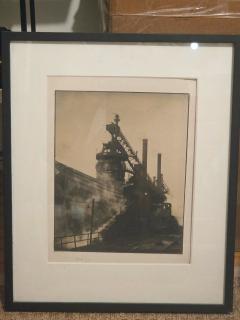
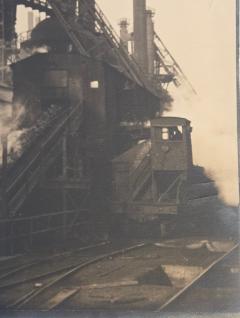
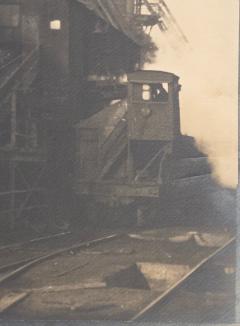
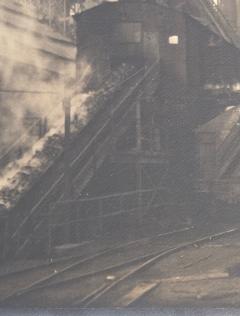
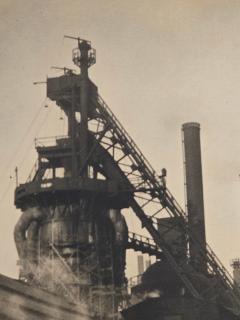
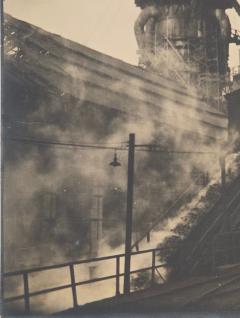
Margaret Bourke-White Precisionist Steel Mill, Otis Steel Company, 1928
-
Description
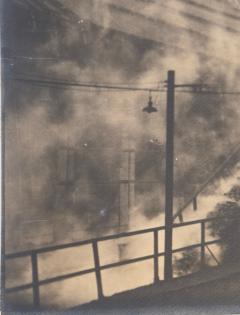
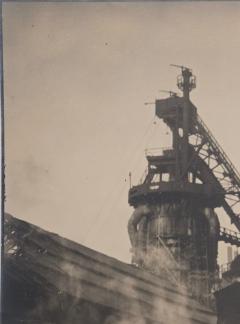
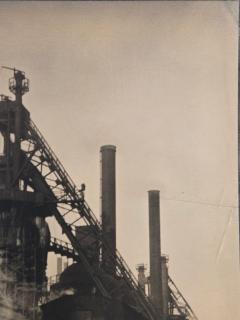
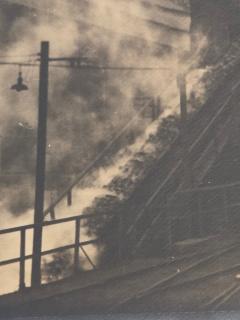
This commanding industrial photograph dates from 1928, a pivotal year in the early career of Margaret Bourke-White, and belongs to the body of work that established her as one of the principal architects of American photographic modernism. The image depicts a blast furnace complex at the Otis Steel Company in Cleveland, Ohio—an environment of conveyors, rail tracks, smokestacks, gantries, and rising steam—transformed through disciplined composition into a monumental modern landscape.
Bourke-White approaches the steel mill not as a documentary subject but as an architectural and abstract system. Strong diagonals lead the eye through the frame, intersecting with vertical stacks and horizontal rail lines to create a dynamic geometric armature. Smoke and steam are deliberately incorporated as compositional masses, softening and activating the rigid industrial forms while heightening spatial depth. The photograph oscillates between clarity and atmosphere, solidity and dissolution, producing an image that is both descriptive and emphatically modernist.
This visual language places Bourke-White’s work in direct dialogue with American Precisionism, particularly the contemporaneous industrial imagery of Charles Sheeler. Like Sheeler—whose photographs and paintings of Ford’s River Rouge Plant redefined industry as a subject of aesthetic rigor—Bourke-White renders machinery and infrastructure as autonomous formal elements. Yet where Sheeler often pursued an austere stillness and near-total suppression of atmosphere, Bourke-White embraced scale, motion, and volatility. Steam, smoke, and glare are not incidental but integral, animating the composition and underscoring the physical intensity of the industrial process.
The Otis Steel photographs were also technically and logistically radical achievements. After sustained efforts to secure permission to work inside the Otis Steel facilities—access that was rarely granted to photographers, and almost never to women—Bourke-White employed experimental artificial lighting techniques, including magnesium flares, to illuminate the vast industrial environment. These methods allowed her to exert unprecedented control over contrast and exposure in conditions dominated by darkness, heat, and steam. Light becomes an active architectural force in the image, carving form out of shadow and reinforcing the sculptural presence of the steelworks.
This photograph belongs to Bourke-White’s landmark Otis Steel series, widely regarded as foundational to American industrial photography. Images from this body of work circulated through exhibitions, institutional collections, and corporate publications in the late 1920s, marking a decisive shift in the perception of industry as a legitimate subject for serious art photography. Shortly thereafter, Bourke-White was appointed the first staff photographer for Fortune magazine, where she played a central role in shaping the magazine’s pioneering visual identity and extending the modernist treatment of industry to a national audience.
Printed as a gelatin silver photograph in the period, the present work exemplifies Bourke-White’s early mastery of tonal range, compositional discipline, and technological innovation. The square format reinforces the sense of equilibrium and monumentality, while the commanding vantage point situates the viewer within a landscape shaped by human engineering on a near-civic scale.
This photograph stands as a defining early statement of twentieth-century modernist photography. It captures the American steel industry at the height of its symbolic, economic, and cultural power, while simultaneously asserting photography’s capacity to engage industry as a site of abstraction, formal invention, and aesthetic ambition. Within Bourke-White’s oeuvre, it marks the emergence of a voice that would shape the visual language of modern America. -
More Information
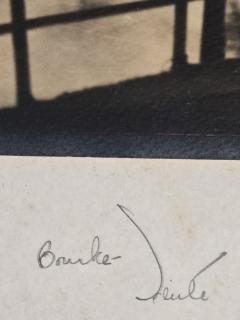
Documentation: Signed Origin: United States, Ohio Period: 1920-1949 Materials: silver print Condition: Good. Vintage gelatin silver print in very good condition. Even tonal range with strong contrast. Minor age-appropriate surface wear Creation Date: 1928 Styles / Movements: Modernism Incollect Reference #: 846204 -
Dimensions
W. 10.5 in; H. 13.25 in; H.2. 18 in; W. 26.67 cm; H. 33.66 cm; H.2. 45.72 cm; Open W. 14 in; Open W. 35.56 cm;
Shipping Information:
Ask about competitive S&H rates.
Message from Seller:
Established in 1984, Appleton offers a curated selection of 20th Century furniture, tables, chairs, and décor, featuring works by iconic designers like Frank Lloyd Wright and Edward Wormley. For inquiries, contact us at appletonarts@gmail.com.
More Listings from Appleton View all 217 listings
-
Vintage French Le Dauphin Style Glass Lamp with Hand Gilt Foliage c1950

-
1950s California Mid-Century Sculptural Manzanita Floor Lamp
-
1952 Tye of California "Aboriginal" Ceramic Table Lamp

-
Pair of Mid-Century Modern Lightolier Table Lamps by Gerald Thurston, 1950s

-
Frank Lloyd Wright Mahogany Desk Heritage Henredon 1955/56

-
Italian Neoclassical Carved Alabaster & Marble Table Lamp, c. 1930s

-
1960s California Brutalist Hand-Carved Interlocking Old-Growth Douglas Fir Totem
-
Paul Frankl Six Drawer Sideboard Cork Johnson Furniture 1950s

-
Streamlined Chinoiserie Twin-Column Temple Gate Table Lamp, c. 1950s
-
Pair Mid-Century Brancusi Cerused Oak Lamps W/ Original Red Fiberglass Shades

-
1990s Achille and Pier Giacomo Castiglioni Taccia Lamp for Flos

-
1950s Eduardo Alvarado Mexican Mosaic Banderillero Rosewood Table Castillo Taxco
-
MAgriTTA Chair

-
1933 Pre-War Bauhaus Kaiser Idell Natural Steel Model 6551 Desk Lamp Germany