









Robert John Thornton
British
Robert John Thornton (1768–1837) was an influential English physician and botanical writer, best known for his major works, A New Illustration of the Sexual System of Carolus Von Linnæus (1797–1807) and The British Flora (1812).
Born to Bonnell Thornton, Robert studied at Trinity College, Cambridge, where he developed a keen interest in botany, inspired by the lectures of John Martyn and the groundbreaking work of Carl Linnaeus. Initially on a path toward the Church, he shifted his focus to medicine, later practicing at Guy's Hospital in London, where he also lectured on medical botany. Following the deaths of his brother and mother, he inherited a substantial family fortune.
Thornton began his ambitious project, A New Illustration of the Sexual System of Carolus von Linnaeus, in 1799. This comprehensive botanical work was intended to consist of three parts. The first two parts focused on the sexual classification of plants, while the third, The Temple of Flora (1799–1807), featured stunning colored plates, many engraved by Thomas Medland from paintings by Philip Reinagle. Despite his vision of publishing seventy folio-sized plates, the project struggled due to lack of public interest, leading to financial difficulties. Ultimately, around 800 copies were produced, each containing 31 plates along with poetry and notes on flower lore.
In addition to his notable works on botany, Thornton published Elements of Botany in 1812, dedicating it to Rev. Thomas Martyn, further solidifying his contributions to the field. Despite his initial success, Thornton faced financial ruin later in life and died in destitution. His legacy endures through his botanical publications, which continue to be referenced in the field of botany. The standard author abbreviation "Thornton" is still used to cite his botanical contributions.
Born to Bonnell Thornton, Robert studied at Trinity College, Cambridge, where he developed a keen interest in botany, inspired by the lectures of John Martyn and the groundbreaking work of Carl Linnaeus. Initially on a path toward the Church, he shifted his focus to medicine, later practicing at Guy's Hospital in London, where he also lectured on medical botany. Following the deaths of his brother and mother, he inherited a substantial family fortune.
Thornton began his ambitious project, A New Illustration of the Sexual System of Carolus von Linnaeus, in 1799. This comprehensive botanical work was intended to consist of three parts. The first two parts focused on the sexual classification of plants, while the third, The Temple of Flora (1799–1807), featured stunning colored plates, many engraved by Thomas Medland from paintings by Philip Reinagle. Despite his vision of publishing seventy folio-sized plates, the project struggled due to lack of public interest, leading to financial difficulties. Ultimately, around 800 copies were produced, each containing 31 plates along with poetry and notes on flower lore.
In addition to his notable works on botany, Thornton published Elements of Botany in 1812, dedicating it to Rev. Thomas Martyn, further solidifying his contributions to the field. Despite his initial success, Thornton faced financial ruin later in life and died in destitution. His legacy endures through his botanical publications, which continue to be referenced in the field of botany. The standard author abbreviation "Thornton" is still used to cite his botanical contributions.
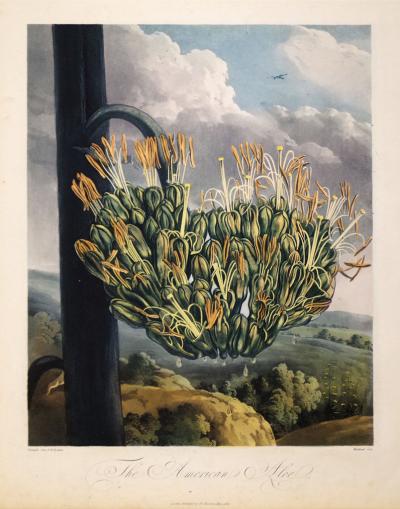
Robert John Thornton
ROBERT JOHN THORNTON (1768-1837), THE AMERICAN ALOE
H 22 in W 17 in
Request Price

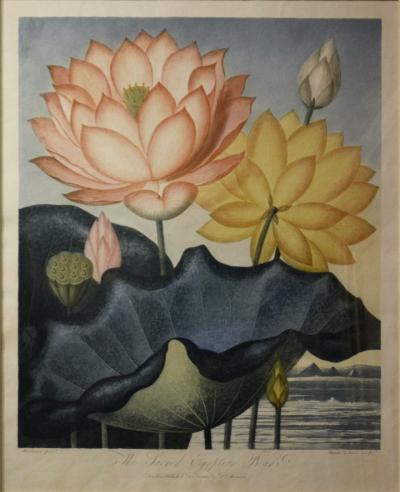
Robert John Thornton
ROBERT JOHN THORNTON (1768-1837), THE SACRED EGYPTIAN BEAN
H 32 in W 27 in
Request Price

Robert John Thornton
ROBERT JOHN THORNTON (1768-1837), THE SUPERB LILY
H 22 in W 17 in
Request Price
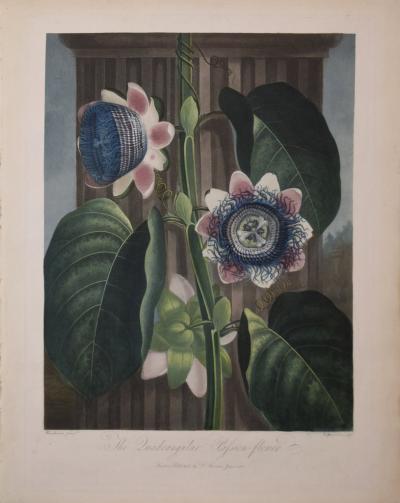
Robert John Thornton
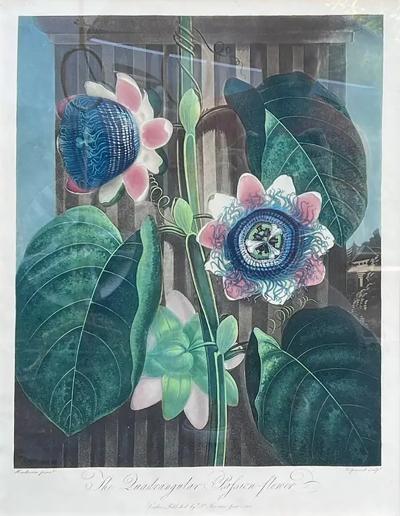
ROBERT JOHN THORNTON (1768-1837), THE QUADRANGULAR PASSION FLOWER
H 22 in W 17 in
Request Price
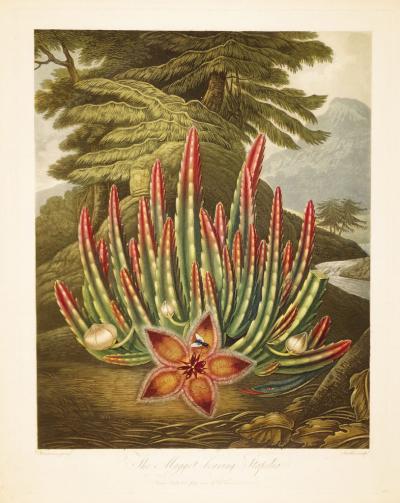
Robert John Thornton
ROBERT JOHN THORNTON (1768-1837), THE MAGGOT BEARING STAPELIA
H 22 in W 17 in
Request Price
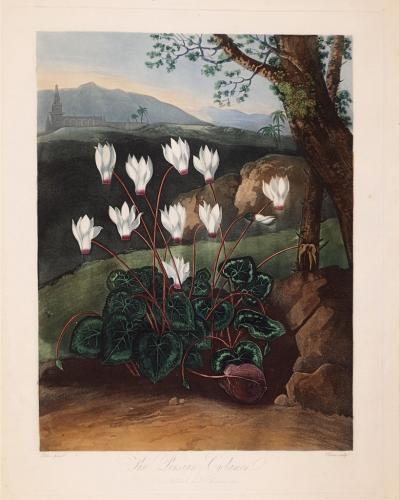
Robert John Thornton
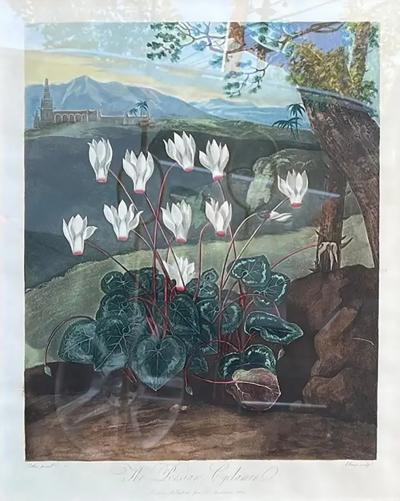
ROBERT JOHN THORNTON (1768-1837), THE PERSIAN CYCLAMEN
H 22 in W 17 in
Request Price
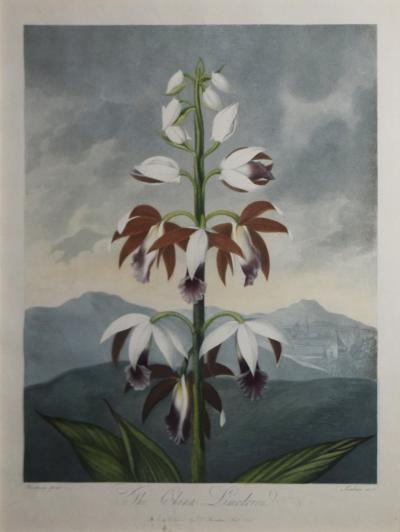
Robert John Thornton
ROBERT JOHN THORNTON (1768-1837), THE CHINA LIMODORON
H 35 in W 32 in
Request Price
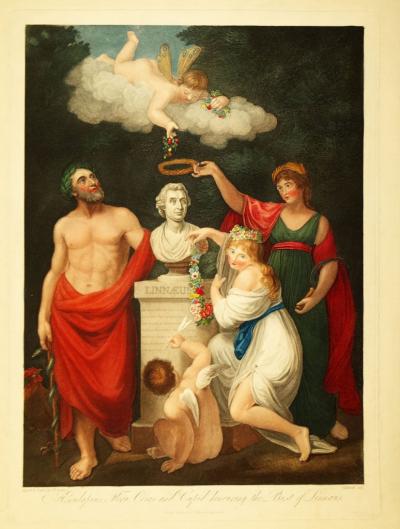
Robert John Thornton
ESCULAPIUS, FLORA, CERES AND CUPID HONORING THE BUST OF LINNAEUS
H 22 in W 17 in
Request Price
Robert John Thornton
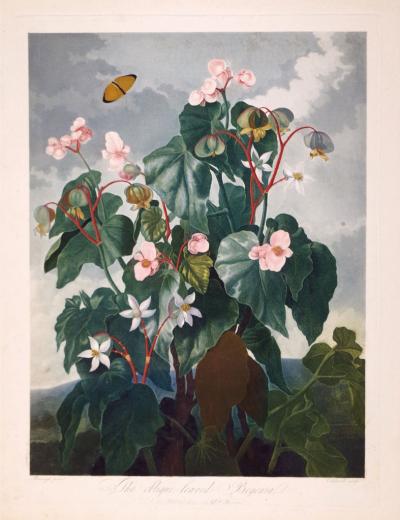
ROBERT JOHN THORNTON (1768-1837), THE OBLIQUE-LEAVED BEGONIA
H 22 in W 17 in
Request Price

Robert John Thornton
ROBERT JOHN THORNTON (1768-1837), A GROUP OF AURICULAS
H 22 in W 17 in
Request Price
Robert John Thornton
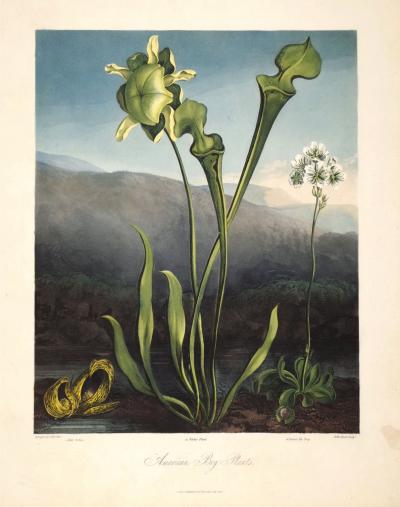
ROBERT JOHN THORNTON (1768-1837), AMERICAN BOG PLANTS
H 22 in W 17 in
Request Price

Robert John Thornton
ROBERT JOHN THORNTON (1768-1837) FLORA DISPENSING HER FAVOURS
H 22 in W 17 in
Request Price
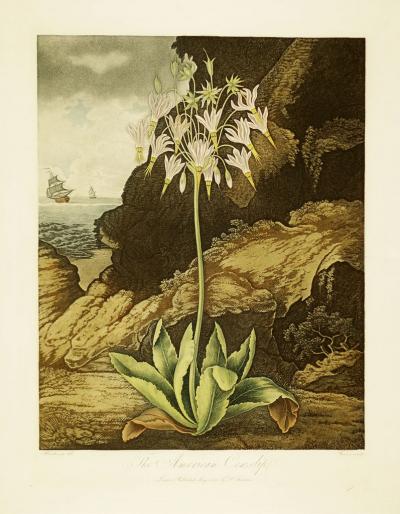
Robert John Thornton
ROBERT JOHN THORNTON (1768-1837), THE AMERICAN COWSLIP
H 22 in W 17 in
Request Price
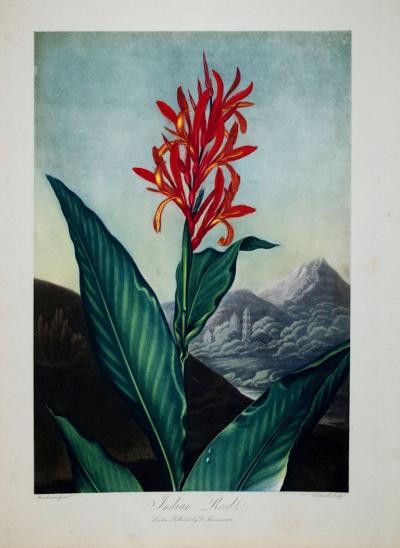
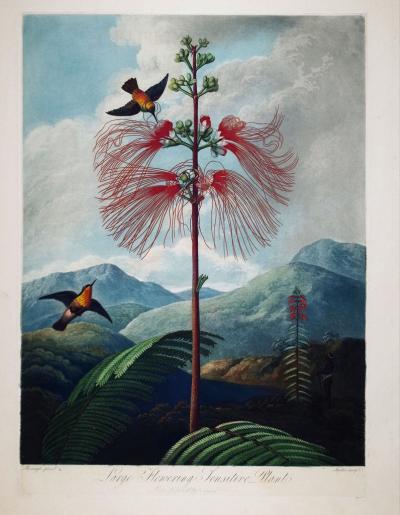
Robert John Thornton
ROBERT JOHN THORNTON (1768-1837), LARGE FLOWERING SENSITIVE PLANT
H 22 in W 17 in
Request Price
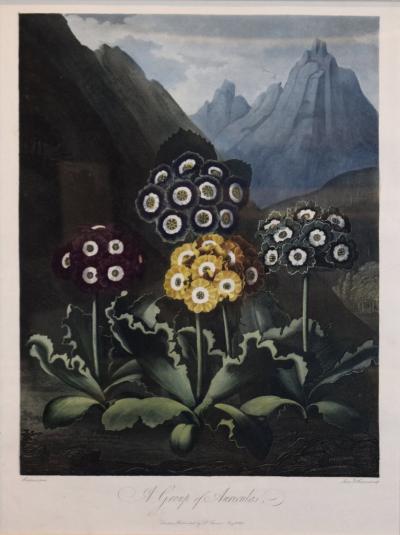
Robert John Thornton
ROBERT JOHN THORNTON (1768-1837), A GROUP OF AURICULAS
H 22 in W 17 in
Request Price
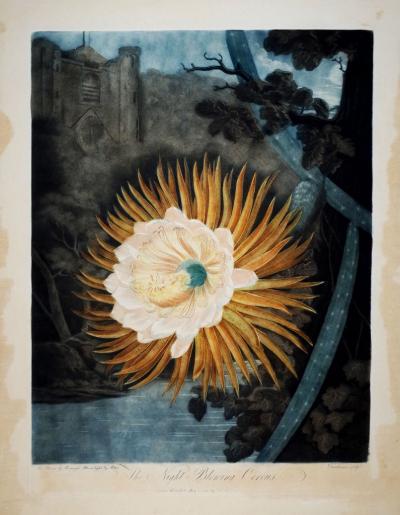
Robert John Thornton
ROBERT JOHN THORNTON (1768-1837), THE NIGHT BLOWING CEREUS
H 22 in W 17 in
Request Price
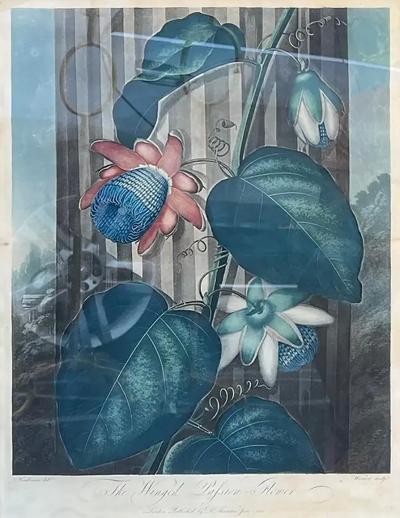
Sold

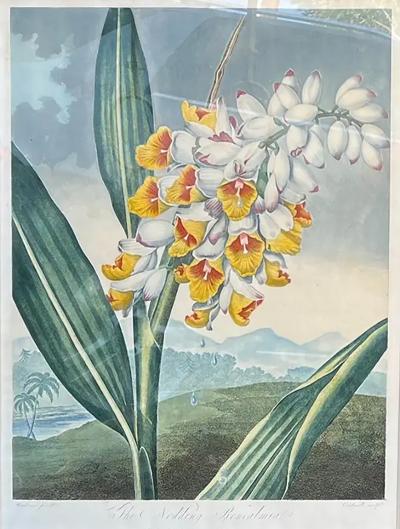
Sold
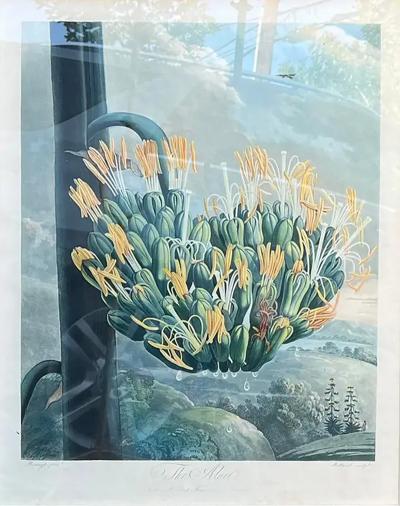
Sold
Robert John Thornton
Antique Botanical Print - the Aloe by Dr. Thornton, Robert John C.1798
H 37 in W 32 in D 2 in
Sold
Robert John Thornton
Antique Botanical Print - the Persian Cyclamen by Thornton, Robert John C.1804
H 37 in W 32 in D 2 in
Sold
Robert John Thornton
Antique Botanical Print - the Quadrangular Passion Flower
H 37 in W 32 in D 2 in
 Loading...
