







William Zorach
American, 1887 - 1966
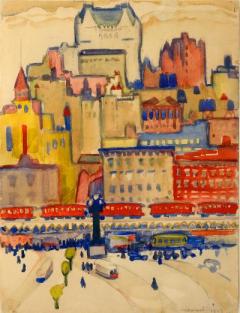
William Zorach, sculptor, painter and teacher, was born February 28, 1887, in Eurburick-Kovno, Russia. He came to the United States in 1891, and lived in New York and Maine. His academic training included studies in Paris, the Cleveland Institute of Art, and the National Academy of Design in New York City. He was a teacher at the Des Moines Art Center, and at the Art Students League in New York City from 1929 to 1966. Zorach was the recipient of numerous awards including: MFA, Bowdoin Club; DFA, Colby Club; Widener Memorial Medal; National Institute Arts and Letters gold medal; New York Architectural League honorable mention prize, Art Institute of Chicago, 1931, medal and purchase prize, 1932; among others. He exhibited at the Taylor Gallery, Downtown Gallery, Whitney Museum, Queens College, Brooklyn Museum, Zabriskie Gallery (all in NYC); Art Institute of Chicago; Art Students League; Contemporary Arts Center, Cincinnati, Ohio. His work can be found in the collections of Phillips Academy, Andover; Newark Museum; Webb Gallery, Vermont; Butler Institute, Youngstown, Ohio; University of Nebraska, Lincoln; Whitney Museum, Columbia University (both in NYC); and the IBM Collection. He was a contributor to Magazine of Art, Creative Arts, National Encyclopedia, and other publications. Zorach was also the author of Zorach Explains Sculpture. Zorach died in Bath, Maine, on November 15, 1966.
William Zorach sculptures paintings
William Zorach sculptures paintings
William Zorach
Born Lithuania, 1887
Died Maine, 1966
A native of Lithuania, William Zorach and his family immigrated to the United States when he was four years old. The Zorach family settled in Cleveland, Ohio where young William began grade school. During this time of development, he displayed exceptional talent in the arts. His talents were so impressive that his seventh grade teacher recommended that he study painting at night with Henry Keller at the Cleveland School of Arts (1903-1905). William progressed so rapidly that he was soon apprenticed at the Lithography Company of Cleveland (1903-1906). By the time he was twenty, he not only mastered his trade but he earned enough money to finance his education at the National Academy of Design in New York.
At the academy, William won several awards for his drawings and paintings. In 1910, he went abroad to study art in Paris at Jacques-Emile Blanche's atelier. During his time abroad, he exhibited some of his earliest paintings at the Salon de Automne. In Paris, he met Marguerite Thompson, a California native and fellow painter, who later became his wife. Soon after marriage, the couple settled into a New York studio. Their work was accepted in the famous Sixty-Ninth Regimental Armory Show of 1913. The show was a milestone in helping to reconstruct many American ideals about art.
In 1923, William and Marguerite settled on a farm in Maine. William achieved incredible success in the latter part of his career. He continued to sculpt and was soon considered one of the country's finest artists. He received numerous commissions and exhibited his work in the nation's premier institutions including the Art Institute of Chicago, Dallas Museum of Fine Art, McNay Art Institute and the Whitney Museum of American Art.
Works Held: Museum of Modern Art; Boston Museum of Fine Arts; Brooklyn Museum; Cleveland Museum of Arts; Whitney Museum of American Art; Art Institute of Chicago; Phillips Memorial Gallery; Berkshire Museum; Newark Museum, New Jersey; "The Spirit of Dance" Radio City Music Hall, New York City; Shelburne Museum, Vermont; Wichita Art Museum, Kansas; Norton Gallery Art; Swope Art Gallery; Munson-Williams Proctor Institution; Los Angeles Museum of Art; Federal Art Project of the Works Progress Administration statue; United States Post Office Building, Washington, DC; Mayo Clinic.
Exhibitions: Salon d'Automne, 1911; Taylor Art Gallery, Cleveland, 1912; Amory Show, 1913; Society of Independent Artists, 1917-18, 1922, 1929, 1941; Dayton Art Institute, solo, 1922; University of Rochester solo, 1924, solo 1941; C.W. Kraushaar, solo 1924; Art Institute of Chicago, 1926-49; Whitney Museum of American Art biennials, 1928-66; Downtown Gallery, New York, 1931; Pennsylvania Academy of Fine Arts, 1933-66; Architecture League of America. (prize 937); Dallas Museum of Fine Art, solo, 1945; Mc Nay Art Institute, solo, 1956; Bowdoin College Museum of Art, solo, 1958; Queens College, New York, 1961; Columbus Gallery of Fine Art; Cincinnati Contemporary Art Club; ; Salons of America.
Further Reading: Who Was Who in American Art 1564-1975: 400 Years of Artists in America, Vol. 3. Peter Hastings Falk, Georgia Kuchen and Veronica Roessler, eds., Sound View Press, Madison, Connecticut, 1999. 3 Vols. (Original Listing 1940); The Illustrated Biographical Encyclopedia of Artists of the American West, Peggy and Harold Samuels, Doubleday & Company, Inc., Garden City, New York, 1976.
Biography courtesy of David Cook Galleries, www.antiquesandfineart.com/davidcook
Born Lithuania, 1887
Died Maine, 1966
A native of Lithuania, William Zorach and his family immigrated to the United States when he was four years old. The Zorach family settled in Cleveland, Ohio where young William began grade school. During this time of development, he displayed exceptional talent in the arts. His talents were so impressive that his seventh grade teacher recommended that he study painting at night with Henry Keller at the Cleveland School of Arts (1903-1905). William progressed so rapidly that he was soon apprenticed at the Lithography Company of Cleveland (1903-1906). By the time he was twenty, he not only mastered his trade but he earned enough money to finance his education at the National Academy of Design in New York.
At the academy, William won several awards for his drawings and paintings. In 1910, he went abroad to study art in Paris at Jacques-Emile Blanche's atelier. During his time abroad, he exhibited some of his earliest paintings at the Salon de Automne. In Paris, he met Marguerite Thompson, a California native and fellow painter, who later became his wife. Soon after marriage, the couple settled into a New York studio. Their work was accepted in the famous Sixty-Ninth Regimental Armory Show of 1913. The show was a milestone in helping to reconstruct many American ideals about art.
In 1923, William and Marguerite settled on a farm in Maine. William achieved incredible success in the latter part of his career. He continued to sculpt and was soon considered one of the country's finest artists. He received numerous commissions and exhibited his work in the nation's premier institutions including the Art Institute of Chicago, Dallas Museum of Fine Art, McNay Art Institute and the Whitney Museum of American Art.
Works Held: Museum of Modern Art; Boston Museum of Fine Arts; Brooklyn Museum; Cleveland Museum of Arts; Whitney Museum of American Art; Art Institute of Chicago; Phillips Memorial Gallery; Berkshire Museum; Newark Museum, New Jersey; "The Spirit of Dance" Radio City Music Hall, New York City; Shelburne Museum, Vermont; Wichita Art Museum, Kansas; Norton Gallery Art; Swope Art Gallery; Munson-Williams Proctor Institution; Los Angeles Museum of Art; Federal Art Project of the Works Progress Administration statue; United States Post Office Building, Washington, DC; Mayo Clinic.
Exhibitions: Salon d'Automne, 1911; Taylor Art Gallery, Cleveland, 1912; Amory Show, 1913; Society of Independent Artists, 1917-18, 1922, 1929, 1941; Dayton Art Institute, solo, 1922; University of Rochester solo, 1924, solo 1941; C.W. Kraushaar, solo 1924; Art Institute of Chicago, 1926-49; Whitney Museum of American Art biennials, 1928-66; Downtown Gallery, New York, 1931; Pennsylvania Academy of Fine Arts, 1933-66; Architecture League of America. (prize 937); Dallas Museum of Fine Art, solo, 1945; Mc Nay Art Institute, solo, 1956; Bowdoin College Museum of Art, solo, 1958; Queens College, New York, 1961; Columbus Gallery of Fine Art; Cincinnati Contemporary Art Club; ; Salons of America.
Further Reading: Who Was Who in American Art 1564-1975: 400 Years of Artists in America, Vol. 3. Peter Hastings Falk, Georgia Kuchen and Veronica Roessler, eds., Sound View Press, Madison, Connecticut, 1999. 3 Vols. (Original Listing 1940); The Illustrated Biographical Encyclopedia of Artists of the American West, Peggy and Harold Samuels, Doubleday & Company, Inc., Garden City, New York, 1976.
Biography courtesy of David Cook Galleries, www.antiquesandfineart.com/davidcook
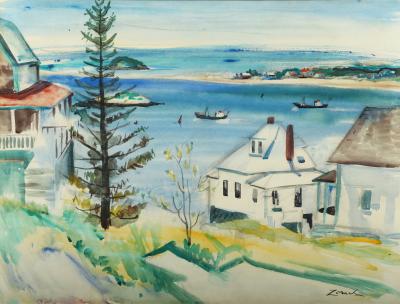
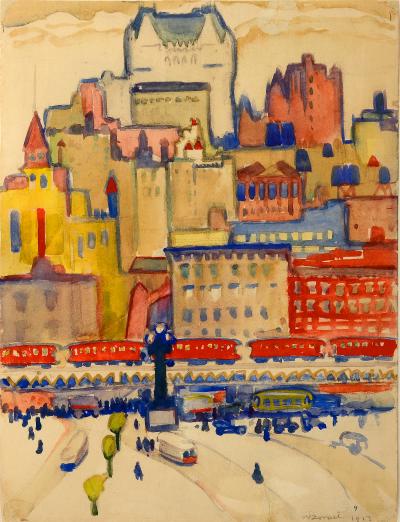
William Zorach
William Zorach (1889-1966) Lived/Active; Ohio, New York, Maine
H 33 in W 39 in
$ 14,500

200
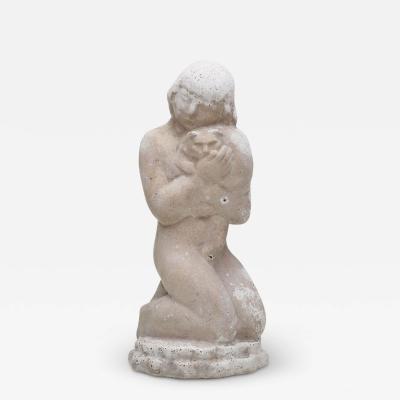
William Zorach
CAST STONE SCULPTURE OF NUDE WITH CAT BY WILLIAM ZORACH
H 14 in W 6 in D 6 in
$ 1,650

 Loading...
