














Offered by:
Kristan Hauge Japanese Art
2-32 Saishoji-cho, Okazaki, Sakyo-ku,
Kyoto 606-8342 , Japan
Call Seller
81757515070
Showrooms
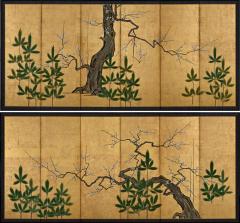
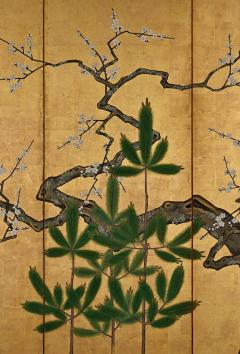
18th Century Japanese Screen Pair. Plum & Young Pines. Kano School.
-
Description
Anonymous, Kano school
Plum & Young Pines
Late 18th Century, Circa 1780
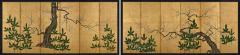
Pair of six-panel Japanese Screens. Ink, pigment, gofun and gold leaf on paper
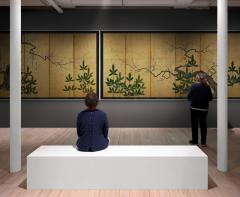
Dimensions (Each screen): H. 176 cm x W. 378 cm (69’’ x 149’’)
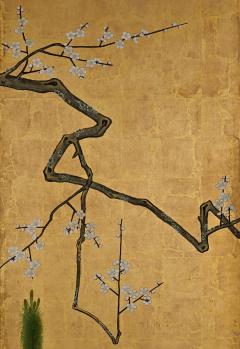
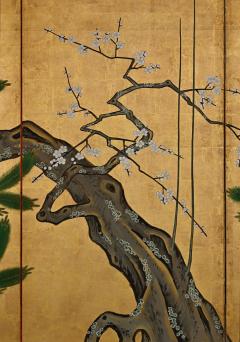
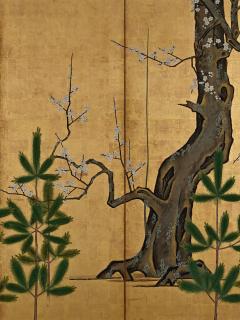
This pair of Japanese folding screens depict blossoming plum trees amongst young pines. They are designed to capture the changing seasons, from winter to spring, reflecting the cyclical nature of life and seeking inspiration from it. Rather than a naturalistic depiction, here the trees and flowers are depicted in a heavily stylized manner influenced by traditional Chinese landscape painting. The copious use of gold leaf conveys a sense of opulence and grandeur and this pair of screens have a particularly beautiful patina. The composition makes full use of the large canvas without overwhelming the space. The negative space is utilized to emphasize the elegant lines and curves of the plum branches and the youthful nature of the pine trees.
These screens were painted by a member of the influential Kano academy of painters. The Kano school operated as a hereditary school with a widespread workshop system. Kano school artists were renowned for producing large-scale screen paintings. These screens were used to define and decorate spaces in castles, temples, and other significant locations. These large-scale screen paintings not only served as decorative elements but also played a role in conveying cultural and historical narratives.
This pair of screens would have been displayed around the New Year period, emphasizing the values of perseverance and strength in the pursuit of a disciplined and enlightened life. The plum blossom is one of the first flowers to bloom in late winter or early spring, signifying hope and renewal. It is widely admired for its beauty and fragrance. In art, the plum blossom represents the coming of spring after the harsh winter, making it a symbol of endurance and new beginnings. The young pine trees similarly convey feelings of revitalization and hope, whilst its evergreen nature also alludes to perpetuity and timelessness. -
More Information
Period: 18th Century Condition: Good. Styles / Movements: Asian Art Incollect Reference #: 724061 -
Dimensions
W. 148.82 in; H. 69.29 in; W. 378 cm; H. 176 cm;
Message from Seller:
Kristan Hauge Japanese Art, based in Kyoto's museum district since 1999, specializes in important Japanese screens and paintings for collectors, decorators, and museums worldwide. Contact us at khauge@mx.bw.dream.jp or +81 75-751-5070 for exceptional access to Japanese art and history.
More Listings from Kristan Hauge Japanese Art View all 69 listings
-
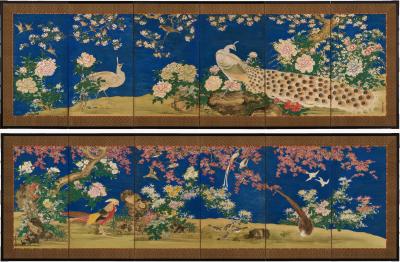
Mid 19th Century Japanese Screen Pair. Flowers & Birds of the Four Seasons
-
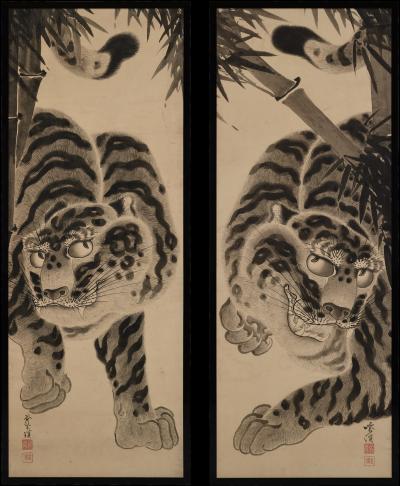
19th Century Japanese Tiger Painting Pair by Kokuho Shimei (1789–1859)
-
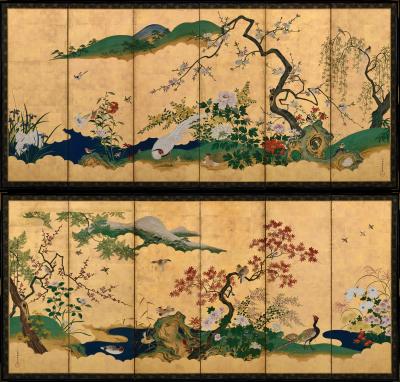
Japanese Screen Pair. 18th Century. Flowers & Birds of the Four Seasons
-
Korean grapevine painting. 17th century.

-
urtledoves in a Peach Tree | Nakamura Daizaburo

-
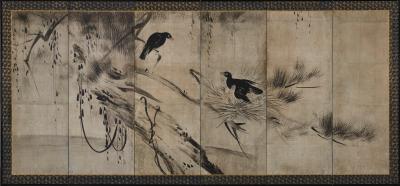
17th Century Momoyama era. Crows on Pine. Studio of Hasegawa Tohaku
-
Japanese Screen. 19th Century. Reflections of the Moon

-
Playful Cat | Hirose Toho (1875-1930) | Japanese scroll painting

-
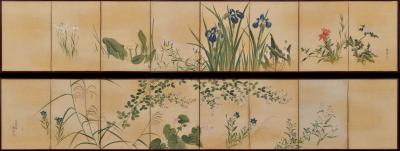
1838 Japanese Screen Pair. Flowers & Grasses of the Four Seasons
-
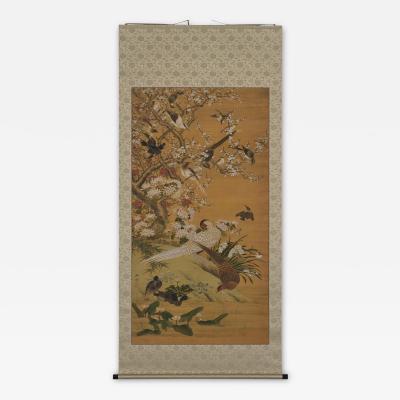
19th Century Japanese Scroll Painting, Birds & Flowers of the Four Seasons.
-
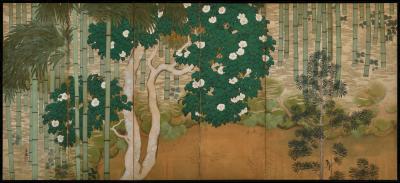
Early 20th Century Japanese Nihonga Screen. Bamboo Forest
-
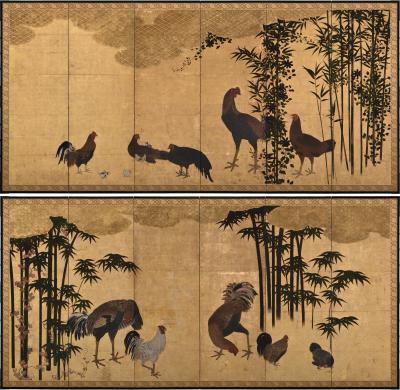
17th Century Japanese Screen Pair. Roosters and Chickens in a Bamboo Grove
-
Early 20th Century Japanese Nihonga Scroll. Crow & Persimmon.

-
Amaranth & Rooster | Circa 1930 | Japanese scroll painting

