








Offered by:
Kristan Hauge Japanese Art
2-32 Saishoji-cho, Okazaki, Sakyo-ku,
Kyoto 606-8342 , Japan
Call Seller
81757515070
Showrooms
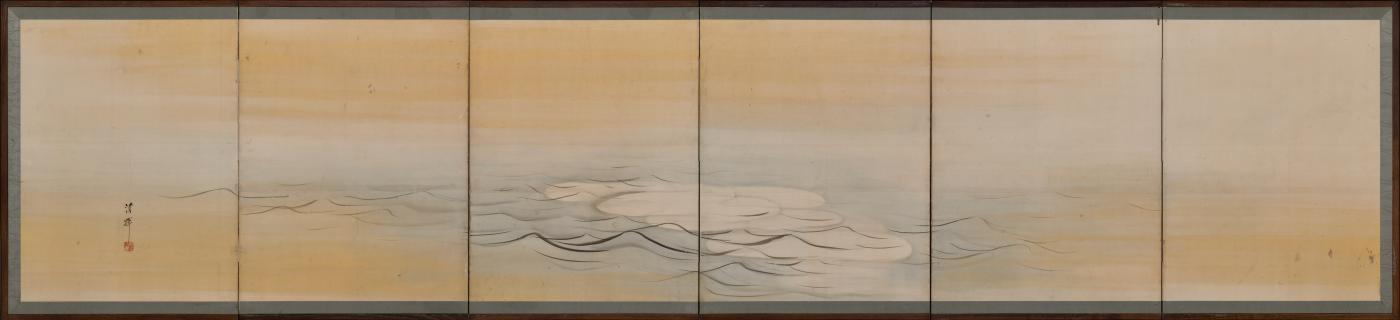
Japanese Screen. 19th Century. Reflections of the Moon
-
Description
Yokoyama Seiki (1792–1864)
Reflections of the Moon
Six-panel Japanese Screen. Ink, color and gold on paper.
Dimensions: H. 63.5 cm x W. 274 cm (25” x 108”)
Price: USD 16,000
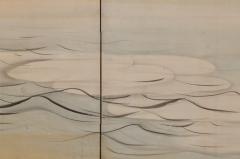
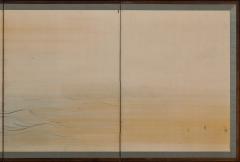
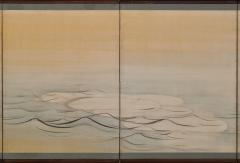
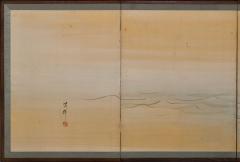
Executed as a six-panel folding screen, this atmospheric composition presents an evocative nocturnal study of moonlight reflected upon a tranquil expanse of water. The moon itself remains unseen, its presence revealed only through elongated bands of pale light that drift across the softly rippling surface, their forms broken and reformed by gently undulating currents rendered in delicate ink line. Subtle washes and fluid brushwork create a refined interplay between luminosity and shadow, conveying the quiet movement of water beneath the night sky. The screen’s broad horizontal format emphasizes the vastness of the scene, surrounding the reflected light with expansive areas of open space that evoke the stillness and silence of the night.
Particularly notable is Seiki’s use of translucent gold washes, which permeate the composition with a soft, radiant glow. Rather than serving a purely decorative function, the gold creates an enveloping atmosphere suggestive of moonlight diffused through mist, while the reflective surface of the screen itself causes the image to shift subtly as ambient light changes. Reduced almost to abstraction and distilled to the essential elements of light, water, and space, the work exemplifies the Shijō school’s sensitivity to observed natural phenomena while expressing a distinctly Japanese appreciation for atmosphere, transience, and contemplative space.
Yokoyama Seiki (1792–1864) was a leading painter of the Kyoto-based Shijō school during the late Edo period. Born in Kyoto, he studied under Matsumura Keibun (1779–1843), the younger half-brother of Matsumura Goshun, founder of the Shijō school. Following Keibun’s death, Seiki emerged as one of the school’s most distinguished artists and was ranked among the foremost painters of Kyoto. Together with Nakajima Raishō, Kishi Renzan, and Shiokawa Bunrin, he was celebrated as one of the “Four Great Heian Painters” of the period. Renowned for his refined depictions of landscapes, flowers, and birds, Seiki combined careful observation of nature with an elegant and atmospheric style. His reputation led to important commissions, including paintings for the rebuilt Kyoto Imperial Palace in 1855, and service as painter to Prince Sonchō of Shōren-in Temple.
The Shijō school developed from the artistic innovations of Maruyama Ōkyo (1733–1795) and his followers in Kyoto. Its style represented a synthesis of careful observation from nature and the lyrical, poetic sensibility associated with literati painting. In contrast to the highly formalized conventions of the Kanō and Tosa schools, Shijō artists emphasized direct study of the natural world, seeking to capture the vitality and character of their subjects with freshness and spontaneity. Landscapes, flowers, birds, and scenes from everyday life were favoured themes. Through artists such as Matsumura Goshun, Matsumura Keibun, Yokoyama Seiki, Shiokawa Bunrin, and others, the school became the dominant painting tradition in nineteenth-century Kyoto, renowned for works that combined naturalism, elegance, and a subtle appreciation of atmosphere and seasonal beauty. -
More Information
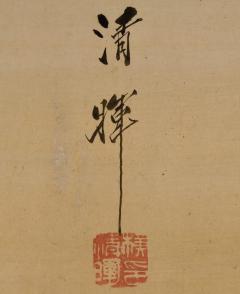
Documentation: Signed Period: 19th Century Styles / Movements: Asian Art Incollect Reference #: 873118 -
Dimensions
W. 107.87 in; H. 25 in; W. 274 cm; H. 63.5 cm;
Message from Seller:
Kristan Hauge Japanese Art, based in Kyoto's museum district since 1999, specializes in important Japanese screens and paintings for collectors, decorators, and museums worldwide. Contact us at khauge@mx.bw.dream.jp or +81 75-751-5070 for exceptional access to Japanese art and history.
More Listings from Kristan Hauge Japanese Art View all 65 listings
-
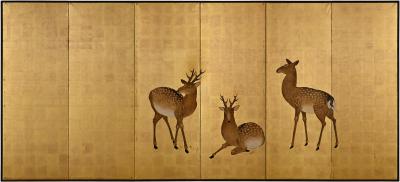
19th Century Japanese Deer Screen by Okamoto Toyohiko. Maruyama Shijo School
-
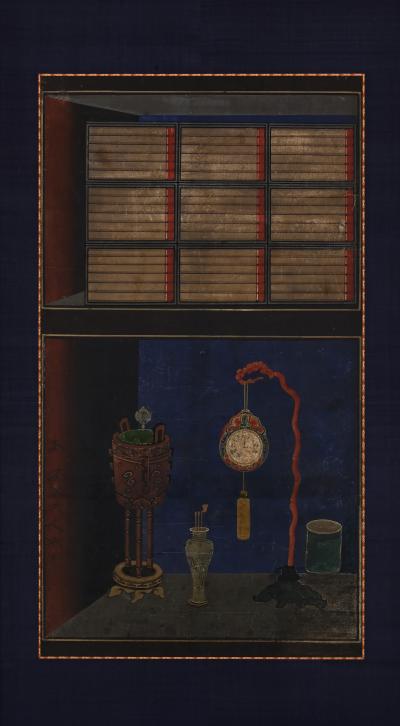
Chaekgeori painting. 19th Century Joseon. Books & Scholars’ Accouterments.
-
Japanese Screen Pair, Tigers by Kishi Renzan, Late Edo Period.

-
Early 20th Century Pair of Japanese Screens | Deer under Maple Trees
-
Mitani Toshuku Unkoku School, 17th century. Japanese falcon painting.

-
Early 20th Century Japanese Screen Pair – Ink Pine Trees on Gold

-
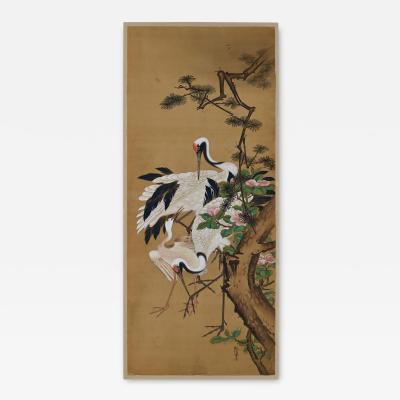
19th Century Japanese Silk Painting by Kano Chikanobu. Cranes, Pine & Camelia.
-
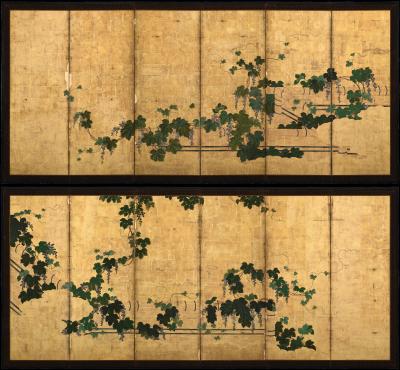
17th Century Japanese Screen Pair. Grapevines. Attributed to Kano Tsunenobu
-
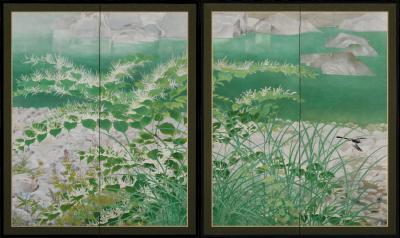
Japanese Screen Pair. Showa era. Nihonga Riverside landscape. Late Summer
-
Japanese Screen. Early 20th Century. Furosaki Screen. Wagtail & Chrysanthemum

-
Early 20th Century Japanese Screen. Cat & Mouse by Otaki Uzan.

-
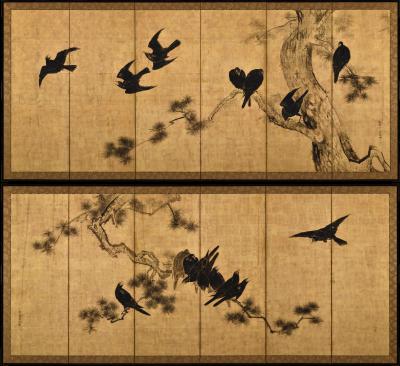
Mid 18th Century Japanese Screen Pair. Crows & Pines by Unkoku Toshuku
-
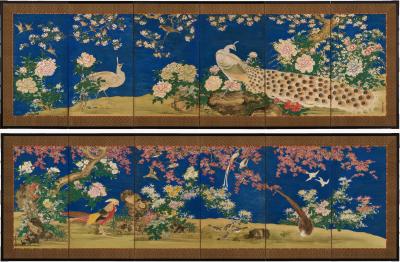
Mid 19th Century Japanese Screen Pair. Flowers & Birds of the Four Seasons
-
17th Century Japanese Screen. Ink Plum Tree & Birds by Kano Naonobu

