





Lucien Clergue The Mediterranean in Black and White at Throckmorton Fine Art
Lucien Clergue:
The Mediterranean in Black and White
at Throckmorton Fine Art
by Benjamin Genocchio
Few photographers are as closely identified with the South of France as Lucien Clergue. The sea, sand, marshes and hard Mediterranean sunlight of the Camargue recur throughout his work, along with bulls, bodies and the ancient rituals of Arles. In Lucien Clergue: A Life Through the Lens, at Throckmorton Fine Art in New York, some 44 photographs spanning more than half a century make a persuasive case that Clergue did more than photograph this world: he created a visual mythology around it.
Born in Arles in 1934, Clergue came to photography largely on his own. His childhood was marked by war — his family home was destroyed — and after his mother’s death, he left school and worked in a factory while pursuing photography. The decisive encounter came in 1953, when the 19-year-old Clergue approached Pablo Picasso at a bullfight in Arles. Two years later, Clergue showed Picasso his photographs in Cannes, beginning a friendship that lasted two decades.
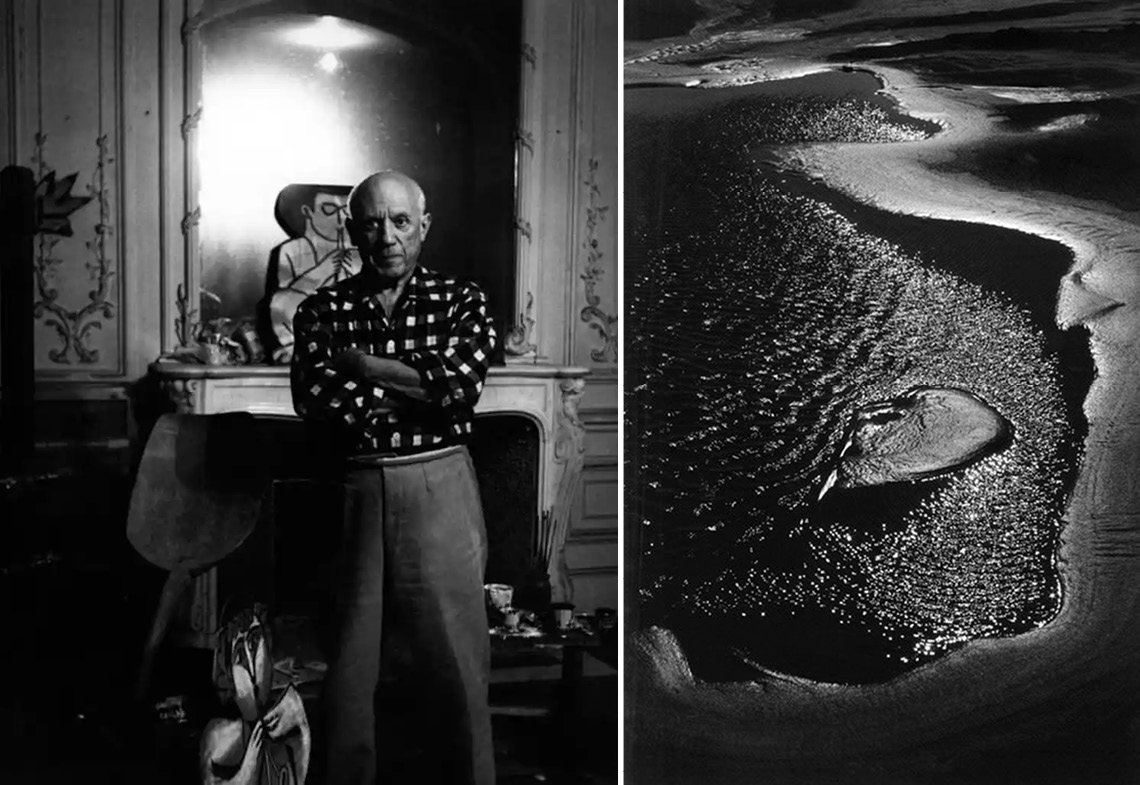 |
Left: Picasso au miroir, La Californie, Cannes, Nov 4th, 1955. Gelatin silver print, vintage, 11.75 x 9.5 in. Right: Beach, Camargue, 1977. Gelatin silver print, vintage, 16 x 11.25 in. |
One result is the marvelous Picasso au miroir, La Californie, Cannes, from November 1955, included here as a vintage print. Picasso stands in front of a mirror, his famous visage the subject. It is less a conventional portrait than a photograph about looking — an appropriate subject for a young photographer seeking recognition from the century’s most famous artist.
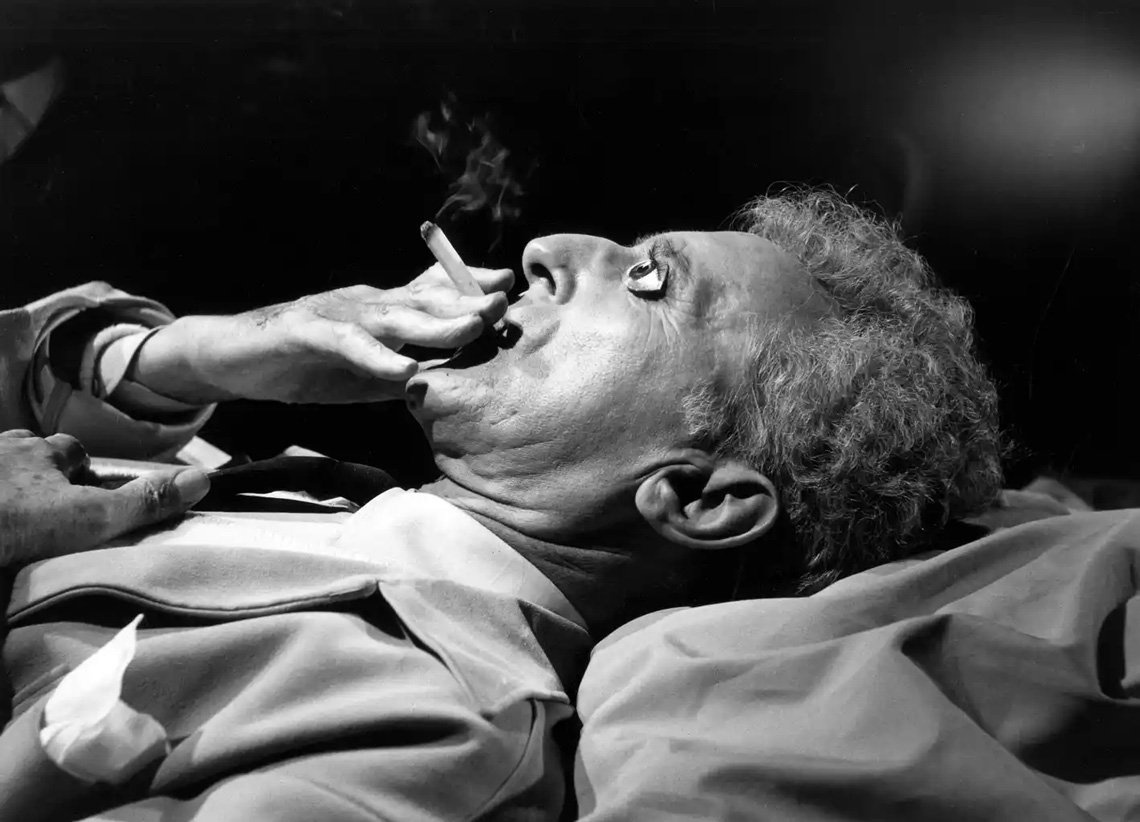 |
Jean Cocteau, Le Testament d'Orphee, 1959, printed 2000. Gelatin silver print, 15.5 x 11.5 in. |
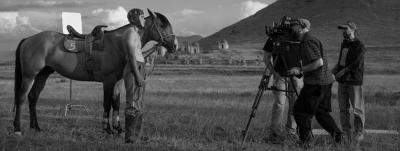
Jean Cocteau soon became another important supporter. Clergue worked as a photographer on Cocteau’s 1960 film The Testament of Orpheus, represented in the exhibition by photographs including the bizarre Jean Cocteau, Le Testament d’Orphée from 1959 and the wonderfully theatrical Horseman from Le Testament d’Orphée, 1960. Yet these celebrity associations, while important to Clergue’s career, are ultimately peripheral to the achievement visible at Throckmorton.
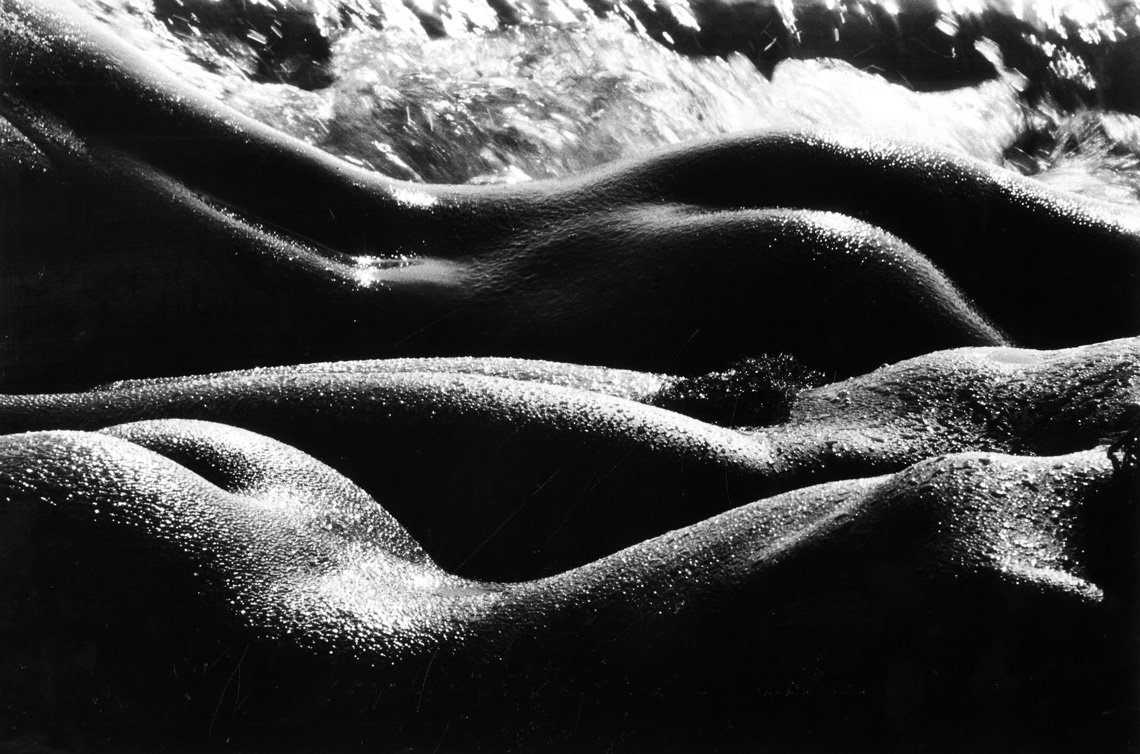 |
The Giants, 1978. Gelatin silver print, 11.25 x 16 in. |
His great subject was light — specifically the fierce, bleaching light of southern France and what it could do to bodies, water and landscape. His celebrated Nus de la mer series, begun in the 1950s, remains the clearest expression of this preoccupation. Several strong examples are here, including Nude in the Sea, Camargue (1957), Nude by the Sea, Camargue (1962), Nude de La Mer (1964) and two 1971 Nude of the Sea photographs. Women emerge from or recline in surf, generally cropped so that faces disappear and the body becomes an arrangement of curves, shadows and glistening planes. Water streaks across skin; sunlight dissolves anatomical detail; breasts, hips and thighs become almost formations in nature.
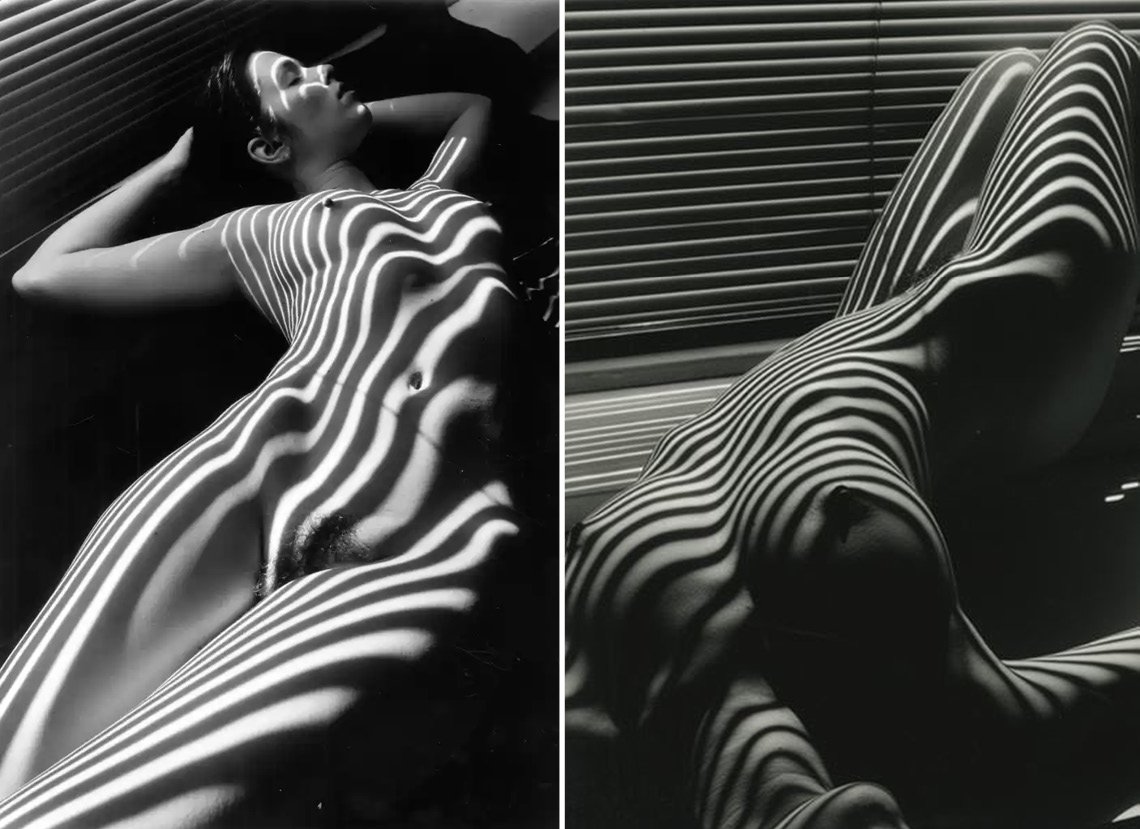 |
Left: Nu Zébré, New York (27/30 MF), 1998. Gelatin silver print, printed later, 20 x 16 in. Right: Nu Zebre, New York (5/8), 1997. Gelatin silver print mounted on aluminum, 47.25 x 31.125 in. |
Seen today, the photographs inevitably carry the assumptions of their era. Their celebration of the female nude belongs to a distinctly male vision of beauty and sensuality, and at times the poses can feel mannered, even theatrical. But Clergue’s best photographs resist simple eroticism because they are so insistently formal. The body becomes landscape. He is less interested in individual identity than in rhythms of black and white, solidity and reflection.
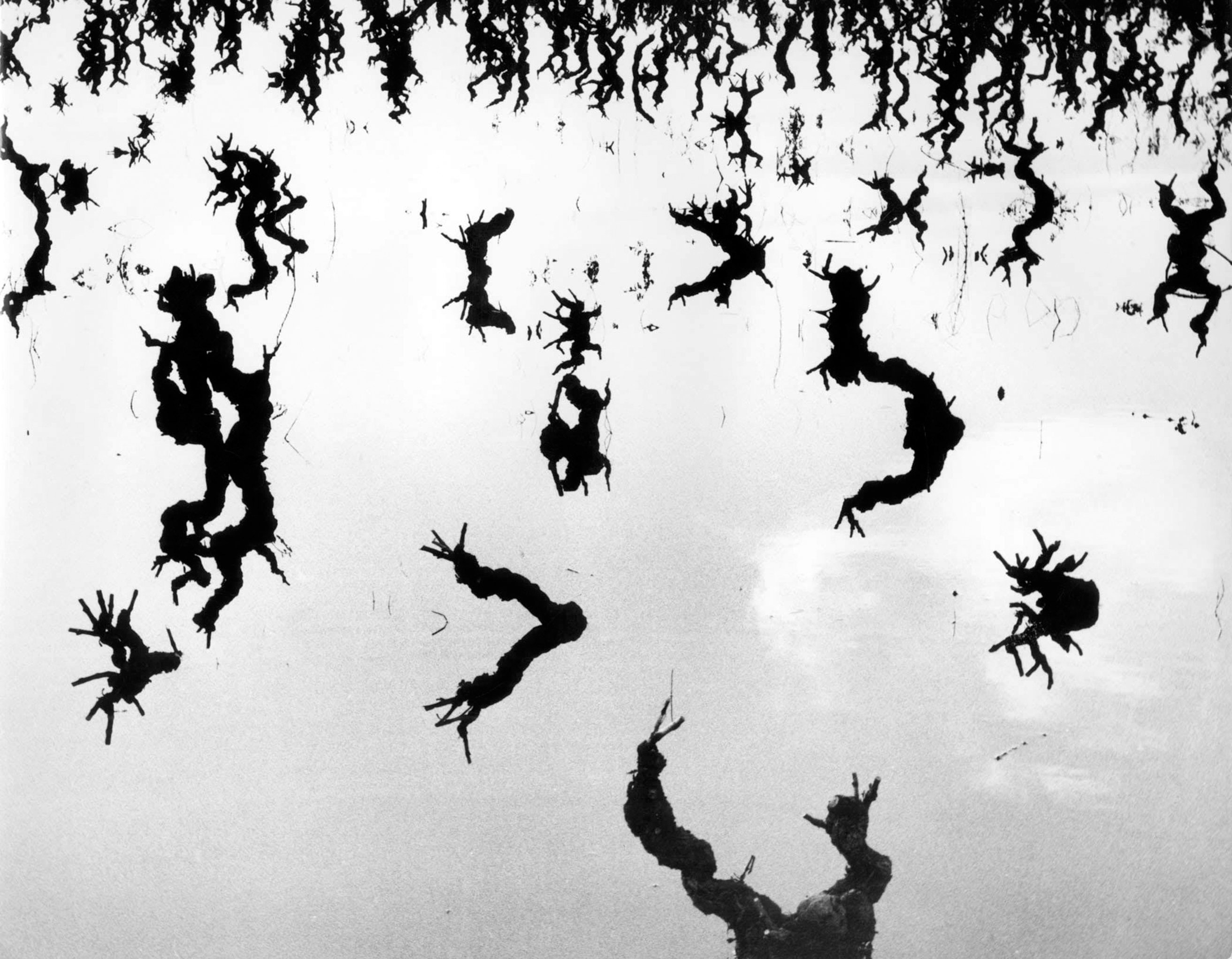 |
Vigne inondé, Camargue, 1960. Gelatin silver print, 9.5 x 12 in. |
That formal instinct is just as evident when the human figure disappears altogether. In Joncs, Camargue (1962), reeds become a spare arrangement of vertical marks, while Vigne inondé, Camargue (1960) and Rice Plantation in Winter, Camargue (1960) turn flooded landscapes into studies of reflection and pattern. Later works such as Traces d’oiseaux, Camargue (1974), Language of the Sands, Camargue (1978) and Plage d’hiver, Faramon, Camargue (2003) find mysterious signs and inscriptions in the landscape itself. Clergue repeatedly discovered abstraction in nature without needing to manufacture it.
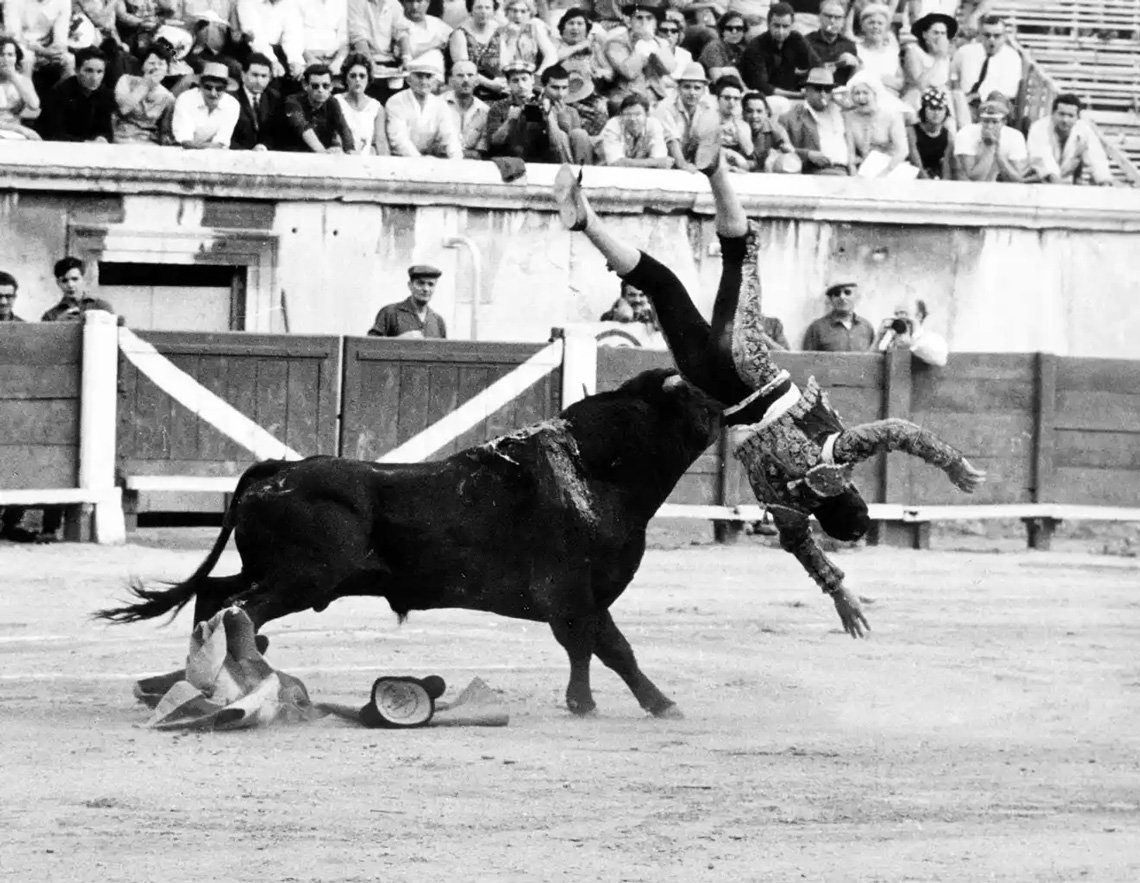 |
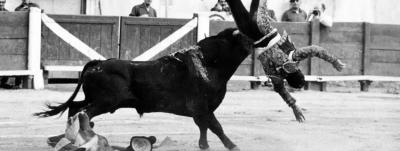
Wounded Bullfighter, Nîmes, Bull Fight (AP/), 1964. Gelatin silver print, vintage, 12 x 9.5 in |
Bullfighting supplied the opposite kind of energy. Wounded Bullfighter, Nîmes (1964), Corrida (1964) and the grimly titled Dead Bull, Palomo Linares, Castellon (1967) replace the languor of the nudes with violence, danger and movement. Yet they share the same fascination with ritual, silhouette and theatrical light. For Clergue, the bullring, the beach, and the Camargue were parts of the same Mediterranean world.
The exhibition also usefully reaches back to his less familiar early work. Gitans and monkey, rue Genive, Arles (1953), Violinist (1954), Grande Recreation, Arles and Triade, Arles, both from 1955, reveal a young photographer fascinated by itinerant gypsy performers, street life and figures on society’s margins. These photographs complicate the sunnier image of Clergue as a photographer of decorative Mediterranean pleasure. From the beginning, something stranger and darker ran through his work.
The prints themselves matter. Many were made close to the dates of their negatives, although the exhibition also includes later prints and experiments with Fresson and Cibachrome processes. The best gelatin silver prints display deep blacks and luminous whites that give Clergue’s images a physical richness easily lost in reproduction. He understood black-and-white photography almost musically: contrast supplies rhythm, while gradations of gray provide quieter intervals.
More than a decade after his death in 2014, the strongest photographs still smell, metaphorically at least, of salt water, hot sand and the Mediterranean sun. They belong unmistakably to another era, but their formal beauty has not faded.
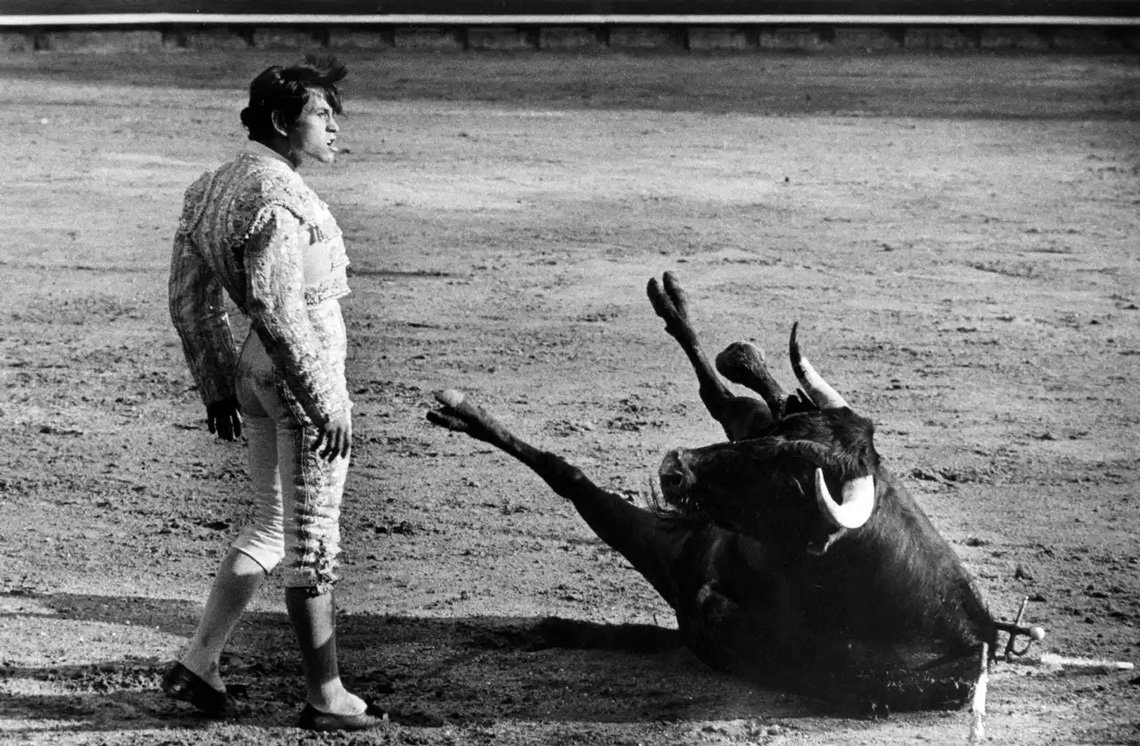 |
Dead Bull, Palomo Linares, Castellon, Bull Fighter (2/30 PF), 1967. Gelatin silver print, vintage, 11.5 x 15.25 in. |
Lucien Clergue: A Life Through the Lens
October 1, 2026, through January 16, 2027
Throckmorton Fine Art
145 East 57th St, 3rd fl., NY, NY 10022
Tel. 212.223.1059 throckmorton-nyc.com info@throckmorton-nyc.com
 |
Discover More From Throckmorton Fine Art on Incollect
 |