





Alexey Morosov’s BELEK: Water, Memory and Power in Venice
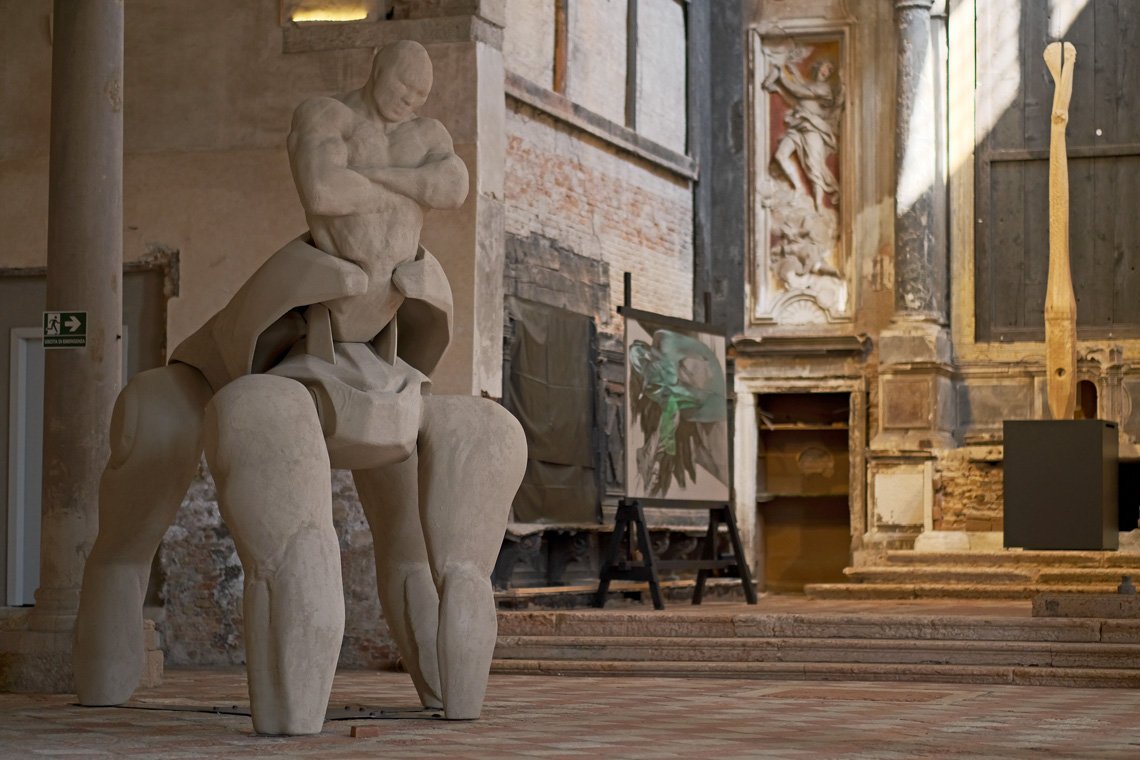 |
Alexey Morosov. TULPAR BATYR I (Nomadic Centaur), 2026. Raw clay composite, steel. 350 × 305 × 215 cm. From the BELEK project. Courtesy MOROSOV ART HUB. |
Alexey Morosov’s BELEK: Water, Memory and Power
in Venice
by Benjamin Genocchio
ALEXEY MOROSOV, BELEK
Kyrgyz Republic Pavilion
Curated by Geraldine Leardi
Ex Chiesa di Santa Caterina, Convitto Foscarini, Venice
61st Venice Biennale
May 9–November 22, 2026
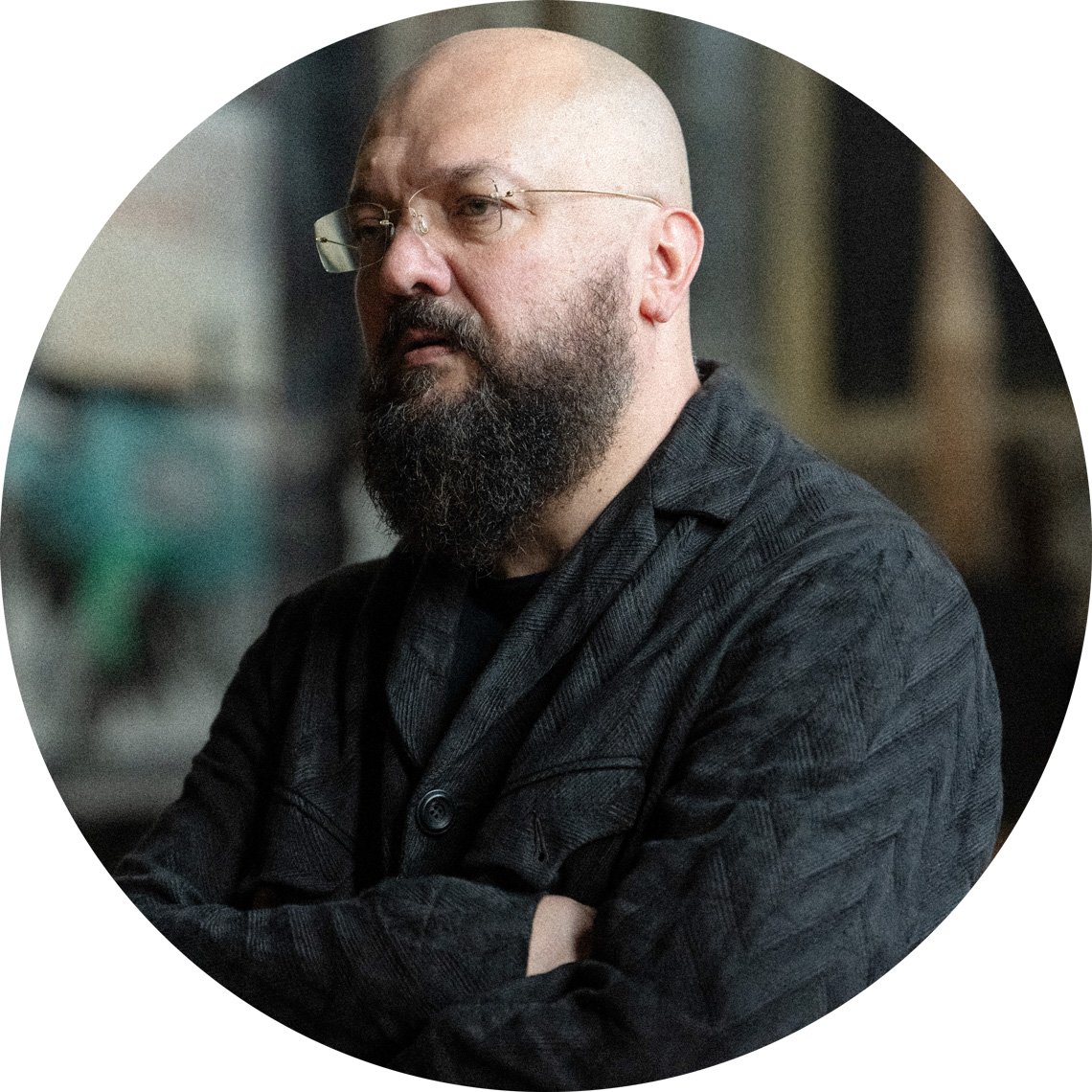 | |
Alexey Morosov. Portrait. Photo: Massimo Giorgi |
One of the more unexpected and visually commanding national presentations at the 2026 Venice Biennale is installed inside the former Church of Santa Caterina in Cannaregio. Representing the Kyrgyz Republic, artist Alexey Morosov’s BELEK brings together water, horses, Soviet infrastructure, ancient mythology and the mountainous landscape of Central Asia.
The former church is an apt setting for an artistic project concerned with monuments, ritual and belief. Santa Caterina was once a significant artistic site, its decorations including Paolo Veronese’s epic masterpiece The Mystic Marriage of Saint Catherine (c. 1570–75), were removed from the church in 1918 and transferred to the Gallerie dell’Accademia in Venice during the First World War. The church, secularized under Napoleon, was badly damaged by fire in 1977.
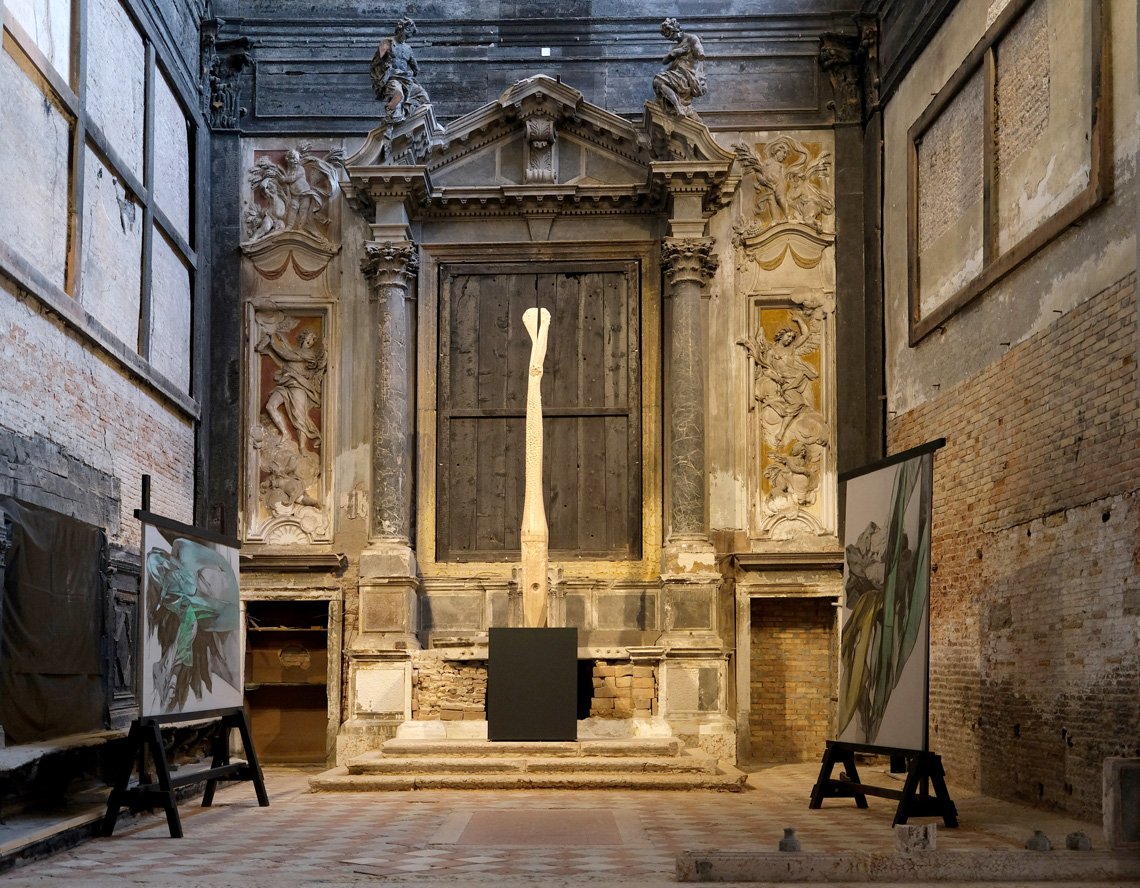 |
| Alexey Morosov. TEMIR KAZYK (Iron Axis / Pole Star), 2026. Poplar wood, steel. 400 × 90 × 90 cm. From the BELEK project. Courtesy MOROSOV ART HUB. |
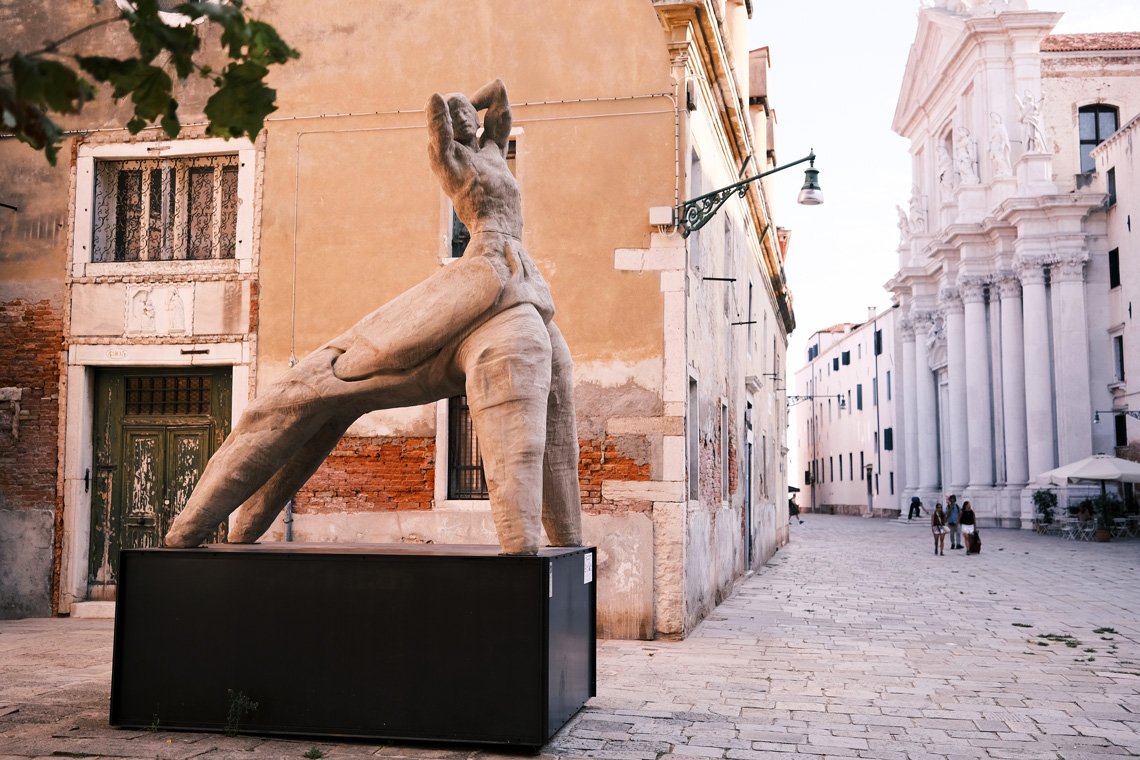 |
Alexey Morosov. TULPAR BATYR II (Nomadic Centaur II), 2026. Raw clay composite, steel. 300 × 150 × 250 cm. From the BELEK project. Courtesy MOROSOV ART HUB. |
Belek means “gift” in modern Kyrgyz, and Morosov begins with the country’s most consequential natural gift: water. Kyrgyzstan is landlocked and overwhelmingly mountainous, with glaciers, alpine lakes and rivers feeding major water systems across Central Asia.
Water is both elemental and political. Soviet hydroelectric projects transformed rivers and valleys into reservoirs and power systems that still shape the region. For Morosov, water is inheritance, resource and geopolitical power: it originates in the mountains but flows across borders. It can be inherited, transformed and passed on—but never possessed.
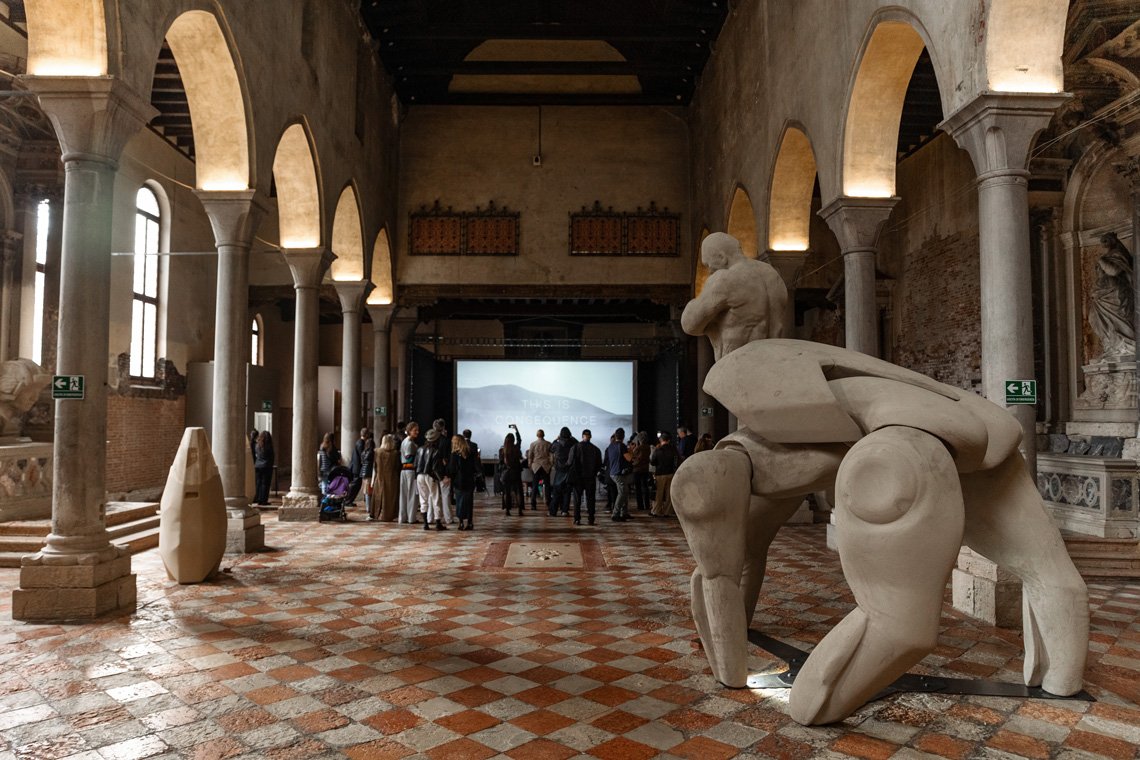 |
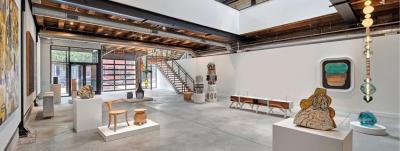
BELEK, installation view with visitors. Chiesa di Santa Caterina, Venice, 2026. |
The strongest expression of these ideas is a monumental 8K video fresco filmed around Kyrgyzstan’s dams and reservoirs. Colossal concrete structures rise against landscapes of almost implausible scale—one bears a monumental bust of Lenin cast in concrete. Morosov calls these structures “cyclopean water altars,” and through his camera they become more than feats of engineering: they are monuments to an almost religious faith in humanity’s ability to master nature.
Yet Morosov is equally fascinated by their beauty. The dams’ severe geometries—walls, tunnels and spillways—combine the heroic scale of Soviet Brutalist architecture with something more ancient. Throughout BELEK, the Neolithic and the Soviet avant-garde converge in monumentality, abstraction and ritual.
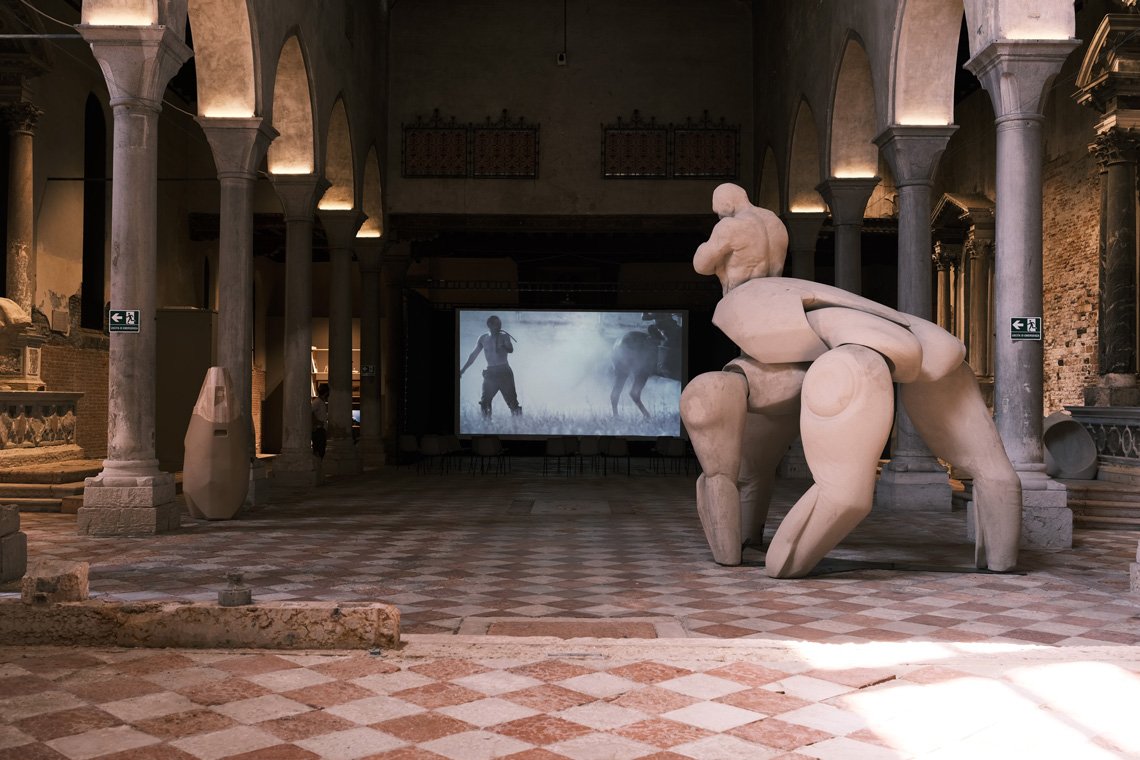 |
BELEK, installation view. Courtesy MOROSOV ART HUB. |
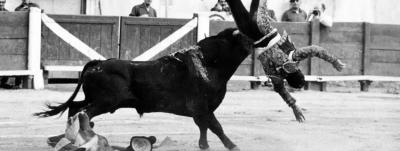
That collision is especially vivid in dynamic footage in the video fresco of Kok-börü, the traditional Central Asian horseback game in which riders compete for possession of a goat carcass. Filmed at close range, sometimes from a camera mounted through the roof of a moving Jeep, the sequence has the visceral energy of an action film: horses charge, bodies collide, and riders lean from their saddles to seize the carcass.
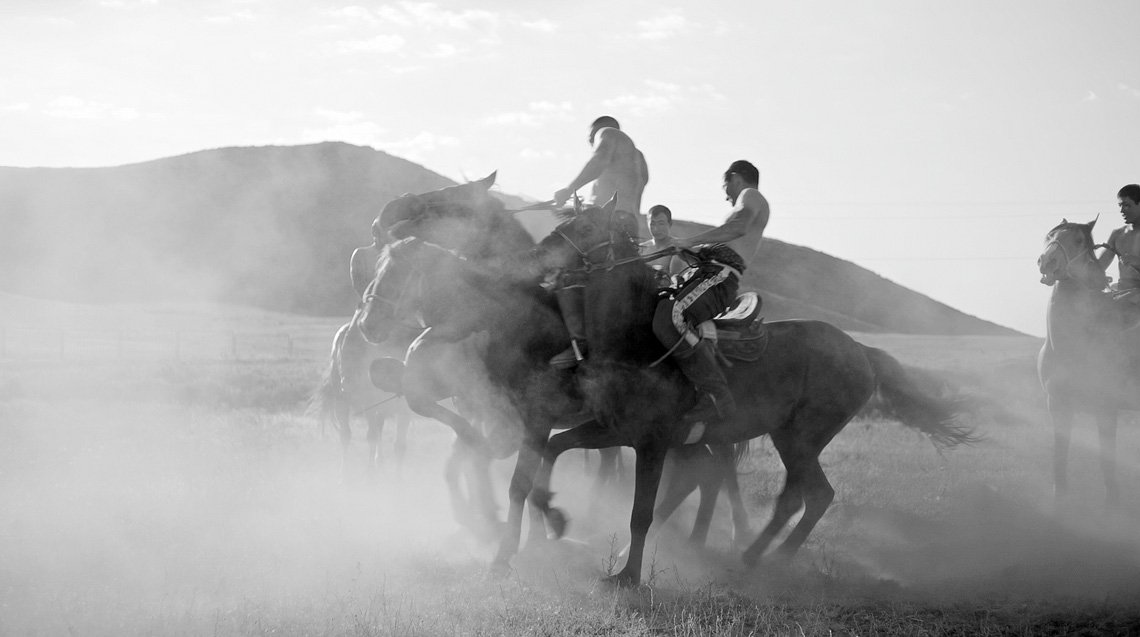 |
| Alexey Morosov. BELEK (The Gift), 2026. Video fresco, still. Projection, 360 × 750 cm screen. Courtesy MOROSOV ART HUB. |
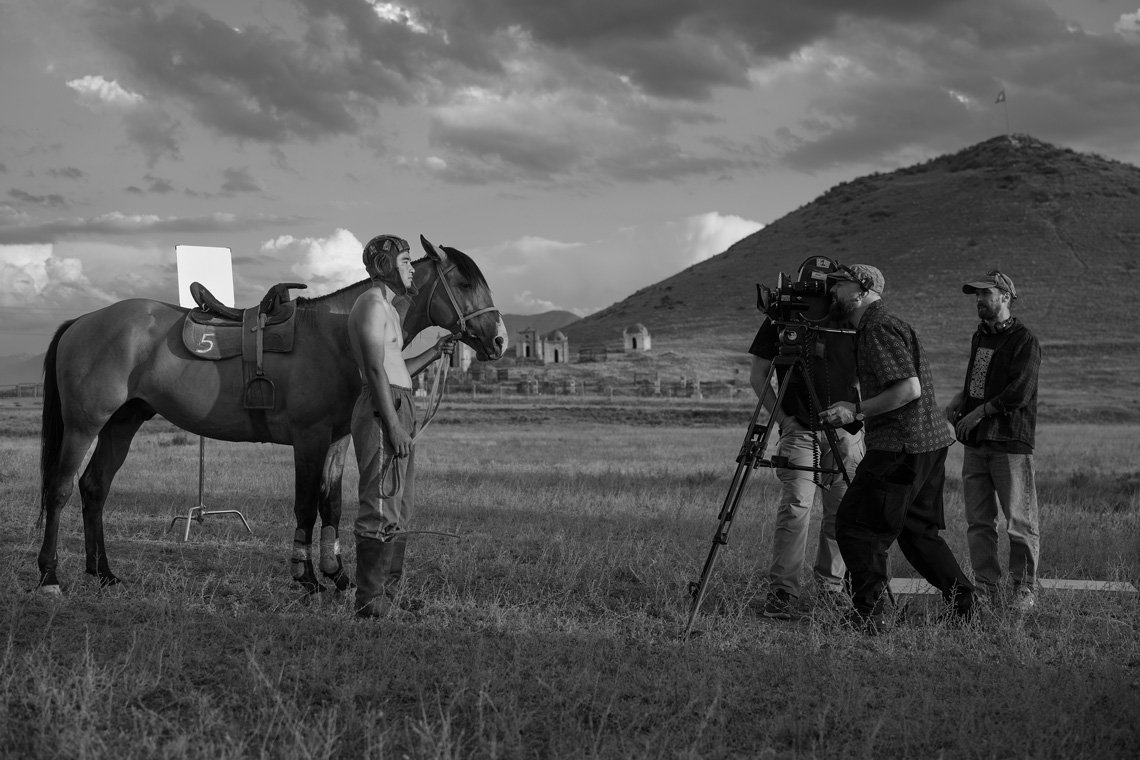 |
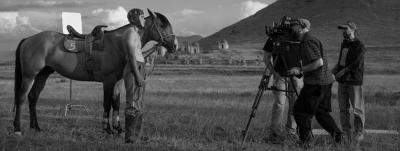
Alexey Morosov filming with a Konvas 35 mm camera on the set of the BELEK video portrait, with camera operator Anton Zhabin and assistant director Nikolai Pegarev. Kyrgyzstan, 2025. Photo: Massimo Giorgi. |
The riders are bare-chested, their bodies merging visually with their horses. “They look like centaurs,” Morosov says. The image becomes a key to the exhibition. Human and animal, ancient warrior and futuristic apparition, form a single hybrid being. The centaur also recurs in Morosov’s sculptures (installed throughout the building and on the nearby Campo dei Gesuiti), whose compact, muscular figures combine human and equine forms. Modeled in clay and resin or built around steel armatures, they move between Neolithic artifacts, nomadic mythology, Soviet Constructivism and twentieth-century futurism. Even the riders’ protective headgear carries this layered history. Some use old Soviet tank helmets, repurposing military equipment as protection against falls from a horse.
Morosov’s own identity is similarly layered. Born in Bishkek, educated in St. Petersburg and Moscow, and living and working in Lucca, Tuscany, since 2015, he considers Italy part of his artistic identity. BELEK is therefore not an ethnographic portrait but a view from both within and outside the culture, examining identity as an accumulation of overlapping histories, experiences, and inheritances.
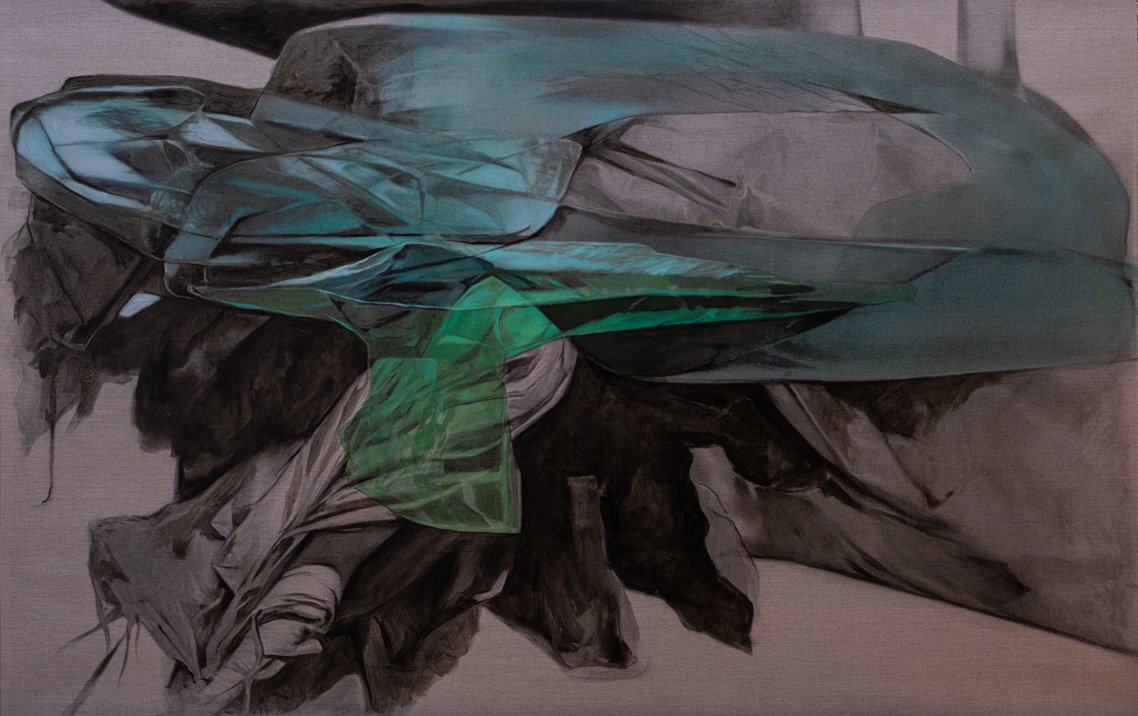 |
Alexey Morosov. SOL KANAT (Left Wing), 2026. Main view. Oil on raw canvas. 150 × 230 cm. From the BELEK project. Courtesy MOROSOV ART HUB. |
His paintings operate according to the same principle. Working on raw canvas with oil and charcoal, Morosov creates fields of black, yellow and deep Veronese green. Rocks, ice, waves and particles emerge without resolving into conventional landscapes. The paintings evoke Venice’s artistic tradition of color while treating water as a state of transformation: ice, wave, particle, solidity becoming fluidity.
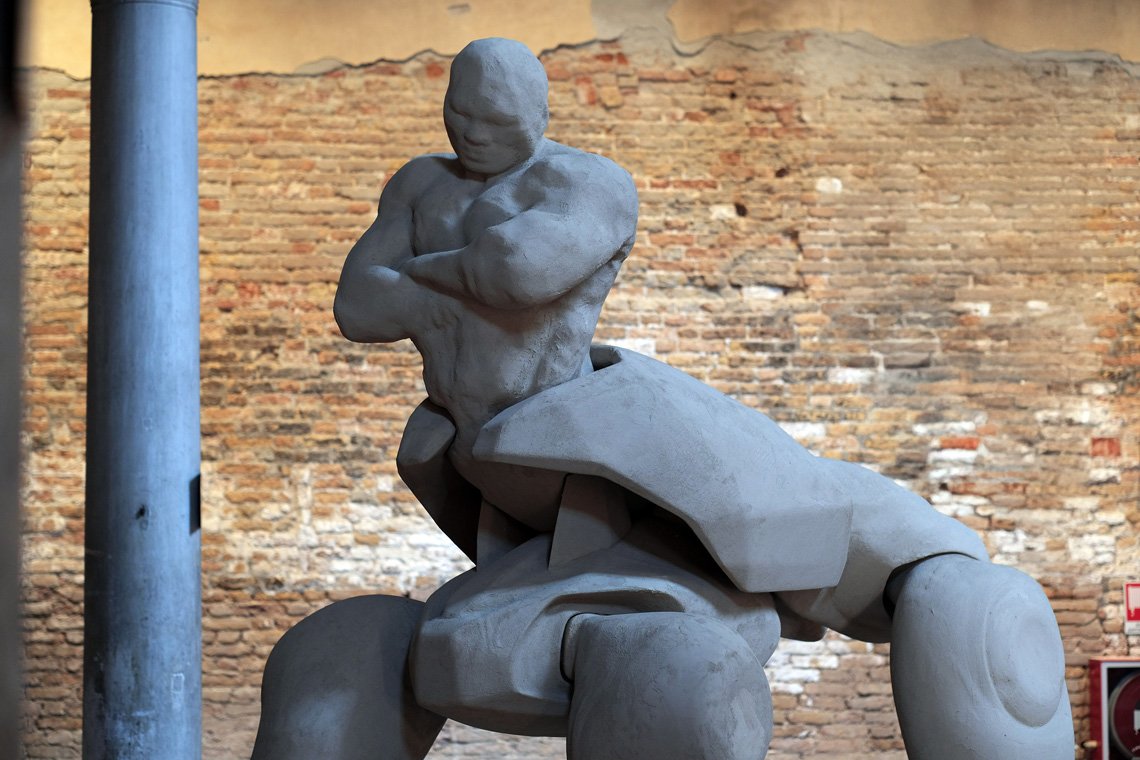 |
Alexey Morosov. TULPAR BATYR I (Nomadic Centaur), 2026. Second view. Raw clay composite, steel. 350 × 305 × 215 cm. From the BELEK project. Courtesy MOROSOV ART HUB. |
Here, BELEK becomes more than a meditation on water. Morosov constructs Kyrgyz identity from apparent contradictions: nomadic tradition and Soviet infrastructure, animistic belief and industrial engineering, archaeological objects and digital imagery. The centaur provides the clearest metaphor. As human and horse become symbiotic in his video fresco and the sculptures, so culture and landscape, ancient history and modern technology continuously merge. Kyrgyzstan appears neither as an untouched nomadic world nor as a landscape damaged by Soviet modernization. Both belong to the same inheritance. The horseman and the hydroelectric dam occupy different historical moments. Still, each embodies an attempt to harness nature’s “gifts”—things that can be inherited, transformed, and passed on, but never completely possessed.