- FINE ART
- FURNITURE & LIGHTING
-
NEW + CUSTOM
- SHOP BY MAKERS
- The latest work from extraordinary artisans and designers
- MEET THE MAKERS
- The stories behind today's most talented artisans and studios
- TODAY'S TOP ARTISTS
- Exceptional designers, ateliers and boutique brands worldwide
- SHOP NEW + CUSTOM
- All
- Seating
- Lighting
- Tables
- Case Pieces & Storage
- Mirrors
- Ceramics
- Decorative Objects
- Rugs & Carpets
- DECORATIVE ARTS
- JEWELRY
- INTERIORS
- MAGAZINE










Offered by:
Kristan Hauge Japanese Art
2-32 Saishoji-cho, Okazaki, Sakyo-ku,
Kyoto 606-8342 , Japan
Call Seller
81757515070
Showrooms
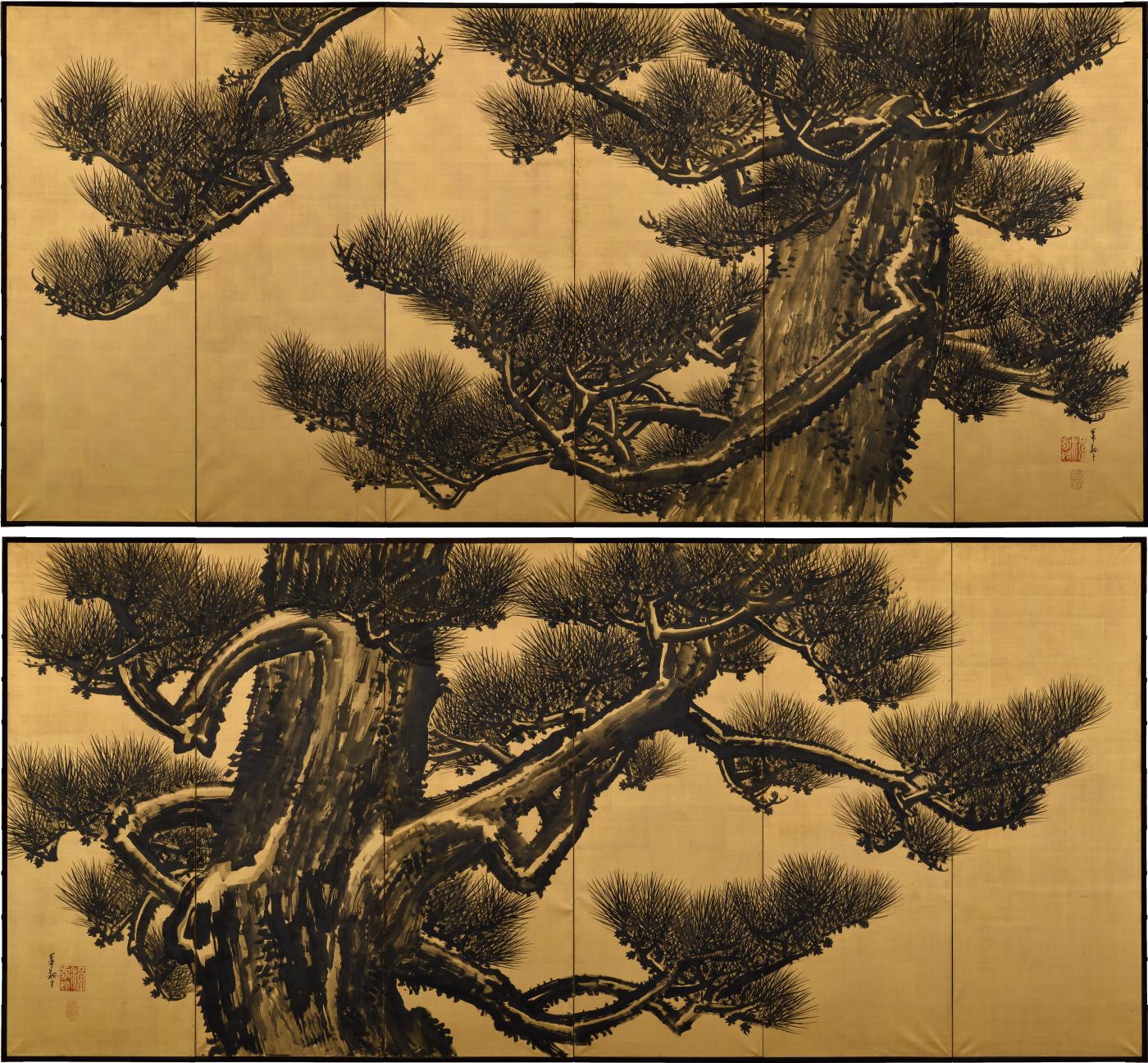
Aged Pines on Gold
-
Description
Aged Pines on Gold
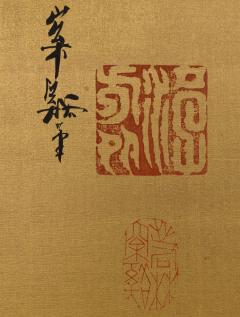
Wakabayashi Shōkei (1858–1938)
Japan, circa 1900, late Meiji period
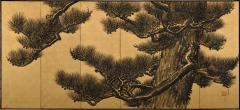
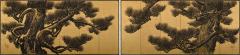
Pair of six-panel Japanese folding screens
Ink on gold leaf
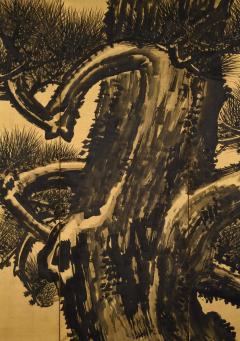
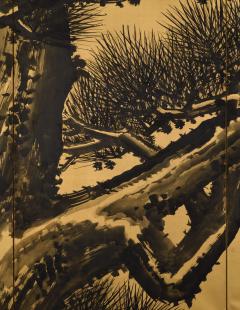
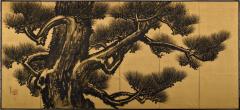
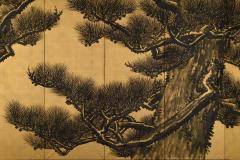
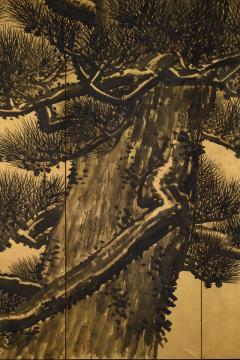
This imposing pair of six-panel screens depicts the massive trunks and spreading branches of ancient pine trees, painted in vigorous black ink against a luminous gold leaf ground. The trees extend beyond the boundaries of the screens, their powerful, twisting forms suggesting an age and scale far greater than the compositions themselves reveal.
Wakabayashi Shōkei was a disciple of Suzuki Shōnen (1848–1918), whose bold and expressive paintings of pine trees were among his most distinctive subjects. Shōnen frequently depicted monumental pines in ink on gold leaf screens, combining dramatic compositions with exceptionally vigorous brushwork. The present pair clearly reflects the influence of these works, both in its treatment of the trees and in the confident, expressive handling of the ink.
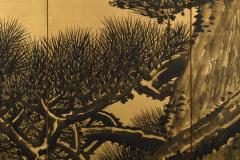
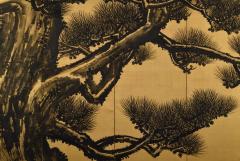
The massive trunks are rendered with broad, forceful brushstrokes, the dark passages of ink contrasting with lighter washes and areas where the gold ground remains visible. The rough, deeply furrowed bark is suggested through an energetic combination of sweeping strokes, broken lines, and sharply accented touches of the brush. In contrast, the foliage is painted with countless fine, rapidly executed strokes, forming dense clusters of pine needles that spread across the gold ground.
The compositions are particularly striking in their unconventional treatment of space. Rather than depicting complete trees within a landscape, Shōkei concentrates on sections of their enormous trunks and branches. These forms enter and leave the picture planes, creating a sense of movement and continuity beyond the physical boundaries of the screens. The two compositions complement one another, their great trunks positioned on opposing sides, while the branches extend across the gold surfaces in a complex interplay of sweeping lines and densely patterned foliage.
The pine tree has long been associated in Japanese art with longevity, endurance, and steadfastness, remaining green throughout the winter and flourishing even in harsh conditions. Here, the great age of the trees is expressed through their immense trunks, weathered bark, and contorted branches, while the vigorous foliage suggests their continuing vitality.
Although strongly indebted to the work of Suzuki Shōnen, these screens demonstrate Shōkei's own assured command of composition and brushwork. They are a particularly compelling expression of the bold, expressive tradition of ink painting practiced by his master, in which the strength and vitality of nature are conveyed through the direct energy of the brush.
Born in Fukuyama, Hiroshima Prefecture, Wakabayashi Shōkei initially studied painting under Fujii Shōrin before moving to Kyoto, where he studied under Suzuki Shōnen. He later settled in Osaka, becoming a prominent figure in the city's artistic community. His paintings were widely exhibited throughout Japan, receiving numerous awards, and he participated in the 1900 Paris Exposition. He also held several influential positions in Osaka's art circles, including secretary of the Osaka Painting Association and advisor to the Naniwa Painting Competition. -
More Information
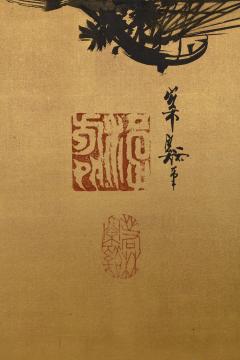
Documentation: Signed Period: 1900-1919 Creation Date: 1900 Styles / Movements: Asian Art Incollect Reference #: 891232
Message from Seller:
Kristan Hauge Japanese Art, based in Kyoto's museum district since 1999, specializes in important Japanese screens and paintings for collectors, decorators, and museums worldwide. Contact us at khauge@mx.bw.dream.jp or +81 75-751-5070 for exceptional access to Japanese art and history.
More Listings from Kristan Hauge Japanese Art View all 67 listings
-
Mother’s Breast (Chichi) 1844. Japanese scroll painting.

-
17th Century Japanese Screen. View of West Lake by Unkoku Toyo

-
Taishō Beauty
-
17th Century Japanese Screen Pair| Hawks on Plum & Pine | Soga Nichokuan

-
Mitani Toshuku (1577-1654). Unkoku School. Japanese falcon painting.
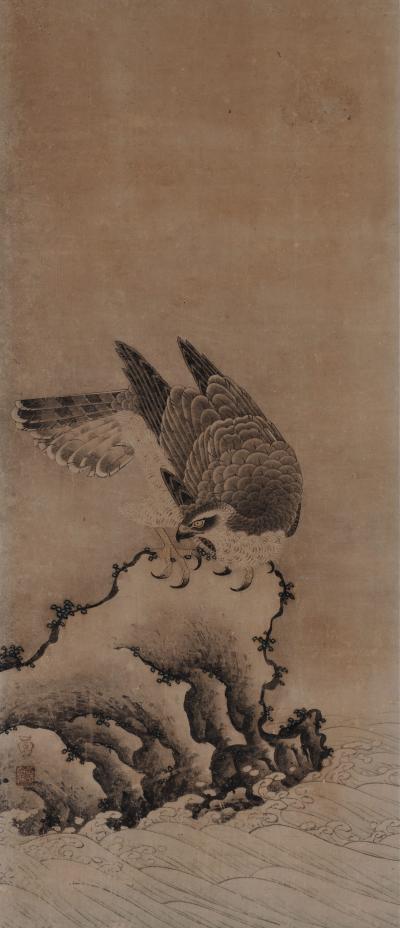
-
17th Century Japanese Unkoku Screen. Flowers & Birds of Winter and Early Spring
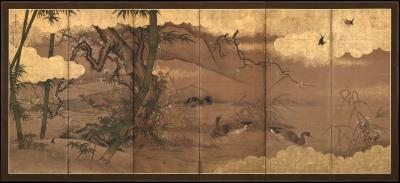
-
19th Century Japanese Silk Painting by Kano Chikanobu. Cats & Butterflies.
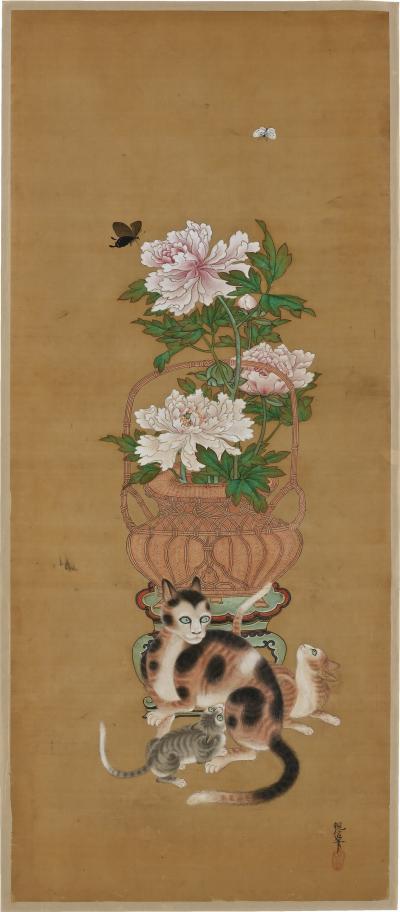
-
Mitani Toshuku (1577-1654). Unkoku School. Japanese falcon painting.

-
19th Century Japanese Shunga Hand-Scroll, Katsukawa School.

-
Early 20th Century Japanese Screen. Flowers of the Four Seasons
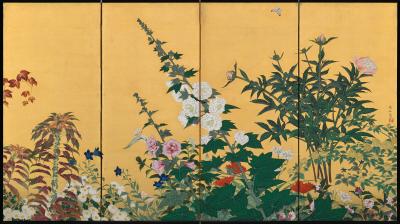
-
19th Century Japanese Scroll Painting by Igarashi Chikusa, Poppies & Butterflies
-
19th Century Japanese Tiger Painting Pair by Kokuho Shimei (1789–1859)

-
17th Century Japanese Screen Pair. Tiger & Dragon by Kaiho Yusetsu
-
Tsunetake Yotei (18 c.) | Phoenix & Peacocks | Japanese folding screen pair