










Art Dealer Isabel Sullivan Has an Eye for Richard Hambelton
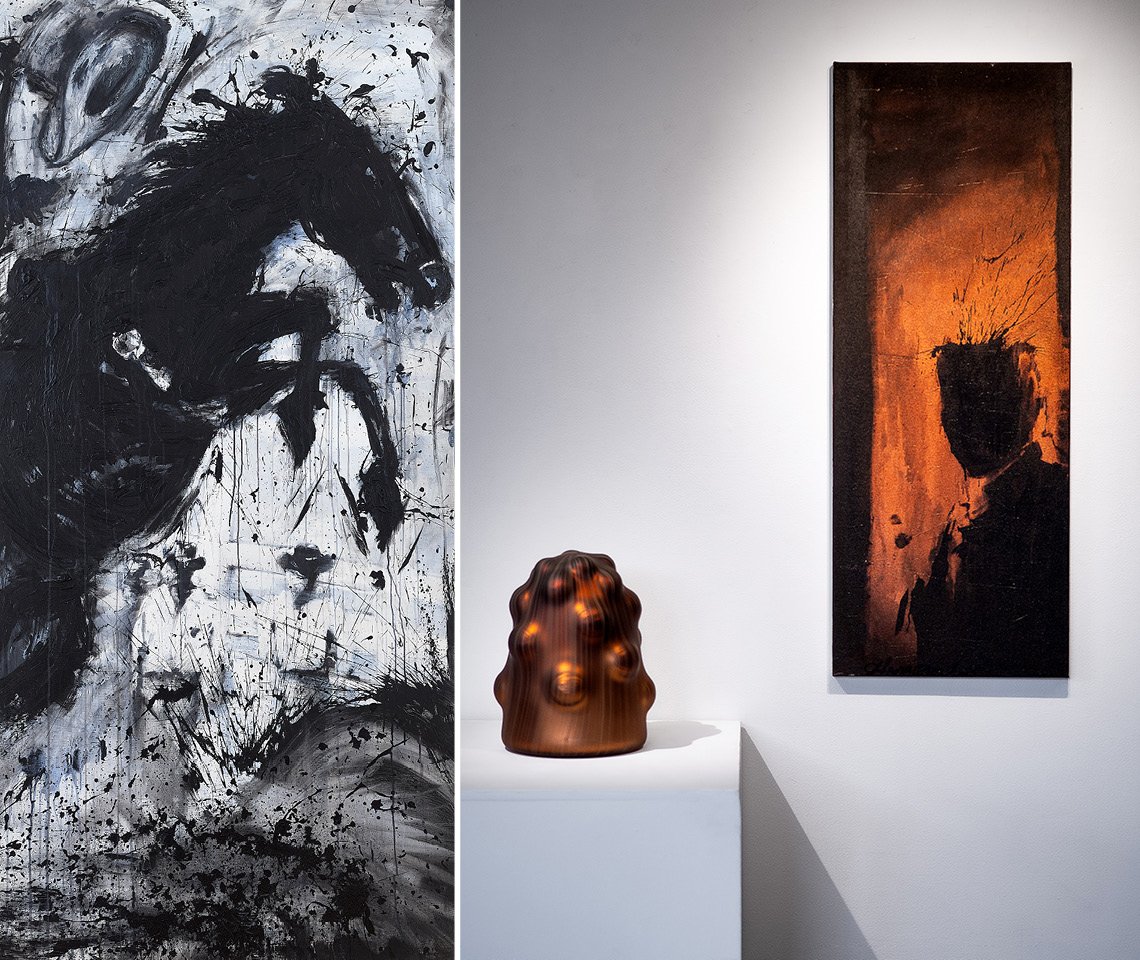 |
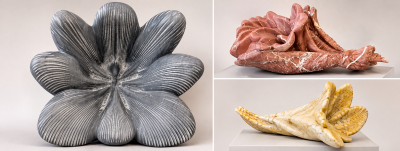
LEFT: Richard Hambleton, Upheaval, 1983/1984, acrylic on canvas, 95 x 46.25 in. RIGHT: Richard Hambleton, Shadow in Copper Leaf, 2003, acrylic and copper leaf on canvas, 49 x 19 in. George Williiam Bell, Fluid Topographies: Object 22, 2025, blown glass, sand carved, silver mirror, 15 x 12.5 x 12.5 in. |
 |
by Benjamin Genocchio
In a black-and-white photograph from a 1984 exhibition in West Berlin, a painting by Richard Hambleton hangs beside a stairwell. It is easy to pick out: a black horse rears against a pale ground, its forelegs bent and its body gathering into a mass of dark paint. Isabel Sullivan, the New York dealer who now has the painting, knew it had belonged to Rick Librizzi, an early collector and dealer of Hambleton’s work. Kristine Woodward of Woodward Gallery, one of the first to represent Hambleton’s work, later located old documentation of the Berlin show, including the installation photograph. It placed Upheaval, painted in 1983, in East Village Art in Berlin at Galerie Zellermayer, alongside Keith Haring, Futura 2000 and David Wojnarowicz.
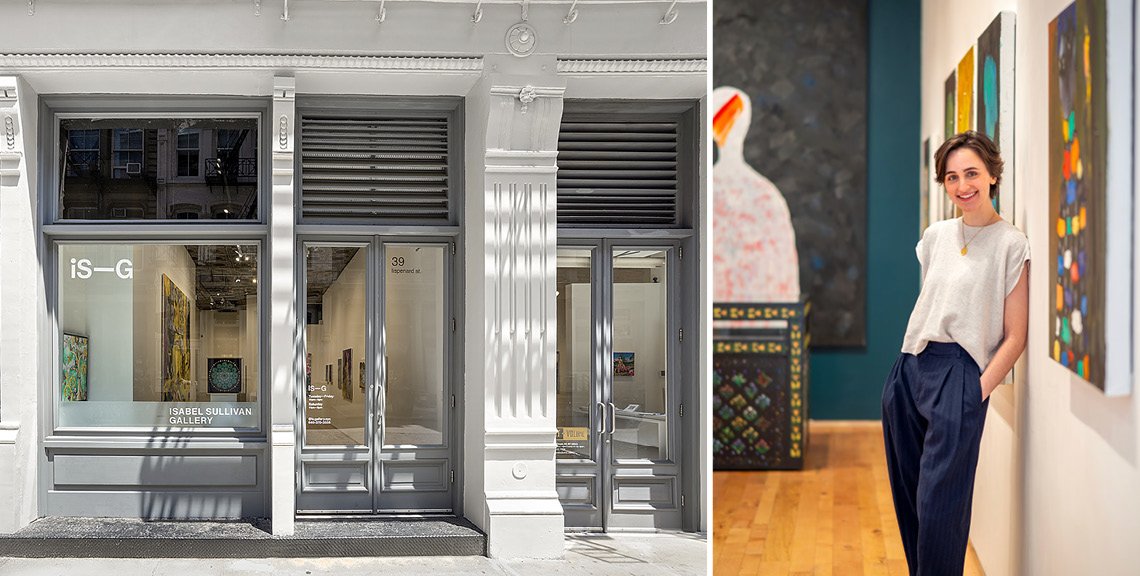 |
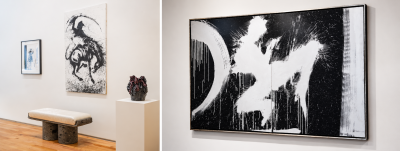
LEFT: Isabel Sullivan Gallery in Tribeca, 39 Lispenard St. New York, NY 10013. RIGHT: Isabel Sullivan |
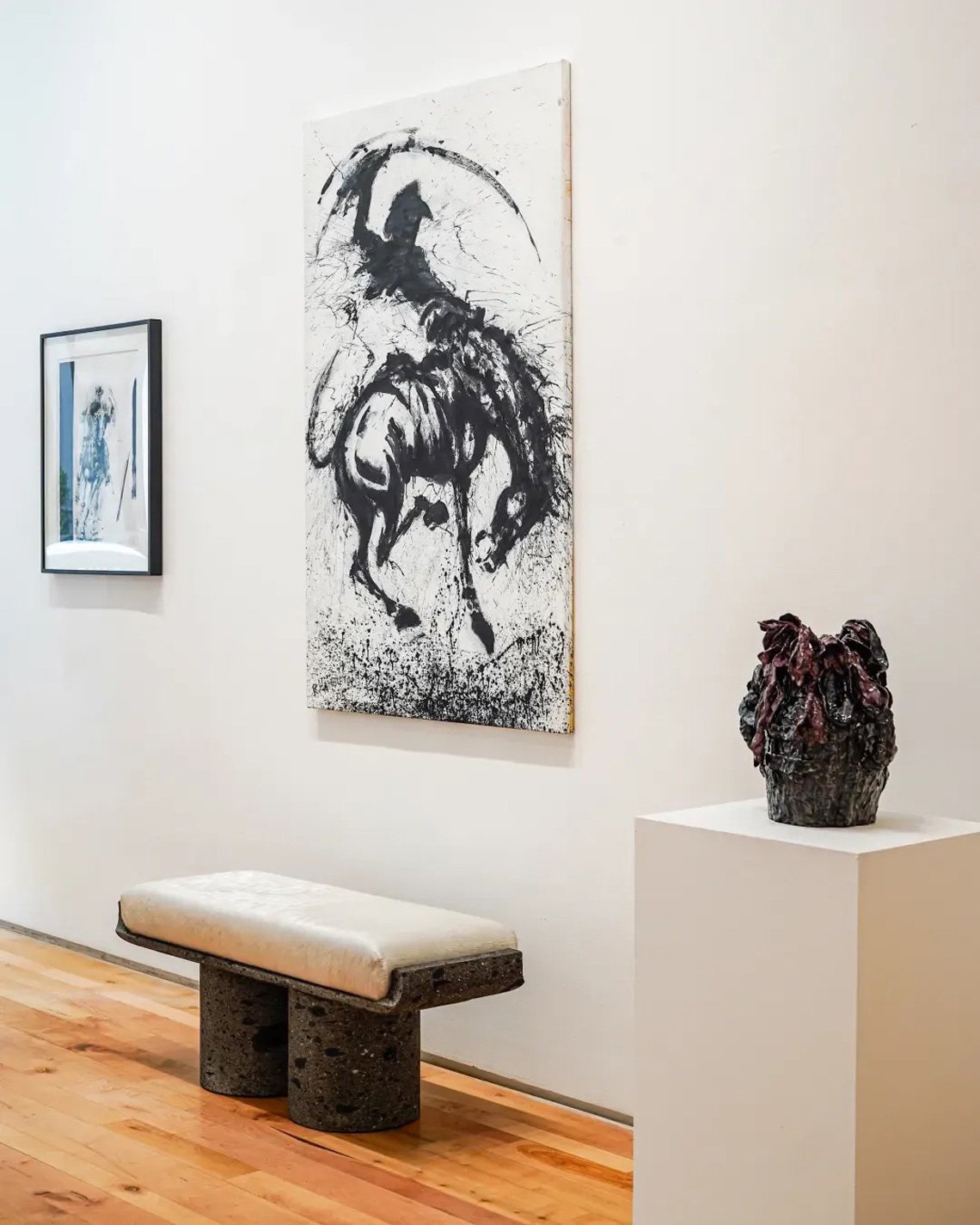 | |
| Richard Hambleton, Horse & Rider, 2005, acrylic on canvas, 62 x 40 in. |
Sullivan likes the paper trail, and she likes the horse. The thick, tar-like paint belongs to a group of rodeo pictures Hambleton made over a few years in the early 1980s. In Upheaval, splashes and drips carry the force of the horse’s movement into the rest of the painting. Sullivan would put a good Shadowman in any collection of Hambleton’s work. Given the choice, though, she makes a case for this less familiar picture. “It is an extraordinarily rare early work from his highly coveted Marlboro series,” she says, adding that Hambleton was a master of motion and gesture. “It’s like he captures the entire excitement of the cultural moment that was New York in the 1980s.”
Sullivan, who was born in 1990, came to that moment through the paintings. After studying art history in college, she moved to New York and spent five years handling management and logistics at Jim Kempner Fine Art on the corner of West 23rd Street and 10th Avenue in the heart of Chelsea. She spent another five years co-running Chase Contemporary, where she worked directly with artists and took on sales. “I love discovering new artists, and I love making deals,” she says. She also likes working closely with buyers, helping them figure out what artwork they want to live with and where it might go.
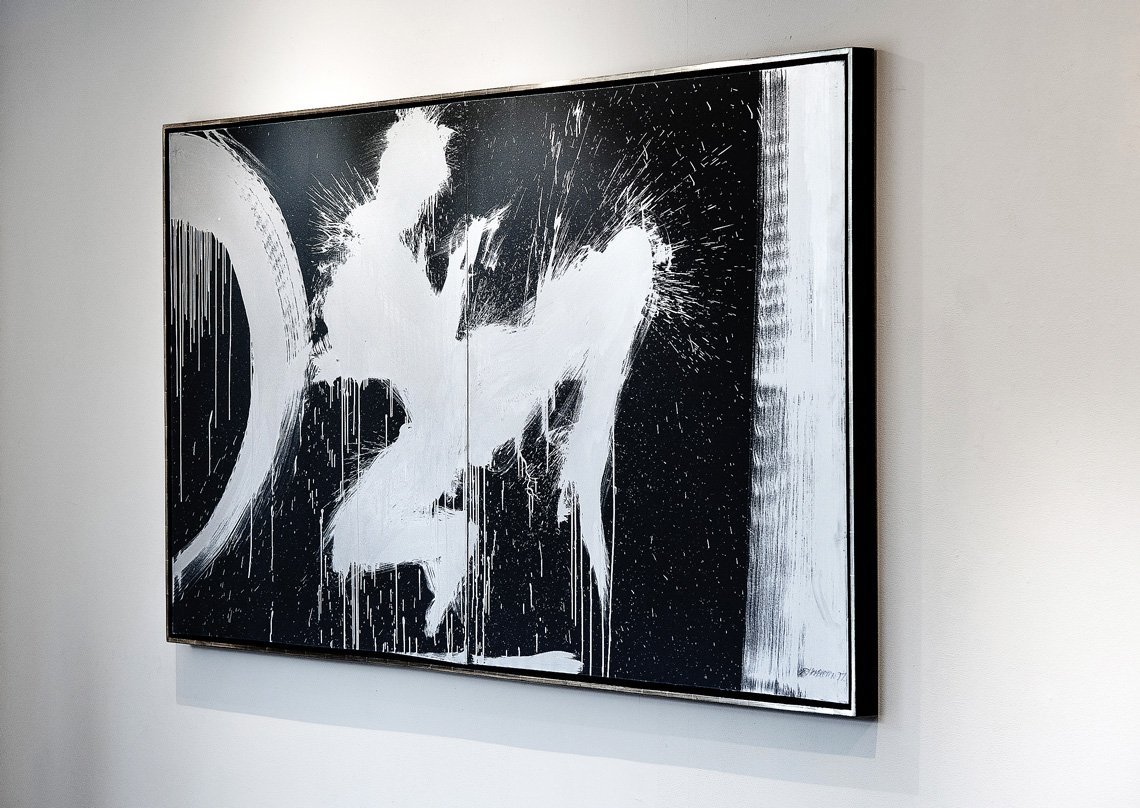 |
Richard Hambleton, Untitled (Jumping Shadow Diptych), 1997, acrylic on canvas, 48 x 96 in. |
In 2019, while working with Bernie Chase, Sullivan encountered a group of Hambletons Chase had acquired from Andrew Valmorbida, who helped bring the artist’s work back into view through a series of Giorgio Armani-sponsored exhibitions and a documentary film on the artist, titled "Shadowman," in 2017. Sullivan and Chase began seeking out paintings together. She also began buying them for herself. “At the end of the day, I’m a collector as much as I’m a dealer,” she says. Later she parted with some of her favorite Hambletons to finance her own gallery, which opened in Tribeca in 2023. Today she has two gallery spaces. Her Chelsea location, opened in 2025, brought her back to the corner of West 23rd Street and Tenth Avenue, to the same steel-and-glass postmodern building where she began working for Kempner. Sullivan wanted more people to see the artists she was showing, and the corner brings a steady flow of collectors, designers, curators and advisers. She was equally taken with the natural light. Most of her clients buy for their homes, she says, and she likes giving them a chance to see how a picture behaves in a room as the light changes.
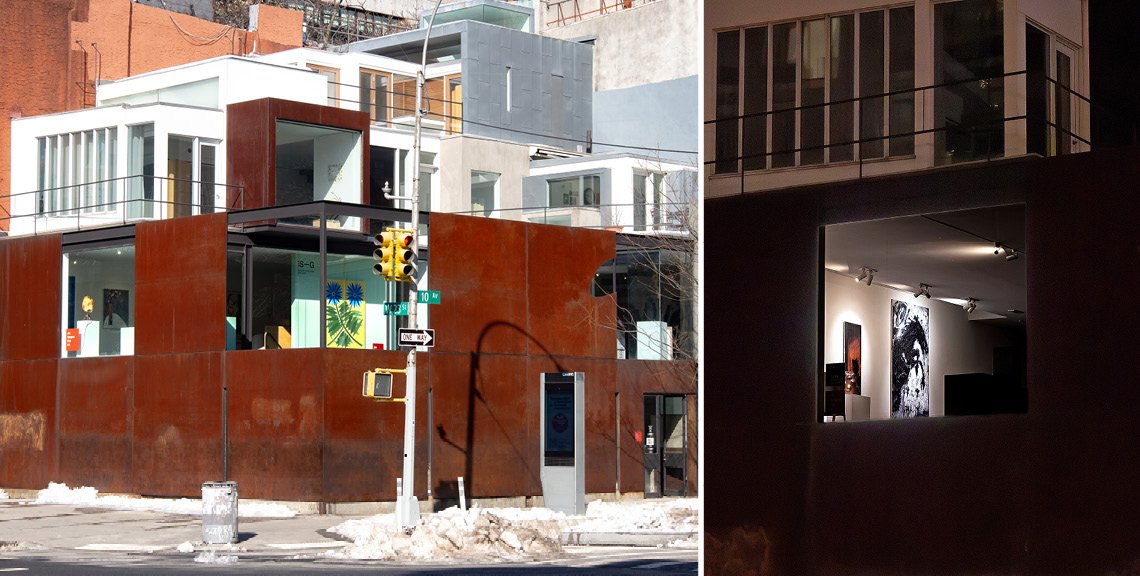 |
LEFT: Isabel Sullivan Gallery, Chelsea location, 501 W 23rd St, New York, NY 10011 RIGHT: Richard Hambleton works at night in Chelsea. |
A narrow painting of a shadow torso in her gallery makes the point. The figure is cropped close, its head a dark block with sprays of paint above it. In the photograph, the copper leaf catches the light beside a window and glows around the silhouette. Sullivan has seen plenty of Hambleton’s shadow heads and full-length figures. The torso is an unusual format, and she says she has never seen another example quite like it in copper. There is something intimate about the picture, as if a figure painted to startle someone on a sidewalk had come close enough to sit for a portrait. Hambleton made his name in the early 1980s painting life-size black figures on walls and buildings across Lower Manhattan. A contemporary of Basquiat and Haring, he carried the street silhouettes onto canvas and paper and even painted versions abroad, including on the Berlin Wall. He participated in gallery and museum shows internationally, including the Venice Biennale twice, and he was still painting in the year of his death in 2017, working and reworking his shadowy figures into ever more dynamic and increasingly massive compositions. Those shadow figures gave him an image people could recognize at a glance, and they became his signature in the art market. The shadowmen can obscure how broad a painter Hambleton was. There are the Marlboro pictures, which borrow the cowboy imagery of cigarette advertising, and the huge landscapes he called his Beautiful Paintings. Seen beside the copper torso, the rodeo picture shows how much Hambleton could do with black paint alone. In one, it comes at you. In the other, it seems to absorb the light.
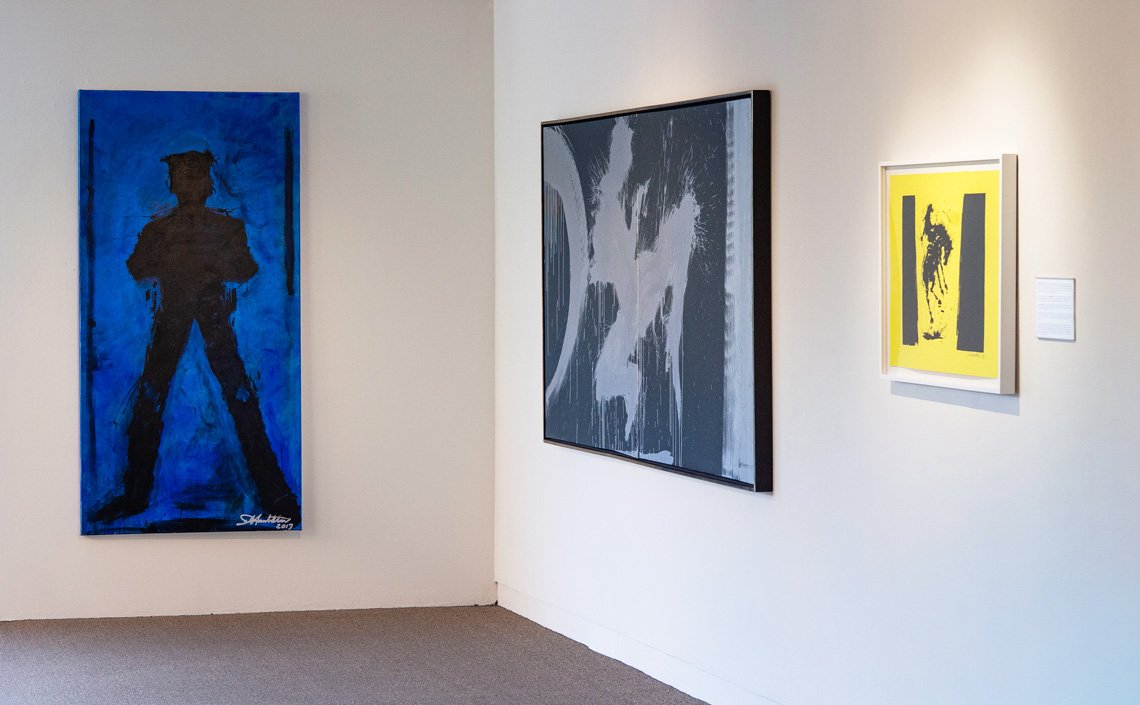 |
| FROM LEFT TO RIGHT: Richard Hambleton, Standing Shadowman (Cobalt/ Black), 2017 silkscreen, acrylic on canvas, 72 x 36 in.; Richard Hambleton, Untitled (Jumping Shadow Diptych), 1997, acrylic on canvas, 48 x 96 in.; Richard Hambleton, Horse & Rider On Yellow, 2006, silkscreen (artist proof, unique) 21 x 30 in. |
When a picture comes her way, she looks at the signature first. She gives equal weight to visual judgment and provenance, and walks away if the history fails to add up. She works closely with the Librizzi family, the writer Carlo McCormick, Hambleton estate executor Brian Vincent Kelly, and the Woodwards, who worked with Hambleton and created an archive of his work. One collector, an architect, saved the signed bill of sale for two works from 1986 along with a shipping receipt bearing Hambleton’s Rivington Street address and phone number. Sullivan delights in that sort of detail. A receipt can take a picture back to the moment it left the artist’s hands.
Authenticity gets a painting through the door. After that, Sullivan weighs condition, scale, rarity, and the painting's quality. A color Shadowman, for example, interests her because color is relatively uncommon in the series. Her enthusiasm for Upheaval is inseparable from her position as its dealer (it is priced at $385,000), but the Berlin photograph gives her argument an art-historical footing. It shows how early Hambleton’s studio painting was circulating abroad alongside the work of his downtown peers. Sullivan is candid about what it takes to change an artist’s standing. She thinks Hambleton’s reputation would have benefited from a sustained relationship with a gallery, and she knows what a dealer with deep pockets and international reach can do for an artist’s market. “I’m just a little guy,” she says. She intends to keep buying Hambletons herself, taking them to fairs and putting more of his work in front of collectors. “This is a lifelong project for me.”
In addition to believing that the work is still highly undervalued, Sullivan explains her rationale for buying a Hambleton painting today. "Life is a series of short, intense bursts of energy, with more mundane, difficult, messy moments in-between. Having a Hambleton on the wall is like being able to keep riding that fleeting excitement in your daily life." It is an unexpectedly domestic ambition for paintings descended from figures that once made people jump with fright on the street. In the old Berlin photograph, Upheaval hangs just beyond the railing, where you can imagine catching sight of the horse as you come up the stairs. More than forty years later, it still looks as if it might bolt.
 |
Discover More From Isabel Sullivan Gallery on Incollect
 |