



Illuminating Tradition through Contemporary Glass Carolyn Cartwright Shapes Light Through Glass
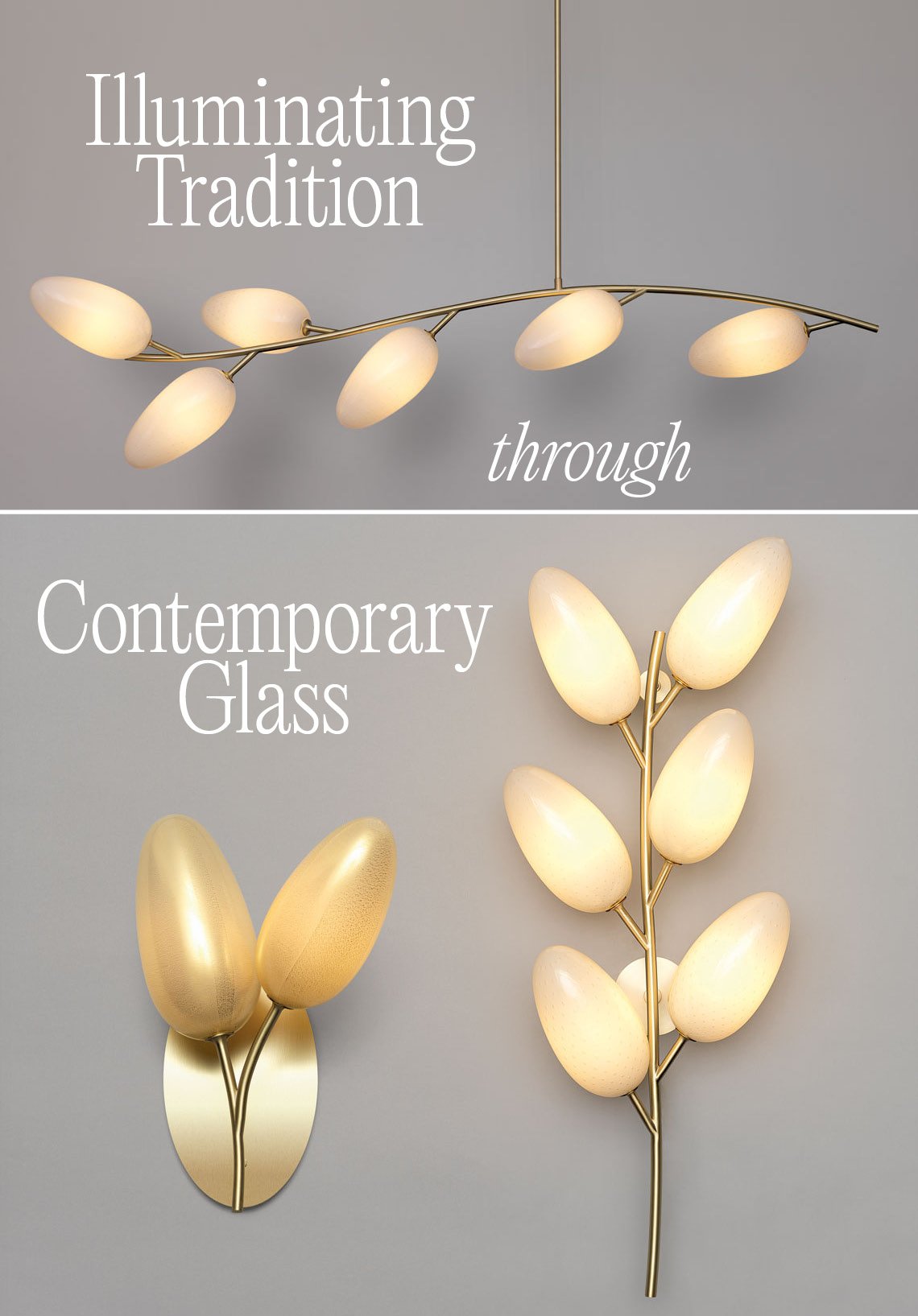 |
| Cartwright New York’s latest series, the Sàlice Collection, is based on the pussy willow branch. The Sàlice Chandelier and the Sàlice Six-Light Sconce, shown in alabaster bullicante glass with a brushed brass frame, and the Sàlice Two-Light Sconce, in gold gilded glass. The designs are also available in raked smoked quartz glass, which gives a soft gradient gray tip and end to the white glass buds, with an oil-rubbed bronze frame. Photos by James Wade Photography. |
Carolyn Cartwright Shapes Light Through Glass
by Benjamin Genocchio
For Carolyn Cartwright, light is never simply illumination. It is atmosphere, emotion, architecture, and memory. The founder of Brooklyn-based Cartwright New York has spent the past decade developing a distinctive body of hand-blown glass lighting that draws on the traditions of Venetian glassmaking while speaking in a contemporary language. Her newest works — the Solé and Sàlice collections, revealed at the Afternoon Light Fair in New York in May — continue that exploration, refining her vocabulary of restrained forms, luminous glass, and exquisitely calibrated light.
“I have no interest in recreating historical objects,” she says. “What I do find interesting are the ideas behind objects — their use, technique, or form.” That distinction lies at the heart of her work. Cartwright approaches history not as a stylistic archive but as a source of ideas to reinterpret. Every design begins with research into Venetian glass, examining centuries of innovation before reducing designs to their essential qualities. Her process mirrors that philosophy. Sketches begin in pencil before being refined into precise drawings that serve as blueprints in the hot shop. There, together with master glassblower Adam Holtzinger, she transforms drawings into molten glass through an extended process of prototyping and refinement.
Her first chandelier, Otto Luce, was designed in 2015 and still in production today (it is one of her bestsellers), came out of intensive study of the history and use of chandeliers in Europe. “I became obsessed with the idea of glass chandeliers. Why make elaborately complex, fragile glass structures and hang them in the air? Turns out, when you go back to the 17th century and look at the forms, chandeliers were mostly used in churches. It was only later that they made their way into the homes of nobles. After looking at hundreds of chandeliers, I edited the concept down to its essence: eight arms, glass shades, period.”
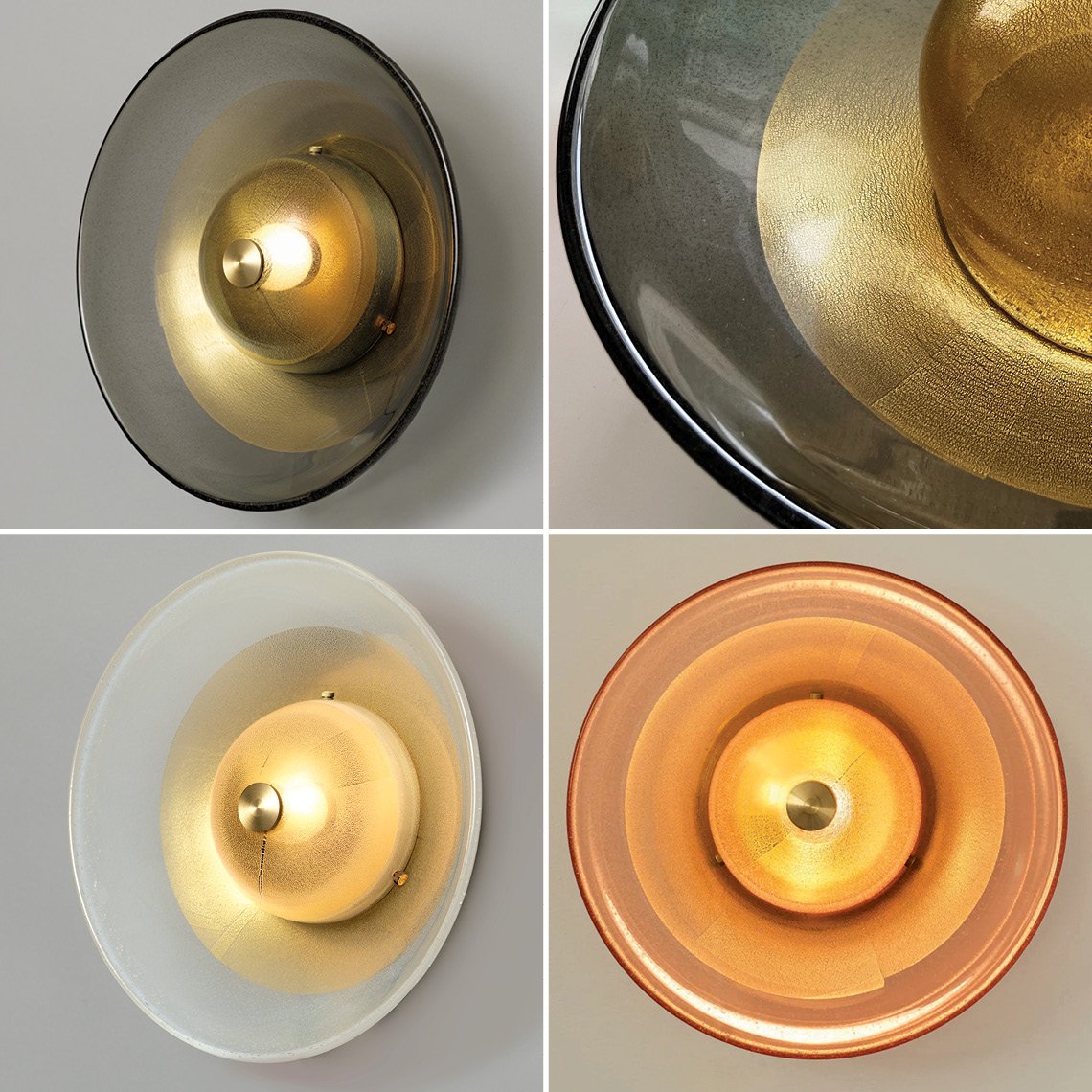 |
The Solé Sconce is Cartwright’s homage to the sunset, with variations mirroring its different stages as it passes from the golden hour, to vibrant twilight, to dramatic dusk. Created in hand-blown Venetian-style puglioso glass, a technique that fills the glass with tiny internal bubbles and scatters light in a soft halo. It is then hot-gilded with a layer of pure gold to cast a rich, warm glow. In White, Rose Champagne, and Smoked Quartz. Photos by James Wade Photography. |
“I am a minimalist at heart,” she explains. “I love very pure, simple forms.” Those simple forms are anything but simple to produce. Behind every apparently effortless curve lies an extraordinary degree of technical precision. “The pieces may look simple,” Cartwright says, “but they are precise, and so technically quite complex.” A notable example is the quiet silhouette of the Solé sconce, which avoids theatrical gestures in favor of subtle proportions and beautiful, minimal details. Rather than commanding attention through scale or ornament, they reveal themselves gradually through the changing qualities of light filtered by hand-blown glass.
Light itself is Cartwright’s true material. “Light is one of the most powerful forces we have on earth,” she says. “Without light we don’t have life, period.” It is a conviction that gives her work an unusual sensuality. Through carefully developed glass techniques she diffuses, softens, reflects and warms artificial light until it approaches the gentle radiance of nature. “I prefer to make the light from our pieces feel soft and even, like a sunny spring day,” she says. “I like it to feel radiant, warm and inviting.” That sensitivity extends to color temperature, an aspect of lighting often overlooked by consumers but central to Cartwright’s thinking. She favors warm illumination around 2700 Kelvin, believing it evokes the reassuring qualities of sunlight and firelight. “We feel comfortable in this light,” she says. “We feel safe.”
The sensual dimension of her work owes something to an unlikely first career. Before founding Cartwright New York, she spent twenty-five years working in the film industry after studying fine art, sculpture, and photography. Cinema sharpened her understanding of atmosphere and the psychological effects of light, even if glass had yet to enter the picture.
 | 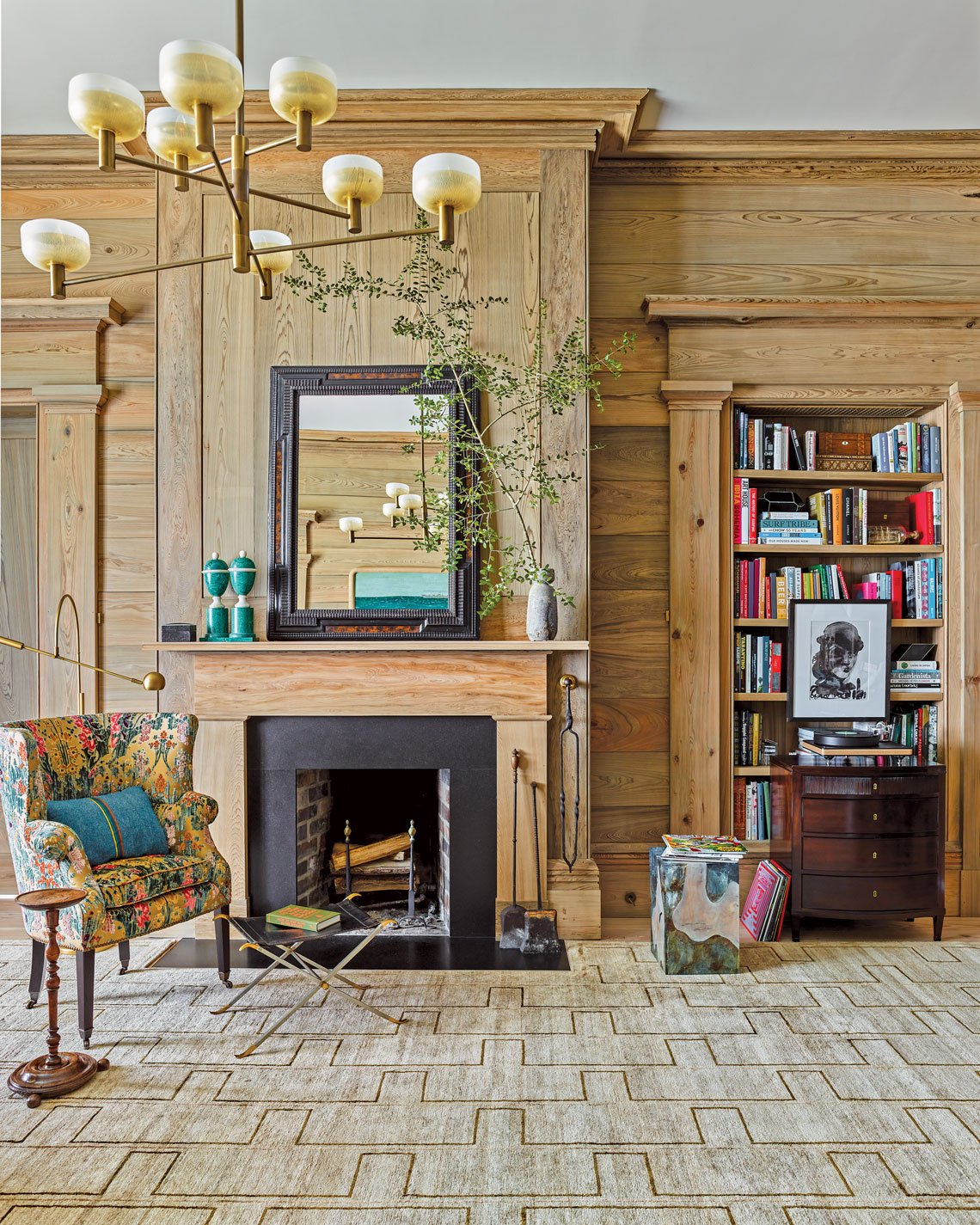 | |
Left: A luminous bedroom at the Four Seasons Residences, Tribeca, New York with the Otto Luce chandelier in gilded rosé champagne. Interior design by Nathan Andrew, The Department of Interiors, photo by Nathan Andrew. Right: The library of a South Carolina Low Country home with views of the Kiawah River is wrapped in reclaimed “sinker” cypress paneling, milled from logs dredged from the river bottom. Overhead, Cartwright New York’s graceful Otto Luce chandelier in hand-blown, hand-rubbed gilded white alabaster is perfectly suited to the warm, stylish mix. Interior design by Tammy Connor Interior Design, D. Stanley Dixon, architect. Photo by Eric Piasecki. | ||
Everything changed during a honeymoon trip to Murano in 2001. Arriving by water taxi at the private dock of the late glass artist and sculptor Pino Signoretto, Cartwright found herself immersed in a world few outsiders ever experience. She was introduced to master glassmakers, private collections, historic factories, and generations of accumulated knowledge. The experience proved transformative. Returning to New York, she found herself unable to forget Murano or the extraordinary culture and history surrounding glassmaking. Eventually she left the film industry altogether to establish Cartwright New York, determined to create contemporary work informed by the traditions she had encountered in Venice.
Her admiration for Venetian glass remains profound, particularly the innovations of twentieth-century masters including Napoleone Martinuzzi, Tomaso Buzzi, Carlo Scarpa, Paolo Venini, and Archimede Seguso. “I feel like the baton has been passed to us,” she says, “to keep that exploration alive for our generation.” That sense of stewardship explains why every Cartwright piece carries an Italian name, acknowledging both the technical lineage and cultural heritage that inform the studio’s work. Yet nothing about the designs feels nostalgic. Cartwright freely adapts historic techniques such as alabastro and sommerso while applying them to sleek contemporary forms. “As a modernist at heart,” she says, “I feel all aspects of the legacy are open for interpretation.”
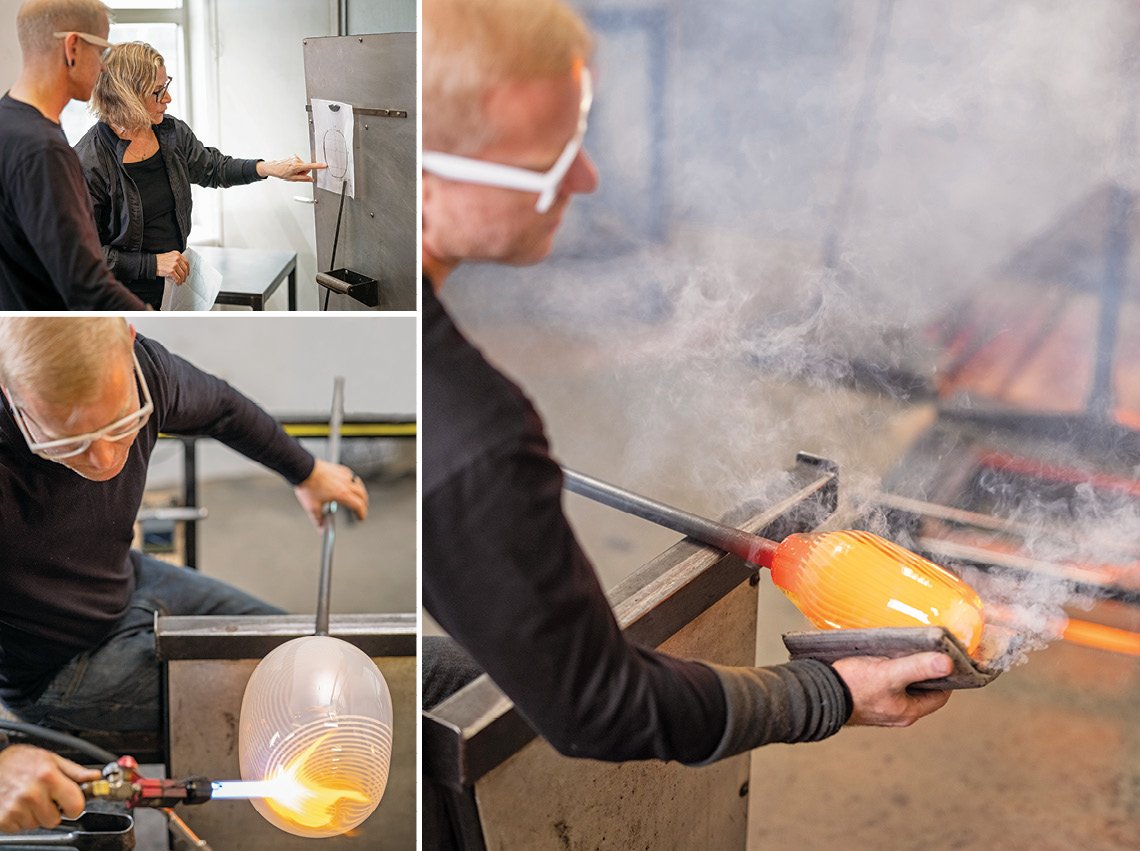 |
Master glassblower Adam Holtzinger at work in the studio with Carolyn Cartwright, developing a new pendant light using the historic, highly intricate Venetian cane technique. Counterclockwise from upper right: Carolyn discusses the drawing with Adam; Adam torches the piece; Adam shapes the piece by hand with wet paper. Photos: ©2026 Bordwin Studio/Andrew Bordwin, courtesy Cartwright New York. |
The making process is equally rooted in collaboration. Holtzinger, whom Cartwright describes as an extraordinary master glassblower, serves as both technical partner and interpreter, translating drawings into molten glass while contributing decades of practical knowledge. “Adam interprets the shapes that I draw in glass,” Cartwright explains, “and we work together to refine the form until we arrive at something that is elemental yet captures the idea.” Despite the apparent fluidity of glass, very little is left to chance. “Both Adam and I are perfectionists,” she says with a laugh. “We don’t leave a lot to chance.” Instead, each piece evolves through successive iterations, testing proportions, techniques, and optical effects until every detail feels resolved. The result is lighting that possesses an unusual quietness — objects that reveal more the longer one lives with them.
Her favorite pieces from the new collection are the Sàlice Chandelier in brushed brass and alabaster bullicante glass; the Sàlice Six-Light Sconce in brushed brass, also with alabaster bullicante glass; and the Sàlice Two-Light Sconce in gold gilded glass. Interior designers have already shown considerable interest in these new designs, along with the Solé sconce in smoked quartz pulligoso glass. Developed with her engineering partner Brendan Foley of HV Custom Fabrication, “The Sàlice pieces are all based on the pussy willow branch, with each offering up different iterations of the idea of the willow branch in bud,” she says. “The Solé series is my homage to the sunset. They all evoke the sun in its various conditions.” The chandelier is ideal for a dining room, Cartwright believes, as its nearly six-foot length gives off a soft, even light. The six-light sconce is much more of a statement piece (perfect for flanking a grand archway), while the two-light sconce was designed for intimate settings — at bedside or around a living, dining or screening room space.
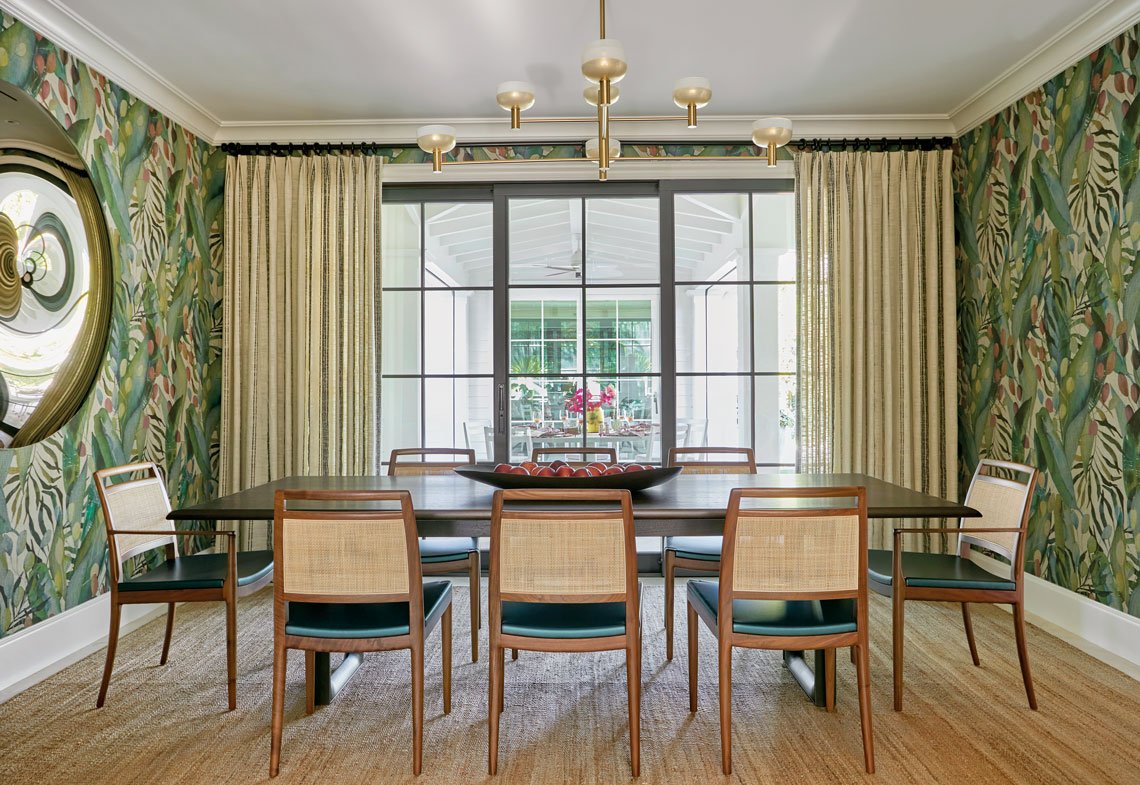 |
This Palm Beach dining room evokes a sense of place with bold tropical grasscloth wallcovering and cane-back dining chairs, while a gleaming Otto Luce chandelier in gilded white alabaster takes center stage. Interior design by Liliane Hart Interiors, photo by Mark Roskams. |
Cartwright hopes viewers notice not simply the objects themselves but the qualities of light her designs create. “I hope that people experience two qualities in our work,” she says. “The deeply healing warmth of the handmade, and a fascination with the patterning, reflectance or diffusion of the glasswork.” That emphasis on craftsmanship also explains why her studio has resisted industrial scale. Remaining relatively small allows Cartwright complete control over production while giving architects and interior designers access to highly customized work. “We make everything ourselves,” she says. “We can custom-make work, which caters to the specific needs of our interior designer and architect clients.”
Looking ahead, Cartwright’s ambitions are expanding. As of September, Cartwright New York is exclusively represented by the prestigious New York design gallery Liz O’Brien. And, she is currently developing a series exploring cast glass, “investigating relationships between glass, rough timber and carved stone,” she says, and “imagining large-scale commissions for luxury hotel interiors.” These projects promise to extend her exploration of light beyond domestic settings into the collectible design market and architectural environments.
 |
Discover More From Cartwright New York on Incollect
 |