- FINE ART
- FURNITURE & LIGHTING
-
NEW + CUSTOM
- SHOP BY MAKERS
- The latest work from extraordinary artisans and designers
- MEET THE MAKERS
- The stories behind today's most talented artisans and studios
- TODAY'S TOP ARTISTS
- Exceptional designers, ateliers and boutique brands worldwide
- SHOP NEW + CUSTOM
- All
- Seating
- Lighting
- Tables
- Case Pieces & Storage
- Mirrors
- Ceramics
- Decorative Objects
- Rugs & Carpets
- DECORATIVE ARTS
- JEWELRY
- INTERIORS
- MAGAZINE





Listings / Fine Art / Paintings / Figurative

Offered by:
Kristan Hauge Japanese Art
2-32 Saishoji-cho, Okazaki, Sakyo-ku,
Kyoto 606-8342 , Japan
Call Seller
81757515070
Showrooms
Taishō Beauty
-
Description
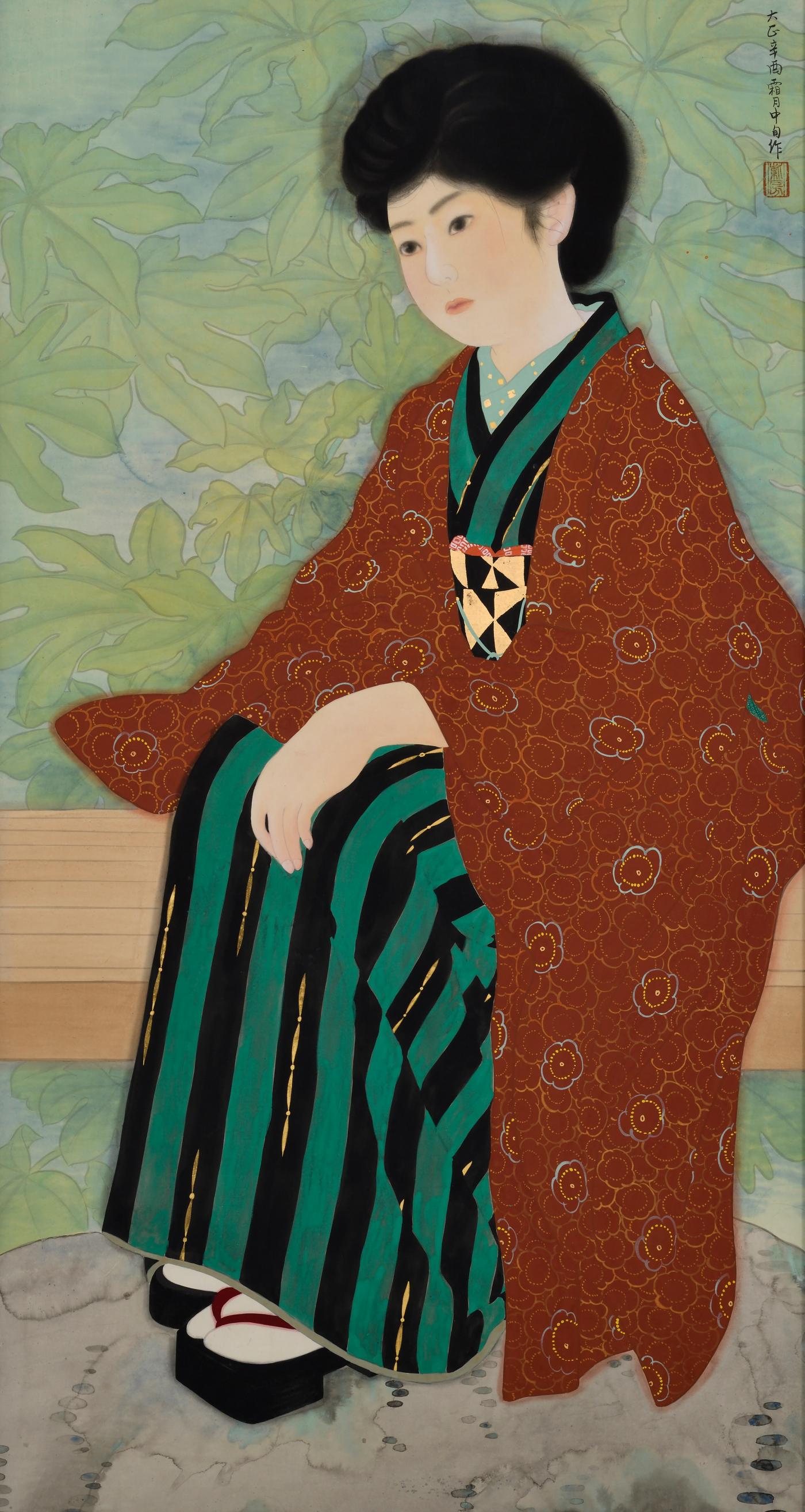
Anonymous (seal: Shibō 紫房)
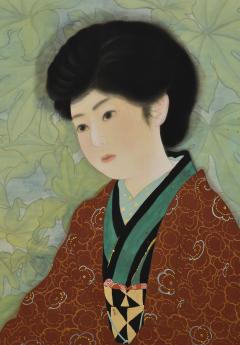
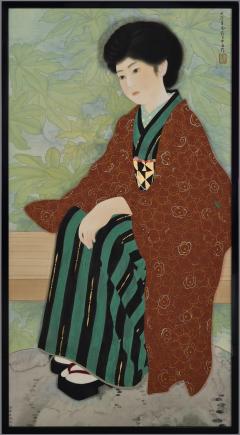
Taishō Beauty
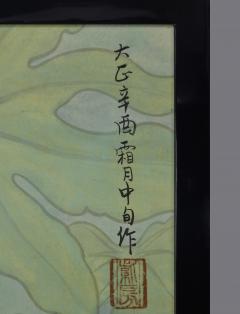
Japanese. Dated Taishō 10 (1921), mid-November.
Painting. Ink and color on silk.
Dimensions: H. 150 cm x W. 82 cm (59" x 32")
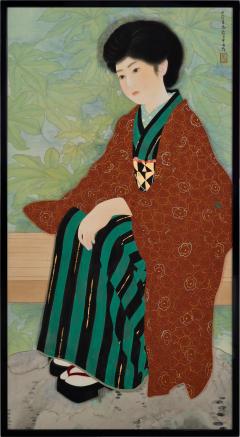
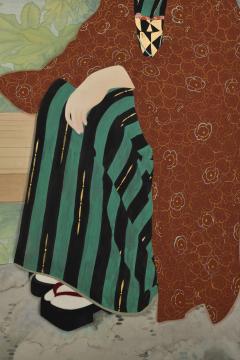
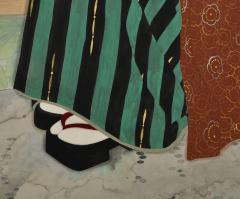
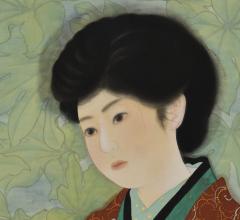
The Taishō period (1912–1926) witnessed profound changes in Japanese society, accompanied by new attitudes toward femininity and the emergence of new ideals of feminine beauty. Artists were increasingly intrigued by these developments, although their progressive interests were often tempered by the weight of tradition and their own classical artistic training. Painted in November 1921, this work belongs to a period of transition, anticipating the emergence of the moga, or modern girl, who would become a defining cultural figure later in the decade. The woman's fashionable appearance already reflects these changing sensibilities. Her hair is arranged in a voluminous coiffure characteristic of the Taishō period, reflecting the growing influence of Western styles upon traditional Japanese hairdressing. The bold stripes of her kimono, contrasting with the geometric checkerboard pattern of her obi, further suggest the changing tastes of the early 1920s. Yet despite these fashionable details, there is something distinctly nostalgic in the artist's treatment of his subject.
The woman is seated against a luxuriant background of Japanese aralia, its large, softly rendered leaves providing a gentle contrast to the strong geometric patterns of her clothing. Flowering in late autumn and early winter, Japanese aralia carries a distinct seasonal association, particularly appropriate to the painting's date of execution in mid-November. This autumnal atmosphere is further suggested through the rich russet tones of the woman's outer robe.
Perhaps the most compelling aspect of the painting is the woman's quiet psychological presence. Neither an idealized courtesan of the Edo period nor merely a decorative embodiment of feminine beauty, she is substantial in both body and spirit. Her lowered gaze and composed expression suggest an inner life that remains entirely her own. Her thoughts are private, seemingly enfolded within her, lending the portrait a sense of individuality and emotional depth.
In this respect, the painting reflects an important development in Taishō-period bijin-ga, in which the woman increasingly emerges as a subject possessed of her own consciousness rather than simply an object of admiration. The artist has created a compelling image of modern femininity, one that reflects the changing sensibilities of the age while remaining firmly rooted in the traditions of Japanese painting.
The painting bears the artist's seal reading 紫房 (Shibō). Despite our research, we have been unable to establish the identity of the artist.
The painting has undergone professional restoration in Japan and has been newly mounted in a hand-lacquered black frame. -
More Information
Period: 1900-1919 Styles / Movements: Asian Art Incollect Reference #: 893481 -
Dimensions
W. 32.28 in; H. 59.06 in; W. 82 cm; H. 150 cm;
Message from Seller:
Kristan Hauge Japanese Art, based in Kyoto's museum district since 1999, specializes in important Japanese screens and paintings for collectors, decorators, and museums worldwide. Contact us at khauge@mx.bw.dream.jp or +81 75-751-5070 for exceptional access to Japanese art and history.
More Listings from Kristan Hauge Japanese Art View all 67 listings
-
Mother’s Breast (Chichi) 1844. Japanese scroll painting.

-
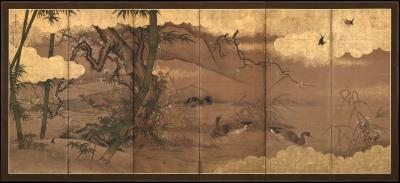
17th Century Japanese Unkoku Screen. Flowers & Birds of Winter and Early Spring
-
Mitani Toshuku (1577-1654). Unkoku School. Japanese falcon painting.
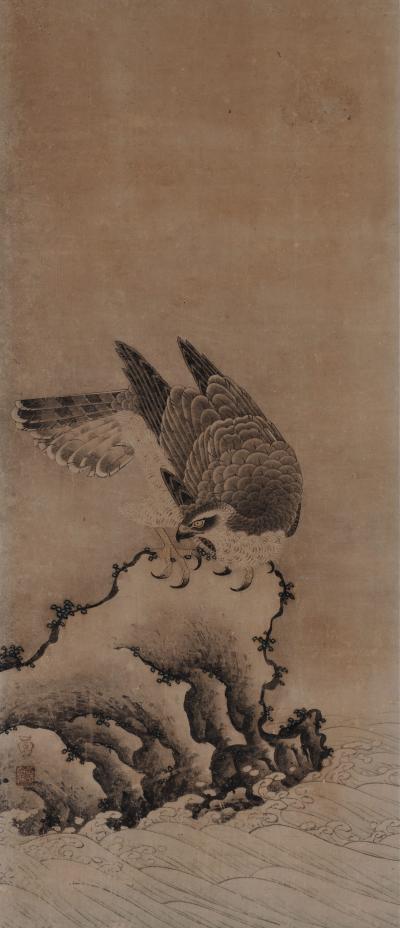
-
Tsunetake Yotei (18 c.) | Phoenix & Peacocks | Japanese folding screen pair
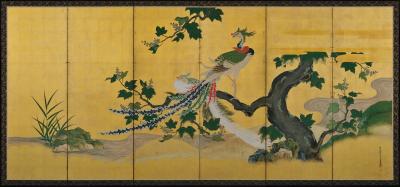
-
Early 20th Century Japanese Screen. Flowers of the Four Seasons
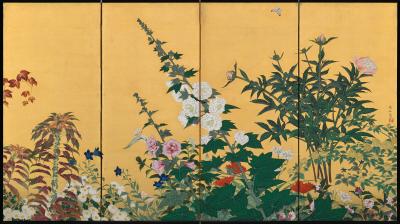
-
Mitani Toshuku (1577-1654). Unkoku School. Japanese falcon painting.

-
19th Century Japanese Silk Painting by Kano Chikanobu. Cats & Butterflies.
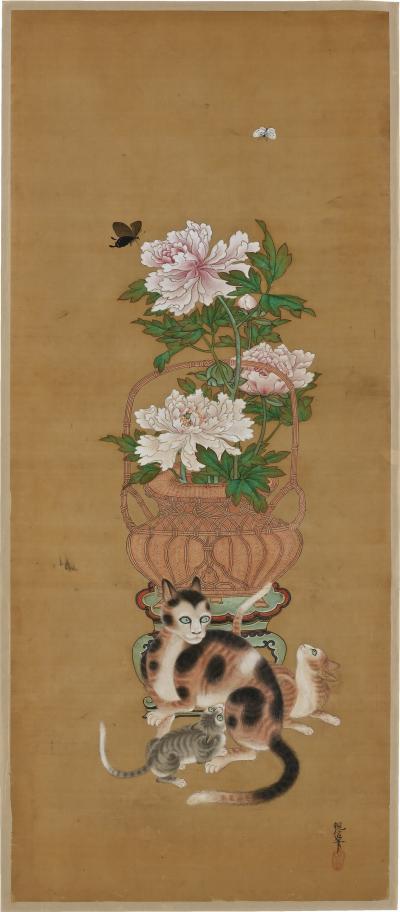
-
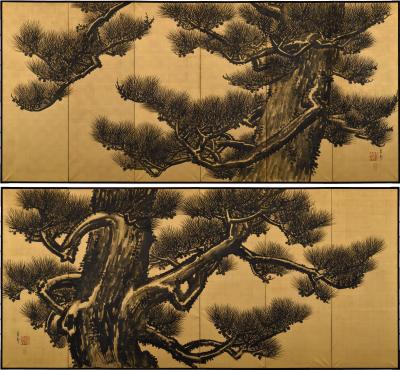
Aged Pines on Gold
-
17th Century Japanese Screen. View of West Lake by Unkoku Toyo

-
19th Century Japanese Tiger Painting Pair by Kokuho Shimei (1789–1859)

-
17th Century Japanese Screen Pair| Hawks on Plum & Pine | Soga Nichokuan

-
Korean Grapevine & Squirrel Scroll Painting | 17th Century, Joseon period.

-
19th Century Japanese Shunga Hand-Scroll, Katsukawa School.

-
19th Century Japanese Scroll Painting by Igarashi Chikusa, Poppies & Butterflies