



Geraldo de Barros
Brazilian, 1923 - 1998
Geraldo de Barros: The Visionary of Brazilian Mid-Century Modernism
Geraldo de Barros (1923–1998) fundamentally reshaped the landscape of Latin American art. While many creators limit themselves to a single medium, the São Paulo native pushed boundaries across fine art painting, graphic design, abstract photography, and industrial furniture production. As a driving force behind Brazil’s concrete art movement, his work challenged traditional boundaries, eventually earning him a reputation as one of the most vital avant-garde figures of the twentieth century.
From Homemade Cameras to Fotoformas
De Barros began dissecting visual forms as a teenager in Chavantes, building his own working camera at just sixteen years old. This early curiosity with image manipulation laid the groundwork for a career defined by experimentation. By the late 1940s, after formal training in classical painting, he turned his focus toward the camera lens.
Blending Gestalt psychological theory with clean geometric forms, he co-founded Grupo XV and launched his landmark Fotoformas series. This body of work completely upended Brazilian photography, using multiple exposures, negatives scratched with razor blades, and heavy abstraction to treat the photograph as a canvas rather than a mere mirror of reality.
European Influences and the Birth of Grupo Ruptura
A desire to merge art with everyday life took De Barros to Europe in the early 1950s. He studied printmaking and lithography in Paris before absorbing the strict, functional philosophies of the Ulm School of Design in Germany.
Returning to Brazil with a radical geometric framework, he co-founded Grupo Ruptura in 1952. This collective launched a direct assault on figurative art, advocating instead for the clean lines, mathematical rhythms, and objective clarity of Concrete Art.
Democratizing Design: Unilabor and Hobjeto
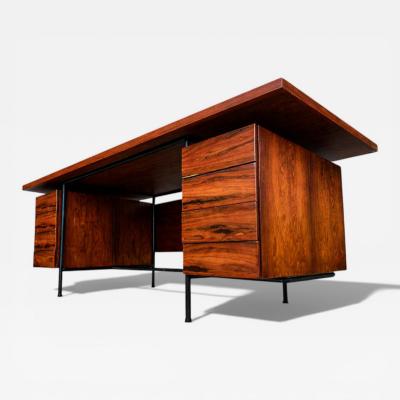
For De Barros, fine art was not meant to sit hidden away in wealthy galleries. He applied his geometric sensibilities directly to the home by entering the furniture manufacturing business. In 1954, he co-founded Unilabor, a radical, worker-owned cooperative that produced affordable, high-design modular furniture using rich Brazilian rosewood and stark iron frames.Later in his career, during the 1970s, he launched Hobjeto, a venture focused on bringing mass-produced, functional modernist furniture to Brazil's growing middle class. Even when shifting political landscapes and economic instability created severe financial hurdles, his dedication to accessible, clean industrial design never faltered.The Sobras Series and Enduring InfluenceIn his final years, despite failing health, De Barros returned to his first love: photography. Collaborating with Ana Moraes, he sliced and reassembled personal family negatives into his final masterpiece, the Sobras (Remnants) series. These haunting, minimalist collages captured international attention, sparking major exhibitions across Europe and the United States. Today, his rare mid-century sideboards, geometric tables, and vintage prints remain highly coveted prizes for serious collectors of global modernism.
Geraldo de Barros (1923–1998) fundamentally reshaped the landscape of Latin American art. While many creators limit themselves to a single medium, the São Paulo native pushed boundaries across fine art painting, graphic design, abstract photography, and industrial furniture production. As a driving force behind Brazil’s concrete art movement, his work challenged traditional boundaries, eventually earning him a reputation as one of the most vital avant-garde figures of the twentieth century.
From Homemade Cameras to Fotoformas
De Barros began dissecting visual forms as a teenager in Chavantes, building his own working camera at just sixteen years old. This early curiosity with image manipulation laid the groundwork for a career defined by experimentation. By the late 1940s, after formal training in classical painting, he turned his focus toward the camera lens.
Blending Gestalt psychological theory with clean geometric forms, he co-founded Grupo XV and launched his landmark Fotoformas series. This body of work completely upended Brazilian photography, using multiple exposures, negatives scratched with razor blades, and heavy abstraction to treat the photograph as a canvas rather than a mere mirror of reality.
European Influences and the Birth of Grupo Ruptura
A desire to merge art with everyday life took De Barros to Europe in the early 1950s. He studied printmaking and lithography in Paris before absorbing the strict, functional philosophies of the Ulm School of Design in Germany.
Returning to Brazil with a radical geometric framework, he co-founded Grupo Ruptura in 1952. This collective launched a direct assault on figurative art, advocating instead for the clean lines, mathematical rhythms, and objective clarity of Concrete Art.
Democratizing Design: Unilabor and Hobjeto
For De Barros, fine art was not meant to sit hidden away in wealthy galleries. He applied his geometric sensibilities directly to the home by entering the furniture manufacturing business. In 1954, he co-founded Unilabor, a radical, worker-owned cooperative that produced affordable, high-design modular furniture using rich Brazilian rosewood and stark iron frames.Later in his career, during the 1970s, he launched Hobjeto, a venture focused on bringing mass-produced, functional modernist furniture to Brazil's growing middle class. Even when shifting political landscapes and economic instability created severe financial hurdles, his dedication to accessible, clean industrial design never faltered.The Sobras Series and Enduring InfluenceIn his final years, despite failing health, De Barros returned to his first love: photography. Collaborating with Ana Moraes, he sliced and reassembled personal family negatives into his final masterpiece, the Sobras (Remnants) series. These haunting, minimalist collages captured international attention, sparking major exhibitions across Europe and the United States. Today, his rare mid-century sideboards, geometric tables, and vintage prints remain highly coveted prizes for serious collectors of global modernism.

Geraldo de Barros
Desk with Armchair, Geraldo de Barros for Unilabor, 1950s
H 29 in W 42 in D 20 in
$ 15,000
Geraldo de Barros
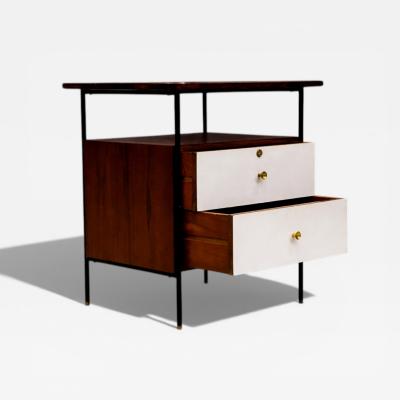
Side Table in Metal, Rosewood and Formica, Geraldo de Barros for Unilabor, 1950s
H 29 in W 22 in D 21 in
$ 6,500
Sale
Geraldo de Barros
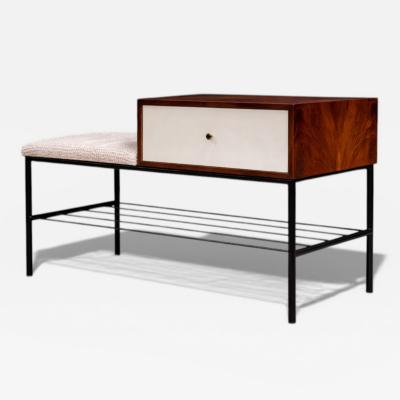
Phone Bench in Rosewood, Fabric & Metal, Geraldo de Barros, 1950s
25% Off
Sale Price: $ 5,625
Sold
Geraldo de Barros
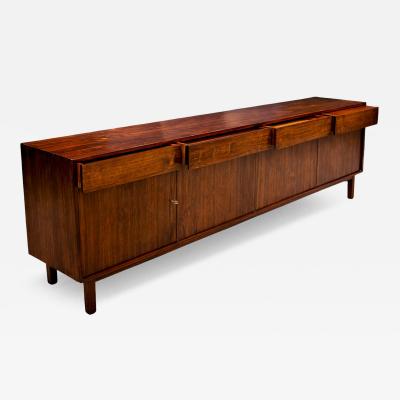
Credenza in Rosewood, Geraldo de Barros for Unilabor, 1950s
H 30 in W 81 in D 15 in
Geraldo de Barros
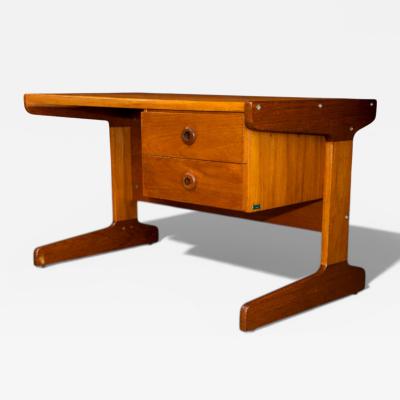
Desk in Cherry wood, Geraldo de Barros for Hobjeto, 1970s
H 28 in W 47 in D 28 in
$ 3,000
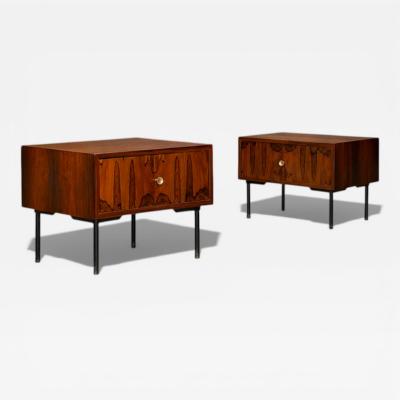
Geraldo de Barros
Geraldo de Barros for Unilabor Pair of Rosewood Nightstands, Brazil 1950s
H 17 in W 21 in D 15 in
$ 15,000
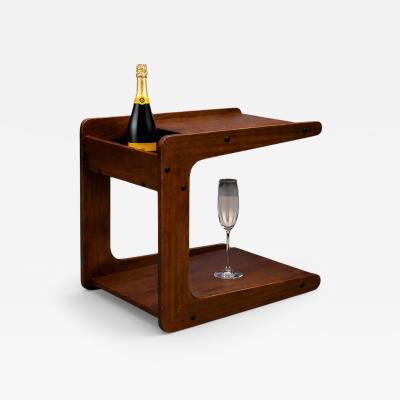
Geraldo de Barros
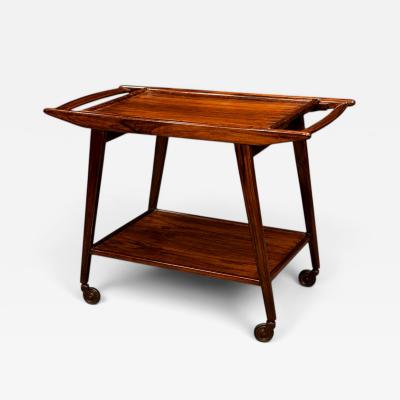
Geraldo de Barros for Hobjeto Bar Cart / Side Table in Brazilian Hardwood
H 24.41 in W 17.32 in D 25.59 in
$ 5,500
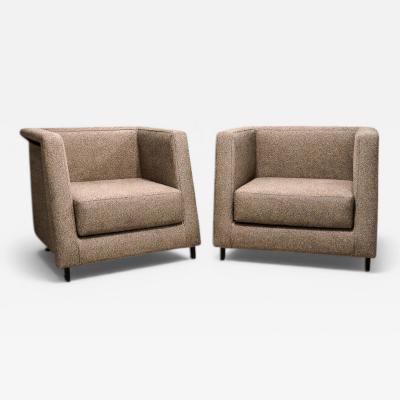
Hold
Geraldo de Barros
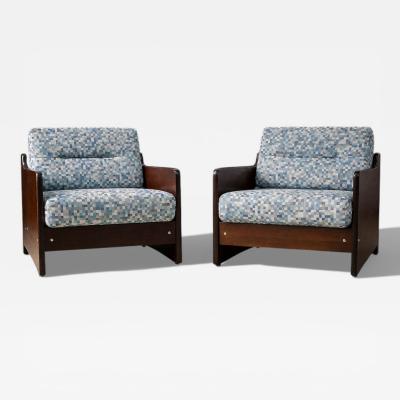
Geraldo de Barros Pair of Armchairs in Blackened Steel & Taupe Mushroom Wool
H 26.38 in W 26.77 in D 24.41 in
$ 17,500
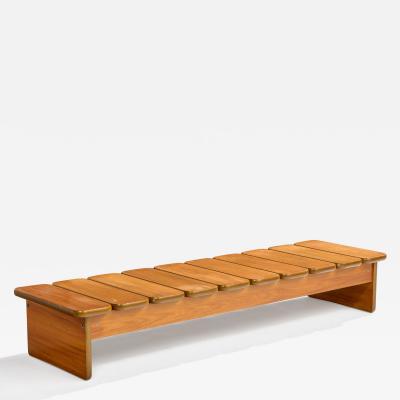
Geraldo de Barros
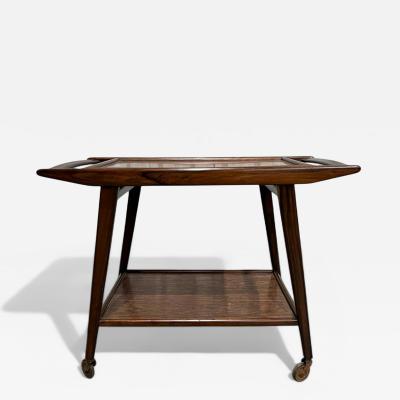
Geraldo de Barros Bench with Wood and Metal, Brazil, 1970s
H 12 in W 78 in
$ 8,900

Sold
Geraldo de Barros
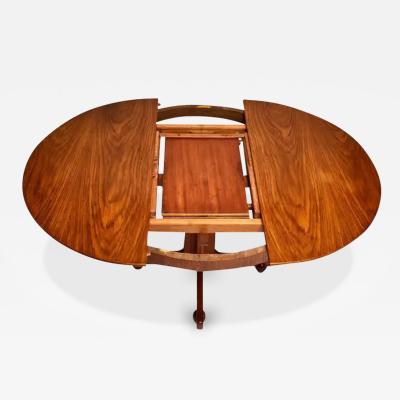
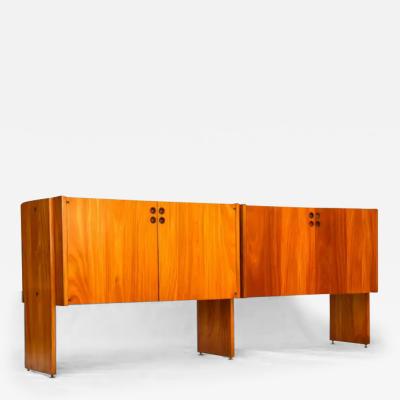
Bar Cart in Hardwood & Formica, Geraldo de Barros for Unilabor, 1960s - Lot 499
H 21 in W 29 in D 13 in
Sold
Geraldo de Barros
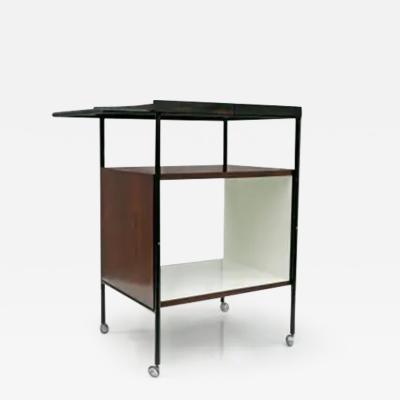
Brazilian Mid-Century Credenza in Hardwood by Geraldo de Barros, c. 1970s
H 28 in W 70 in D 17 in
Sold
Geraldo de Barros
Bar Cart in Hardwood, Iron, & White Formica by Geraldo de Barros, 1950s
H 31 in W 35 in D 17 in
Sold
Geraldo de Barros
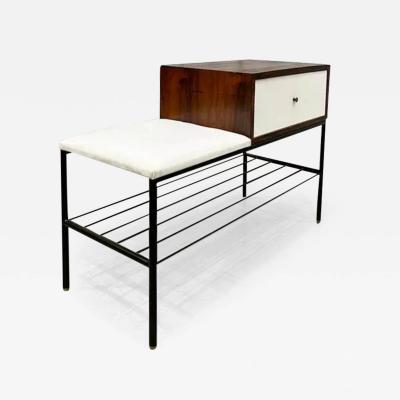
Brazilian Modern Phone in Table in Hardwood & Steel, Geraldo de Barros, Brazil
H 25 in W 36 in D 15 in
Sold
Geraldo de Barros
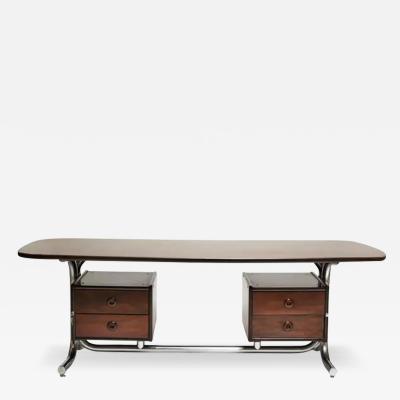
1970's Midcentury Modern Desk in Tubular Chrome & Wood Leaf by Geraldo Barros
H 29 in W 82 in D 35 in
200
Geraldo de Barros
Mid-Century Modern Tea Cart by Geraldo de Barros, 1950s
H 24 in W 31 in D 16 in
$ 12,000


Sold
Geraldo de Barros
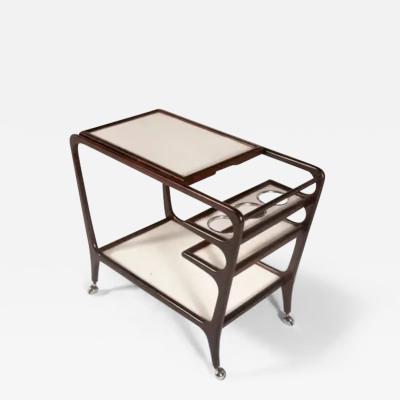
Brazilian Modern Bar Cart in Hardwood, Chrome, & White Finish, Geraldo de Barros
H 24 in W 33 in D 17 in

Sold
Geraldo de Barros
Brazilian Modern Armchairs in Metal, Hardwood & Boucle, Geraldo de Barros
H 31 in W 25 in D 26 in
Sold
Geraldo de Barros
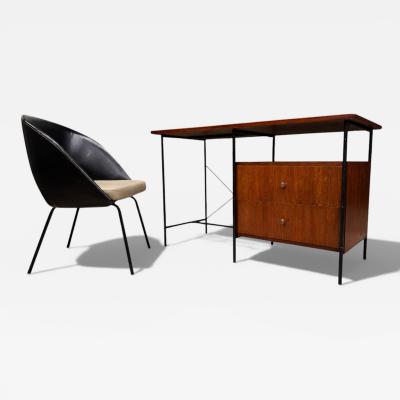
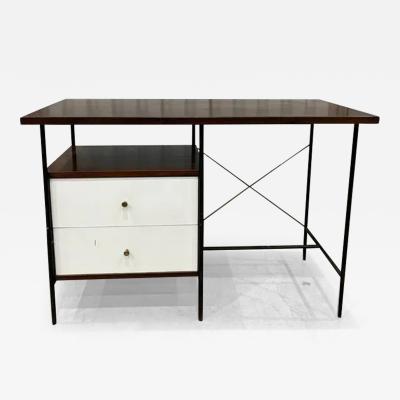
Mid-Century Modern Desk & Chair in Hardwood & Iron by Geraldo de Barros, Brazil
H 29 in W 43 in D 21 in
Sold
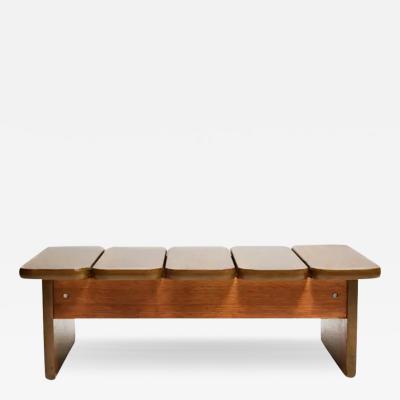
Geraldo de Barros
Brazilian Modern Bench in Hardwood by Geraldo de Barros for Hobjeto, 1970’s
H 13 in W 39 in D 22 in
 Loading...
