


Listings / Fine Art / Photographs / Abstract




Showrooms
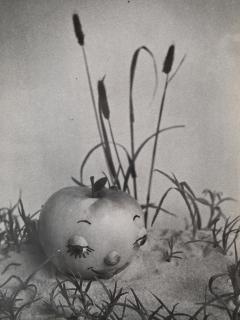
Henry Rox "A Soft Carpet On Which Tommy Could Fall" 1934/40 Vintage Silver Print
-
Description
Henry Rox (1899–1967)
“A Soft Carpet On Which Tommy Could Fall”
From Tommy Apple and His Adventures in Banana-Land
by James Laver
Jonathan Cape, London, 1935
Opposite p. 10
1934 (printed c. 1939–1940)
Silver gelatin print
8 x 6 inches
Verso copyright stamp:
“Copyright Henry Rox, 102 College Street, South Hadley, Mass.”
Estate stamp verso
This vintage silver gelatin print was created by Henry Rox in London in 1934 for Tommy Apple and His Adventures in Banana-Land, written by James Laver and published in 1935. The image appears opposite page 10 and served as the original photographic source translated into photogravure for publication.
The composition presents Rox’s sculptural protagonist “Tommy Apple” resting within a constructed landscape described in the accompanying text as “a soft carpet on which Tommy could fall.” At first glance, the setting reads as natural—grasses, soil, and vertical plant forms—but closer inspection reveals a fully fabricated miniature environment. Rox assembles the terrain by hand, controlling texture, density, and placement so that the space resolves convincingly within the tight photographic frame.
The image is organized horizontally and built through shallow spatial layering. The low ground plane anchors the composition, while the upright cattail forms establish rhythm and depth. Rox’s lighting is carefully controlled, moving from a softer, open tonality in the upper field to more defined contrast within the ground, reinforcing both surface detail and spatial clarity. The result is a quiet but highly constructed illusion of landscape within a confined scale.
Rox did not draw these images—he built them. Using fruit, vegetable forms, plaster, and fabricated elements, he constructed three-dimensional tableaux and staged them specifically for the camera. The photograph is the final work, not documentation of an object. In the Tommy Apple series, this method moves beyond earlier commercial constructions into sustained narrative, where character, environment, and gesture operate together.
Rox’s ability to construct and control such scenes is grounded in extensive formal training. Between 1919 and 1933 he studied art history and sculpture in Berlin and Paris, including at the University of Berlin, the Charlottenburger Kunstgewerbeschule, and later at the Académie Julian and Académie Colarossi. By the late 1920s he had established an active studio practice in Berlin, documented in a 1930 photograph, and in 1933 he undertook advanced photographic training at the Berliner Fotoschule to refine the documentation of his sculptural work. This trajectory was interrupted by the political conditions in Germany, leading to his relocation to London in 1934.
In London, Rox translated this sculptural foundation into what he termed “photo-sculpture”: carefully constructed three-dimensional scenes created solely for photographic realization. His collaboration with James Laver resulted in Tommy Apple and His Adventures in Banana-Land (1935) and Tommy Apple and Peggy Pear (1936), marking the first sustained expression of this method.
Rox’s photo-sculptures circulated widely within mid-twentieth-century illustrated publications, appearing in American magazines including Life, Coronet, Collier’s, The New York Times Magazine, and later Family Circle. British and European outlets, including Picture Post and the Swiss journal Graphis, also reproduced his work, reflecting continued transatlantic visibility.
Beginning in 1993, Rox’s photographs were reintroduced through a series of Modernism exhibitions in the United States, where they were engaged primarily as objects within a broader decorative and material context. This early phase of presentation differs from more recent European scholarship, which has increasingly situated Rox within a photographic and art-historical framework.
In recent years, Rox’s work has undergone renewed European institutional attention through the research of Wolfgang Vollmer (Cologne), including exhibition at Fotohof, Salzburg (2021), participation in the European Month of Photography in Berlin, presentations in Paris, and inclusion in an exhibition at the Bonartes Photo Institute, Vienna (December 2025 – February 2026).
Rox’s career bridges European avant-garde sculpture, émigré reinvention, British publishing culture, American commercial modernism, and postwar academic practice. His photo-sculptures stand as hybrid works—simultaneously sculptural, performative, and photographic—reflecting a practice shaped by displacement, adaptation, and sustained formal inquiry.
Provenance
Acquired by the present owner in 1992 as part of a group of approximately 500 Henry Rox photographs.
Private collection, Camden, Maine.
Literature
James Laver, Tommy Apple and His Adventures in Banana-Land, Jonathan Cape, London, 1935.
This image reproduced opposite page 10. -
More Information
Documentation: Signed Origin: United States, Massachusetts Period: 1920-1949 Materials: Silver Gelatin Vintage Photograph Condition: Good. Creation Date: 1934/1940 Styles / Movements: Modernism, Other Incollect Reference #: 847251 -
Dimensions
W. 5 in; H. 6 in; W. 12.7 cm; H. 15.24 cm;
Shipping Information:
Ask about competitive S&H rates.
Message from Seller:
Established in 1984, Appleton offers a curated selection of 20th Century furniture, tables, chairs, and décor, featuring works by iconic designers like Frank Lloyd Wright and Edward Wormley. For inquiries, contact us at appletonarts@gmail.com.
More Listings from Appleton View all 218 listings
-
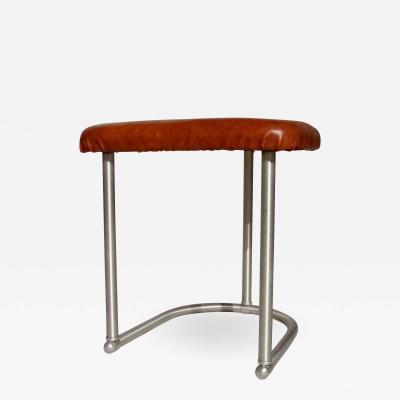
Warren McArthur Vanity Stool Style No. 1131 circa !936
-
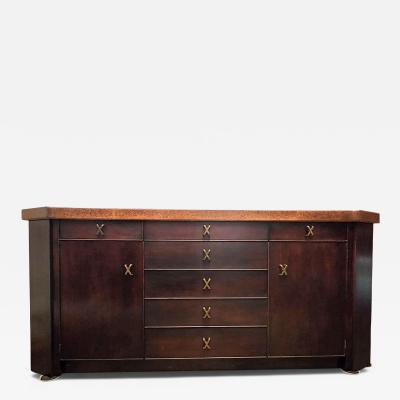
Paul Frankel 72" Cork Top Sideboard Johnson Furniture Co. 1950s
-
Mexican Carved Hand Chair in the Style of Pedro Friedeberg, circa 1960
-
Jerry Johnson Pair of Wrought Iron Sling Chairs Leathercraft C. 1954
-
Liteline Glass Cane Table Lamp in the Style Gaetano Scolari, circa 1970
-
Pair of Chased Brass and Mirrored Glass End Tables from Semon Bache, 1959

-
Stilnovo Floor Lamp Red and White Plexiglass and Marble, Italy, 1960

-
Studio Crafted Spider Leg Oval Writing Desk, 1970s
-
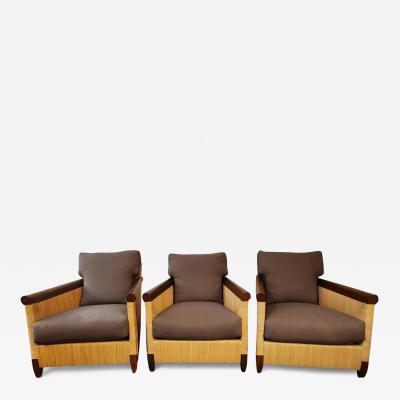
Set of 3 John Hutton Lounge Chairs for Donghia Merbau Coastal Collection1995
-
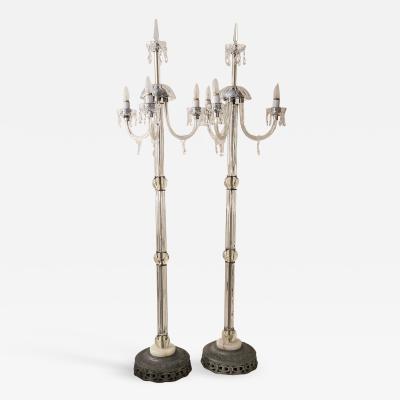
Italianate Lead Crystal Chandelier Floor Lamps Circa 1940
-
Paul Frankl Mahogany Coffee Table with Cork Tops Johnson Furniture c. 1940s

-
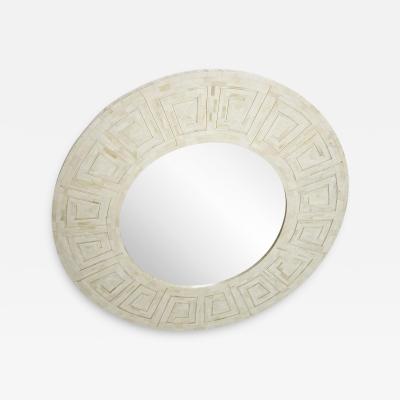
Enrique Garcel Greek Key Mirror Tessellated Bone 1970s Studio Crafted Columbia
-
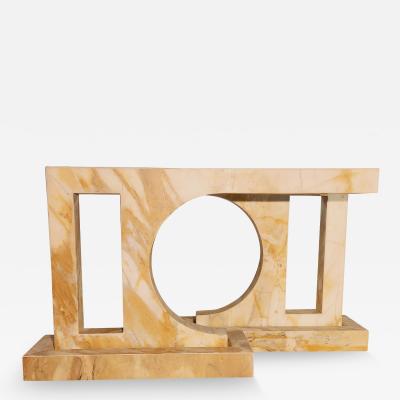
Paul Puccio Giallo Siena Marble Dining Table/ Console 1976 New York
-
Rare Mid Century Pair Iron Palm Frond Fine Art Lamp Co. Lamps, circa 1985

