

David Haskell: Boom Beach at Donzella NYC
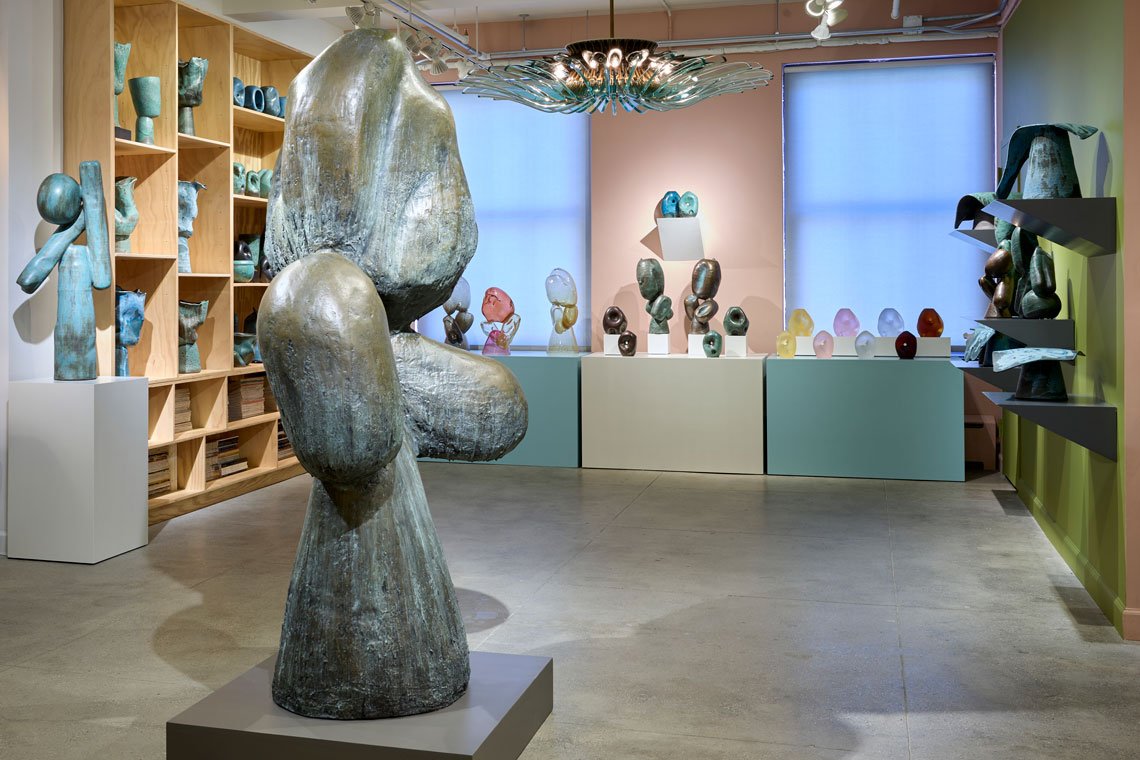 |
| David Haskell, 4 PC. MONUMENTAL, BRONZE ASSEMBLAGE SCULPTURE, USA, 2026. Limited edition assemblage sculpture, 1/6. Cast at Chapon Foundry, France. H. 71" x W 39" x D. 26" |
David Haskell: Boom Beach
Donzella Ltd
New York Design Center
200 Lexington Avenue, Suite 1510
Through Tuesday, June 30th
Reviewed by Benjamin Genocchio, Photography by Eric McNatt
David Haskell's first solo exhibition at Donzella Ltd., Boom Beach, marks a significant evolution in the practice of an artist whose work has long occupied the fertile territory between design, craft, and sculpture. He is best known outside the art world as the editor-in-chief of New York magazine. Here, Haskell demonstrates a mature sculptural vision that deserves to be considered independently of his literary and editorial accomplishments.
.jpg) | 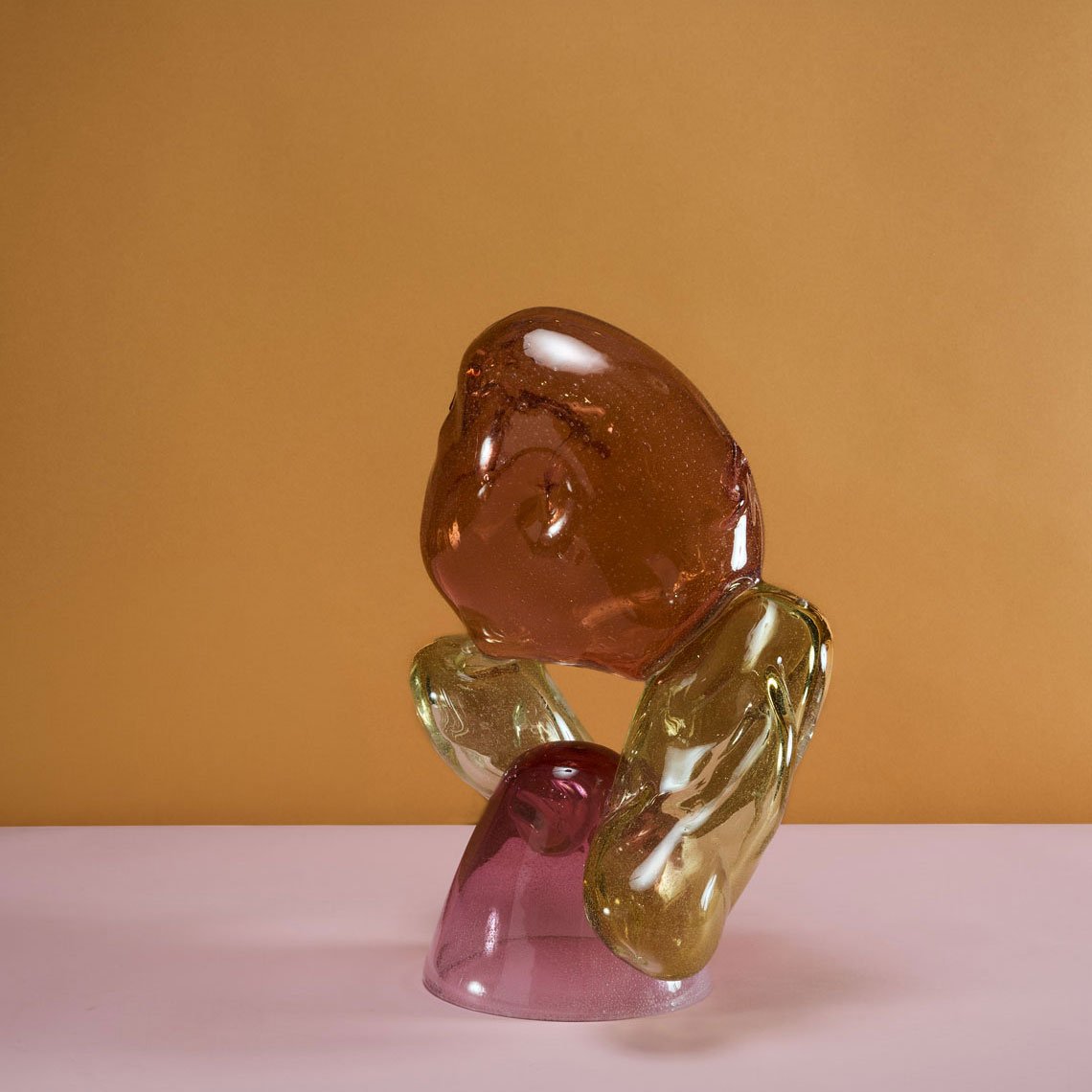 | |
| Left: David Haskell, 4 PC. ASSEMBLAGE SCULPTURE #5, USA, 2022. Ceramic sculpture with blue glazes. Right: David Haskell, 4 PC. GLASS ASSEMBLAGE SCULPTURE #1, USA,2026. Assemblage sculpture with 3 organic forms balancing atop a conical base in pink, coral, and yellow colored blown glass. | ||
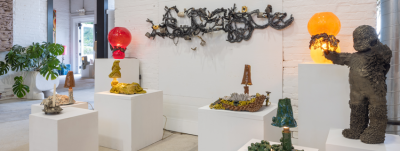
The exhibition takes its title from a rugged stretch of Maine coastline where Haskell studies rock formations shaped by wind, tide, and weather. Those geological processes provide both subject matter and method. The approximately forty works on view—executed in ceramic, bronze, and glass—appear less constructed than discovered, as though they have emerged from long cycles of erosion and accretion rather than from the artist's studio.
Haskell's sculptures inhabit an intriguing space between abstraction and representation. Many resemble weathered boulders, marine organisms, seed pods, or architectural fragments, yet none fits comfortably into a single category. Forms are pierced, stacked, compressed, and balanced in ways that suggest both natural growth and deliberate assembly. The artist's assemblage sculptures are especially compelling. Their precarious configurations create a tension between stability and collapse, animating the work physically and psychologically.
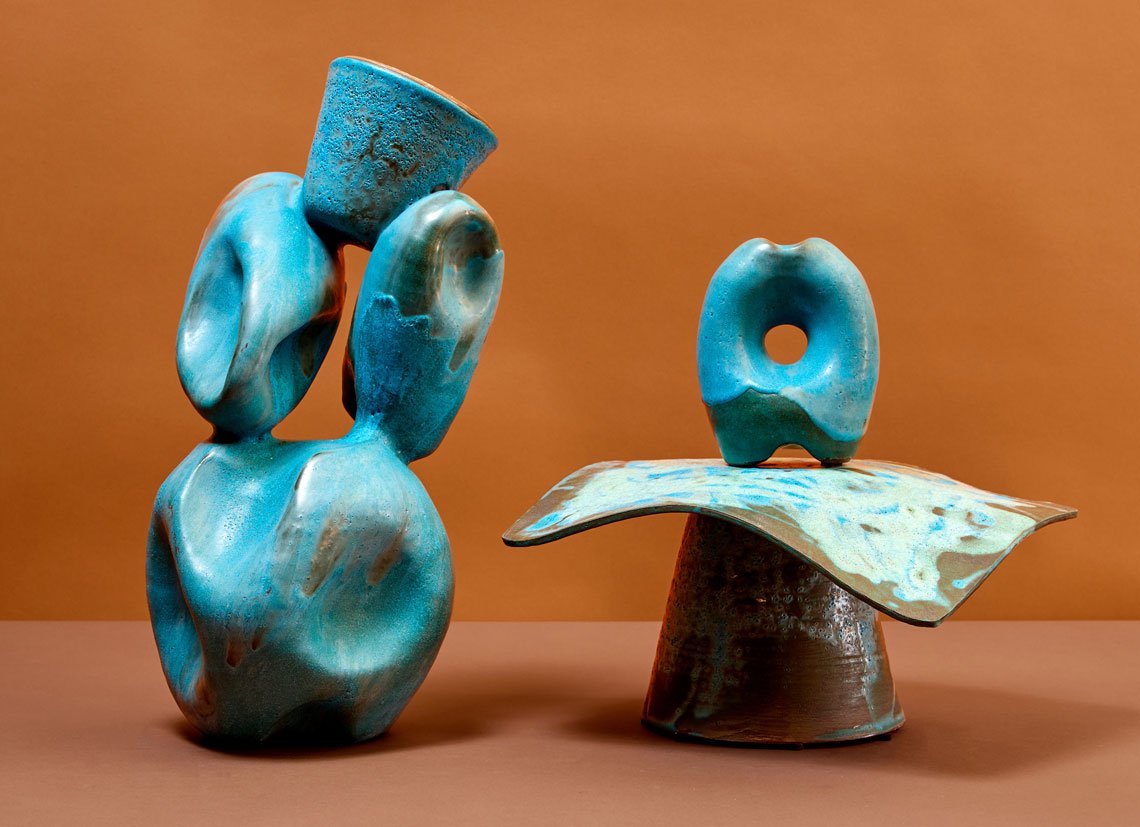 |
Left: David Haskell, 4 PC. ASSEMBLAGE SCULPTURE #7, USA, 2025. Glazed ceramic. Two organic forms and one vessel balanced atop an amorphic orb. Right, above: David Haskell, PIERCED SCULPTURE #9, USA, 2024. Glazed ceramic. Wheel-thrown sculpture with center piercing and blue glazes. Right, below: David Haskell, CAKE STAND SCULPTURE #4, USA, 2025. Glazed ceramic. Freeform sculpture with blue glazes. |
“Once we decided to do the show, he then dedicated himself to making some really ambitious new work. I am more than impressed by what he created, stunned, actually.”
— Paul Donzella
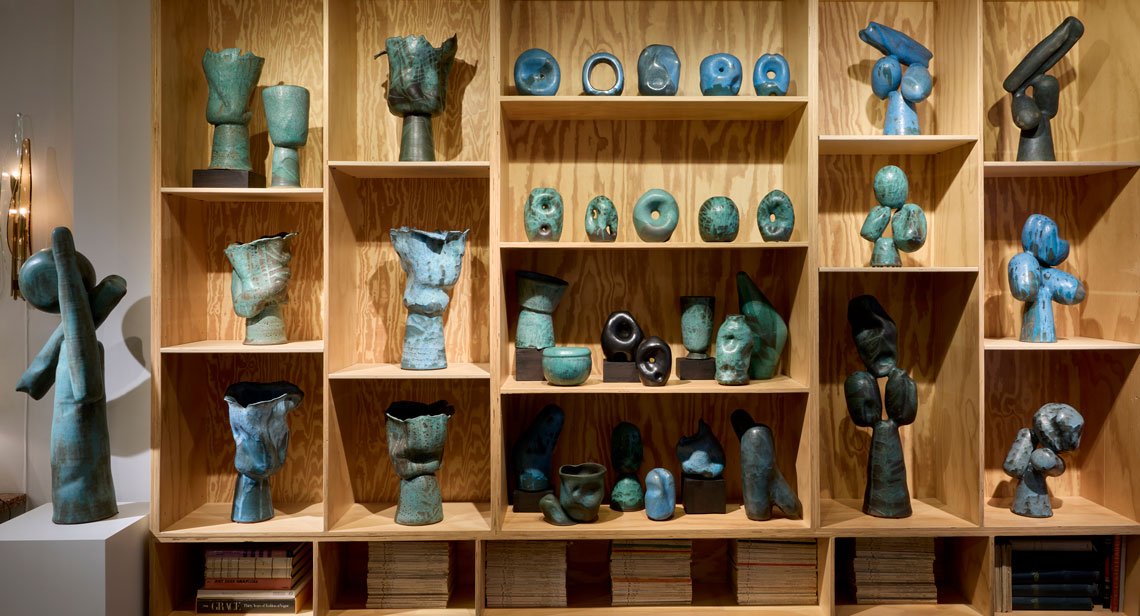 |
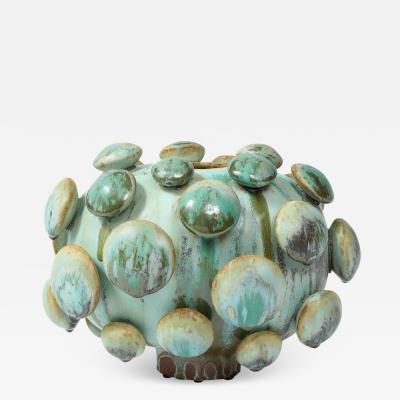
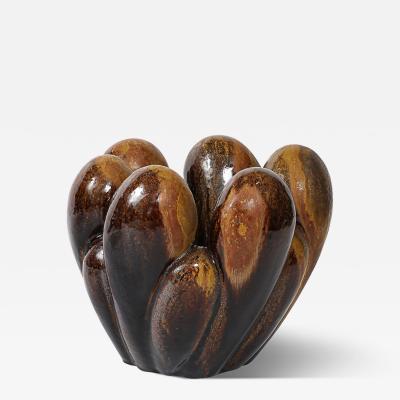
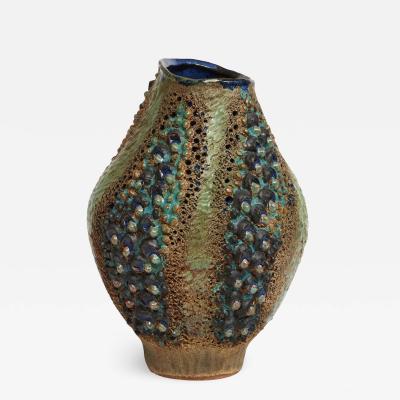
The ceramic works remain the heart of the exhibition. Haskell begins with wheel-thrown forms, then alters and recombines them into increasingly complex structures. This process leaves traces of both making and transformation visible on the surface. His restrained palette of blues and greens over rich brown clay evokes sea-worn stone and coastal vegetation, while innovative texturing techniques lend the works a tactile presence that rewards close looking. The surfaces seem simultaneously ancient and contemporary, geological and handmade.
What distinguishes Boom Beach from much contemporary ceramic sculpture is its resistance to spectacle. Haskell is not interested in technical virtuosity for its own sake. Instead, the work unfolds gradually through subtle formal relationships and carefully calibrated material effects. The sculptures possess an unusual quietness, inviting contemplation rather than demanding attention.
Paul Donzella, the gallery owner, says he decided to give Haskell a solo show after he observed “an amazing uptick” in the level and diversity of work Haskell was making. “Once we decided to do the show, he then dedicated himself to making some really ambitious new work. I am more than impressed by what he created, stunned, actually.”
The recent expansion of Haskell's practice into bronze and glass is also noteworthy. Rather than simply translating ceramic forms into different materials, these works explore the unique expressive possibilities of each medium. The bronze sculptures emphasize mass and permanence, while the glass pieces introduce a surprising sense of lightness and fragility. Together, they broaden the exhibition's investigation of transformation, demonstrating how a single formal language can migrate across materials while retaining its essential character.
Art historically, Haskell's work recalls a lineage that includes Isamu Noguchi, Louise Bourgeois, and Constantino Nivola, artists who found ways to reconcile modernist abstraction with organic form and lived experience. Yet his sculptures avoid mere homage. Their appeal lies in their ambiguity: they are at once vessels and objects, landscape and body, artifact and organism.
 |
Discover More From Donzella on Incollect
 |