










Listings / Decorative Arts / Objects / Other

Offered by:
Wick Antiques LTD
Unit 2, Riverside Business Park, Gosport Street
Lymington, Hampshire SO41 9BB , England
Call Seller
44.159.067.7558
Showrooms
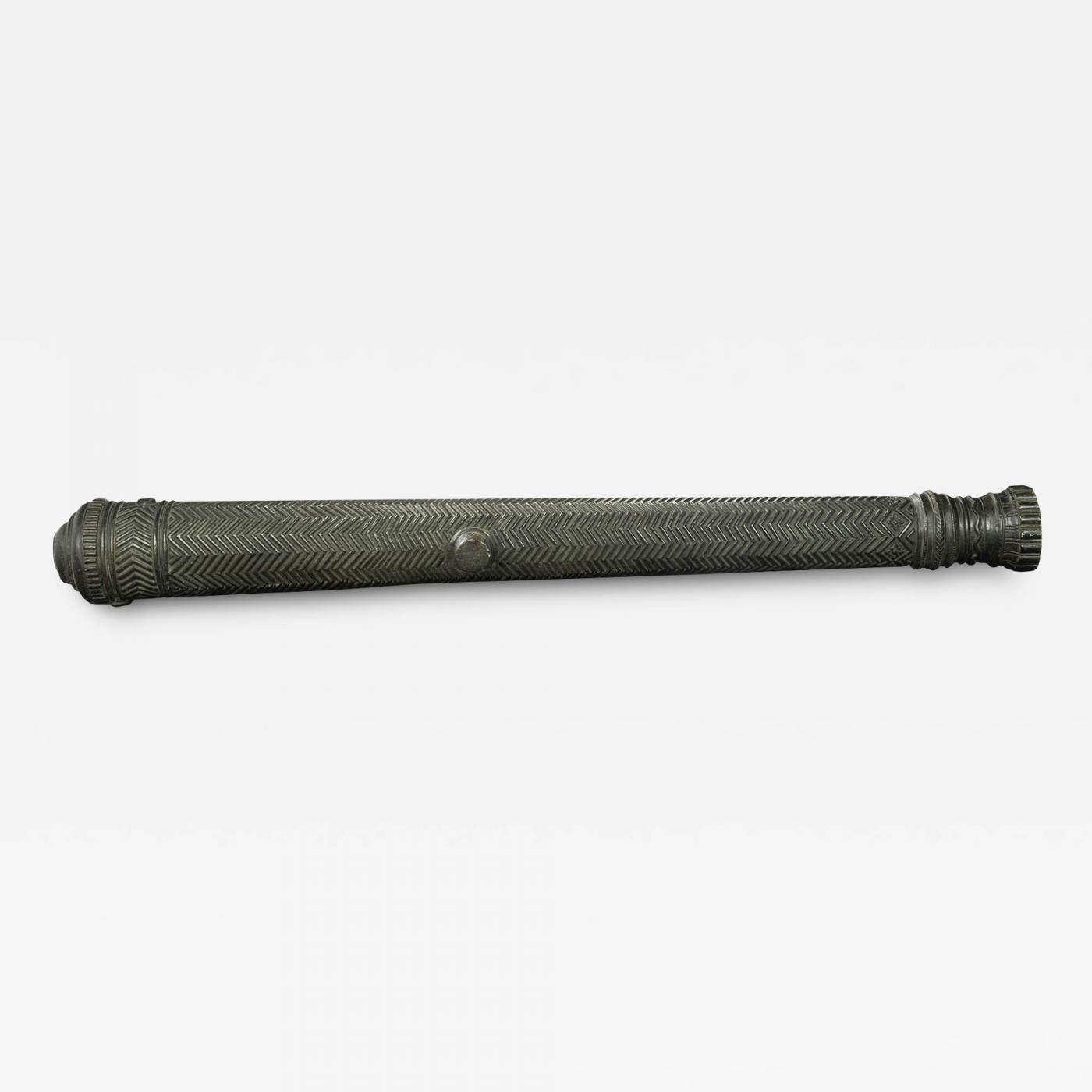
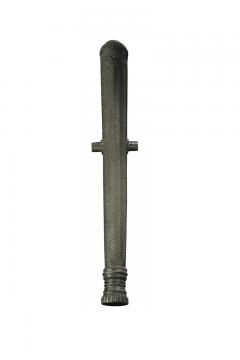
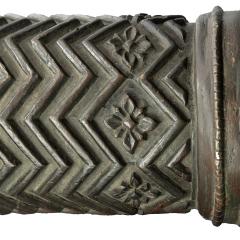
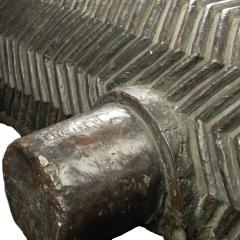
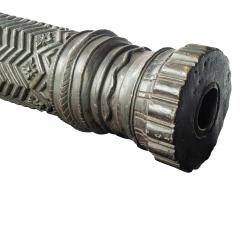
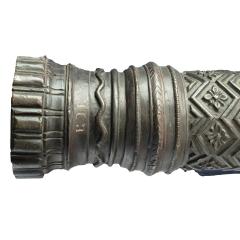
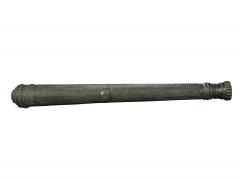
A highly important Mughal Indian Cannon captured at Copal Droog, 1858
-
Description
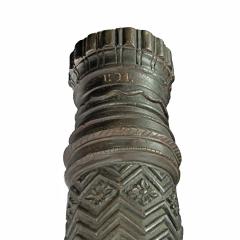
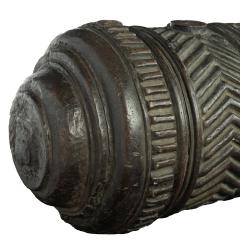
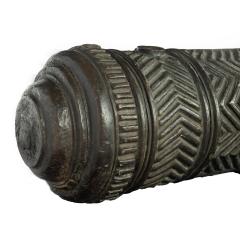
A highly important Mughal Indian Cannon captured at Copal Droog, 1858 This remarkable cannon is cast overall with a zig-zag design, often representative of ripples in water. The central cannon shown on the top left of the illuminated manuscript on page 50 show a cannon with a similar ripple pattern in gilt on bronze (described as a “Vandyke pattern” by the 1908 Royal United Service Museum catalogue) with additional floral decoration towards the end of the tapering barrel. The diameter of the bore is 2 ½ inches and is equivalent to ‘less than a 3 pounder’, ibid. The mouth is painted in gilt with numbers H04 and accession number C.20708. Mughal Empire, 1526-1761.
Length: 94in (239cm) max width 16in (41cm) max. diameter approx. 10in (25.5cm)
Provenance: Captured by Major J. E. Hughes and his troops at Copal Droog, 1858
Presented by Major General Donald Macleod to the United Service Institute Museum, Whitehall,
Literature: Journal of the United Service Institute 1864: Vol. 7 appendix p. V
Official Catalogue Royal United Service Museum Whitehall, 1908, p.182, item 2689
Old and New London, 1878, vol. 3. p.325 (in the United Service Museum)
At some 3,500ft in elevation, Copal Droog had long been an important strategic site in India. It was notoriously the site of the execution of several British army officers in 1783 during the Mysore Wars, the Indian forces at this stage being commanded by Tipu Sultan. In May of 1819, the fort was captured by British forces after a long siege and then lost again resulting in another assault in 1858. The United Service Museum 1908 catalogue states that the piece came from “Copiddroog”, something which has led to certain amounts of speculation about the true location of the piece when captured in 1858. An added complication can be seen in The Families in British India Society lists which have 9 different spellings for this one place. The 1819 siege was a protracted affair but the 1858 attack was much more straightforward from the British perspective. The Homeward Mail newspaper reported on 19th July 1858 that the siege had taken no more than three hours of fighting with 100 of the defending forces killed, including the two leaders of the rebellion, and 150 taken prisoner. Only 7 British troops were injured. However, a reference in the Journal of the United Service Institute for 1864 confirms the capture at the siege of the important Copal Droog Hill located to the southwest of Bangalore on the 2nd of June 1858.
Despite the sources mentioned in our literature, attributing this military success at Copal Droog to Major General Macleod, it is clear from contemporary sources that he played little to no part in the operation. He was in charge of the “ceded districts” in India and the battle itself was conducted by a column of troops under Major J. E. Hughes. The crushing of the rebellion led to swift promotions for both Hughes and Macleod, both of whom enjoyed long and successful careers. Macleod was promoted to Lieutenant-Colonel of the Madras Army in 1862 and Hughes became Brevet-Lieutenant Colonel of the Madras Native Infantry in 1959. -
More Information
Origin: India Period: Pre 18th Century Condition: Good. Creation Date: 1526-1761 Styles / Movements: Traditional Incollect Reference #: 779211 -
Dimensions
W. 16 in; H. 94 in; Diam. 10 in; W. 40.64 cm; H. 238.76 cm; Diam. 25.4 cm;
Message from Seller:
Wick Antiques, established by Charles Wallrock in the early 1980s, specializes in fine antiques with a reputation built on extensive knowledge and long-standing relationships, including with Harrods. Contact Charles at 44.159.067.7558 or via email at charles@wickantiques.co.uk for exceptional pieces curated by a team with expertise in Islamic, Japanese, and fine works of art.
Sold
More Listings from Wick Antiques LTD View all 470 listings
-
A Very Fine and Historically Significant George III Silver Mounted Powder Horn
-
A Victorian English oak 6 sided Country house letter box
-
A Genre Interior Scene Painted by Jules Ruinart de Brimont (1838-1898)
-
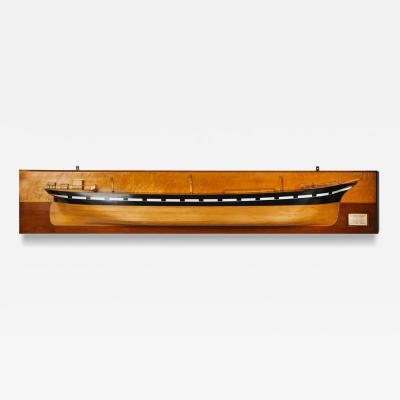
A half hull model of ‘Sutherlandshire’ by Russell & Co, 1882
-
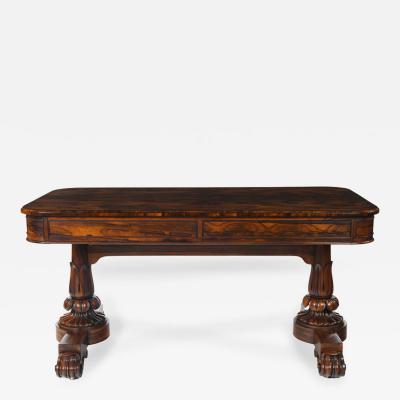
Fine William IV Period Rosewood Library Table by George Simson and Son
-
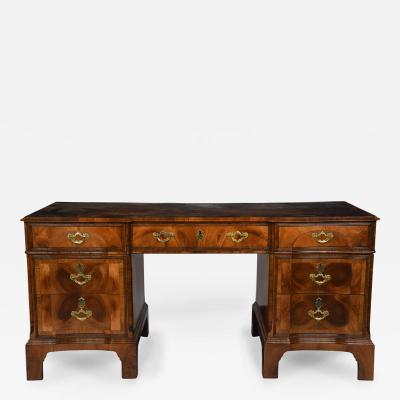
An Unusual Early 20th Century George I Style Free Standing Pedestal Desk
-
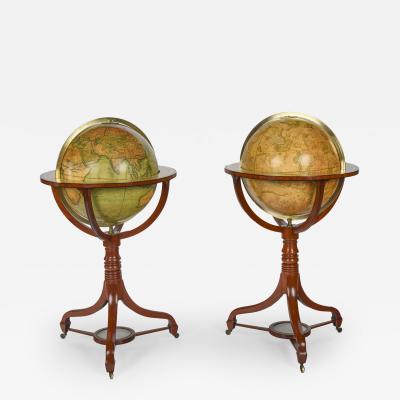
A Fine Pair of Cary Globes, Retailed by Kirk and Mercein of New York c.1816-1820
-
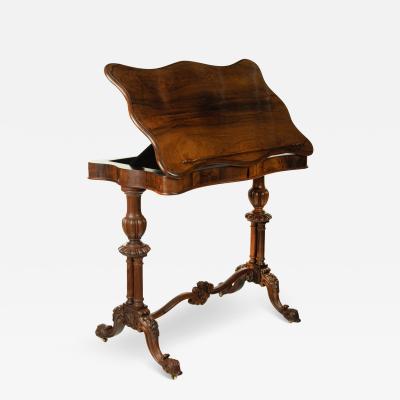
An early Victorian rosewood reading table
-
A historically important Victorian silver tea and coffee set

-
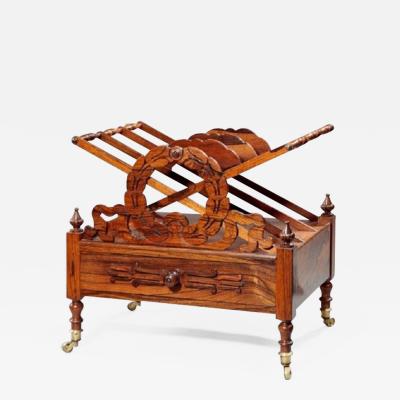
A Regency rosewood Canterbury in the manner of Loudon
-
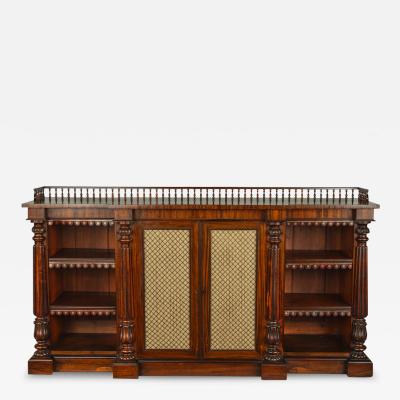
A late William IV rosewood breakfront open bookcase, by Gillows
-
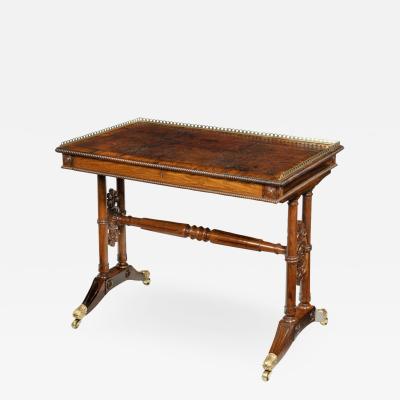
A William IV rosewood free-standing end support table attributed to Gillows
-
A Highly Important Documentary Pietra Dura Table Top by Giuseppe Darmanin
-
A Fine Art Deco Period Brass-Mounted Ship’s Humidor from the M. Y. Princess