







Offered by:
Kristan Hauge Japanese Art
2-32 Saishoji-cho, Okazaki, Sakyo-ku,
Kyoto 606-8342 , Japan
Call Seller
81757515070
Showrooms
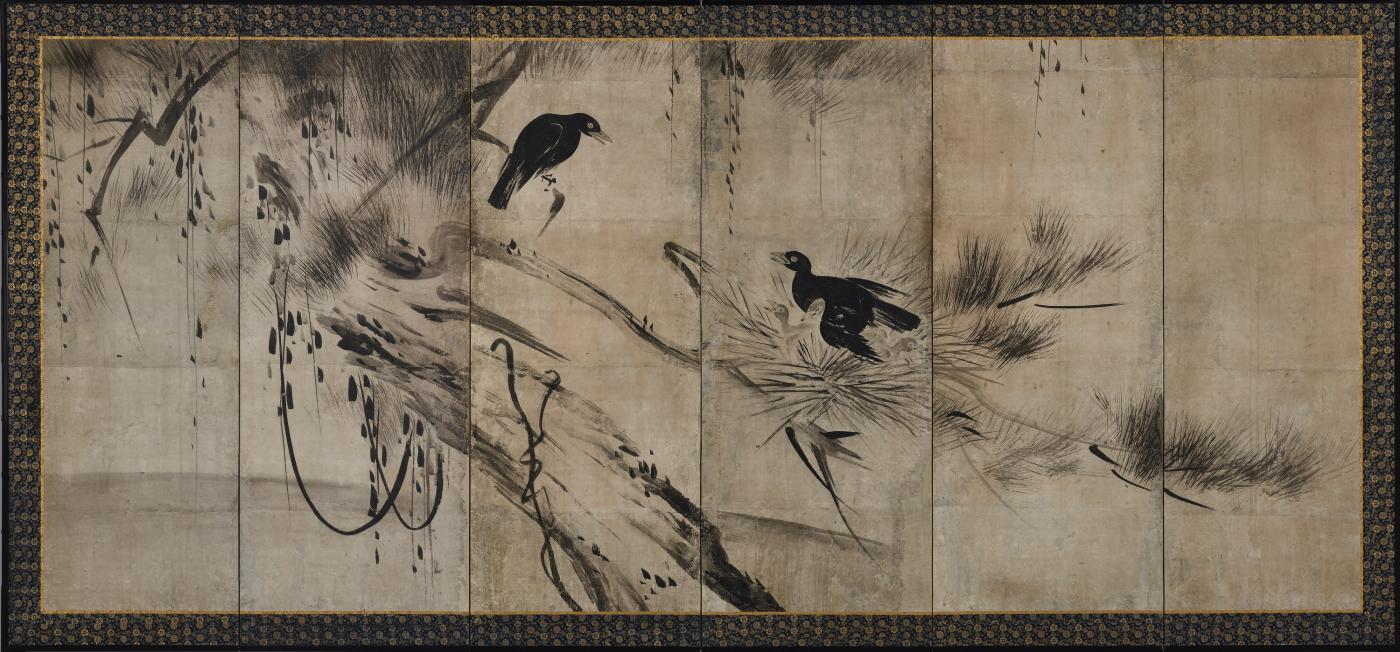
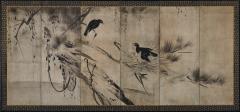
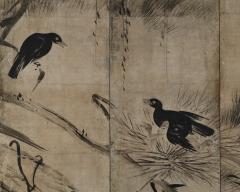
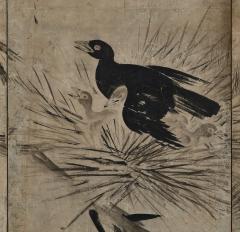
17th Century Momoyama era. Crows on Pine. Studio of Hasegawa Tohaku
-
Description
Studio of Hasegawa Tohaku (1539-1610)
“Crows on Pine”
Momoyama period. Early 17th Century.
A six-panel Japanese Screen. Ink on paper.
Dimensions: H. 167 cm x W. 358 cm (66” x 141”)
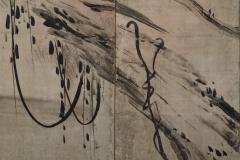
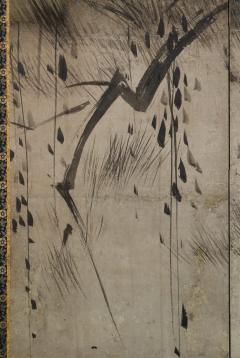
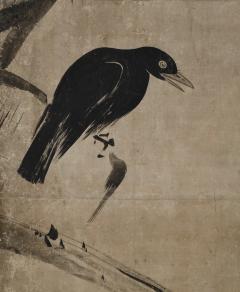
The early 17th century Momoyama period screen “Crows on Pine” is a recent discovery. Although it has no signature or seal, it is obviously closely related to the right-side screen of “Crows on Pine and White Herons on Willow," by Hasegawa Tohaku (1539-1610). Held in the Idemitsu Museum of Arts, Tokyo it is one of Tohaku’s representative pieces. Both works feature a family of crows in a pine tree. The newly discovered screen is more strongly focused on the central tree and the birds and the artist has placed more emphasis on the pine needles. The brushwork is more dynamic and the denser ink-strokes create stronger contrasts. In the Tohaku screen in the Idemitsu museum the brushwork is gentler and more atmospheric. The chicks are more integrated into the nest with a softer visual presence. The composition has more emphasis on negative space and narrative flow. Hasegawa Tōhaku painted “Crows on Pine and White Herons on Willow" in the late 16th century.
Another work by Tohaku with strong stylistic similarities to the present screen is “Old Trees and Monkeys”, an Important Cultural Property presently held in the Kyoto National Museum. Due to its dynamic brushwork and thickly applied ink it is thought to date from latter part of the artist’s career, post 1600. “Crows and Herons” is an Important Cultural Property painted by Tohaku previously held in the Kawamura Memorial DIC Museum of Art. The painting was created after 1605. It is a representative work from Tōhaku's later years and demonstrates denser composition, stronger brushwork and thicker, more highly contrasting ink-work.
The recently discovered “Crows on Pine” is thought to date to the late period of Tohaku’s life. Not the work of the master himself, but painted by one of his son’s or disciples likely working under the master’s supervision. For a directly relatable work from the Hasegawa school in the late Momoyama period see: ‘Pine Trees in Moonlight’, attributed to Hasegawa Tohaku. This pair of screens was widely exhibited and published within Japan and eventually sold through Christies New York in 2007.
Hasegawa Tohaku (1539-1610) had four sons, Kyuzou, Sotaku, Sakon, and Soya, but Kyuzou, who was the most gifted of them all, died at the early age of 26, and Sotaku temporarily inherited the family lineage but died the year after Tohaku 's death . In the end, his third son, Sakon, took over the school. Other artists in the Hasegawa school during Tohaku's active period included Tohaku's pupil and son-in-law Tohaku Toin, who went to Edo and produced screen paintings for Katori Shrine and the Date clan's Zuigan-ji Temple , as well as Toho, Toji, Tojin, Toen, and others. The screen paintings at Chishaku-in (formerly Shoun-ji Temple), Sanbo-in, Myoren-ji, and Zenrin-ji Temple are thought to be works of the Hasegawa school.
The screen has quite recently undergone a complete ground-up restoration and remounting in a traditional Japanese conservation studio. Carried out by master craftsmen employing centuries-old materials and techniques, the process is exceptionally complex, requiring extensive knowledge and meticulous handwork at every stage. Comprehensive restoration of this calibre is a substantial undertaking that safeguards the screens for future generations while ensuring their continued structural stability and aesthetic integrity. The screen has been restored a number of times over its long life and exhibits paper losses and repainting. Please contact me for a condition report. -
More Information
Period: Pre 18th Century Creation Date: Early 17th century Styles / Movements: Asian Art Incollect Reference #: 874801 -
Dimensions
W. 140.94 in; H. 65.75 in; W. 358 cm; H. 167 cm;
Message from Seller:
Kristan Hauge Japanese Art, based in Kyoto's museum district since 1999, specializes in important Japanese screens and paintings for collectors, decorators, and museums worldwide. Contact us at khauge@mx.bw.dream.jp or +81 75-751-5070 for exceptional access to Japanese art and history.
More Listings from Kristan Hauge Japanese Art View all 70 listings
-
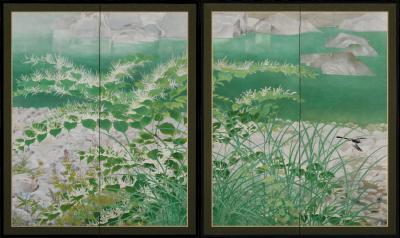
Japanese Screen Pair. Showa era. Nihonga Riverside landscape. Late Summer
-
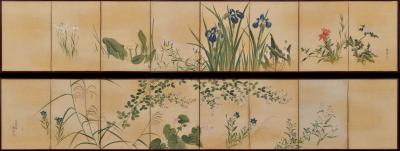
1838 Japanese Screen Pair. Flowers & Grasses of the Four Seasons
-
19th Century Japanese Silk Painting by Kano Chikanobu. Cranes, Pine & Camelia.
-
18th Century Japanese framed painting. Tiger and Cub
-
Japanese Screen. 19th Century. Reflections of the Moon
-
Early 20th Century Pair of Japanese Screens | Deer under Maple Trees
-
Japanese Screen Pair, Tigers by Kishi Renzan, Late Edo Period.

-
19th Century Japanese Tiger Painting Pair by Kokuho Shimei (1789–1859)
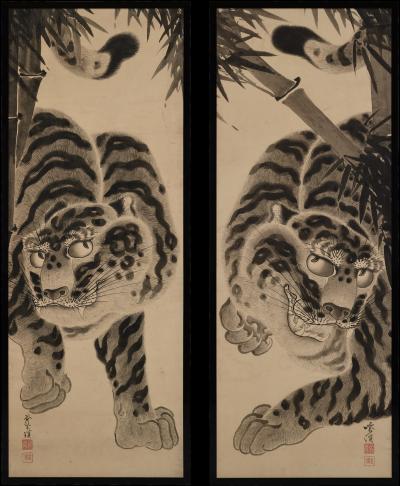
-
17th Century Japanese Screen Pair. Roosters and Chickens in a Bamboo Grove
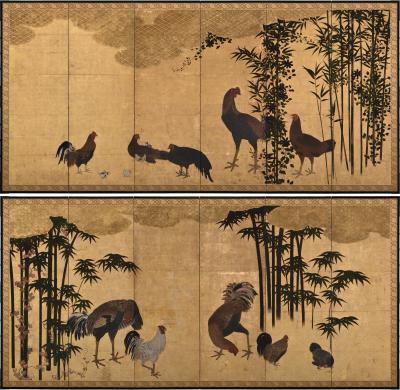
-
Mid 19th Century Japanese Screen Pair. Flowers & Birds of the Four Seasons
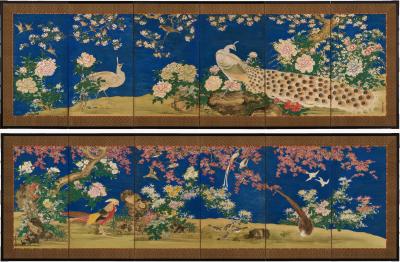
-
Early 20th Century Japanese Screen. Cat & Mouse by Otaki Uzan.

-
17th Century Japanese Screen Pair. Grapevines. Attributed to Kano Tsunenobu
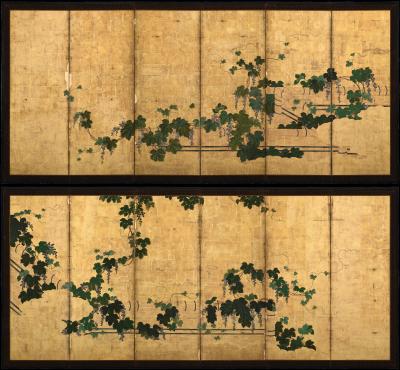
-
urtledoves in a Peach Tree | Nakamura Daizaburo

-
Japanese Screen Pair. 18th Century. Flowers & Birds of the Four Seasons