









Offered by:
Kristan Hauge Japanese Art
2-32 Saishoji-cho, Okazaki, Sakyo-ku,
Kyoto 606-8342 , Japan
Call Seller
81757515070
Showrooms
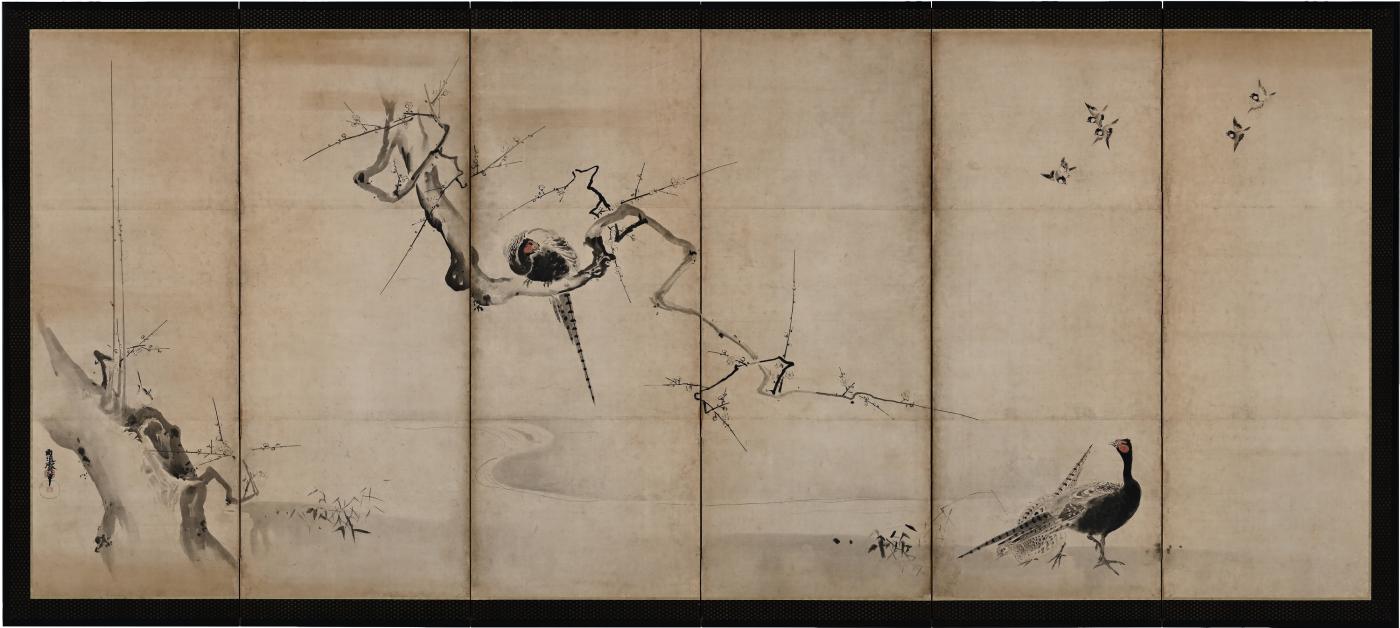
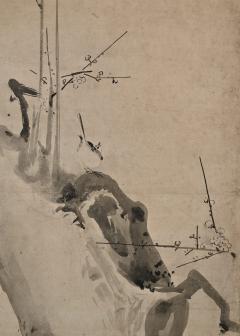
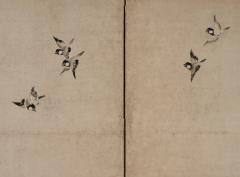
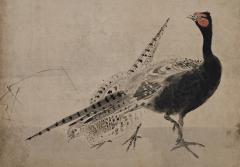
17th Century Japanese Screen. Ink Plum Tree & Birds by Kano Naonobu
-
Description
Kano Naonobu (1607-1650)
Plum Tree and Birds
Six-fold Japanese Screen. Ink and slight color on paper.
Dimensions: H. 65” x W. 145” (165 cm x 368cm)
Price: USD 38,000
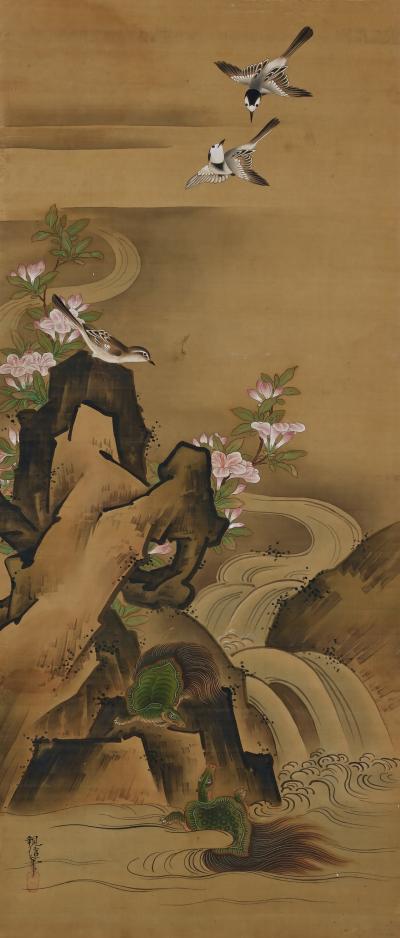
In this evocative ink work spread over a six-panel folding screen, we see the consummation of the elegance and refinement of the Edo Kano school. This 17th century screen is a rare surviving example of a large-scale bird and flower painting by Kano Naonobu, the younger brother of Kano Tanyu. Closely related works are held in the Minneapolis Institute of Arts and the Cleveland Museum of Art. Kano Naonobu was the second son of Kano Takanobu (1571-1618). He was granted an estate in Edo in 1630. He became an official painter for the Shogunate and founder of the influential Kobikicho Kano family. The Kano were the most important family of professional painters in Japanese history. Stretching from the sixteenth to the twentieth century, the House of Kano served as official painters to the imperial and military elite for over four centuries. Naonobu produced a number of prominent commissions for the Shogunate including room partitions in Nagoya Castle. In Kyoto, he helped his brother with paintings for Nijō Castle and the major Pure Land Buddhist temple Chion’in.
His older brother Tanyu was a child prodigy and giant of Japanese art who laid the foundations for the Kano school’s dominance of Japan’s Edo period. Tan’yu made bold use of negative space to create his own unique world of simple elegance which was sensitively in tune with the demands of the era. Tanyu’s influence on his younger brother is undeniable but Naonobu’s delicate and lyrical ink paintings are outstanding. Even during his short lifetime his ink talents were praised over those of his brother. Naonobu seems to have inherited the tendency of painters of the previous era who found beauty in negative space, such as Hasegawa Tohaku and Kaiho Yusho, and to this he added elegance of expression. His works show individualism and originality even within the strict confines of the Kano school of the time, suggesting the form of the subject rather than delineating it. Although the screen presented here is a work of ink painting, the winter world of birds, blossoming plum trees and flowing water expressed by ink bleeding, scratching and stopping is already the realm of abstraction.
The screen has recently been restored and completely remounted utilizing traditional techniques and craftsmen. -
More Information
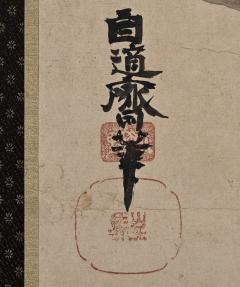
Documentation: Signed Period: Pre 18th Century Creation Date: 17th Century Styles / Movements: Asian Art Incollect Reference #: 845950 -
Dimensions
W. 145 in; H. 65 in; W. 368.3 cm; H. 165.1 cm;
Message from Seller:
Kristan Hauge Japanese Art, based in Kyoto's museum district since 1999, specializes in important Japanese screens and paintings for collectors, decorators, and museums worldwide. Contact us at khauge@mx.bw.dream.jp or +81 75-751-5070 for exceptional access to Japanese art and history.
More Listings from Kristan Hauge Japanese Art View all 63 listings
-
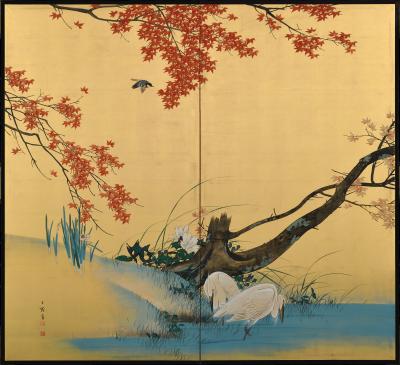
Meiji era Japanese Screen Pair, Two-panel. Spring & Autumn Birds & Flowers
-
Yamamoto Shunkyo (1871-1933) | Leaping Carp | Japanese framed painting
-
17th Century Japanese Screen Pair. Flock of Cranes. Ink and color on gold leaf.

-
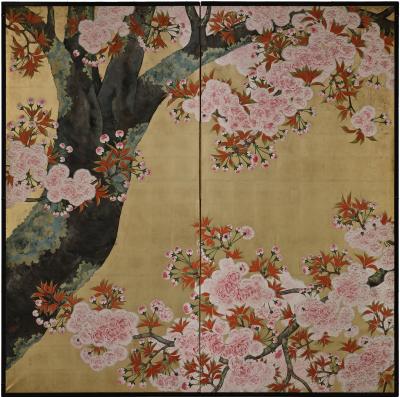
Early 20th Century Japanese Cherry Blossom Screen
-
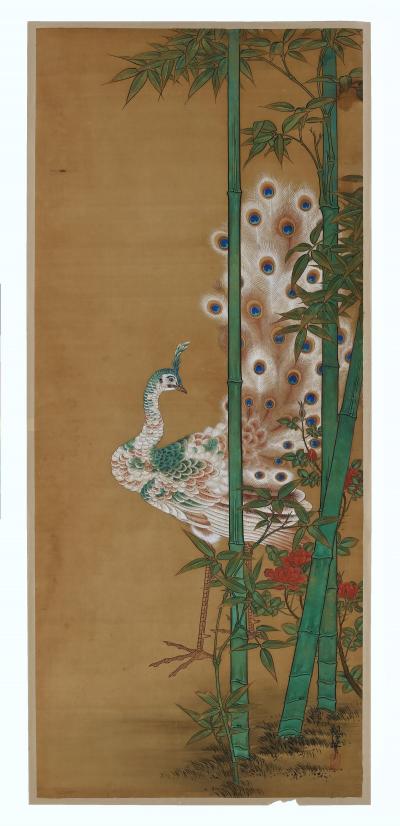
19th Century Japanese Silk Painting by Kano Chikanobu. Peacock & Bamboo.
-
Early 20th Century Japanese Screen Pair – Ink Pine Trees on Gold

-
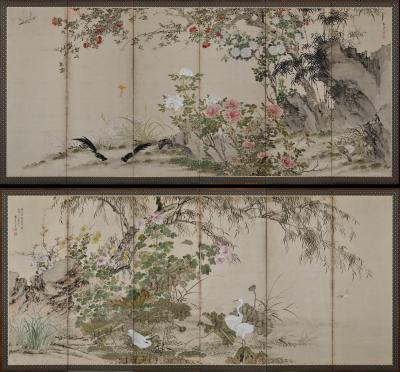
19th Century Japanese Screen Pair – Birds & Flowers of the Four Seasons
-
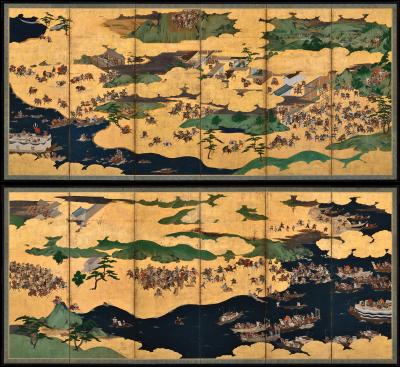
Late 17th Century Japanese Screen Pair. Battle of Ichi-no-tani and Yashima
-
Sakai Hoitsu (1761-1828) | Autumn flowers | Japanese screen painting

-
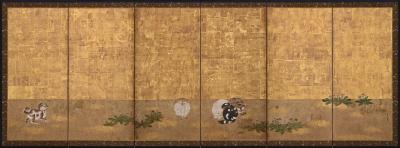
Late 17th Century Japanese Screen. Puppy and Kittens on Gold Leaf.
-
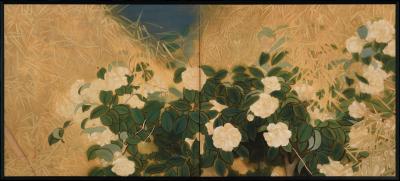
Circa 1925. Taisho era Japanese Nihonga Screen. Camellia & Bamboo
-
Mid 19th Century Framed Japanese Painting. Spider & Morning Glory.
-
1895 Meiji Japanese Screen Pair. Cherry Blossoms & Autumn Maples on Silver Leaf
-
19th Century Japanese Silk Painting by Kano Chikanobu. Turtles & Azaleas.