










Offered by:
Kristan Hauge Japanese Art
2-32 Saishoji-cho, Okazaki, Sakyo-ku,
Kyoto 606-8342 , Japan
Call Seller
81757515070
Showrooms
19th Century Japanese Silk Painting by Kano Chikanobu. Peacock & Bamboo.
-
Description
Birds & Flowers of the Seasons
Peacock & Bamboo
Ink, pigment and gofun on silk
Kano Chikanobu 1819-1888
Signature: Chikanobu
Seal: Shateki
Dimensions:
H. 46” x W. 19.5” (117cm x 49.5cm)
Price: USD 4,500
Offered here is an unframed ‘kacho-e’ painting by the 19th century Japanese Takamatsu domain painter Kano Chikanobu. There are 8 individual paintings available, which originally would have been part of a set of 12. ‘Kacho-e’ literally means ‘pictures of birds and flowers’. In reality it covers a wide range of natural motifs including birds, fish, insects and small animals in combination with flowers, grasses or trees. The theme has a long history in Japanese painting. It is one of three painting genres, the other two being landscape and figure, which derive from Chinese academic painting classification. As one of the accepted types of painting to be shown in official residences, scenes of birds, flowers and animals were rife with metaphorical reference as well as physical beauty.
In these paintings Chikanobu has made conspicuous use of brilliant pigments and meticulous brushwork. The rocks, water, trees, blossoms, and birds are treated as stylized formal elements in a grand design. All of the components contribute to the patterned effect and tactile richness of the surface. Beyond their highly decorative qualities, the subject of some of the paintings are also an allusion to imperial allegiance; the pheasants are symbolic of bravery and steadfastness, peacocks represent divinity and power, and the phoenix paired with paulownia a just and benevolent ruler. Cranes and turtles symbolize longevity, and the lush, full bloom of the peony flower represents wealth and opulence. Paintings of native Japanese birds and flowers were appreciated primarily for their evocation of the seasons and the traditional poetic emotions associated with them. This is the case here with the spring scene of cherry blossoms and birds and the winter scene of narcissus, nandina and sparrows. The rich expression of flower and bird paintings opens our eyes not only to the beauty of the creations of nature, but also to the underlying feelings and emotions of people who cherished this genre of painting in the mid 19th century.
The artist, Kano Chikanobu, was the last official hereditory painter for the Takamatsu feudal domain (present day Kagawa Prefecture). It was his primary duty to supply paintings for his feudal lord. The domain was disbanded in 1871 but not before they fought against the reformist forces at the onset of the Meiji Restoration in 1868. It was a turbulent time in history and the Takamatsu strived unsuccessfully to retain their centuries old way of life.
The paintings have recently been restored in Kyoto utilizing traditional materials and techniques. Fresh backing papers have been applied to the silk in preparation for presentation in a western style frame. Amongst the work carried out during restoration was the cleaning of water damage, repair of holes with replacement silk, reinforcement of cracked silk and touch-ups of the background. There has been no re-painting of the images. -
More Information
Documentation: Signed Period: 19th Century Condition: Good. Styles / Movements: Asian Art Incollect Reference #: 755720 -
Dimensions
W. 19.5 in; H. 46 in; W. 49.53 cm; H. 116.84 cm;
Message from Seller:
Kristan Hauge Japanese Art, based in Kyoto's museum district since 1999, specializes in important Japanese screens and paintings for collectors, decorators, and museums worldwide. Contact us at khauge@mx.bw.dream.jp or +81 75-751-5070 for exceptional access to Japanese art and history.
More Listings from Kristan Hauge Japanese Art View all 69 listings
-
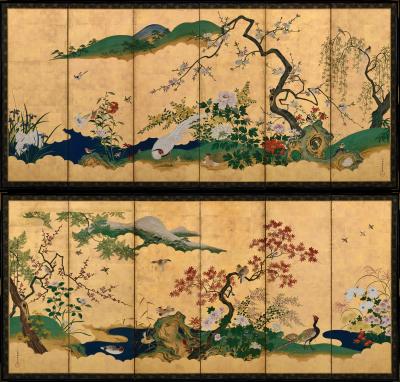
Japanese Screen Pair. 18th Century. Flowers & Birds of the Four Seasons
-
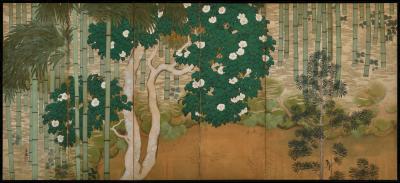
Early 20th Century Japanese Nihonga Screen. Bamboo Forest
-
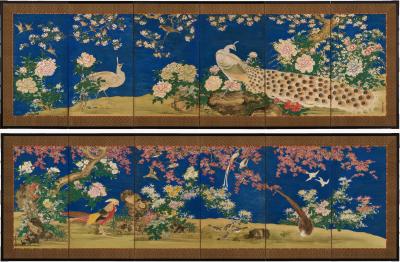
Mid 19th Century Japanese Screen Pair. Flowers & Birds of the Four Seasons
-
Korean grapevine painting. 17th century.

-
Early 20th Century Japanese Nihonga Scroll. Crow & Persimmon.

-
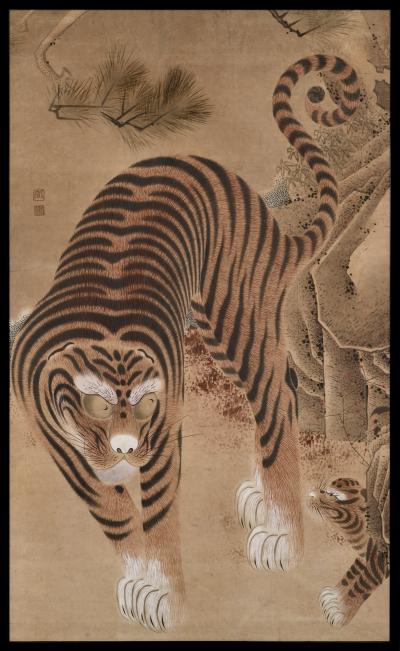
18th Century Japanese framed painting. Tiger and Cub
-
Amaranth & Rooster | Circa 1930 | Japanese scroll painting

-
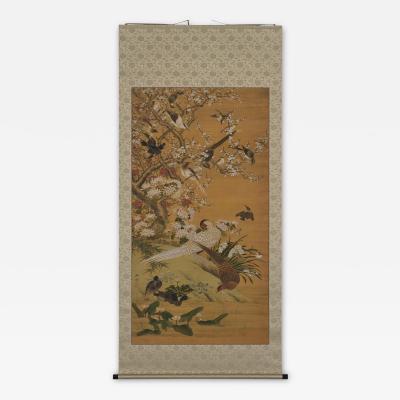
19th Century Japanese Scroll Painting, Birds & Flowers of the Four Seasons.
-
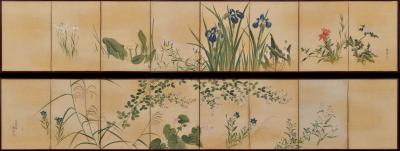
1838 Japanese Screen Pair. Flowers & Grasses of the Four Seasons
-
Playful Cat | Hirose Toho (1875-1930) | Japanese scroll painting

-
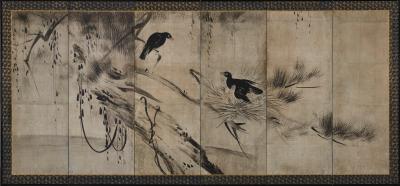
17th Century Momoyama era. Crows on Pine. Studio of Hasegawa Tohaku
-
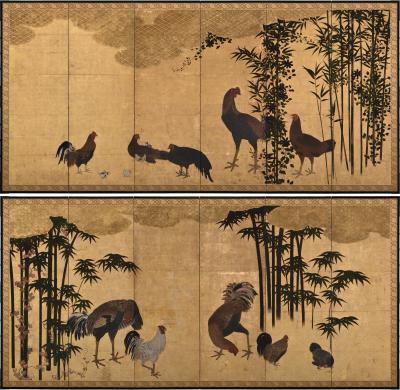
17th Century Japanese Screen Pair. Roosters and Chickens in a Bamboo Grove
-
Japanese Screen. 19th Century. Reflections of the Moon
-
19th Century Japanese Tiger Painting Pair by Kokuho Shimei (1789–1859)