








Offered by:
Kristan Hauge Japanese Art
2-32 Saishoji-cho, Okazaki, Sakyo-ku,
Kyoto 606-8342 , Japan
Call Seller
81757515070
Showrooms
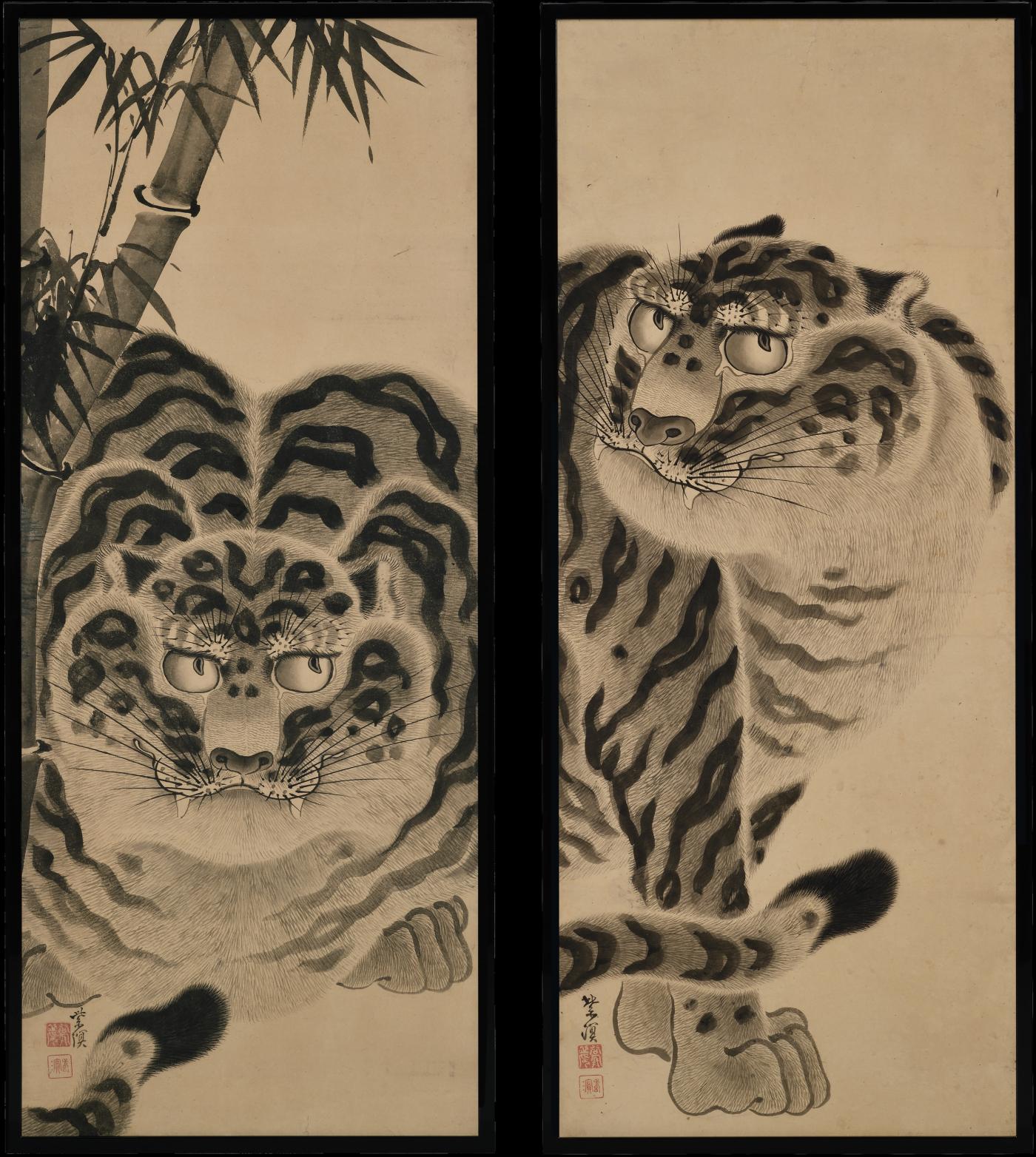
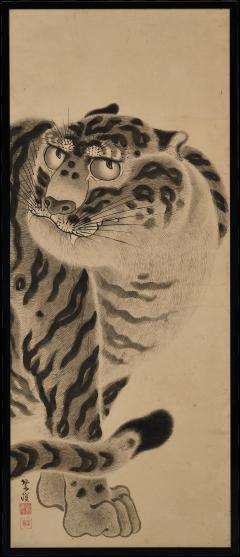
19th Century Japanese Tiger Painting Pair by Kokuho Shimei (1789–1859)
-
Description
Kokuho Shimei (1789–1859)
Tigers
Pair of framed paintings; ink on paper
Dimensions: each (2) H. 134.2 cm x W. 57.2 cm (53” x 22.5”)
Price: USD 11,500
Kokuho Shimei was active during the late Edo period as a Nagasaki School artist, working at a cultural crossroads unique within Japan. Nagasaki’s role as the country’s principal point of contact with the outside world fostered an environment in which Chinese, Korean, and Western visual ideas circulated with unusual freedom, and Shimei’s art reflects this openness with particular clarity.
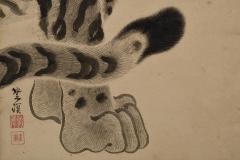
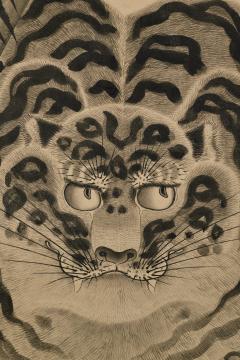
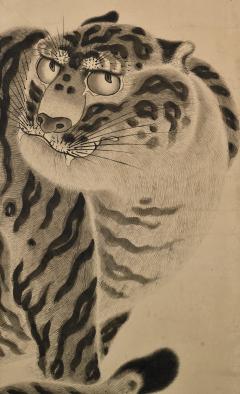
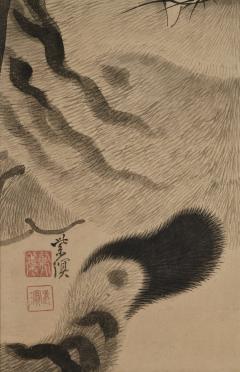
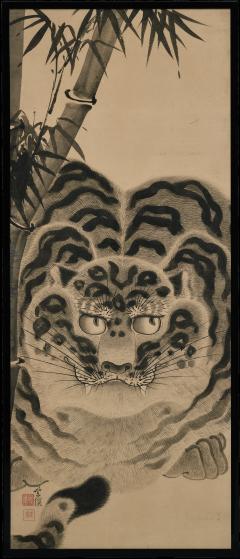
His tiger paintings are best understood as Korean-inspired images rather than conventional Japanese ones, shaped by the visual language of Joseon-period folk painting (minhwa). Unlike Japanese tigers derived from Chinese pictorial models—often conceived as symbols of authority or exercises in naturalism—Shimei’s tiger emphasizes presence over fearlessness. The animal’s expression is deliberately ambiguous. Large, rounded eyes and a slightly wary, almost puzzled look give the figure a sense of alertness tempered by restraint. The posture feels grounded and calm, conveying strength without aggression. This quality reflects the Korean conception of the tiger as a vigilant presence or guardian, rather than a fearsome predator. The body is constructed schematically rather than descriptively. Oversized paws, simplified anatomy, and bold striping emphasize rhythm and pattern over realism. The stripes, applied with a calligraphic cadence, do not strictly follow musculature; instead, they float across the body as decorative elements, closer to textile pattern than to natural fur. This emphasis on surface and repetition is characteristic of Korean folk painting, where symbolic clarity often outweighs illusionistic depth.
Space is treated with similar economy. With little sense of landscape or ground, and bamboo introduced as a graphic framing element rather than a natural setting, the tiger is visually isolated. This shallow, open space heightens the animal’s presence and gives the image a quiet, talismanic intensity. The tiger’s averted gaze—directed slightly upward or to the side—creates a subtle psychological tension, suggesting awareness rather than confrontation.
Beyond painting, Shimei was a central figure in Nagasaki’s woodblock-print culture. During the Bunka era, he headed the publishing house Bunkindō, one of the four principal woodblock publishers in the city. Taking over the business from his father, Shimei designed prints under multiple pseudonyms and helped elevate both the artistic ambition and commercial success of Nagasaki print production. His leadership played a significant role in transforming the local print industry during the 19th century. -
More Information
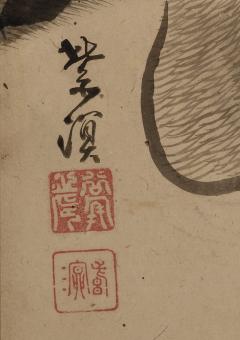
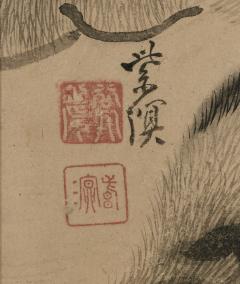
Documentation: Signed Period: 19th Century Styles / Movements: Asian Art Incollect Reference #: 854416 -
Dimensions
W. 22.52 in; H. 52.83 in; W. 57.2 cm; H. 134.2 cm;
Message from Seller:
Kristan Hauge Japanese Art, based in Kyoto's museum district since 1999, specializes in important Japanese screens and paintings for collectors, decorators, and museums worldwide. Contact us at khauge@mx.bw.dream.jp or +81 75-751-5070 for exceptional access to Japanese art and history.
More Listings from Kristan Hauge Japanese Art View all 64 listings
-
Japanese Screen. 19th Century. Reflections of the Moon
-
Mid 19th Century Japanese Screen Pair. Flowers & Birds of the Four Seasons
-
Japanese Screen. Early 20th Century. Furosaki Screen. Wagtail & Chrysanthemum

-
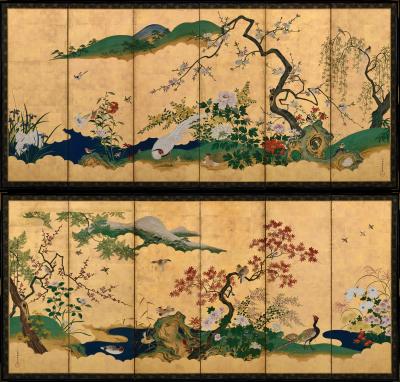
Japanese Screen Pair. 18th Century. Flowers & Birds of the Four Seasons
-
Mitani Toshuku Unkoku School, 17th century. Japanese falcon painting.

-
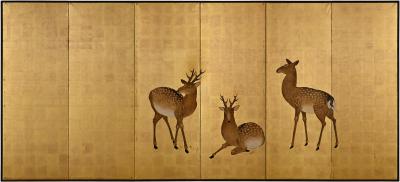
19th Century Japanese Deer Screen by Okamoto Toyohiko. Maruyama Shijo School
-
17th Century Japanese Screen. Ink Plum Tree & Birds by Kano Naonobu

-
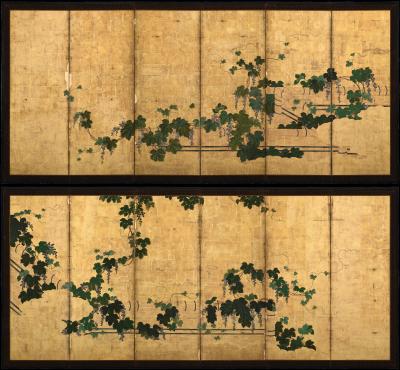
17th Century Japanese Screen Pair. Grapevines. Attributed to Kano Tsunenobu
-
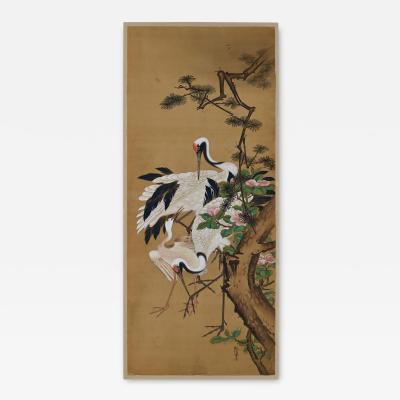
19th Century Japanese Silk Painting by Kano Chikanobu. Cranes, Pine & Camelia.
-
Japanese Screen Pair. Showa era. Nihonga Riverside landscape. Late Summer
-
Mid 18th Century Japanese Screen Pair. Crows & Pines by Unkoku Toshuku
-
Chaekgeori painting. 19th Century Joseon. Books & Scholars’ Accouterments.
-
Japanese Screen Pair, Tigers by Kishi Renzan, Late Edo Period.

-
Early 20th Century Pair of Japanese Screens | Deer under Maple Trees