








Offered by:
Kristan Hauge Japanese Art
2-32 Saishoji-cho, Okazaki, Sakyo-ku,
Kyoto 606-8342 , Japan
Call Seller
81757515070
Showrooms
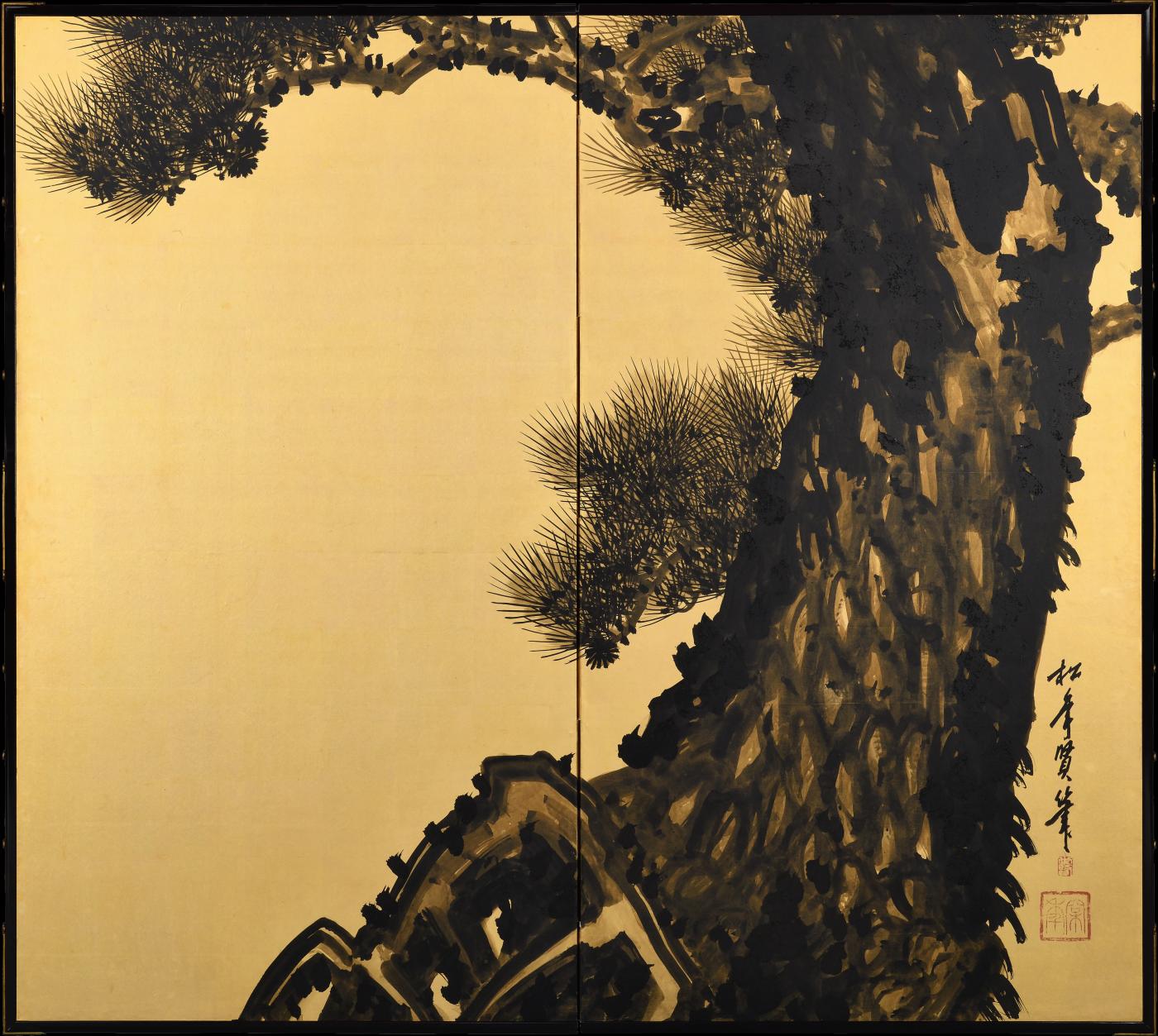
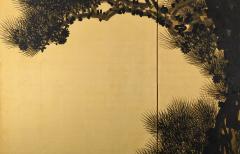
Two-panel Japanese Screen – Aged Pines by Suzuki Shonen. Meiji period.
-
Description
Suzuki Shonen (1848-1918)
Aged Pine
Meiji period (1868-1912). Circa 1900.
Two-panel Japanese screen. Ink and gold leaf on paper.
Dimensions: H. 170 cm x W. 189 cm (67″ x 74.5”)
Price: USD 27,500
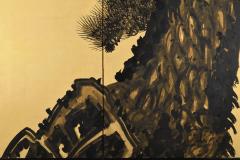
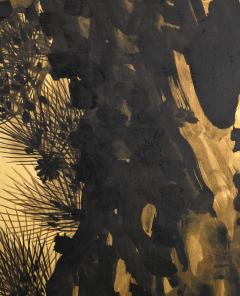
This commanding two-panel screen by Suzuki Shōnen presents an ancient pine rendered with extraordinary force and immediacy. The massive trunk dominates the composition, its thick girth and rough, moss-covered bark suggesting a tree of great age. Shōnen emphasizes the pine’s venerable character through the density and complexity of the trunk surface: layered brushstrokes and deep pools of ink evoke the rugged fissures of weathered bark, giving the tree a palpable sense of endurance and permanence.
The artist deliberately crops the tree at both the top and bottom edges of the screen, implying that it continues beyond the boundaries of the panels. As a result, the tree appears far larger than the pictorial field itself, expanding our sense of scale and enhancing the impression of monumental presence.
Shōnen’s handling of ink reveals remarkable technical command. He skillfully employs a wide range of tonal variations—from dense, saturated blacks to softer washes—to describe the many facets of the pine. These tonal shifts articulate the rugged bark of the trunk and branches while also distinguishing the clusters of pine cones and the sprays of needles.
The deep black ink used for the trunk creates powerful visual weight. The tree rises heavily from the lower edge of the screen, occupying much of the foreground and anchoring the composition with a sense of solidity and permanence. This mass is balanced by the more delicate passages of foliage. Shōnen contrasts the robust, almost sculptural trunk with finely articulated needles rendered in sharp, radiating strokes.
The overall effect is one of grandeur. Rather than presenting the pine as a distant element within a broader landscape, Shōnen magnifies it into a monumental presence that fills the viewer’s field of vision. The dramatic diagonal movement of the trunk, the powerful contrasts of ink, and the bold cropping all contribute to a sense of scale and immediacy. In keeping with Shōnen’s reputation for dynamic brushwork and bravura execution, the screen transforms a familiar subject—the pine, long a symbol of longevity and resilience in Japanese painting—into a striking demonstration of both technical mastery and expressive force.
Suzuki Shōnen was one of the most prominent Kyoto-based painters of the late Meiji period and an important figure in the development of modern Japanese painting. Shōnen was known for a flamboyant and outspoken personality, openly criticizing other artists and proudly displaying his success and wealth.
Artistically, Shōnen developed a bold and highly individual style distinguished by rapid, direct execution. He typically worked without preparatory sketches, painting swiftly with confident brushwork and dramatic control of ink tonalities. His emphasis was less on personal expression than on virtuosic displays of brush technique and decisiveness. This forceful manner, together with the dramatic character of his compositions, led contemporaries to refer to him as a “modern-day Soga Shōhaku,” invoking the eccentric Edo-period master whose work also possessed a striking intensity. One of his most frequent motifs was the pine tree—appropriate to his name, since the character shō means “pine.”
Beyond Japan, Shōnen was active in major international exhibitions, receiving recognition at the World’s Columbian Exposition and the Exposition Universelle in Paris. Despite such success, his independent temperament remained evident; in 1907 he declined to serve as a juror for the first Bunten exhibition, objecting to what he saw as bureaucratic interference in artistic judgment. His personal life was equally unconventional, including a well-known relationship with the painter Uemura Shōen, with whom he had a son, the later artist Uemura Shōkō. -
More Information
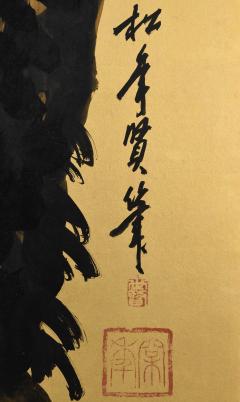
Documentation: Signed Period: 1900-1919 Creation Date: 1900 Styles / Movements: Asian Art Incollect Reference #: 854415 -
Dimensions
W. 74.41 in; H. 66.93 in; W. 189 cm; H. 170 cm;
Message from Seller:
Kristan Hauge Japanese Art, based in Kyoto's museum district since 1999, specializes in important Japanese screens and paintings for collectors, decorators, and museums worldwide. Contact us at khauge@mx.bw.dream.jp or +81 75-751-5070 for exceptional access to Japanese art and history.
More Listings from Kristan Hauge Japanese Art View all 63 listings
-
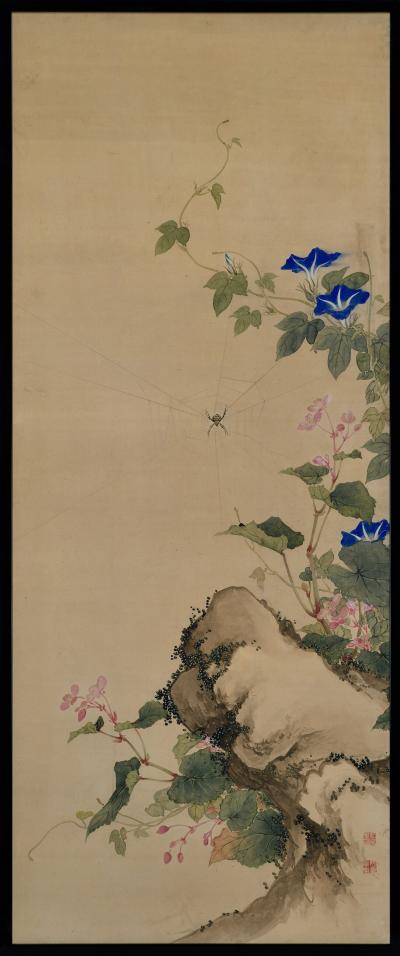
Mid 19th Century Framed Japanese Painting. Spider & Morning Glory.
-
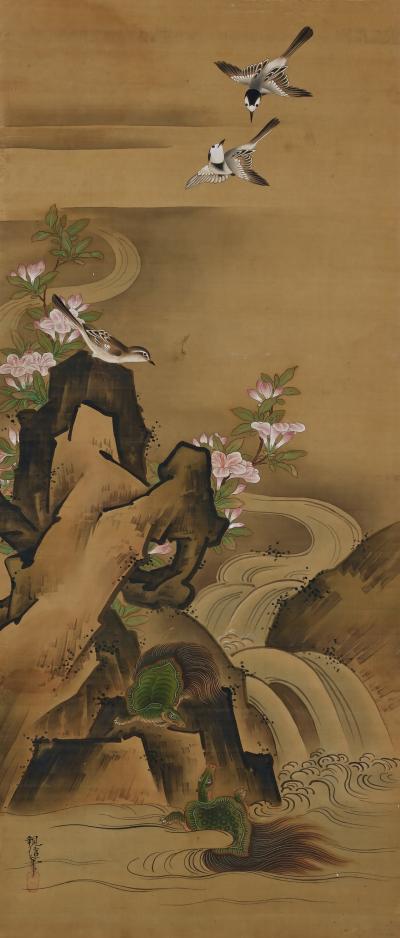
19th Century Japanese Silk Painting by Kano Chikanobu. Turtles & Azaleas.
-
19th Century Japanese Screen Pair – Birds & Flowers of the Four Seasons
-
Yamamoto Shunkyo (1871-1933) | Leaping Carp | Japanese framed painting
-
Late 17th Century Japanese Screen. Puppy and Kittens on Gold Leaf.
-
Late 17th Century Japanese Screen Pair. Battle of Ichi-no-tani and Yashima
-
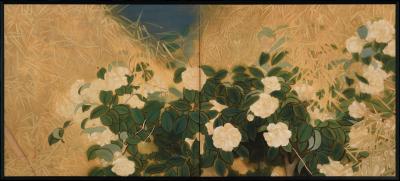
Circa 1925. Taisho era Japanese Nihonga Screen. Camellia & Bamboo
-
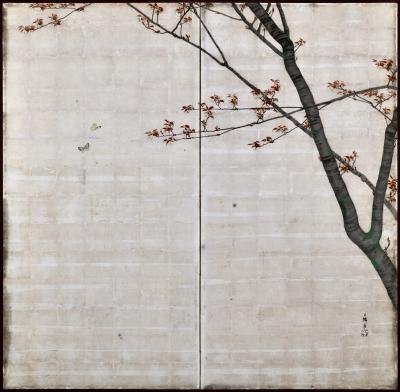
1895 Meiji Japanese Screen Pair. Cherry Blossoms & Autumn Maples on Silver Leaf
-
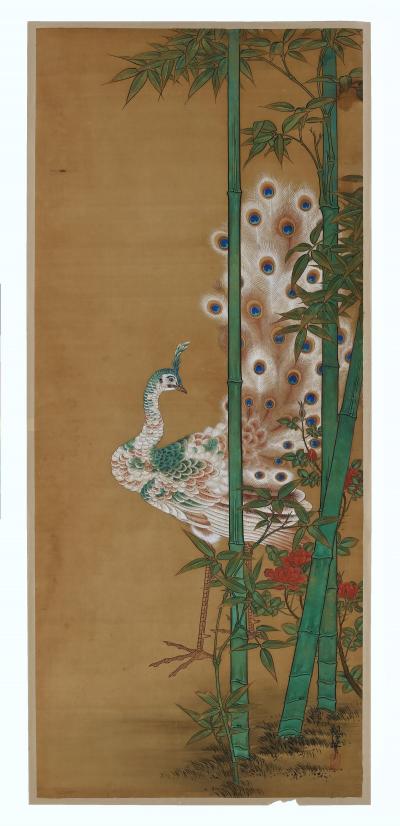
19th Century Japanese Silk Painting by Kano Chikanobu. Peacock & Bamboo.
-
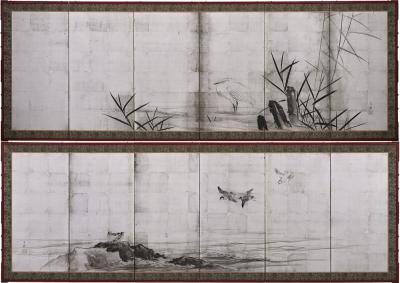
Meiji period Japanese Silver Screen Pair. Herons & Plovers, Shijo School.
-
Sakai Hoitsu (1761-1828) | Autumn flowers | Japanese screen painting

-
Meiji era Japanese Screen Pair, Two-panel. Spring & Autumn Birds & Flowers
-
Bamboo in Moonlight. Japanese scroll painting by Gamo Rakan (1784-1866)

-
Early 20th Century Japanese Cherry Blossom Screen