












Vacheron & Constantin
Swiss, 1770
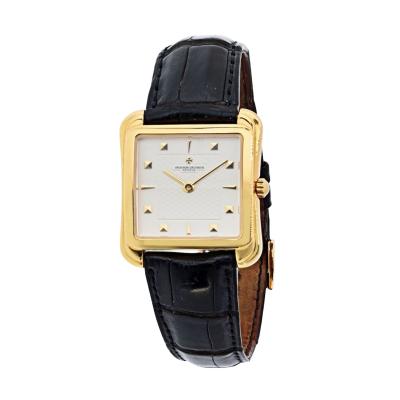
Vacheron Constantin, the esteemed luxury watchmaker, traces its origins back to 1755 when Jean-Marc Vacheron founded the company in Geneva. It emerged from the prestigious circles of the Geneva Cabinotiers, craftsmen who meticulously refined watch blanks in their light-filled workshops. This tradition of excellence continues today in the "Atelier Cabinotiers," where watches are crafted to the highest standards. As the world's oldest continuously operating watch manufacturer, Vacheron Constantin has a rich history of creating exquisite timepieces.
Initially, Vacheron produced custom-made pocket watches for nobles and royalty, including Louis XIV, Czar Alexander II, and the Maharajah of Patiala. However, the French Revolution in 1789 led to a decline in demand, prompting François Constantin to join forces with Vacheron's descendants. Together, they expanded the brand's presence in Europe and the USA, leading to the renaming of the company to Vacheron & Constantin.
In the mid-19th century, Georges Auguste Leschot, the technical director, developed a machine for serial production, meeting the growing demand for Vacheron Constantin's high-quality timepieces. The brand's iconic Maltese cross logo was registered in 1880, symbolizing its commitment to excellence.
Following Francois Constantin's passing, George Grandjean took over and in 1903, designed a portable watch for the Wright brothers' motorized biplane, the Wright Flyer. This marked Vacheron Constantin's foray into creating robust pilot watches.
Over the years, Vacheron Constantin has crafted exceptional timepieces, including complex pocket watches such as the James Ward Packard (1918) and the Fuad I (1929), known for their intricate complications. In 1990, the Vendôme Group (now Richemont SA) acquired the company, leading to the creation of remarkable watches like the Malte-Squelette Tourbillon and the Overseas series.
In 2005, Vacheron Constantin unveiled the Tour de l'Île wristwatch, featuring 16 complications, making it one of the most complex wristwatches ever made. The brand also introduced the Métiers d'Art series, known for its sophisticated designs and exceptional craftsmanship.
Today, Vacheron Constantin's collection includes the elegant and understated Patrimony and Traditional series, reflecting the brand's commitment to timeless design and meticulous attention to detail. In 2015, to celebrate its 260th anniversary, Vacheron Constantin unveiled Reference 57260, the most complicated pocket watch ever made, with 57 complications and 2826 individual parts, showcasing the brand's dedication to pushing the boundaries of watchmaking craftsmanship.




 Loading...
