


Why Roger Capron?
 |
ROGER CAPRON (1922–2006) was among the most inventive and influential figures in postwar French ceramics, a designer whose long career encompassed studio pottery, furniture, architectural ceramics and sculpture. Born in Vincennes and trained at the École des Arts Appliqués in Paris, Capron moved to Vallauris in 1946, when the Provençal pottery center was emerging as a magnet for a new generation of artists and ceramicists. There, with Robert Picault, he founded l'Atelier Callis; Jean Derval joined them the following year. Together they participated in the remarkable postwar revival of ceramics for which Vallauris became internationally known.
Capron believed that good design should be accessible. Inspired by his teacher René Gabriel’s principle of making beautiful things available to everyone, he combined traditional ceramic techniques with modern forms and methods of serial production. In 1952, he acquired a former pottery in Vallauris. He expanded his own production, making everything from vessels and decorative objects to architectural ceramics and the tiled tables that remain among his most recognizable designs. His workshop eventually grew into a substantial operation, employing around 120 people by 1980.
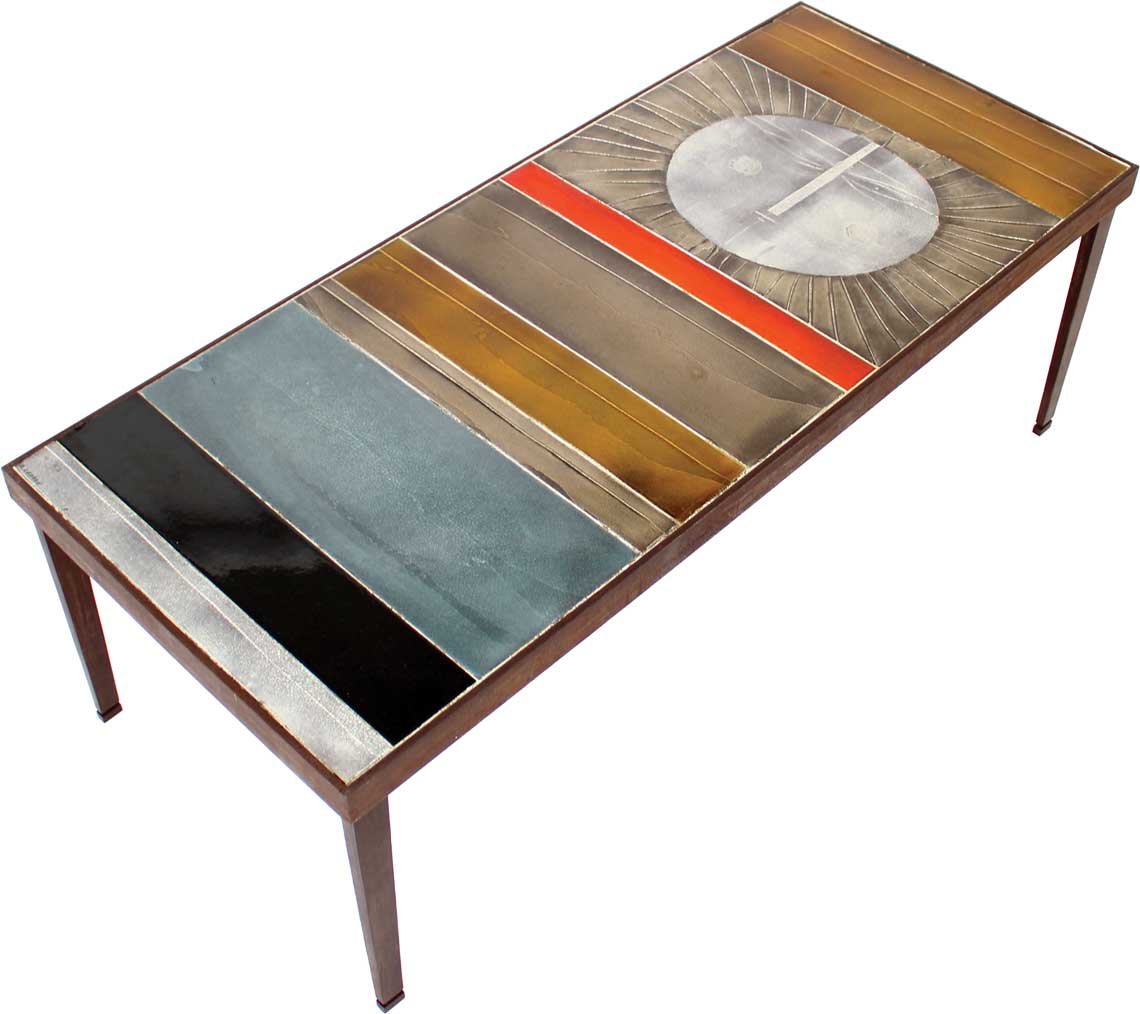 | |
Le Soleil series coffee table with varied bands of colorful glazed ceramic tiles and large radiant sun motif tile. Steel structure. Signed, Vallauris, France, circa 1960s. From Pavilion Antiques on Incollect.com |
Today Capron’s work has a particularly visible presence at the hotel Cheval Blanc in St. Tropez, where his ceramics and furniture are incorporated throughout Jean-Michel Wilmotte’s interiors, reinforcing the designer’s enduring association with the colors, materials and atmosphere of the Mediterranean. We spoke with Incollect dealer Deborah Coleman of Pavilion Antiques in Chicago about why Capron matters — and what collectors should know before buying his work.
Why is Roger Capron so important, and why should collectors be looking at his work today?
The artists working in Vallauris first gained widespread prominence for their ceramics in part because Picasso worked there, collaborating with Suzanne and Georges Ramié at the Madoura pottery beginning in the late 1940s. Capron moved to Vallauris around the same time, in 1946, initially working with Robert Picault before developing his own studio and production. He became popular in his own right because his work expressed the joie de vivre, warmth, playful colors, and naturalistic subjects associated with the Côte d’Azur. These artistic qualities never really go out of style.
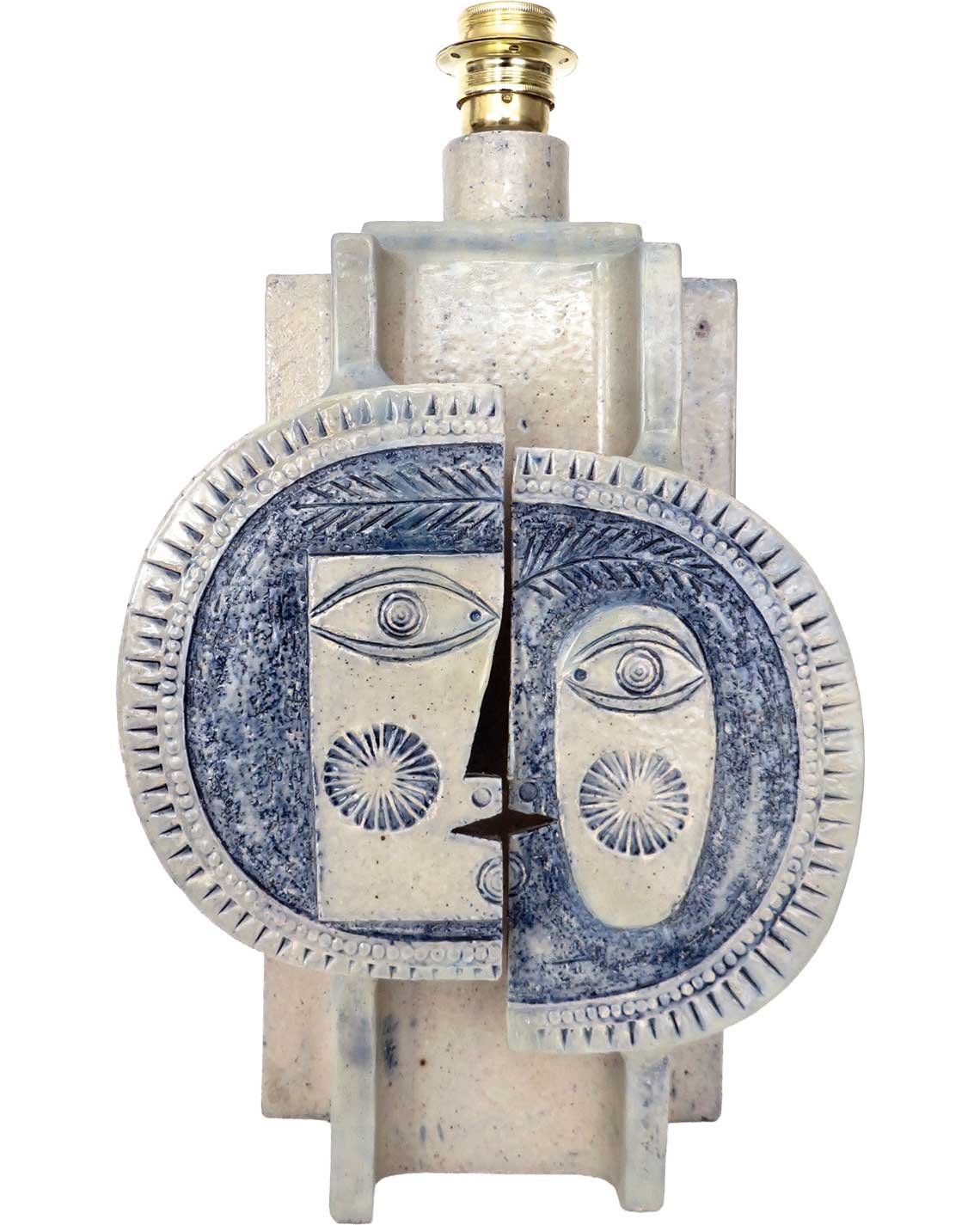 |  | |
Left: Le Jour et la Nuit lamp created with Jean Derval. In the rare version with blue and gray glazed ceramic. Signed, Vallauris, France, circa 1969. From Pavilion Antiques on Incollect.com Right: Large model Ear vase, vivid blue, blue-green and black decorations. Signed, Vallauris, France, circa 1950s. From Galerie Edouard de La Marque on Incollect.com | ||
Capron’s career extended from early studio pottery and production ceramics to tiled furniture, architectural commissions and, later, one-of-a-kind sculptural works. Which period do you find most compelling, and why?
I find the work from the 1960s and 1970s to be the most joyful and creative. He was exploring themes — and variations on themes — of color, using tiles that became more irregular, abstract, and pictorial at the same time. He also produced frescoes and undertook private architectural commissions during this period, which I believe encouraged greater experimentation and creativity.
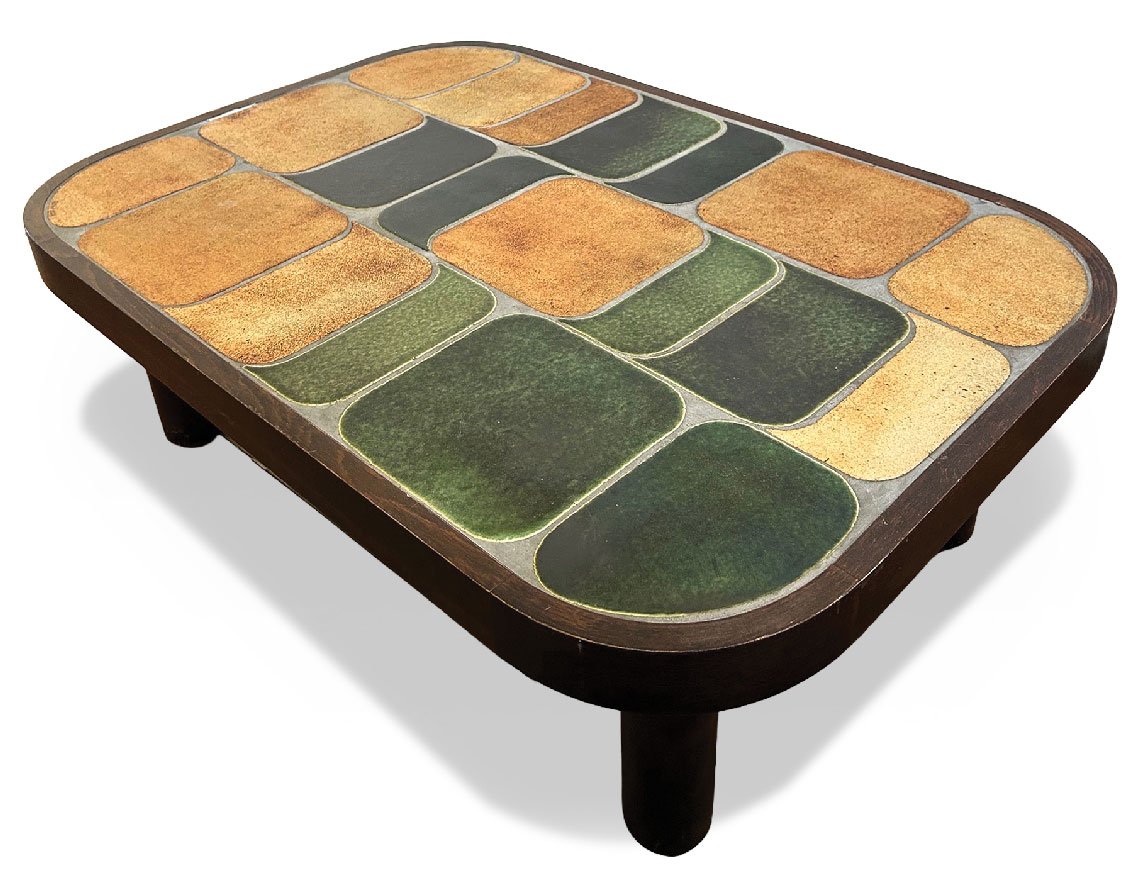 |
Shogun coffee table with wood frame and round legs. Glazed ceramic tiles in rich greens and earth tones. Signed, Vallauris, France, circa 1960s. From Galerie Edouard de La Marque on Incollect.com |
His tiled tables are among his most recognizable and desirable works. What should a collector look for when buying one — the design, date, materials, condition, signature, or provenance? How do you determine authenticity?
First, look at the central image or pattern and the condition of the tiles: ideally, none should be broken or replaced. The signature is also important; most examples are signed. Provenance can be almost impossible to establish with certainty because these tables were generally regarded back then as furniture rather than art or sculpture, so many original invoices were simply not retained.
That said, there are tables I know of that were made as private commissions and are highly collectible today, but they rarely come onto the market. In the end, the dealer — and collector — has to have confidence in the source from which the piece is being acquired.
The vases and many of the lamps are another category altogether. For me, they fall more clearly into the realm of sculpture. They should be signed and ideally have no restoration, while the choice of form and decoration is ultimately a matter of personal taste. These pieces also tend to appeal more broadly to collectors.
How do you use Capron’s work in an interior? Do you see it primarily as French mid-century design, or does its handmade quality allow it to sit easily alongside contemporary furniture and art?
Capron’s tables are so individual that they comfortably bridge different periods and interior styles. They work wonderfully in contemporary, even hyper-modern minimalist interiors as statement pieces, but are equally at home in a country or beach house, as well as transitional interiors. Their craftsmanship, color, and individuality give them a presence that continues to intrigue the viewer.
 |
All these pieces and many more designs by Roger Capron are available on Incollect.com
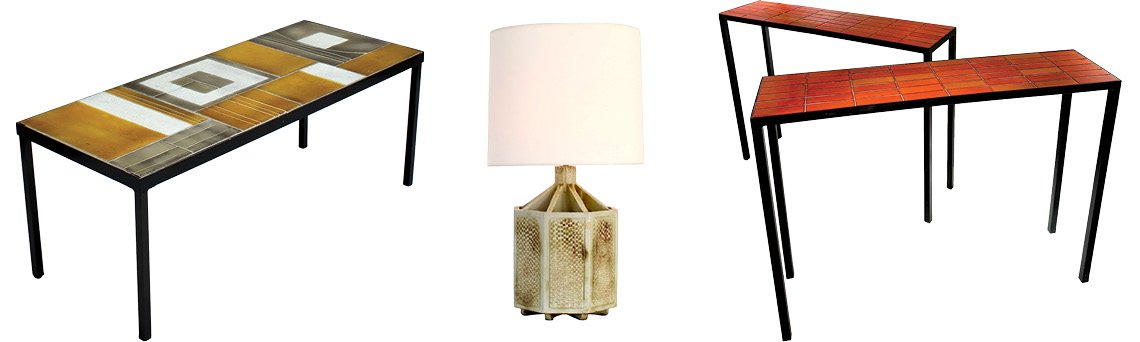 |
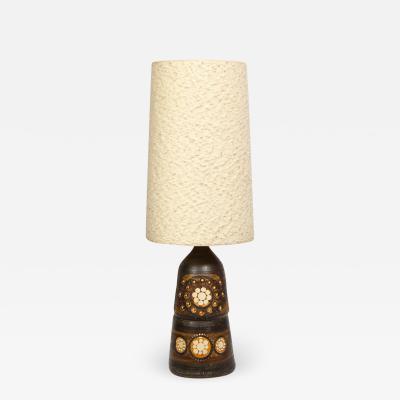
| Left: Coffee table with geometric pattern glazed ceramic-tiled top in earth tones and white on a minimalist metal base. Vallauris, France, 1960s. From Conjeaud & Chappey on Incollect.com Center: Rare octagon form table lamp with cream, gray and ochre glazed and incised decoration. Not many of these forms were made as they were more difficult to execute. Vallauris, France, circa 1970. From Pavilion Antiques on Incollect.com Right: Pair of console tables with glazed ceramic tiles and painted steel frame. Signed, Vallauris, France, circa 1955. From Portuondo on Incollect.com |
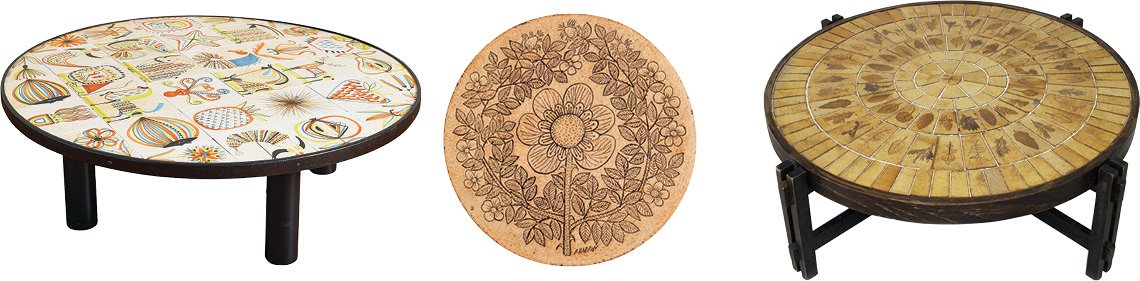 |
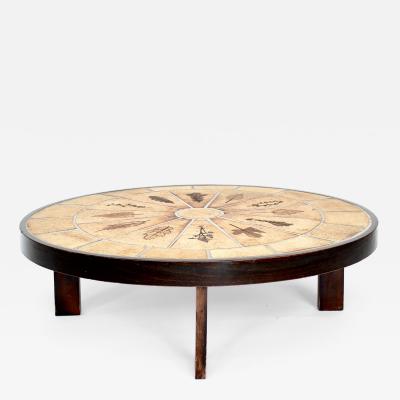
Left: Wonderful ceramic tile top coffee table. Unique happy and colorful hand-painted ceramic tiles with illustrations of whimsical animals and objects: Lion, Octopus, Starfish, Strawberry, Flower, Crab, Pineapple and Fish. Oak and iron structure. Signed, Vallauris, France, circa 1950s. From Orange Los Angeles on Incollect.com Center: Ceramic plaque in a stylized floral composition with a central blossom surrounded by delicately incised leaves and smaller flowers. Rendered in fine black line on a warm, natural clay ground, Signed, Vallauris, France circa 1970s. From Original in Berlin on Incollect.com Right: Round Pomone coffee table with 4-leg, stained oak frame and earthtone Garrigues ceramic tiles in a radial sunburst pattern. Signed, Vallauris, France, circa 1960s. From Newel Antique Gallery on Incollect.com |
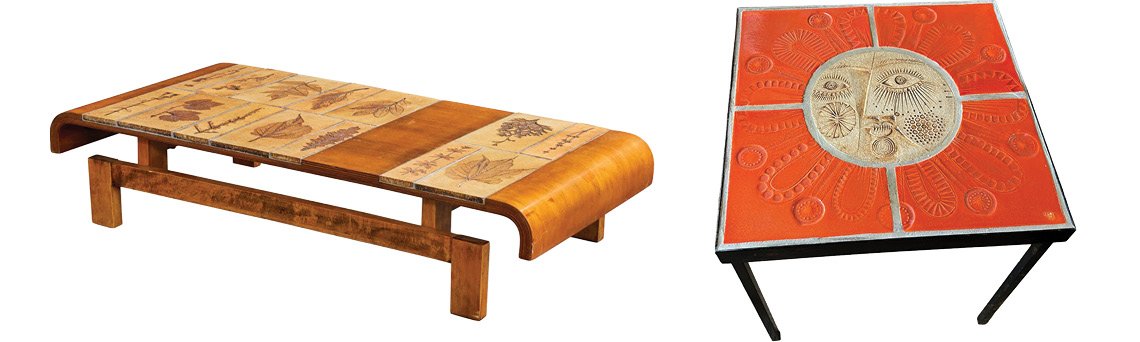 |
Left: Coffee table with wood and Garrigues ceramic tiles, with bentwood waterfall ends. Garrigues tiles were created by pressing native plant material from the area surrounding Capron’s studio in the south of France into the wet clay to create the delicate botanical designs. Vallauris, France, circa 1970s. From PRB Collection on Incollect.com Right: Le Soleil square side/coffee table with Cubist sun surrounded by radiating flower petals in tangerine glazed tiles. Iron base. Signed, Vallauris, France, circa 1960s. From Galerie Edouard de La Marque on Incollect.com |
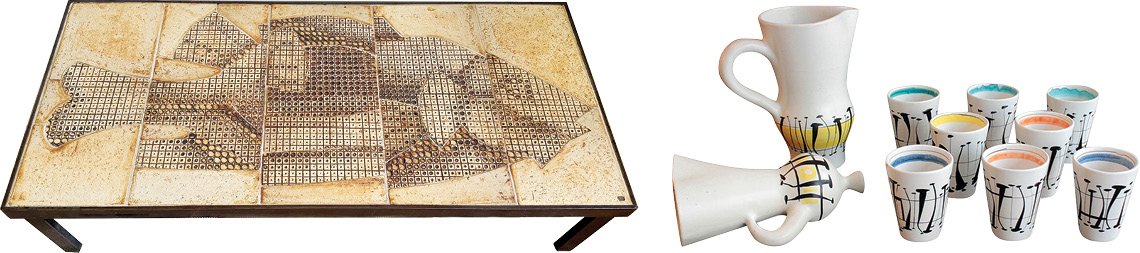 |
Left: Rectangular coffee table with fish motif glazed ceramic tile top and black iron frame. Signed, Vallauris, France, circa 1960. From Appel on Incollect.com Right: Ten-piece wine set with eight cups, one jug and one wall jug with flattened side and nail hole. Handmade, hand-glazed ceramic. Signed, Vallauris, France, circa 1960s. From Combray Gallery on Incollect.com |
 |