















Showrooms
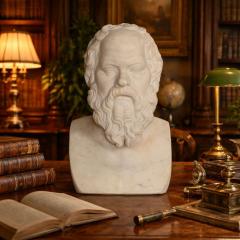
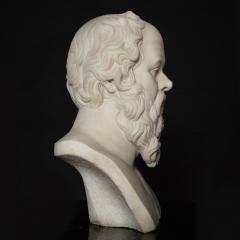
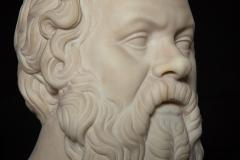
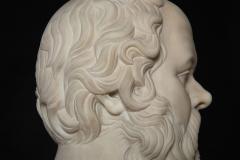
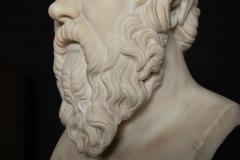
19th Century Antique Italian Grand Tour Marble Bust of Socrates ca. 1860-80
-
Description
GRAND TOUR
Italy, 19th century
"Bust: Portrait of Socrates"
Carved from a single solid block of white marble
Unsigned
Circa 1860-80
18 1/2" H x 10" W x 7 1/2" D
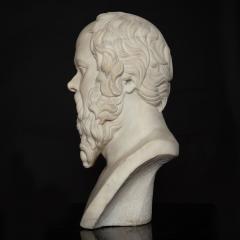
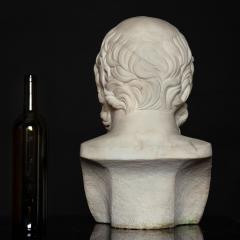
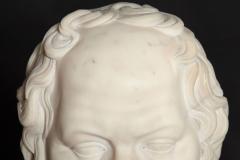
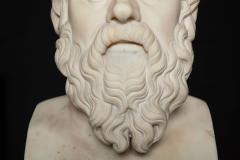
Carved from a single block of white marble, this very fine bust of Socrates presents the head and upper chest depicting the philosopher after the original of antiquity preserved in the Louvre. The sculptor contrasts smoothly finished flesh passages against a more vigorously worked hair and beard, these deeply carved with textured flowing locks that create strong shadows. The eyes are left unpupiled in the classical tradition, reinforcing an inward, intellectual focus rather than individualized portrait realism. The restrained polish and careful articulation of form are characteristic of late 19th-century academic sculpture with a careful adherence to the classicism demanded by the wealthy patrons of the Grand Tour.
This bust is modeled after the canonical ancient portrait type of Socrates, a likeness known today through Roman marble copies of lost Greek originals from the late 4th century BCE. The bust of antiquity the present sculpture is modeled after is the work is catalogued in the Louvre as Portrait de Socrate, inventory number MA 59 in the Département des Antiquités grecques, étrusques et romaines. The Louvre bust is dated to the Roman Imperial period, ca. 75–125 AD. It is widely considered a Roman marble copy after an earlier Greek bronze original from the fourth century BCE, a lost sculpture traditionally attributed to the circle of Lysippos. Lysippos created portrait works of prominent figures including Socrates, and a bronze statue of Socrates was set up in Athens’ Pompeion after the philosopher’s death.
Portrait de Socrate firmly established the visual record of Socrates: bald or high-foreheaded with a heavy curling beard, broad nose and slightly recessed eyes. Unlike idealized heroic portraits, this image emphasizes intellectual gravity and moral seriousness. It almost emphasizes his physical plainness in close adherence to ancient accounts of Socrates’ appearance. The MA 59 bust became a key reference point for scholars and artists alike and served as a primary model for Renaissance, neoclassical, and academic reinterpretations, including 19th-century marbles such as the present example.
Socrates (469–399 BCE) occupies a foundational position in Western philosophy. Active in Athens during its classical peak, he wrote nothing himself; his thought is transmitted through the dialogues of Plato, the writings of Xenophon, and, in a more satirical vein, the plays of Aristophanes. Central to his legacy is the “Socratic method,” a disciplined form of questioning intended to expose false assumptions and lead toward ethical clarity. His relentless examination of virtue, knowledge and civic responsibility ultimately brought him into conflict with the Athenian state, resulting in his trial and execution. In later centuries, Socrates came to embody the ideal of the philosopher as moral exemplar: a man committed to truth above comfort or self-preservation.
Condition: an old oxidized patina throughout the stone surface; a chip to the right edge; other minor chips and bites at the stone; discolorations to the stone; a fine presentation, ready to place.
ref. 512RMN11A -
More Information
Origin: Italy Period: 19th Century Materials: Marble, Carved Condition: Good. An old oxidized patina throughout the stone surface; a chip to the right edge; other minor chips and bites at the stone; discolorations to the stone; a fine presentation, ready to place. Styles / Movements: Other, Traditional Dealer Reference #: 512RMN11A Incollect Reference #: 846631
Message from Seller:
Silla, Ltd. is a family-owned antique gallery located at 117 W Burd St., Shippensburg, PA 17257, specializing in 19th and early 20th century bronze sculptures and unique period furniture. For more information or to schedule a visit, contact us at sales@sillafineantiques.com or call 717.708.9017.
More Listings from SILLA View all 370 listings
-
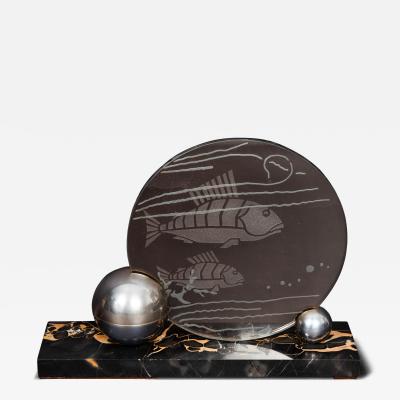
French Art Deco Chrome and Etched Glass "Fish" Lumiere Table Light
-
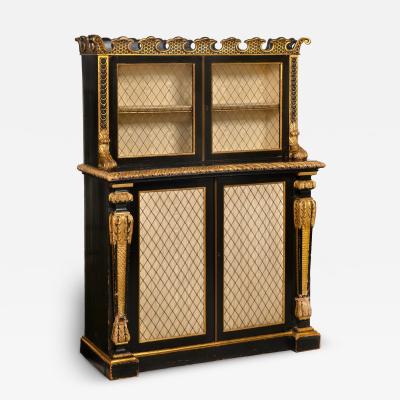
Regency Period Black and Gilt Painted Bookcase Cabinet, 19th Century
-
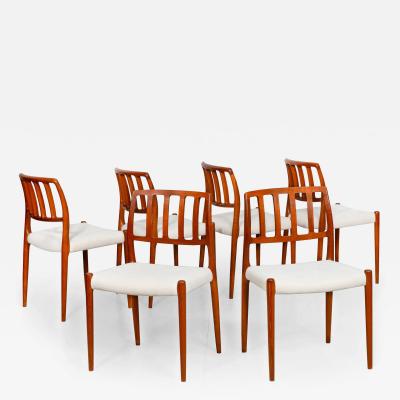
Set of 6 Danish Mid Century Modern Teak Model 83 Niels Moller Dining Chairs
-
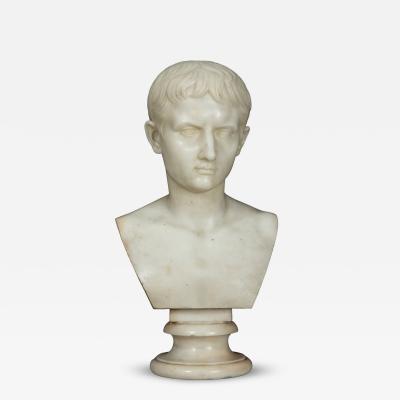
Grand Tour Italian Antique Marble Bust Sculpture "Young Caesar Augustus"
-
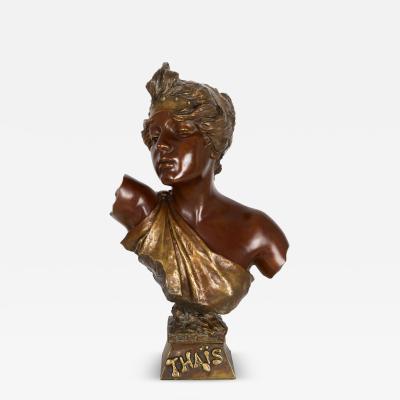
Emmanuel Villanis Bronze Sculpture Bust of Thais
-
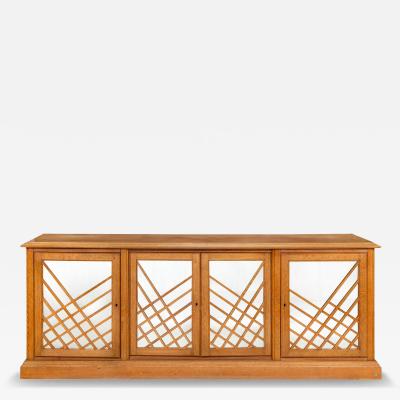
French Modernist Cerused Oak Sideboard Buffet Cabinet by Jean Claude Mahey
-
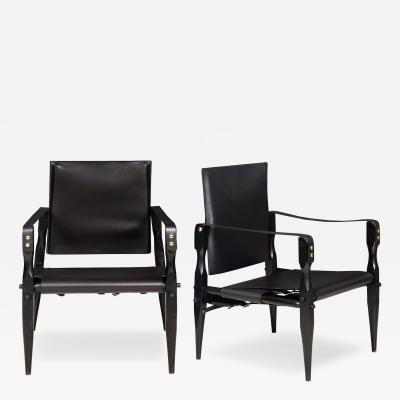
Pair of Ebonized Black Leather "Safari" Chairs | Wilhelm Kienzle
-
German School Alpine Landscape with Hiker and Livestock, 19th Century

-
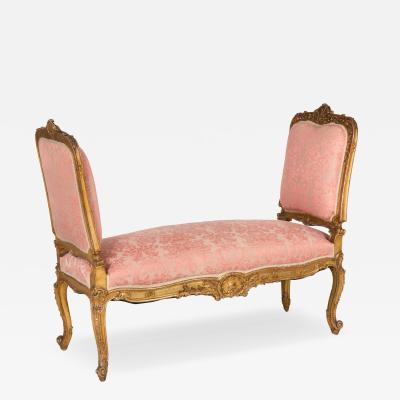
French Louis XV Style Window Bench
-
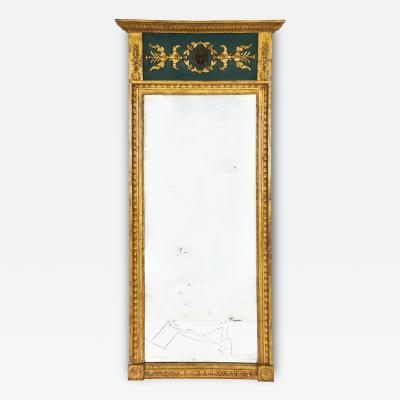
Regency Period Gilded Pier Mirror with Lion’s Mask, early 19th century
-
Museum Quality Painting “Martin Luther at Magdeburg” by Wilhelm Lindenschmit

-
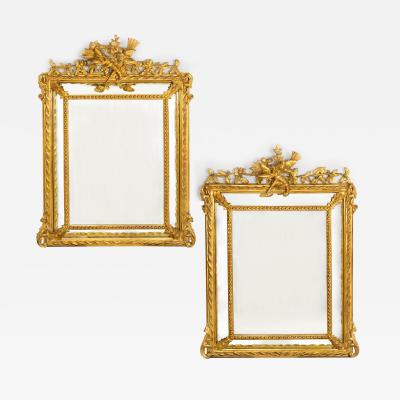
Pair of 19th Century French Neoclassical Antique Giltwood “Wedding” Mirrors
-
French Provincial Desk in Ebonized Polychrome, late 18th century

-
Continental School Alpine Village Oil Painting, late 19th century