










Offered by:
Thomas Gallery Ltd.
315 East 91 Street, 6th floor
New York City, NY 10128 , United States
Call Seller
917.434.4032
Showrooms
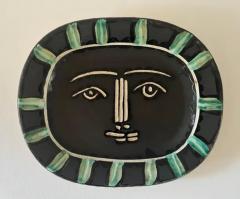
Ceramic Plate Visage Gris 'Grey Face' A.R. 206 by Pablo Picasso & Madoura, 1953
-
Description
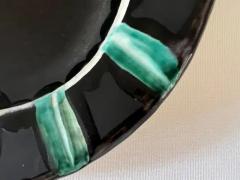
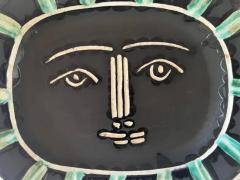
The engraved and brush painted ceramic plate, Visage Gris (Grey Face) is one the most iconic pieces created by Pablo Picasso (1881 - 1973) at the Madoura workshop in Vallauris, France. It is said "all portraits are self portraits". In this work, we see Picasso's wistfulness, vulnerability and humor set within a beautiful image representing both the sun and the moon, the masculine and the feminine. Picasso mastery of form, image, composition and subtle color is evident in a work that resonates transcendence.
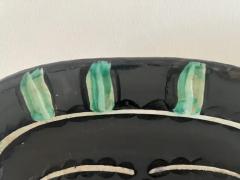
Created in 1953, Pablo Picasso ceramic Visage Gris (Grey Face), 1953 A.R. 206 is a Madoura white earthenware clay, knife engraved under partial brushed glaze with decoration in engobes (green, black, white) from the edition of 500. This work is stamped with the 'Madoura PLEIN FEU' and ‘EMPREINTE ORIGINALE DE PICASSO’ pottery stamps on the reverse. Dimensions: 12 3/8 x 15 1/8 x 1 5/8in (31.4 x 38.3 x 4.1cm). Madoura was an artisan workshop created by Georges and Suzanne Ramie which collaborated with Picasso in the fabrication and hand painting of the works.
Pablo Picasso designed 633 different ceramic editions between 1947 and 1971 at the Madoura workshop, with a number of variants and unique pieces resulting from these initial works. He began by creating simple, utilitarian objects such as plates and bowls, but later produced more complex forms, including pitchers and vases — their handles occasionally shaped to form facial features, or anatomical parts of his animal subjects.
Picasso remains one of the highest-grossing artists at auction today, and the range of his ceramics means it's possible to find both a good investment and a beautiful object. Visage Gris is among the most important.
A Short Biography follows:
Pablo Picasso revolutionized the art world and to many is THE artist of the 20th century. He is famous for his role in pioneering Cubism with Georges Braque and for his melancholy Blue Period pieces. Original signed Picasso lithographs and prints are a sure investment. Madoura Picasso ceramics are highly collectible in their own right.
As one of the most influential Modern artists of the 20th century, Pablo Picasso is renowned as a legendary artistic master to this day. Born on October 25, 1881 in Malaga, Spain, Pablo Picasso was a child prodigy who was recognized as such by his art-teacher father, who ably led him along. The small Museo de Picasso in Barcelona is devoted primarily to his early works, which include strikingly realistic renderings of casts of ancient sculpture.
Picasso was a rebel from the start and, as a teenager, began to frequent the Barcelona cafes where intellectuals gathered. He soon went to Paris, the capital of art, and soaked up the works of Edouard Manet, Gustave Courbet, and Henri de Toulouse-Lautrec, whose sketchy style impressed him greatly. Then it was back to Spain, a return to France, and again back to Spain – all in the years 1899 to 1904.
Before he struck upon Cubism, Picasso went through a prodigious number of styles – realism, caricature, the Blue Period, and the Rose Period. These distinguished styles are apparent in the unique original works as well as Picasso ceramics, lithographs, linocuts, and etchings that he created later in his life.
The Blue Period dates from 1901 to 1904 and is characterized by a predominantly blue palette and focuses on outcasts, beggars, and prostitutes. This was when he also produced his first sculptures. The most poignant work of the style, La Vie (1903), currently located in Cleveland’s Museum of Art, was created in memory of his childhood friend, the Spanish poet Carlos Casagemas, who had committed suicide. The painting started as a self-portrait, but Picasso’s features became those of his lost friend. The composition is stilted, the space compressed, the gestures stiff, and the tones predominantly blue.
The Rose Period began around 1904 when Picasso’s palette brightened and is dominated by pinks and beiges, light blues, and roses. His subjects are saltimbanques (circus people), harlequins, and clowns, all of whom seem to be mute and strangely inactive. One of the premier works of this period is Family of Saltimbanques (1905), currently in Washington, D.C. at the National Gallery, which portrays a group of circus workers who appear alienated and incapable of communicating with each other, set in a one-dimensional space.
In 1905, Picasso went briefly to Holland, and on his return to Paris, his works took on a classical aura with large male and female figures seen frontally or in distinct profile, as in early Greek art. One of the best examples of this style is in the Albright-Knox Gallery in Buffalo, NY, La Toilette (1906). Several pieces in this new, classical style were purchased by Gertrude Stein (the art patron and writer) and her brother, Leo Stein.
With his groundbreaking 1907 painting Les Demoiselles d’Avignon, Picasso, along with Georges Braque, developed a revolutionary style of modern art that was formed in response to the rapidly changing modern world: Cubism. He simplified and distorted figures and objects into geometric planes, often including elements of text and collage in his works.
Picasso enjoyed creating his art in many different artistic mediums throughout his life and, in due time, became a master in each medium. From Picasso ceramics to paintings to lithographs, etchings, and linocuts, all of his works are a testament to his artistic skills. There are even hand signed Picasso prints that are worth more than unique original works. -
More Information
Documentation: Signed Origin: France Period: 1950-1979 Materials: Earthenware,Engraved,Glazed Condition: Good. Styles / Movements: Modern, Mid Century Incollect Reference #: 667548 -
Dimensions
W. 15.13 in; H. 1.63 in; D. 12.38 in; W. 38.43 cm; H. 4.14 cm; D. 31.45 cm;
Message from Seller:
T. Thomas Gargiulo came from a dual background as a Ph.D. in Psychology with extensive training in Art History and Anthropology to form Thomas Gallery in downtown Manhattan in 1997 to balance intellectual with design pursuits. Since its inception the gallery has seen decorative arts as a vibrant representation of human culture of each age and as a portal to understanding it. P: 917.434.4032 E: thomasgalleryltd@gmail.com
Sold
More Listings from Thomas Gallery Ltd. View all 1131 listings
-
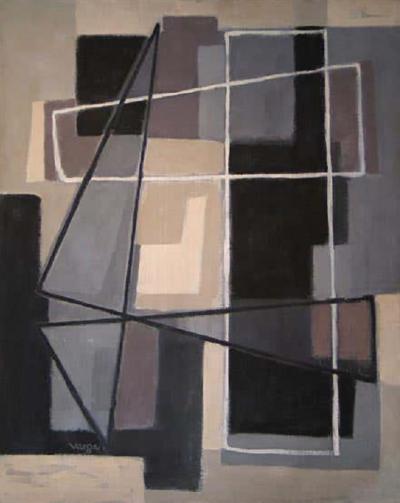
Mid-Century "Ecole de Paris" Abstraction "Symphony in Grey" by Ferenc Varga 1957
-
Late 20th Century Artist Made Aluminum Desk / Side Chair by Jose Pascual

-
French, 1940s Modern Neoclassical Mirrored Frame Mirror
-
Pair of French Mid-Century Modern Cowhide Lounge Chairs, Spirit of Jean Roye?re
-
French Modern Neoclassical Style Carved Wood Desk in Style of Jean-Michel Frank
-
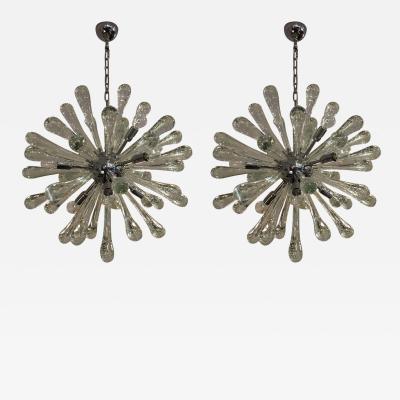
2 Italian Mid-Century Murano / Venetian Glass 'Starburst' / Sputnik Chandeliers
-
Painting, Oil, 'Street Scene' Signed Bela Kadar

-
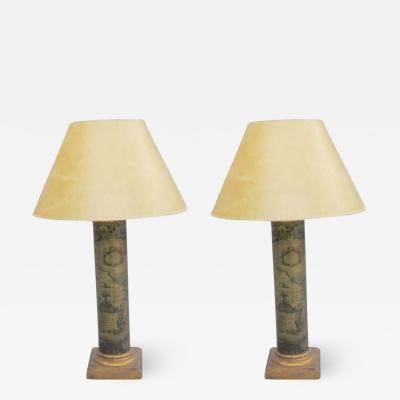
Pair of Italian Mid-Century Modern Table Lamps in the Style of Piero Fornasetti
-
Italian Mid-Century Murano / Venetian Crystal / Glass Floral Flush Mount Fixture

-
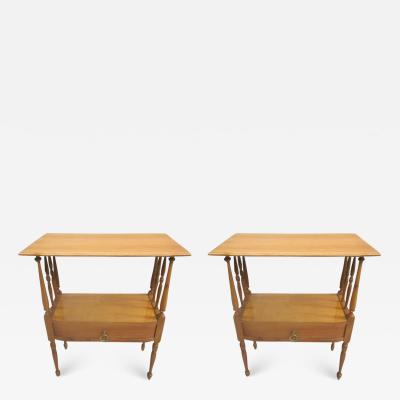
Pair of French Mid-Century Modern Nightstands / End Tables in Andre Arbus Style
-
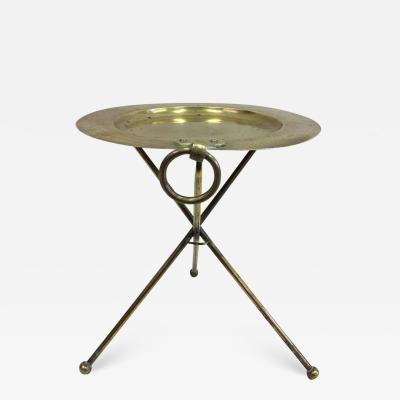
French Mid-Century Modern Neoclassical Solid Brass Guéridon or Side Table
-
Pair Italian Mid-Century Modern/ Space Age Articulating Floor Lamps by Reggiani
-
Italian 'Arte Povera' / Post-Minimalist Wrought Iron Sculpture or Side Table

-
Pair, Rare, Important French Early Modern GRAS Floor Lamps, Model # 215, 1920-30