













Offered by:
Arader Galleries
1016 Madison Avenue
New York City, NY 10075 , United States
Call Seller
215.735.8811
Showrooms
Boston from the Ship House, West End of the Navy Yard
-
Description
Until now this painting (fig. 1) has been ascribed to Thomas Birch as a view of Philadelphia, based upon the opinions of both the Director, Richard Boyle, and the Curator, Frank Goodyear Jr., of the Pennsylvania Academy of the Fine Arts (please see attached letters). However, recent scholarship has since proven that while the painting is most probably by Birch it is in fact an exceptionally rare view of Boston by this artist's hand. This new information is based upon a number of factors, which are outlined below.
Identification of the Subject - The View One of the primary means of identifying the subject of the painting has been the view presented in the background, which is undoubtedly related to an aquatint and watercolor by William James Bennett (ca. 1787-1844). In 1830, Bennett embarked upon a journey to Boston and three years later published an aquatint of the city entitled Boston from the Ship House, West End of the Navy Yard. This view was part of his series depicting American cities and was published by Henry J. Megarey, along with Bennett's other 1833 Boston view, Boston from City Point near Sea Street. The watercolor study for Boston from the Ship House (fig. 2) is located at the Phelps Stokes Collection, Print Collection, New York Public Library and the original plate for this view was used to create restrikes by the Club of Odd Volumes, Boston, in 1901 (fig. 3). Examination of both images against that of the oil painting reveal that elements such as the ship house, two boats in the left foreground, the ship located in the center middle ground and the view of Boston are almost wholly the same.
As stated in the title of the Bennett aquatint, the view of Boston is taken from the Navy Yard built at Charlestown in 1800. The federal government purchased 35 acres of land for the repair and construction of U. S. Navy ships and over the years the yard was wharfed out to create land for huge shiphouses in which wooden sailing ships were constructed. These buildings are clearly
visible to the left of the oil painting, watercolor and aquatint and the yard is clearly visible on William B. Annin's and George G. Smith's 1826 Plan of Boston Comprising a Part of Charlestown and Cambridgeport (fig. 4). The map also gives the location of the most significant buildings at Boston and when examined in conjunction with the painting identification can be made of the key structures (fig. 5).
To the very right can be seen the new Massachusetts State House. Built in 1798 it was constructed at the top of Beacon Hill on land once owned by the State's first elected governor, John Hancock. The white spire of Park Street Church, built in 1809 and the site of the old town granary, follows. At this church, in 1818, the first Sunday school was held and in 1824 it was the first prison aid.
On July 4, 1829, William Lloyd Garrison gave his first public anti- slavery speech from here and two years later the church children's choir sang "My Country 'Tis of Thee" for the first time. The next notable landmark is Copps Hill followed by the Old North Church or Christ Church, located almost at the center of the composition. The steeple is 191 feet high, making it the tallest steeple in Boston and it was from it that Robert Newman signaled with lanterns the approach of the British. Paul Revere was one of its bellringers and it is the oldest Church building in Boston, dating to 1723. The spire that follows is that of the Old State House. It was constructed ten years prior to the Old North Church and was the center of all political life in Boston until the construction of the new State House. On July 18, 1776, the city's citizens gathered here to hear the first public reading of the Declaration of Independence in Massachusetts.It is probable that the Long Wharf is the final piece of land seen to the left. -
More Information
Documentation: Origin: United States Period: 19th Century Creation Date: c. 1833 Styles / Movements: Other Incollect Reference #: 97824 -
Dimensions
W. 38 in; H. 28 in; W. 96.52 cm; H. 71.12 cm;
Message from Seller:
Founded in 1971, Arader Galleries is the leading dealer of rare maps, prints, books, and watercolors from the 16th to 19th centuries. Visit us at 1016 Madison Avenue, NYC, or contact us at 215.735.8811 | loricohen@aradergalleries.com |
More Listings from Arader Galleries View all 1312 listings
-
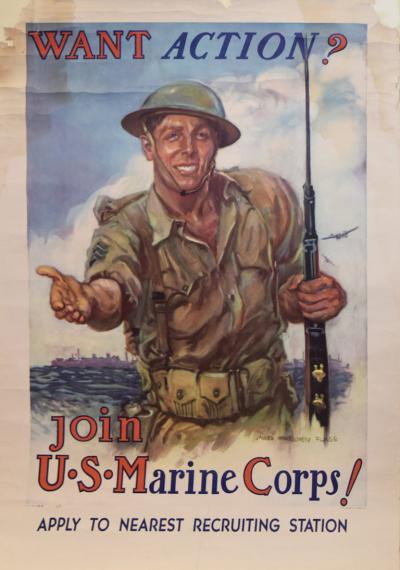
JAMES MONTGOMERY FLAGG (1877-1960), WANT ACTION? JOIN THE US MARINE CORPS!
-
MARK CATESBY (1683-1749), LE COQ DU BOIS D'AMERIQUE (PARTRIDGE), T1

-
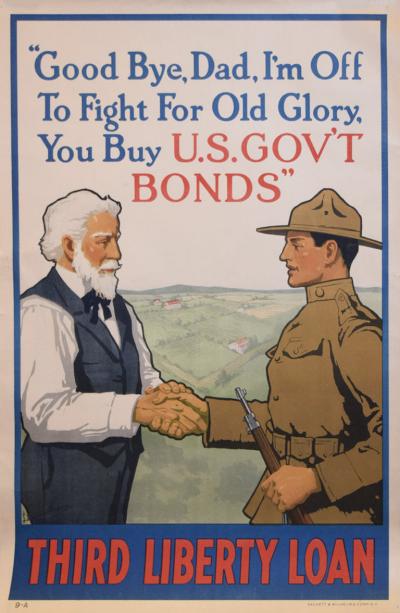
"GOOD BYE, DAD, I'M OFF TO FIGHT FOR OLD GLORY, YOU BUY U.S. GOV'T BONDS"
-
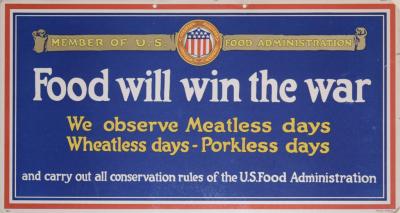
MEMBER OF THE US FOOD ADMINISTRATION, FOOD WILL WIN THE WAR...
-
PAIR OF SIDE CHAIRS (INV. 0303)

-
MASSACRE OF THE AMERICAN PRISONERS OF WAR AT DARTMOOR PRISON

-
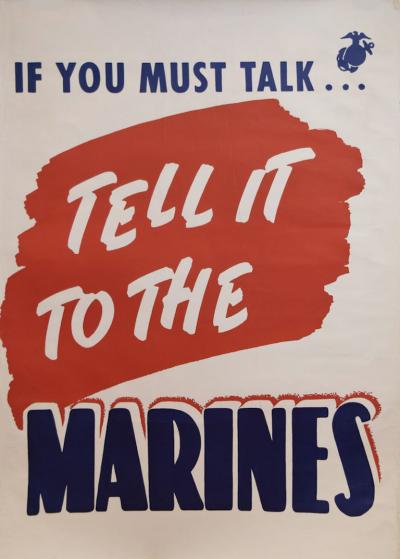
UNKNOWN ARTIST, IF YOU MUST TALK TELL IT TO THE MARINES
-
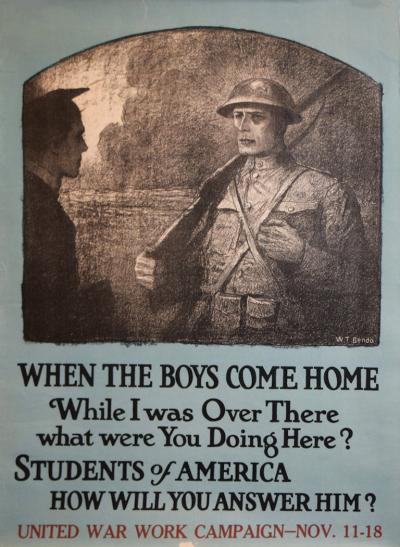
WLADYSLAW THEODORE BENDA (1873-1948), WHEN THE BOYS COME HOME
-
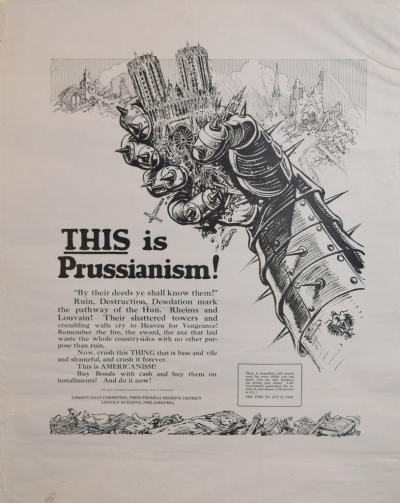
UNKNOWN ARTIST, THIS IS PRUSSIANISM!
-
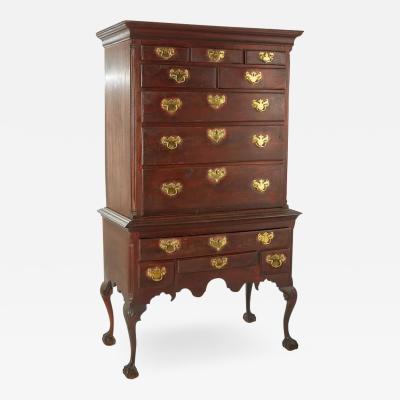
NORTHERN DELAWARE OR SOUTHEASTERN PENNSYLVANIA HIGH CHEST OF DRAWERS
-
PHILADELPHIA SIDE CHAIR (INV. 0033)

-
PHILADELPHIA DRESSING TABLE (INV. 0327)

-
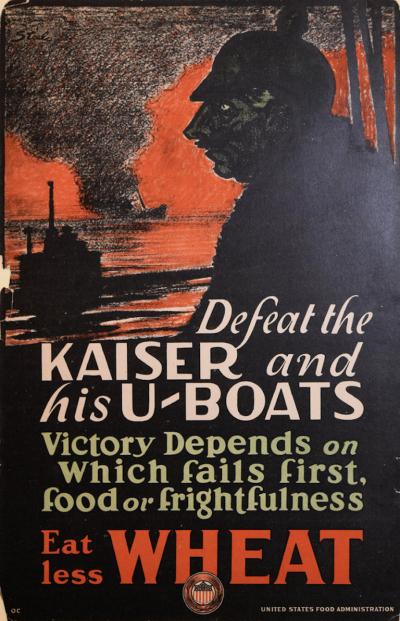
UNITED STATES FOOD ADMINISTRATION, DEFEAT THE KAISER AND HIS U-BOATS...
-
ENGLISH NEOCLASSICAL SIDE CHAIR (INV. 0026)