





Eero Aarnio – Fearless by Design
 |
Eero Aarnio's daughters in his 1968 Bubble Chair. Image courtesy of the Eero Aarnio Archive |
 |
by Elias Haddadin
photos courtesy of Haddadin Design
Few designers have captured the spirit of an era quite like Eero Aarnio. To many, his name immediately brings to mind the Ball Chair, the Bubble Chair, or perhaps the playful Puppy. Yet behind these iconic objects stood a man whose personality was every bit as unconventional as his creations.
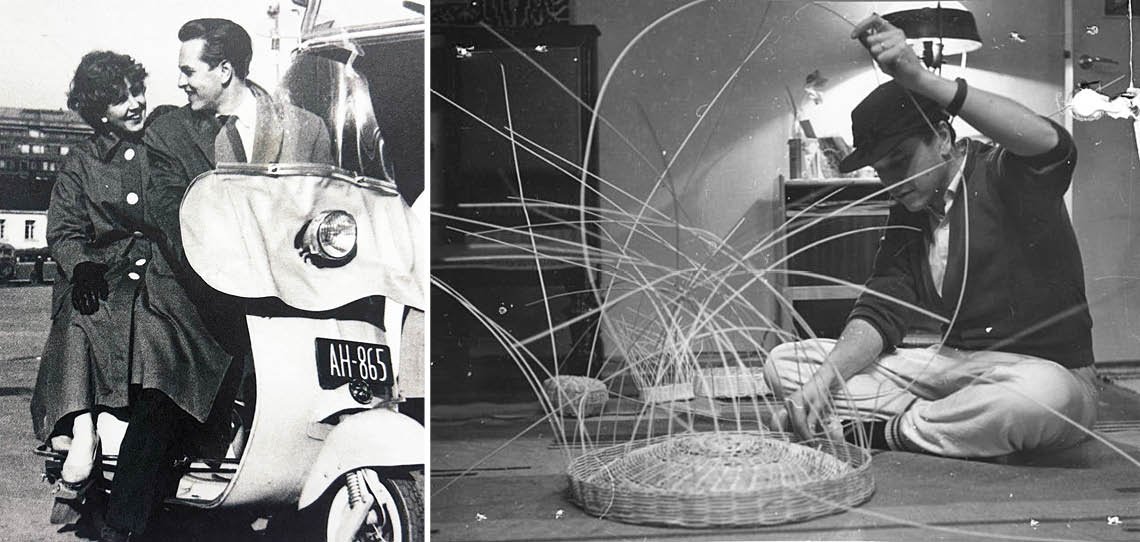 |
Left: Eero Aarnio and his wife Pirkko, Helsinki,1950s. Right: Aarnio weaving a rattan basket, which led to his first commercially successful design, the Mushroom Stool, launched at the 1962 Cologne Furniture Fair. “In 1954, at my future wife's house, her father asked if I would like to try rattan weaving. And of course, the new material intrigued me! I sat on the floor and wove a basket, which turned out to be a swaying structure half a meter wide and high. When I turned it upside down, it looked exactly like a chair to me,” Eero Aarnio recalls. |
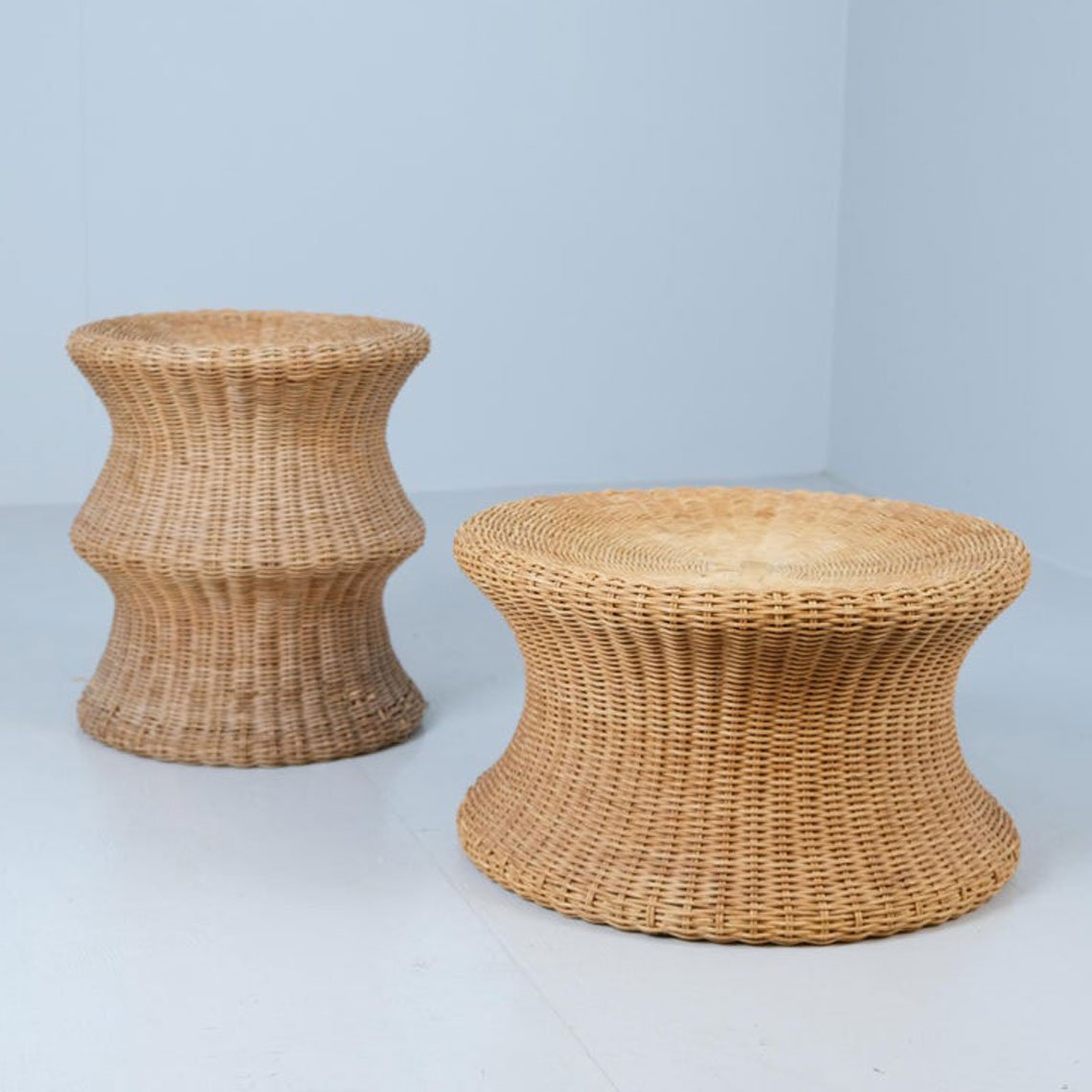 | 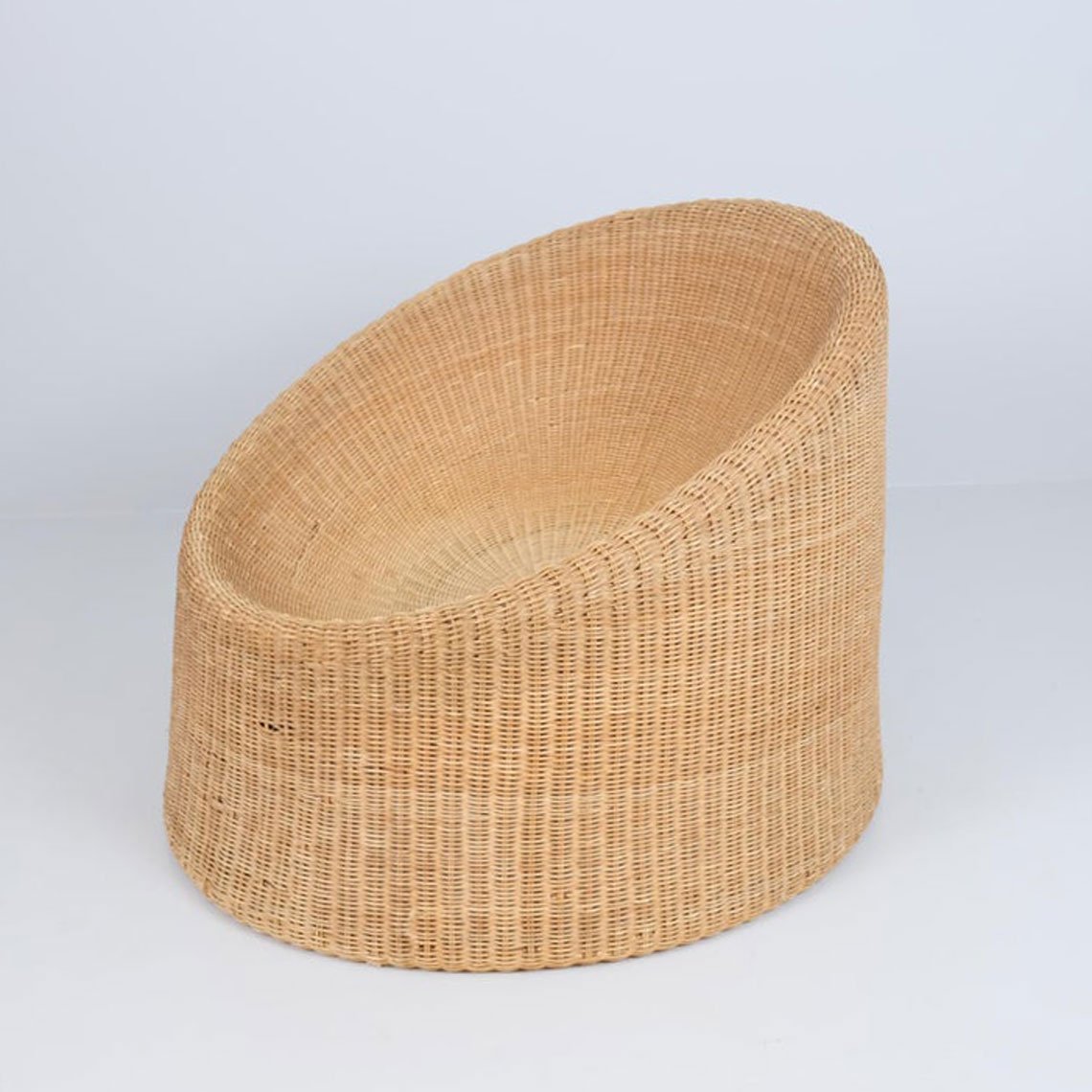 | |
| Left: Set of two Eero Aarnio "Mushroom" Juttu Stools in woven rattan with bamboo and rattan frame, produced by Asko, 1960s. Can also be used as side tables. Available from Haddadin Design on Incollect.com. Right: Eero Aarnio "Elephant Boot" Lounge Chair, in woven rattan with bamboo and rattan frame, produced by Asko, 1960s. Available from Haddadin Design on Incollect.com. | ||
 |
Fearless, spontaneous, and relentlessly optimistic, Aarnio helped redefine not only Finnish design, but the very idea of what furniture could be.
Eero Aarnio was born in Helsinki in 1932 and spent his childhood during one of the most turbulent periods in Finnish history. Growing up in wartime Helsinki left a lasting impression. His family home in the Kallio district of Helsinki was bombed during the Second World War, and Aarnio later recalled diving into a ditch to avoid bullets fired from a passing Soviet aircraft. Perhaps it is impossible to know how profoundly these experiences shaped him, but throughout his life Aarnio displayed a remarkable fearlessness and an eagerness to embrace uncertainty. He seemed almost incapable of standing still.
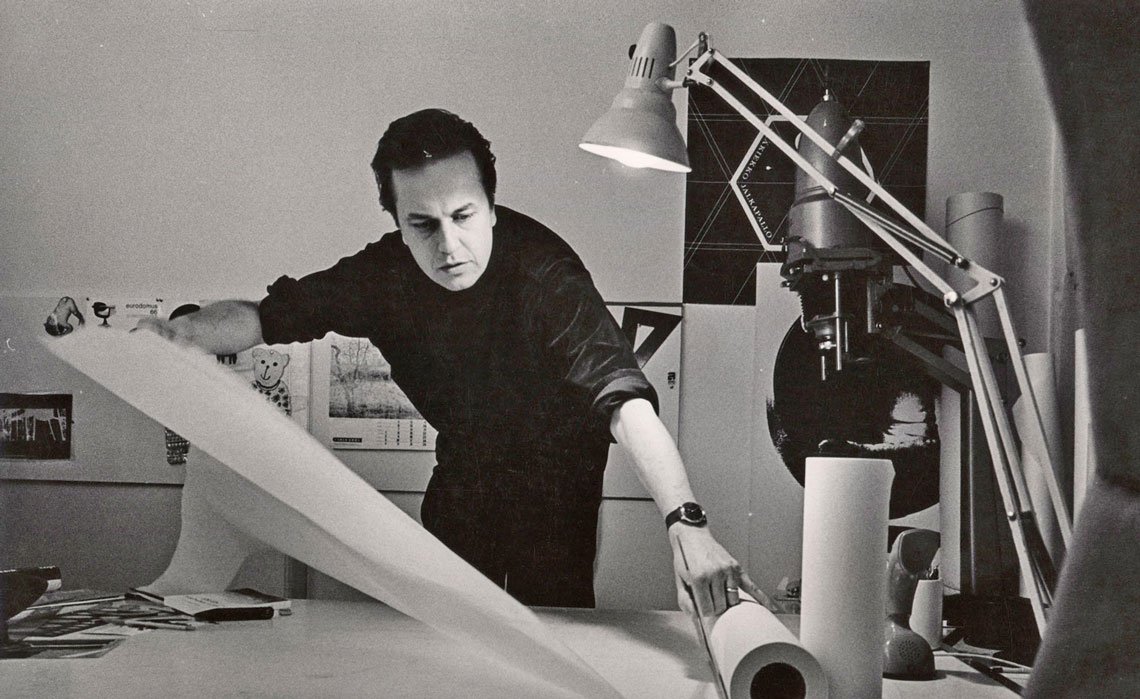 |
Eero Aarnio in his design studio at work on a prototype, circa late 1960s. |
He was constantly moving — switching jobs, launching new ventures, and accepting opportunities at a moment's notice. One day he might be designing furniture, the next travelling across the world. Nearly every account of Aarnio describes the same qualities: boundless energy, charisma, and an infectious optimism. The more one researches his life, the more he begins to resemble an almost James Bond-esque figure. Fittingly, there is even a story of Aarnio skiing in Gstaad alongside one of the actors who portrayed James Bond.
His fearlessness was perhaps best illustrated by a defining moment in his career. The story goes that Aarnio walked into Finnish furniture producer Asko's headquarters, where he worked first as an employee and later as a freelance designer, carrying the prototype of what would become one of his iconic chairs. There and then, he informed the management that he was resigning—and taking the chair with him. Shortly thereafter, he established his own company, embarking on a career that would transform Finnish design.
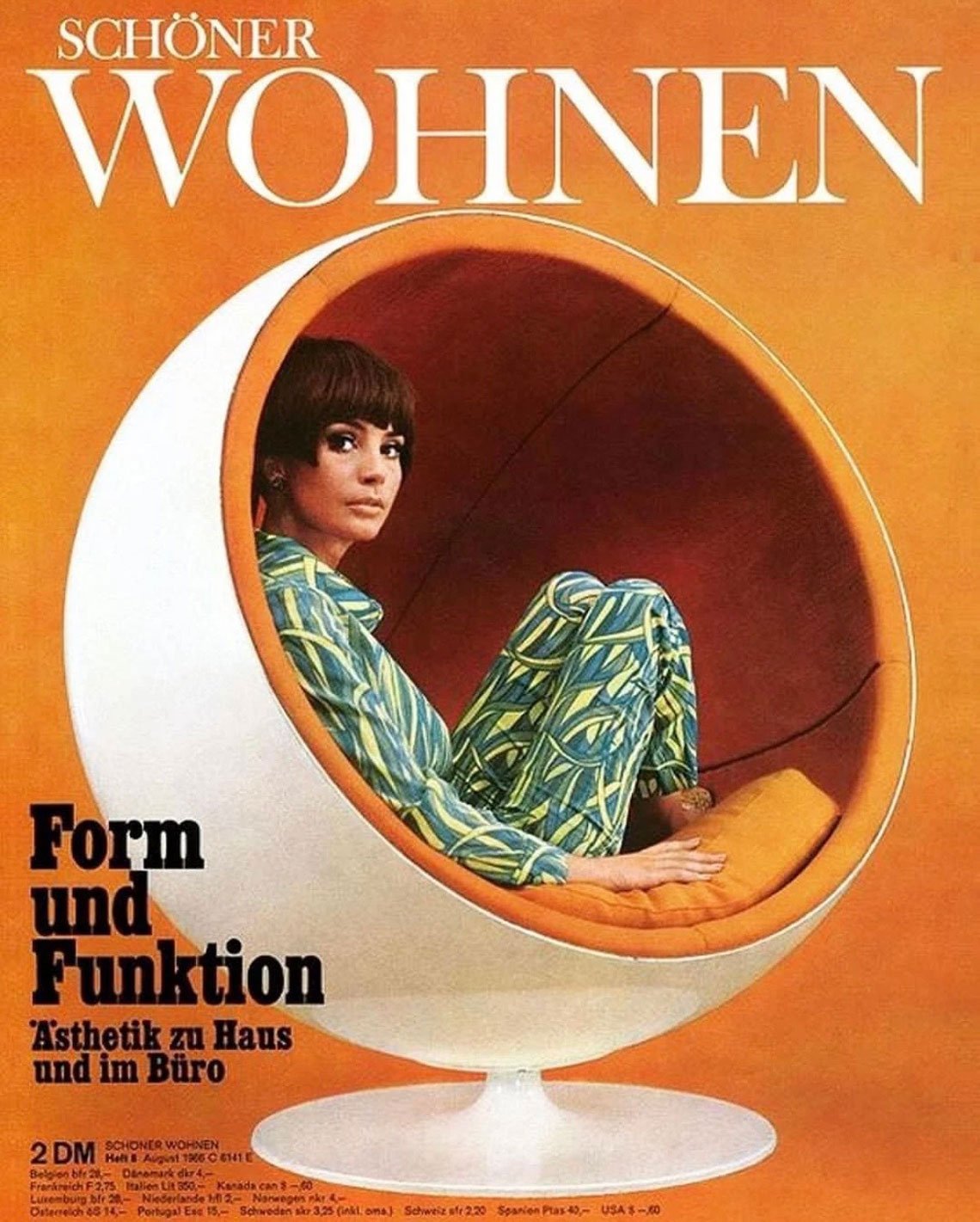 | 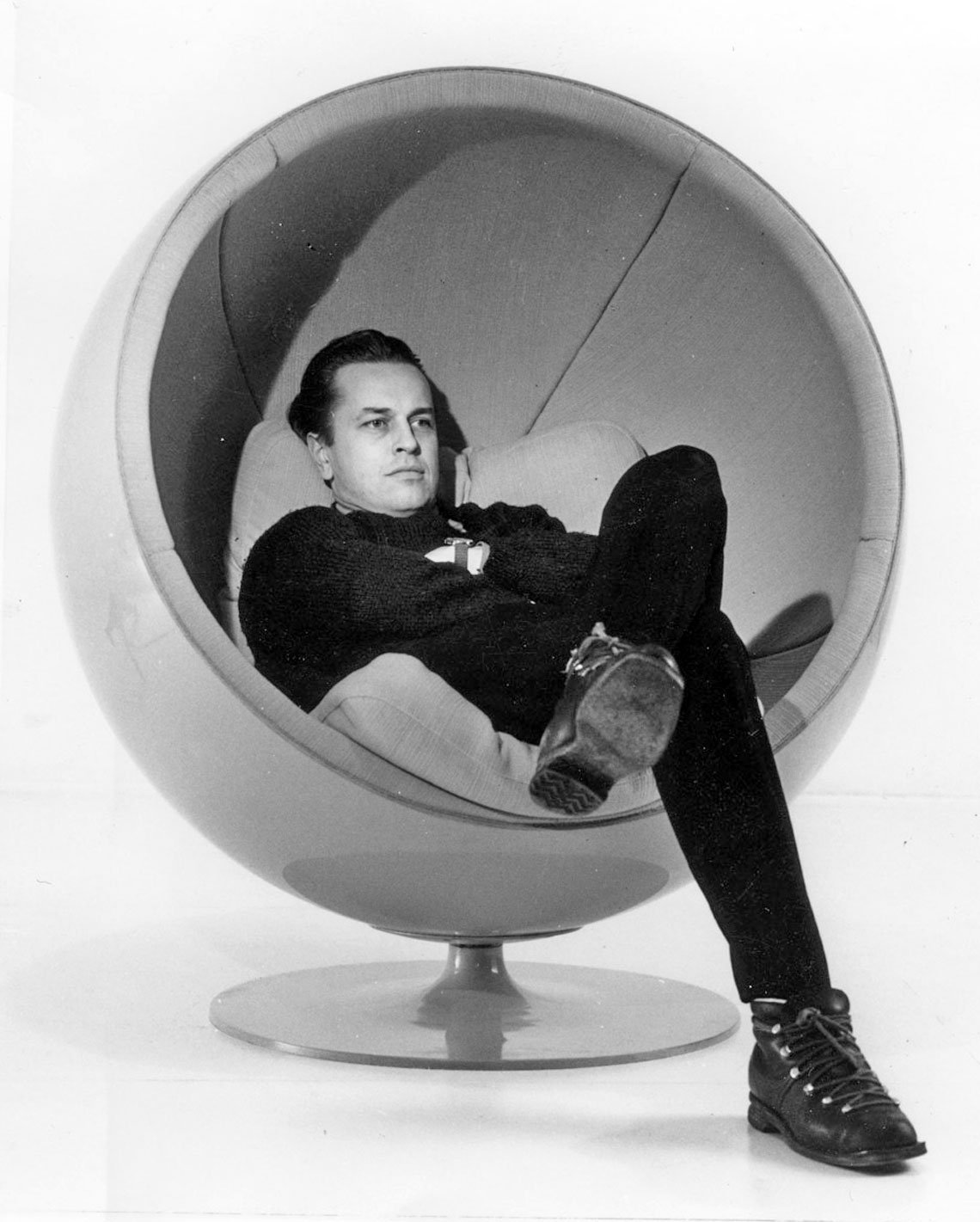 | |
| Left: The Ball Chair on the cover of the August 1966 issue of German interior design magazine Schöner Wohnen. When it debuted at the Cologne Furniture Fair in 1966, the response was overwhelming; the chair was a hit. International press declared it “the world’s most exciting chair,” and it soon appeared on magazine covers and in films worldwide. Right: Aarnio seated in his revolutionary Space Age design. The chair originally could be ordered with a factory-installed red LM Ericsson telephone mounted on the inside wall. | ||
"I only look ahead, never look back," he once remarked. It was more than a memorable quote. It was the philosophy that guided his entire life. Unlike many designers who relied heavily on manufacturers, agents, or large organizations, Aarnio often preferred to do everything himself. He designed, manufactured, marketed, photographed, and promoted his own work. "I like to act quickly; I never leave things hanging," he once said.
Another of his observations perhaps reveals even more about his character: “Ideas are like hunger — they keep coming and never stop.” Indeed, Aarnio's career can be understood as a continuous stream of experimentation. He was never content to repeat himself. Instead, he constantly sought new materials, new forms, and new ways of living.
 |
If the 1950s belonged to Scandinavian restraint and natural materials, the 1960s ushered in a radically different world. Space travel, technological optimism, youth culture, and new synthetic materials transformed the visual landscape. No Finnish designer embraced these changes more enthusiastically than Eero Aarnio. His use of fiberglass, plastic, bold colors, and sculptural forms perfectly captured the optimism of the era. Furniture was no longer expected merely to serve a practical purpose. It could also entertain, surprise, and challenge conventions.
The Ball Chair, introduced in 1963, quickly became an international sensation. Part furniture, part architecture, and part sculpture, it offered users an entirely new spatial experience. The chair became one of the defining symbols of the Space Age and remains among the most recognizable furniture designs ever created. He followed it up with the colorful molded fiberglass Pastil Chair in 1967, and the hanging clear acrylic Bubble Chair in 1968. Soon magazines, films, and television productions around the world featured Aarnio's work. And thereafter everyone seemed to want an Eero Aarnio chair. Collectors and admirers included figures such as Andy Warhol, Princess Grace of Monaco, and Empress Farah Pahlavi of Iran.
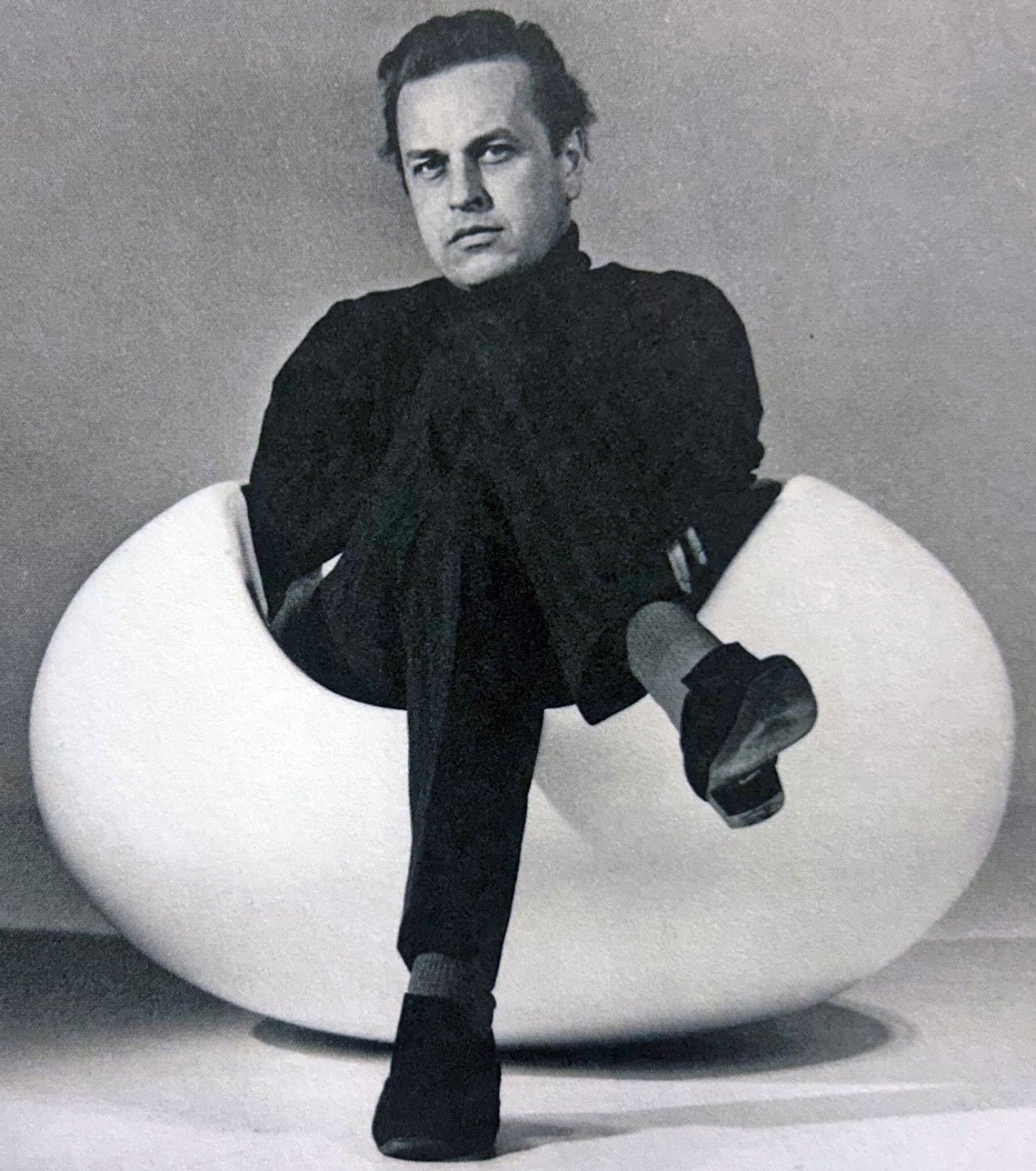 | 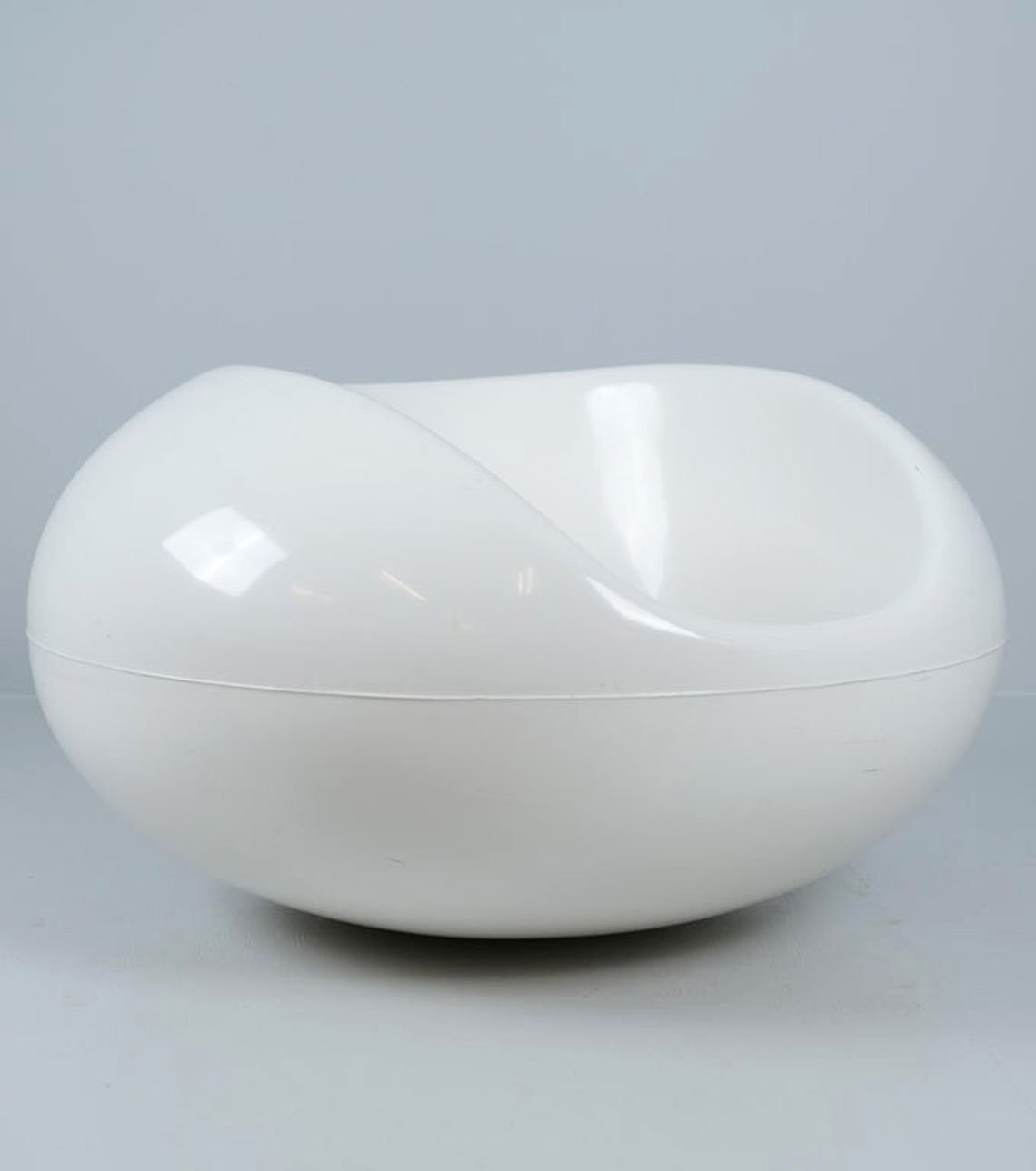 | |
| Left: Eero Aarnio and the 1967 Pastil Chair, named for the candy drops it was inspired by. Ergonomically designed for comfort and perfect balance, the chair rocks gently yet still maintains a solid center of gravity. It was originally offered in shiny vibrant colors including orange, yellow, red, green, sky blue, and mod black and white. Awarded the International Design Award of the American Institute of Interior Designers in 1968. Right: White Eero Aarnio iconic “Pastil” Chair, fiberglass. This example was produced by Asko in the 1980s. Available from Haddadin Design on Incollect.com. | ||
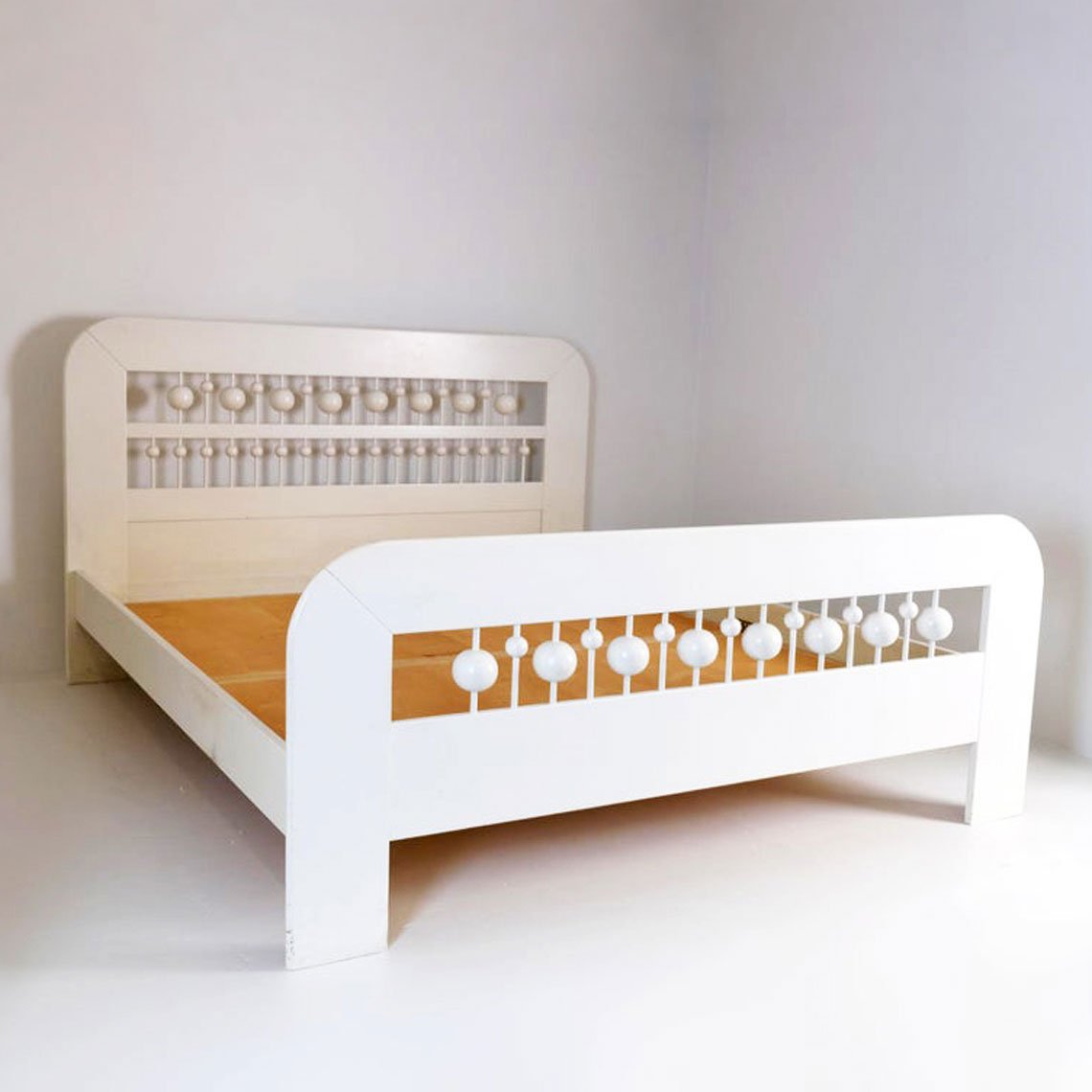 |  | |
Left: Abakus Bed, model 33030, by Eero Aarnio, 1970s, in white painted birch. Produced by Asko, Finland. A playful yet highly architectural double bed from the celebrated Abakus series. Introduced in 1971, the design perfectly captures the optimism and bold geometrical language of early 1970s Finnish design. Available from Haddadin Design on Incollect.com. Right: Yellow Eero Aarnio iconic 'Pastil' Chair, fiberglass, produced by Asko, 1960s. Available from Haddadin Design on Incollect.com. | ||
 |
Aarnio worked extensively in Italy, then the epicenter of avant-garde design. Alongside designers such as Joe Colombo, Aarnio became one of the most prominent voices of the international Space Age movement. Both designers shared an enthusiasm for futuristic living, modular environments, and the possibilities offered by new industrial materials. Together, they helped redefine postwar design. The significance of Aarnio's contribution has not gone unnoticed by later generations. Alberto Alessi, himself one of the most influential figures in contemporary design, summarized Aarnio's importance succinctly: "Eero is without doubt one of the greatest innovators of contemporary design."
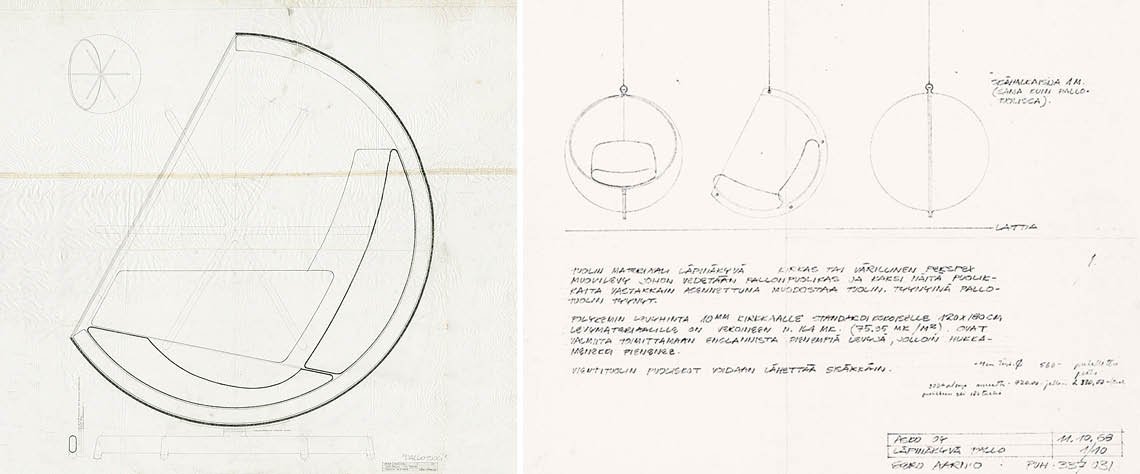 |
Eero Aarnio’s original sketches for the Bubble Chair (left) and the Ball Chair (right). |
 |
It would be easy to reduce Eero Aarnio to a handful of famous chairs. Yet doing so would overlook the true breadth of his contribution. At its core, Aarnio's work represents the courage to innovate. He demonstrated that Finnish design need not be confined to wood, restraint, and tradition. It could also be playful, experimental, colorful, and futuristic. More than sixty years after the introduction of the Ball Chair, his creations continue to appear in museums, films, public spaces, and private collections around the world. And perhaps that enduring relevance can be explained by Aarnio himself.
He never looked back. He always looked forward.
 |
Discover More From Haddadin Design on Incollect
 |