


-
FINE ART
-
FURNITURE & LIGHTING
-
NEW + CUSTOM
- Featured Bespoke Articles
- Hélène de Saint Lager’s Designs…
- Amorph-Where wood comes to life
- Markus Haase: Translating Artistic...
- Trent Jansen: Design Meets Heritage
- Hoon Moreau: Sculptural Poetry
- Kam Tin: The Art of Modern Baroque Furniture
- Gregory Nangle and Outcast Studios
- Roman Plyus Designs Furniture That’s…
- Ervan Boulloud: Daring Ingenuity
- Julian Mayor: Mirror Image
-
DECORATIVE ARTS
- JEWELRY
-
INTERIORS
- Interior Design Books you Need to Know
- 2021’s Best New Design Books: 9 Top Picks
- Robert Stilin: New Work, The Refined Home: Sheldon Harte and Inside Palm Springs by Dan Flood
- Ashe Leandro: Architecture + Interiors, David Kleinberg: Interiors, and The Living Room from The Design Leadership Network
- The Elegant Life by Alex Papachristidis and More is More Is More: Today’s Maximalist Interiors by Carl Dellatore
- Extraordinary Interiors by Suzanne Tucker and Destinations by Jean-Louis Deniot
- New books by Alyssa Kapito, Rees Roberts + Partners, and Gil Schafer, and Bunny Williams: Life in the Garden
- Torrey: Private Spaces: Great American Design by Andrew Torrey and Marshall Watson’s Defining Elegance
- Peter Pennoyer Architects: City | Country and Jed Johnson: Opulent Restraint
- Distinctly American: Houses and Interiors by Hendricks Churchill and A Mood, A Thought, A Feeling: Interiors by Young Huh
- Cullman & Kravis: Interiors, Nicole Hollis: Artistry of Home, and Michael S. Smith’s Classic by Design
- Featured Projects
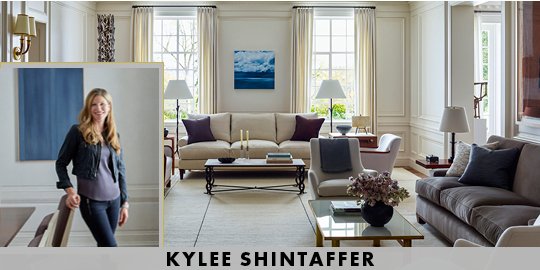
- East Shore, Seattle, Washington by Kylee Shintaffer Design
- Apartment in Claudio Coello, Madrid by L.A. Studio Interiorismo
- The Apthorp by 2Michaels
- Houston Mid-Century by Jamie Bush+ Co.
- Sag Harbor by David Scott
- Park Avenue Aerie by William McIntosh Design
- Sculptural Moderns by Kendell Wilkinson Design
- Noho Loft by Frampton Co
- Greenwich, CT by Mark Cunningham Inc
- West End Avenue by Mendelson Group
- View All Interior Designers
-
MAGAZINE
- Featured Articles
- Northern Lights: Lighting the Scandinavian Way
- Milo Baughman: The Father of California Modern Design
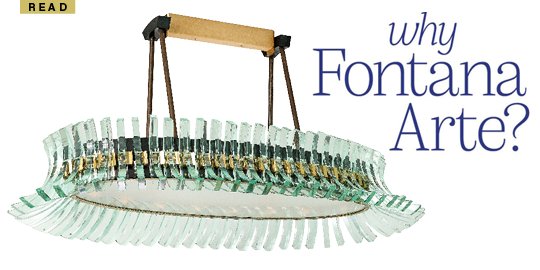
- A Chandelier of Rare Provenance
- The Evergreen Allure of Gustavian Style
- Every Picture Tells a Story: Fine Art Photography
- Vive La France: Mid-Century French Design
- The Timeless Elegance of Barovier & Toso
- Paavo Tynell: The Art of Radical Simplicity
- The Magic of Mid-Century American Design
- Max Ingrand: The Power of Light and Control
- The Maverick Genius of Philip & Kelvin LaVerne
- 10 Pioneers of Modern Scandinavian Design
- The Untamed Genius of Paul Evans
- Pablo Picasso’s Enduring Legacy
- Karl Springer: Maximalist Minimalism
- See all Articles
Listing
Period
Medium
Size
Location
- Clear All
Henry Moore
British, 1898 - 1986
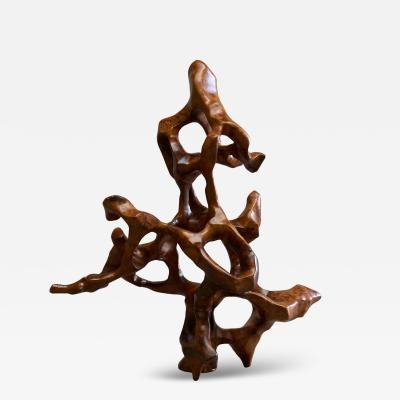
Henry Spencer Moore (1898–1986) was a pioneering British sculptor known for his monumental, semi-abstract works in bronze and stone. Born in Castleford, Yorkshire, Moore pursued art after serving in World War I, studying at Leeds School of Art and later at the Royal College of Art in London.
Moore transformed modern sculpture by drawing inspiration from the human form, as well as from natural objects like bones, stones, and shells. His approach blended elements of ancient and non-Western art, resulting in a distinctive visual language that emphasized organic shapes and tactile surfaces. A key figure in the direct carving movement, Moore believed in revealing the natural beauty and character of his chosen materials.
Among his most iconic themes were the reclining figure and the mother-and-child motif, which appeared repeatedly throughout his career. From the mid-20th century onward, Moore created numerous major public commissions, with works installed in institutions and open spaces around the world, including the United Nations headquarters in Paris and the Lincoln Center in New York.
Moore also produced an extensive body of drawings, prints, and maquettes. In 1977, he established the Henry Moore Foundation to support the arts and preserve his legacy. Today, his former home and studios at Perry Green serve as a museum and educational center, continuing to inspire new generations of artists and admirers.

Moore transformed modern sculpture by drawing inspiration from the human form, as well as from natural objects like bones, stones, and shells. His approach blended elements of ancient and non-Western art, resulting in a distinctive visual language that emphasized organic shapes and tactile surfaces. A key figure in the direct carving movement, Moore believed in revealing the natural beauty and character of his chosen materials.
Among his most iconic themes were the reclining figure and the mother-and-child motif, which appeared repeatedly throughout his career. From the mid-20th century onward, Moore created numerous major public commissions, with works installed in institutions and open spaces around the world, including the United Nations headquarters in Paris and the Lincoln Center in New York.
Moore also produced an extensive body of drawings, prints, and maquettes. In 1977, he established the Henry Moore Foundation to support the arts and preserve his legacy. Today, his former home and studios at Perry Green serve as a museum and educational center, continuing to inspire new generations of artists and admirers.
Loading...