











Wurlitzer
American
Founded in 1853 by German immigrant Franz Rudolph Wurlitzer in Cincinnati, the Rudolph Wurlitzer Company, commonly known as Wurlitzer, began as an importer of stringed, woodwind, and brass instruments from Germany. The company achieved early success, particularly through defense contracts supplying musical instruments to the U.S. military. By 1880, Wurlitzer had expanded into piano manufacturing and relocated to North Tonawanda, New York. The company grew rapidly, diversifying into the production of band organs, orchestrions, player pianos, and pipe or theatre organs, which were popular in silent movie theaters.
In addition to its manufacturing, Wurlitzer ran a chain of retail stores for its products. As technology progressed, the company adapted by producing electric pianos, electronic organs, and jukeboxes. Over time, Wurlitzer became more associated with jukeboxes and vending machines, areas in which it continues to operate.
In 1973, Wurlitzer sold its jukebox business, which was moved to Germany. In 1988, the Baldwin Piano Company acquired Wurlitzer's piano and organ divisions along with its U.S. manufacturing operations, leading to the majority of piano production being relocated overseas. Baldwin, including its Wurlitzer assets, was later acquired by Gibson Guitar Corporation around 1996. In 2006, Gibson also acquired Deutsche Wurlitzer and the trademarks for Wurlitzer Jukeboxes and Vending Electronics, briefly reuniting Wurlitzer’s iconic products under one roof. However, Baldwin ceased production of Wurlitzer pianos in 2009. Today, Wurlitzer-branded vending machines are still made in Germany under Gibson's ownership, and while jukebox production ended in 2013, replacement parts are still available.
In addition to its manufacturing, Wurlitzer ran a chain of retail stores for its products. As technology progressed, the company adapted by producing electric pianos, electronic organs, and jukeboxes. Over time, Wurlitzer became more associated with jukeboxes and vending machines, areas in which it continues to operate.
In 1973, Wurlitzer sold its jukebox business, which was moved to Germany. In 1988, the Baldwin Piano Company acquired Wurlitzer's piano and organ divisions along with its U.S. manufacturing operations, leading to the majority of piano production being relocated overseas. Baldwin, including its Wurlitzer assets, was later acquired by Gibson Guitar Corporation around 1996. In 2006, Gibson also acquired Deutsche Wurlitzer and the trademarks for Wurlitzer Jukeboxes and Vending Electronics, briefly reuniting Wurlitzer’s iconic products under one roof. However, Baldwin ceased production of Wurlitzer pianos in 2009. Today, Wurlitzer-branded vending machines are still made in Germany under Gibson's ownership, and while jukebox production ended in 2013, replacement parts are still available.

Wurlitzer
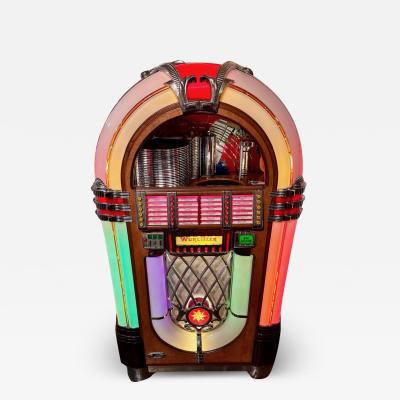
Original Rock-Ola Tabletop Jukebox now a Bluetooth Device Player
H 23 in W 21 in D 12 in
$ 3,000

Sold
Wurlitzer
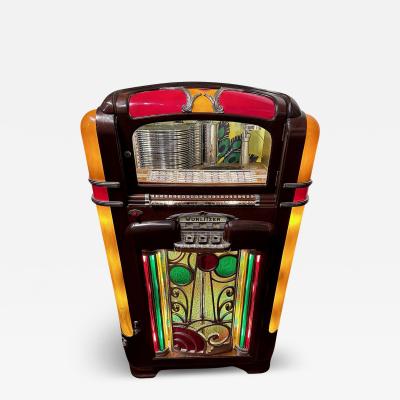
Vintage 1946 Wurlitzer Model 1015 Bubbler Collector Multi-Selector Phonograph
H 60 in W 30 in D 24 in
Sold
Wurlitzer
Wurlitzer Juke Box Model 700 Original and Restored Art Deco Circa 1940
H 55 in W 32 in D 25 in

Sold
Wurlitzer
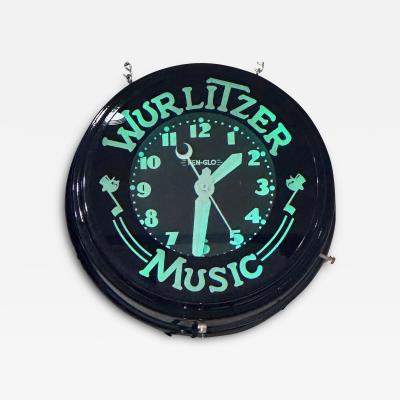
Wurlitzer Auxiliary #4008 External Speaker Matches JukeBox Bubbler
H 34 in W 34 in D 10 in
Sold

 Loading...
