












Showrooms
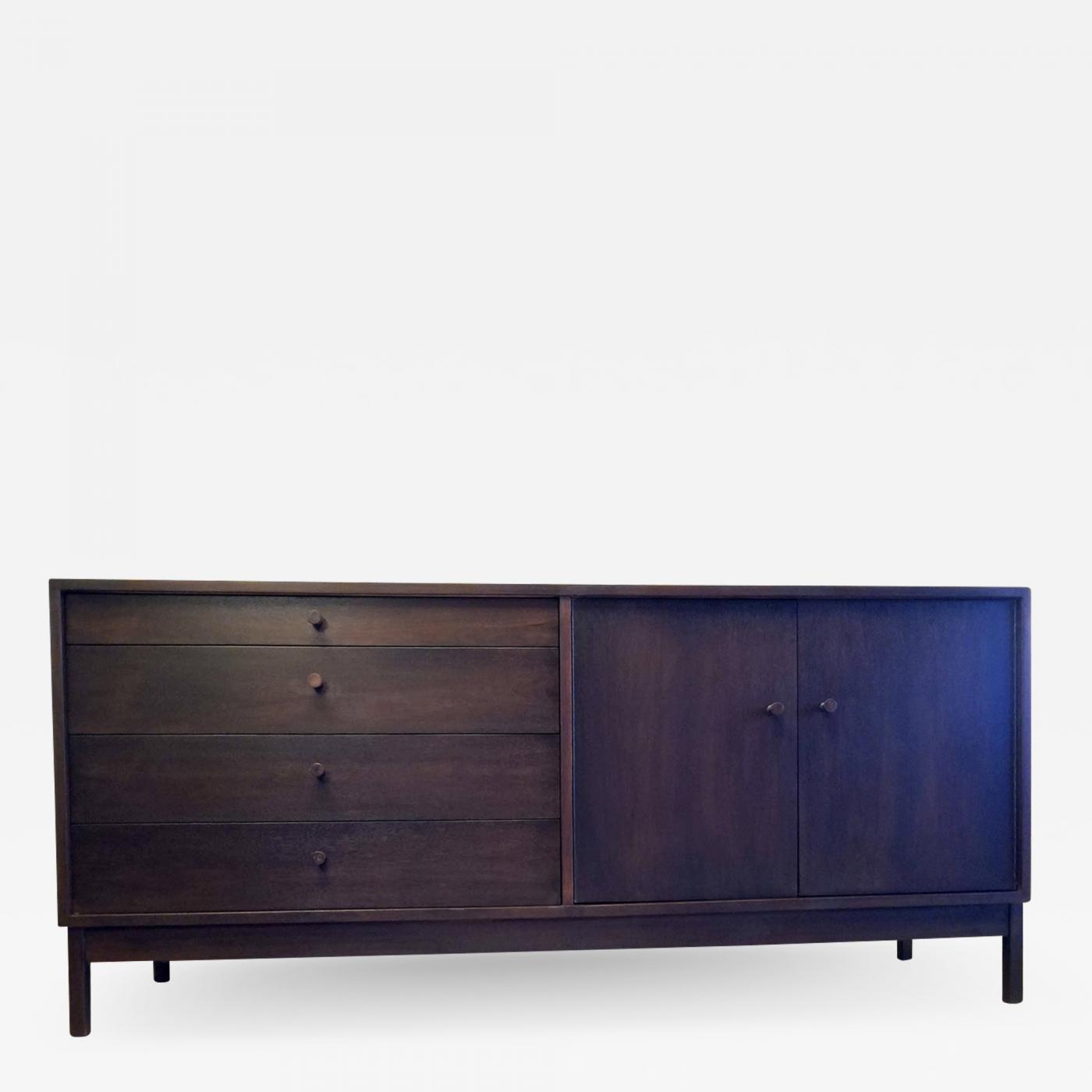
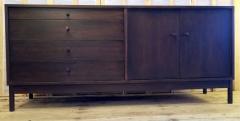
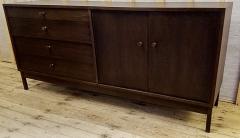
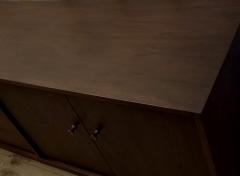
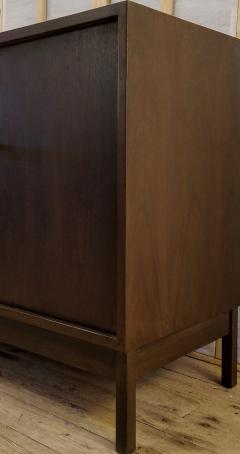
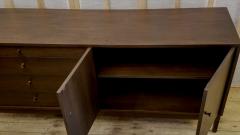
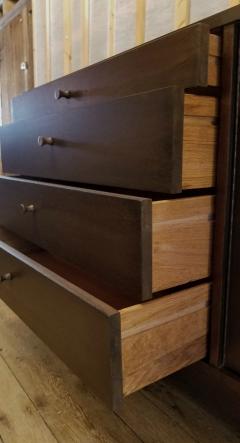
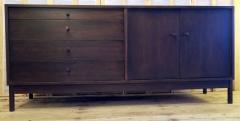
Richard Artschwager Studio Crafted Four Drawer Walnut Credenza Dresser, 1960s
-
Description
Richard Artschwager black walnut credenza dresser designed in 1953 and produced thru 1970. This example was purchased in the 1960s.
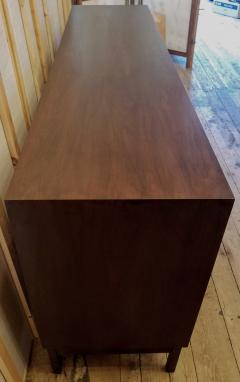
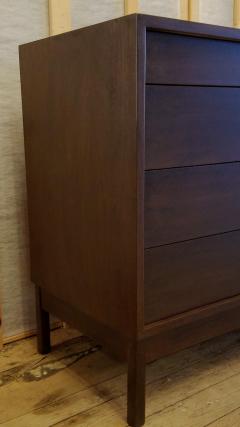
This cabinet was produced in his studio and is handcrafted of black walnut and features two pullout doors on rights opening to reveals and interior with an adjustable shelf, and four drawers on left.
Richard Artschwager forged a unique path in art from the early 1950s through the early twenty-first century, making the visual comprehension of space and the everyday objects that occupy it strangely unfamiliar. His work has been variously described as Pop art, because of its derivation from utilitarian objects and incorporation of commercial and industrial materials; as Minimal art, because of its geometric forms and solid presence; and as conceptual art, because of its cool and cerebral detachment. But none of these classifications adequately define the aims of an artist who specialized in categorical confusion and worked to reveal the levels of deception involved in pictorial illusionism. In his work, an anonymous sheet of walnut-pattern Formica is both itself and a depiction of a wooden plane; a table or chair is furniture, sculpture, and image all at once; and a painting or sculpture can be a “multi-picture” or “three-dimensional still life.” Artschwager foregrounded the structures of perception, striving to conflate the world of images—which can be apprehended but not physically grasped—and the world of objects, the same space that we ourselves occupy. His last body of work marked a departure from his previous series, in that the images he composed from sources in popular culture communicated overt, if deadpan, allusions to contemporary political issues.
Artschwager was born in 1923 in Washington, DC, and died in 2013 in Albany, New York. After receiving a BA in 1948 from Cornell University, New York, he studied under Amédée Ozenfant, one of the pioneers of abstraction. In the early 1950s Artschwager became involved in cabinetmaking, producing simple pieces of furniture. After a ruinous workshop fire at the end of the decade, he began making sculpture using leftover industrial materials, then expanded into painting, drawing, site-specific installation, and photo-based work. Artschwager’s first exhibition took place at the Art Directions Gallery, New York, in 1959, and was followed by the first of many solo exhibitions with Leo Castelli in 1965. Solo exhibitions include Up and Across, Neues Museum, Nuremberg, Germany (2001, traveled to Serpentine Gallery, London); Museum für angewandte Kunst (MAK), Vienna (2002); Kunstmuseum Winterthur, Switzerland (2003, traveled to Kaiser Wilhelm Museum, Krefeld, Germany, and Staatliche Graphische Sammlung, Munich); Painting Then and Now, Museum of Contemporary Art, Miami (2003); Up and Down/Back and Forth, Deutsche Guggenheim Berlin (2003); Hair, Contemporary Art Museum, Saint Louis (2010); Richard Artschwager!, Whitney Museum of American Art, New York (2012, traveled to Hammer Museum, Los Angeles, Haus der Kunst, Munich, and Nouveau Musée National de Monaco); and Punctuating Space: The Prints and Multiples of Richard Artschwager, Frances Lehman Loeb Art Center, Vassar College, Poughkeepsie, New York (2015). -
More Information
Documentation: Ample Provenance Notes: The original owner was a jazz musician in New York and purchased the sideboard from Artschwager's studio. Origin: United States, New York Period: 1950-1979 Materials: black walnut Condition: Good. restored to original color Creation Date: 1962 Styles / Movements: Modern, Mid Century Incollect Reference #: 474545 -
Dimensions
W. 71 in; H. 31.5 in; D. 18.5 in; W. 180.34 cm; H. 80.01 cm; D. 46.99 cm;
Shipping Information:
Ask about competitive S&H rates.
Message from Seller:
Established in 1984, Appleton offers a curated selection of 20th Century furniture, tables, chairs, and décor, featuring works by iconic designers like Frank Lloyd Wright and Edward Wormley. For inquiries, contact us at appletonarts@gmail.com.
Sold
More Listings from Appleton View all 213 listings
-
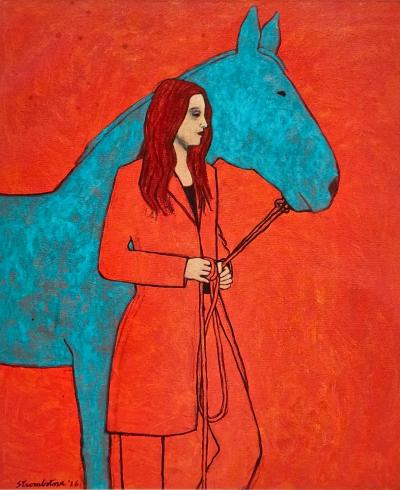
James Strombotne painting "Horsewoman in Red" 2016
-
Set of Four Warren McArthur Webbed Lounge Chairs, circa 1938

-
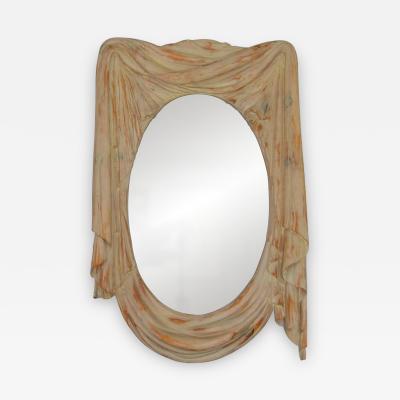
NeoClassical 1960s Draped Carved Wood Mirror by Chapman
-
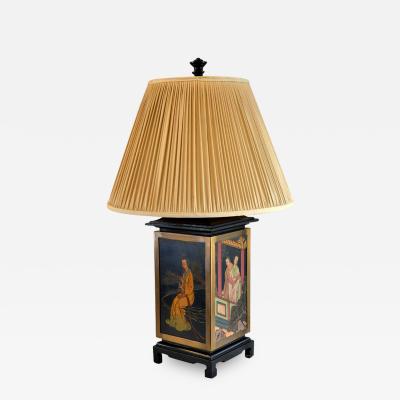
Norman Perry Asian Modern Table Lamp
-
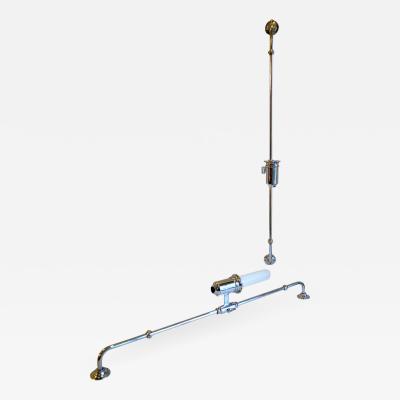
Arizona Biltmore Chrome-Plated Adjustable Sconces from 1929 Rare
-
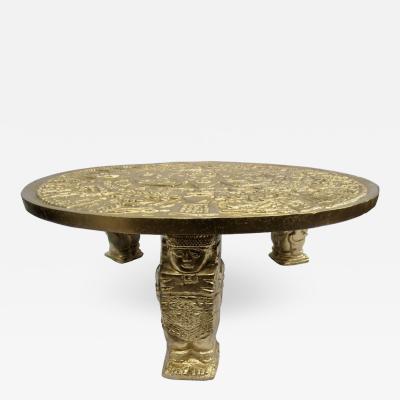
Gilt Bas- Relief Aztec Calendar Coffee Table Cast Aluminium, Mexican, 1960s
-
Edward Wormley Extension Walnut Dining Table for Dunbar, circa 1956

-
Pair of Lounge Chairs by T.H. Robsjohn-Gibbings, 1954 for Widdicomb

-
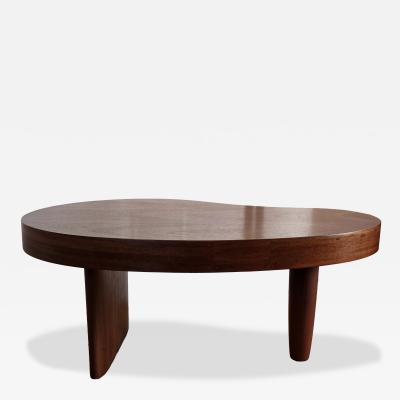
Biomorphic Mahogany Coffee Table North Shore Massachusetts c. 1948 Studio
-
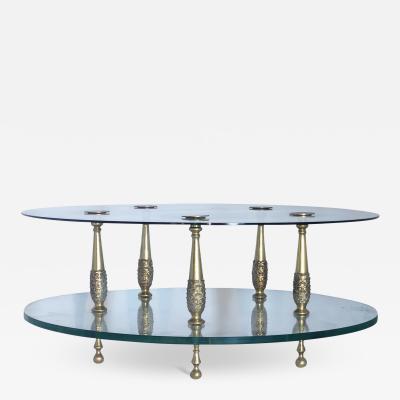
Italian Neoclassical Cast Brass Pinecone Two-Tier Glass Coffee Table 1970s
-
Corner Table by Paul Frankl for Johnson Furniture

-
Warren McArthur Umbrella Stand Rome NY 1934 Pat. Applied For Anodic Aluminum
-
NAMCO Australia Mahogany Top Aluminum Table, Warren McArthur License Era c. 1955
-
Mayan Revival Rare Pair of Art Deco Wrought Iron and Tin Floor Lamps, circa 1928

