










Beyond Boundaries: Wexler Gallery Twenty-Five Years of Shaping Contemporary Collectible Design
 |
Wexler Gallery: Twenty-Five Years
of Shaping Contemporary Collectible Design
by Benjamin Genocchio • Photos courtesy Wexler Gallery
For the past twenty-five years, Wexler Gallery has occupied a distinctive place in the American art and design world. Long before “collectible design” became a widely used term, the Philadelphia gallery championed artists whose work blurred the boundaries between art, craft, and design. Today, as those distinctions have largely disappeared, the gallery’s approach seems prescient. “Being a successful design dealer is part Jewish mother, part shrink, and part P. T. Barnum,” jokes founder Lewis Wexler, who established the gallery with his wife and business partner, Sherri Apter Wexler. That success has depended on recognizing talent early on while building a market for work that initially sat outside conventional categories.
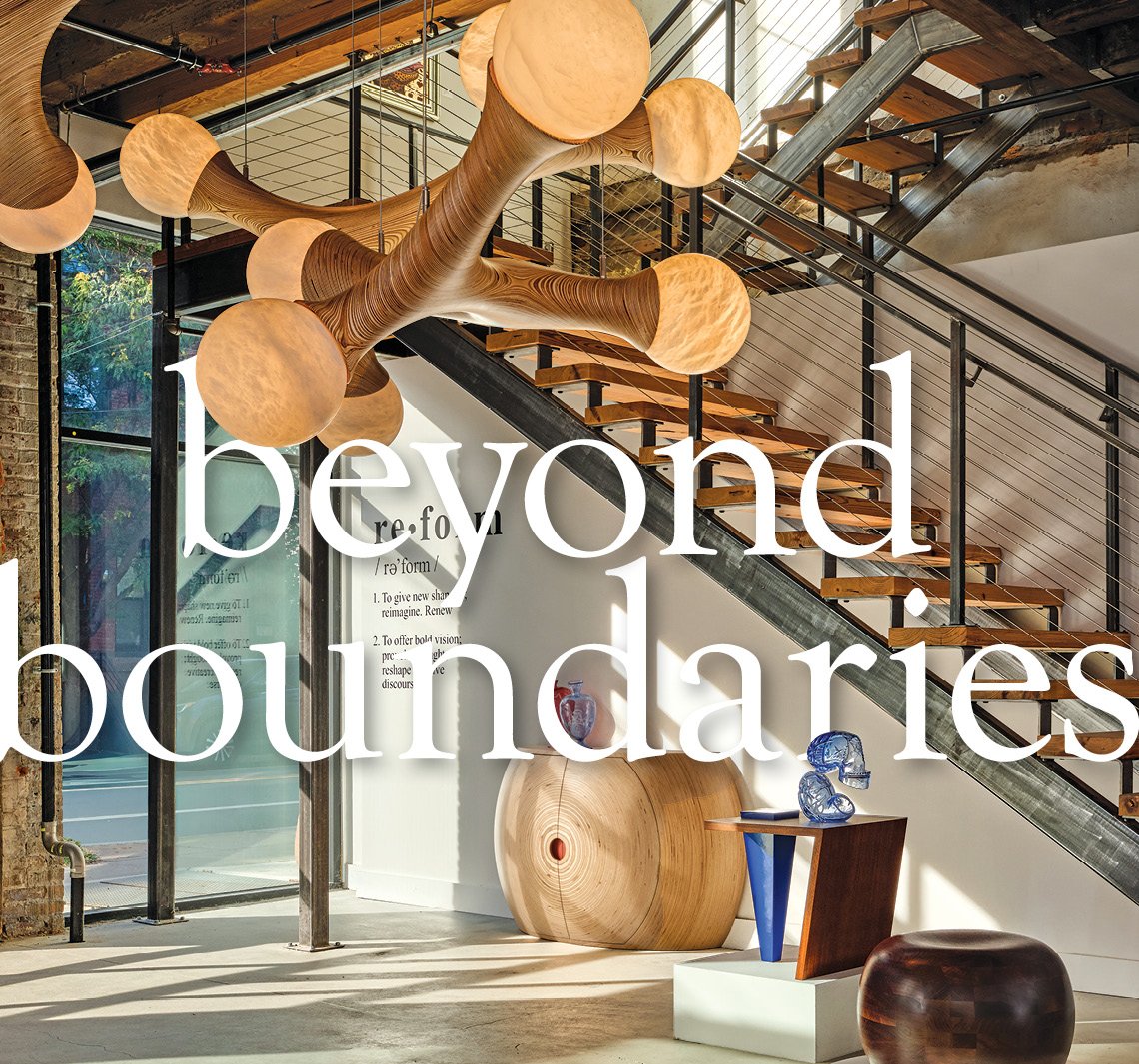
Their vision reached a new milestone in 2023 with the opening of the gallery’s 11,000-square-foot headquarters in Philadelphia’s Fishtown neighborhood. Housed in a renovated industrial warehouse, today, Wexler Gallery is recognized as one of the country’s leading advocates for design artists working across a wide variety of material-based practices.
From the beginning, the gallery rejected traditional divisions between fine art and the decorative arts. “The gallery emerged from a conviction that the future of collecting would not be constrained by the boundaries that had long divided visual art from design,” Wexler says. “From the very beginning we wanted to create a platform that reflected the increasingly interdisciplinary nature of contemporary practice.”
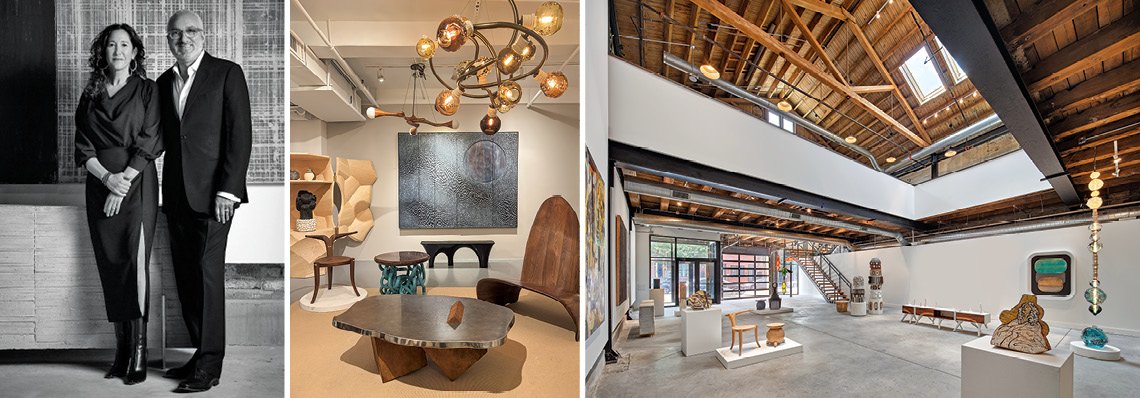 |
Left: Sherri Apter Wexler and Lewis Wexler in their 11,000-square-foot gallery, a former pretzel factory, in the Fishtown area of Philadelphia. Photo: Josh Gaddy Photography, courtesy Wexler Gallery. |
Philadelphia proved an ideal home for that vision. The city’s long tradition of craftsmanship is supported by institutions including the Philadelphia Museum of Art, the Barnes Foundation, and the Tyler School of Art. It also has a rich legacy of studio makers living nearby, from George Nakashima, Harry Bertoia, Paul Evans, and Toshiko Takaezu. The gallery’s roster now includes more than thirty artists and designers from over a dozen countries, among them Andy Paiko, Jomo Tariku, Trent Jansen, Daniel Shapiro, Richard Haining, Sofia Karakatsanis, and Marcus Vinicius De Paula.
“I spent many years specializing in glass and ceramics, so I’ll always have a particular affection for artists working in those materials,” Wexler says. “But what excites me most today is the extraordinary diversity of creative thinking happening around the world.” That international outlook has given the gallery an unusually broad program. Exhibitions regularly explore sustainability, material innovation, cultural identity, and the relationship between traditional craftsmanship and new technologies.
Australian designer Trent Jansen exemplifies that approach. His furniture transforms discarded materials into sophisticated contemporary design while addressing environmental concerns and Australian cultural history. For Wexler, the work represents the kind of thinking the gallery has long championed. “We first encountered Trent’s work at Design Miami,” he recalls. “What impressed me wasn’t simply the craftsmanship but the strength of the ideas behind it.”
International art fairs have played an important role in expanding the gallery’s audience. Regular participation in Design Miami and Salon Art + Design has introduced its artists to collectors, architects, and designers from around the world. Throughout its history, Wexler Gallery has remained committed to artists who combine technical skill with original ideas. That philosophy has become increasingly relevant as greater value is placed on handmade production, sustainable practices, and works that reflect cultural narratives. The gallery expanded its reach in 2020 with a location at the New York Design Center, and has maintained an online storefront on Incollect.com since 2018.
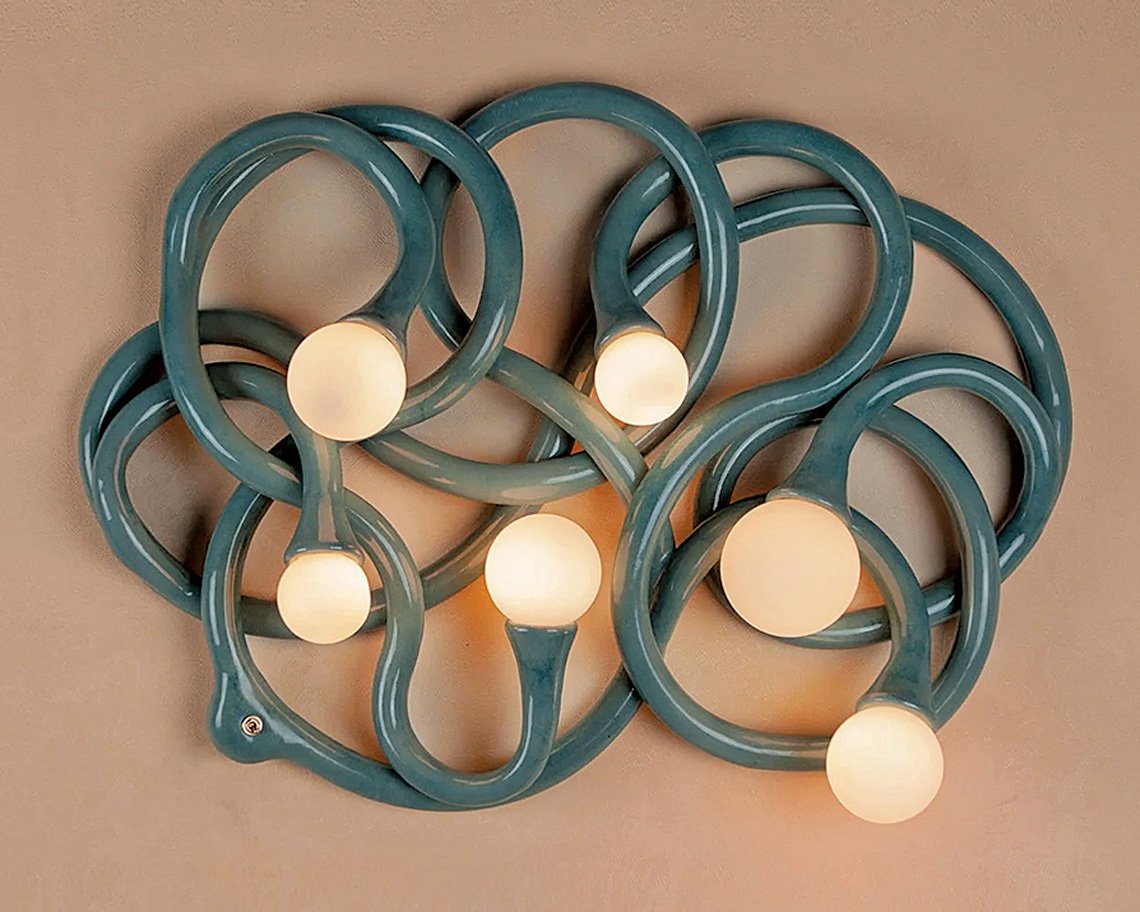 |
6 Globe Wall Squiggle, 2022. Stoneware, gold luster, glass, 26 x 34 x 3 inches. |
 |
Daniel Shapiro is among a new generation of American designers expanding the possibilities of ceramics. Based in St. Louis, his work bridges furniture, lighting, and sculpture, using clay as an architectural and sculptural material. His work reflects the renewed interest in collectible design while avoiding nostalgia, producing objects that feel both timeless and contemporary.
Rather than focusing on vessels, Shapiro emphasizes the sculptural qualities of clay. His work retains fingerprints, irregularities, and textured surfaces that reveal the making process, reinforcing the handmade character of each piece.
Lighting has become the strongest expression of his practice. His Squiggle series, which won the Editor’s Award for Best Lighting at the 2023 International Contemporary Furniture Fair, established him as a significant new voice in design. Whether producing sconces, pendants, or table lamps, Shapiro treats light as an integral part of the object. Textured ceramic diffuses illumination into a warm, soft glow, allowing the material itself to shape the light.
The same approach informs his furniture. Tables, stools, and occasional pieces combine substantial forms with carefully balanced proportions. Shapiro rejects industrial perfection in favor of variation and the unpredictability of fired clay. Each piece reflects the hand of its maker, demonstrating how craftsmanship and material can work together to produce objects of lasting character.
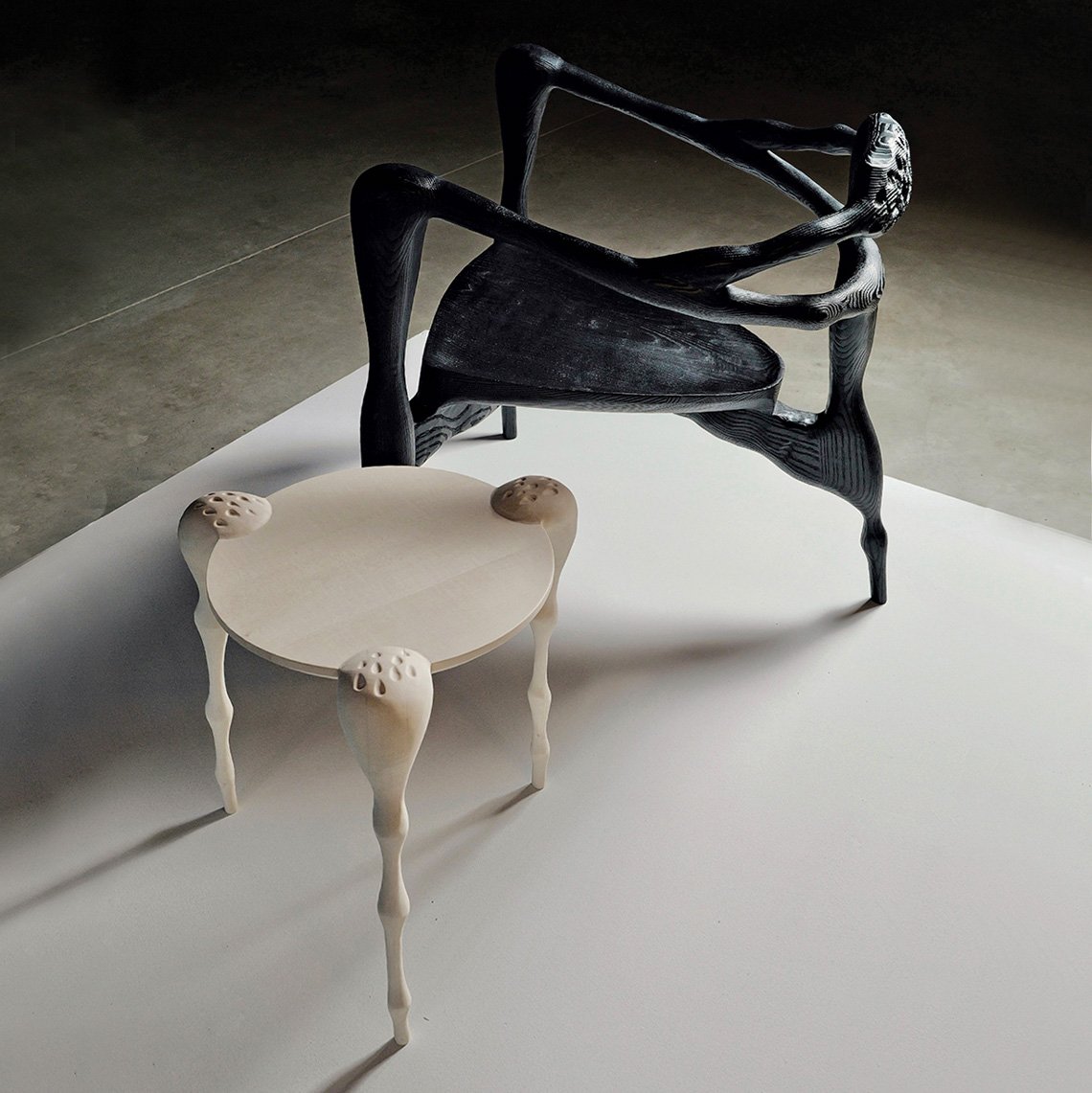 |
Top: Resilience Chair, 2023. Solid ash, scorched, stained and lacquered, 28.5 x 27.5 x 29 inches. Bottom: Phase Side Table, 2023. Solid sycamore side table, bleached and oiled, 16.25 x 16.5 x 16.5 inches. |
 |
Sofia Karakatsanis creates furniture that sits between sculpture, craft, and contemporary design. Her work is defined by restraint, precise proportions, and an exceptional understanding of wood, producing pieces that are both functional and quietly sculptural.
Raised in a family that valued making by hand, she later studied furniture design, combining traditional craftsmanship with a contemporary design sensibility. Working primarily in white oak, walnut, and ash, Karakatsanis allows the character of each timber to inform the final design. Grain, texture, and natural variation remain central to every piece, creating furniture that is authentic and materially honest.
Her work is distinguished by clarity and precision. Tables, chairs, and cabinets balance structural simplicity with subtle sculptural detail, while every joint and transition is carefully resolved. Ornament is reduced to a minimum, allowing proportion and material to take precedence. Traditional woodworking techniques underpin her practice, alongside a commitment to sustainable sourcing and durable construction. Designed to last for generations, her furniture offers a thoughtful alternative to disposable design.
 |
STACKED 10 Bulb Chandelier, 2026. Salvaged Walnut, 19.25 x 60 inches. |
 |
Brooklyn-based designer Richard Haining has built an original woodworking practice around reclaimed timber, transforming demolition lumber and construction waste into sculptural furniture, lighting, mirrors, and vessels. His work demonstrates that sustainability and craftsmanship can reinforce one another. A graduate of the Rhode Island School of Design, Haining originally studied ceramics before turning to wood. That influence remains visible in his Stacked process, in which thousands of small reclaimed wood fragments are laminated before being carved into flowing forms. The additive method recalls ceramic construction as much as traditional woodworking. The finished works celebrate the history of the material. Nail holes, weathering, mineral stains, and varied grain remain visible, giving each object a unique surface while highlighting the character of reclaimed timber.
Despite being assembled from countless geometric pieces, Haining’s forms appear remarkably fluid. Mirrors, vessels, lighting, and furniture combine technical precision with sculptural simplicity. Sustainability is embedded in both his process and materials. By using wood that would otherwise be discarded, Haining creates work that combines environmental responsibility with innovative design and exceptional craftsmanship.
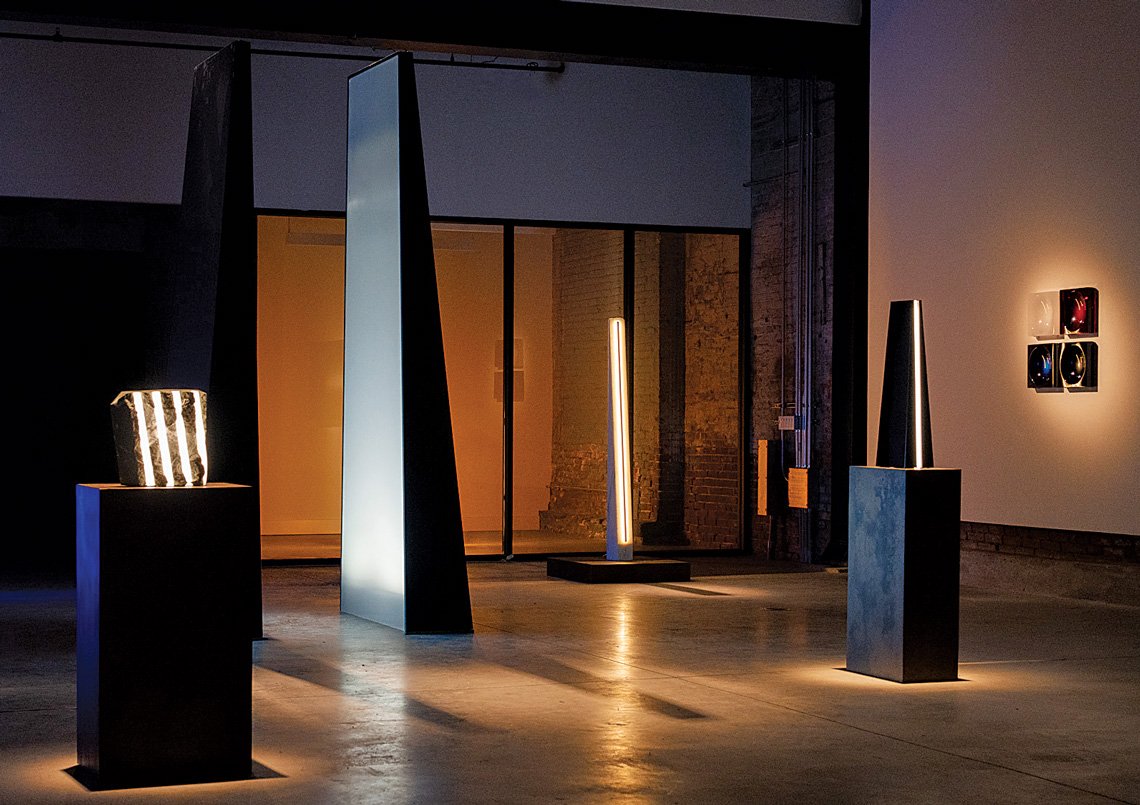 |
Interstice: Thresholds Carved with Light and Time, a recent exhibition of Marcus De Paula sculpture at Wexler Gallery, Philadelphia. From left: Rhea, 2023; Titan, 2022; Coeus Ultor, 2026, and Aegaeon, 2021. |
 |
Brazilian-American artist Marcus Vinicius De Paula combines monumental stone sculpture with engineered light to create works that explore geology, astronomy, and time. Using granite, basalt, and other ancient stones, he transforms solid material into sculptures animated by carefully integrated illumination.
His work examines the relationship between permanence and light. Massive stone blocks are carved with precision before concealed LEDs illuminate fissures and openings, revealing the natural structure of the rock while creating subtle visual effects. De Paula’s practice reflects both artistic and scientific influences. Raised by a painter and ceramic artist mother and a father who worked as an engineer on NASA’s Mars exploration program, he combines engineering with sculptural inquiry.
Technology is integrated seamlessly into the work. LEDs, acrylic, steel, and electronics disappear within the stone, allowing light to appear as a natural extension of the material rather than a technological intervention. Many sculptures reference astronomy, geology, and classical mythology, but their emphasis remains on material, scale, and the interaction between stone and light.
 |
Discover More From Wexler Gallery on Incollect
 |